Food Wastewater Treatment
Food Wastewater Treatment
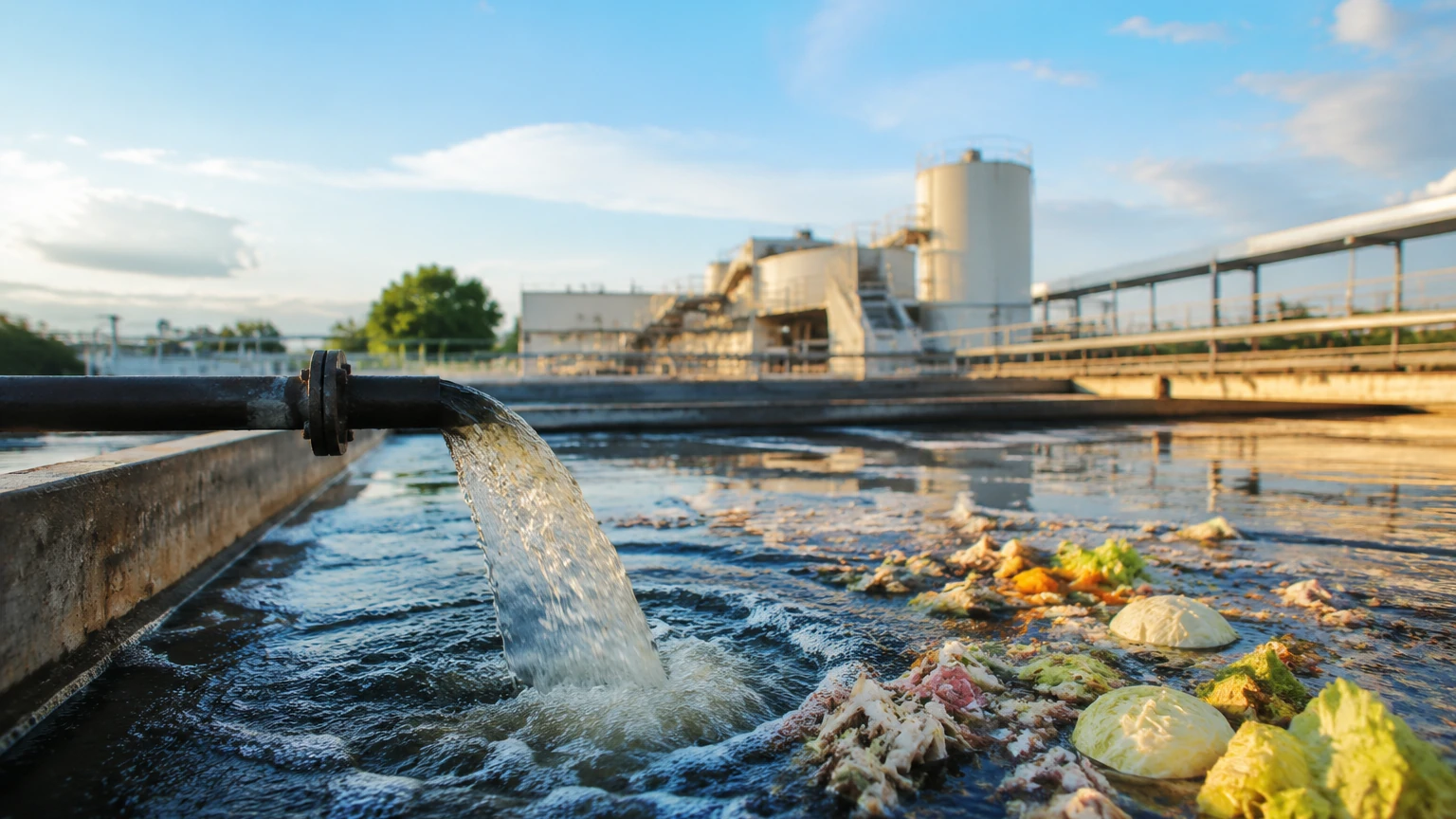
Food wastewater treatment represents one of the most demanding sectors within industrial water management. Unlike municipal sewage, wastewater from food and beverage (F&B) processing is characterized by extreme fluctuations in flow volume, high organic loading, and significant concentrations of fats, oils, and grease (FOG). To maintain regulatory compliance and operational efficiency, plant engineers must implement robust treatment processes supported by precise instrumentation. Accurate level measurement is the cornerstone of these processes, ensuring that equalization tanks, chemical dosing systems, and bioreactors function within their designed parameters.
The Nature of Food Industry Wastewater
Before selecting instrumentation or designing a treatment train, it is essential to understand the specific characteristics of the influent. Food wastewater varies significantly depending on the sub-sector:
* Dairy Processing: High biological oxygen demand (BOD) and chemical oxygen demand (COD), often containing milk solids and cleaning chemicals (CIP fluids).
* Meat and Poultry: High levels of nitrogen, phosphorus, and suspended solids, alongside significant FOG content.
* Fruit and Vegetable Processing: Large volumes of water used for washing, often containing soil, pesticides, and high sugar content which can lead to rapid fermentation.
* Brewing and Distilling: High temperature discharges with fluctuating pH levels and yeast solids.
Because these streams are highly variable, the treatment infrastructure must be dynamic. Level sensors provide the real-time data necessary to manage hydraulic retention times (HRT) and prevent overflows during peak production periods.
Core Level Measurement Principles for Wastewater
In the context of food wastewater treatment, several measurement principles are commonly employed. Each has distinct physical foundations that dictate its suitability for specific stages of the treatment process.
1. Radar Level Measurement (FMCW)
Modern industrial radar meters typically utilize Frequency Modulated Continuous Wave (FMCW) technology. The sensor emits a continuous radar signal where the frequency increases linearly over time. The signal reflects off the wastewater surface and is received by the antenna. By measuring the frequency difference between the emitted and received signal, the device calculates the distance with high precision.
Radar is often preferred in food wastewater because it is non-contact. It is unaffected by changes in process temperature, pressure, or the presence of vapors and dust. High-frequency 80 GHz radar is particularly effective as it offers a narrow beam angle, allowing for installation in narrow tanks or basins with internal obstructions like agitators.
2. Ultrasonic Level Measurement
Ultrasonic sensors operate on the time-of-flight principle. The transducer emits a pulse of sound waves (typically 20 kHz to 200 kHz) that travels to the liquid surface and bounces back. The time taken for the echo to return is proportional to the distance. While cost-effective, ultrasonic measurement is sensitive to air temperature fluctuations (which change the speed of sound) and can be blocked by heavy foam or steam, both of which are common in food processing environments.
3. Hydrostatic Pressure Measurement
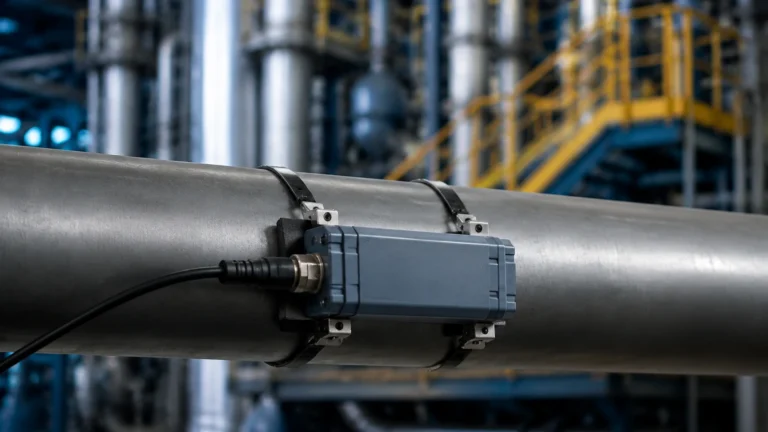
This principle relies on the relationship between the height of a liquid column and the pressure it exerts at the base of a tank. A pressure transmitter installed at the bottom of the vessel measures the "head pressure." This value is then converted into a level reading based on the density of the fluid. Hydrostatic sensors are highly reliable for deep tanks but require recalibration if the density of the wastewater changes significantly due to varying solids content.
4. Magnetic Level Gauges and Switches
For point-level detection or visual bypass indication, magnetic systems use a float containing a magnet that moves with the liquid level. These are often used for high-level alarms or to control the start/stop cycles of transfer pumps in sump pits.
Technology Selection for Specific Treatment Stages
Effective food wastewater treatment involves several stages, each presenting unique challenges for level instrumentation.
Equalization and Buffer Tanks
Equalization basins are used to normalize the flow and organic load before the wastewater enters biological treatment. These tanks often experience high turbulence and varying surface conditions. Non-contact radar is the recommended technology here, as it can ignore the surface ripples and provide a steady reading even when the tank is being filled at high flow rates.
Dissolved Air Flotation (DAF) Units
DAF systems are used to remove FOG and suspended solids by injecting micro-bubbles that carry contaminants to the surface, forming a thick sludge layer (scum). Measuring the liquid level beneath the scum layer is critical. Hydrostatic sensors are often used here because they measure the pressure of the liquid column and are less likely to be fooled by the floating sludge layer than top-down non-contact sensors.
Anaerobic and Aerobic Digesters
Biological treatment involves the use of microorganisms to break down organic matter. In anaerobic digesters, biogas is produced, creating a pressurized and potentially corrosive atmosphere. Radar sensors with chemical-resistant housings (such as PTFE-faced antennas) are ideal for these closed vessels. They provide accurate level data while remaining isolated from the corrosive biogas.
Chemical Dosing Skids
Treatment processes require the precise addition of coagulants, flocculants, and pH adjusters. These chemicals are often stored in small plastic tanks. Small-form-factor radar or ultrasonic sensors are used to monitor chemical inventory, ensuring that the treatment process is never interrupted by a lack of reagents.
Selection Matrix and Technical Comparison
| Criteria | Radar (80 GHz) | Ultrasonic | Hydrostatic | Magnetic Float |
| :— | :— | :— | :— | :— |
| Measurement Range | Up to 30m+ | Up to 15m | Up to 100m+ | Up to 6m |
| Accuracy | ±1mm to ±2mm | ±0.25% of range | ±0.1% to ±0.5% | ±5mm |
| Foam Tolerance | Moderate to High | Low | High | Excellent |
| Steam/Vapor Impact | None | High | None | None |
| Installation Type | Top-down (Non-contact) | Top-down (Non-contact) | Bottom or Submerged | Side-mount or Top-down |
| Maintenance | Low | Low | Moderate (Cleaning) | Moderate (Moving parts) |
Installation Best Practices and Environmental Challenges
To ensure the longevity of level sensors in food wastewater treatment applications, several installation factors must be considered:
1. Mounting Position: Sensors should be mounted away from the tank inlet to avoid the direct path of falling liquid, which can cause false readings or physical damage. For radar and ultrasonic units, the sensor must be perpendicular to the liquid surface.
2. Beam Clearance: Ensure there are no structural supports, pipes, or ladders within the signal beam's path. Even though modern software can "map out" fixed obstructions, a clear path provides the highest signal-to-noise ratio.
3. Nozzle Height: If mounting on a nozzle, the sensor antenna or transducer should ideally extend slightly past the bottom of the nozzle to prevent "ringing" or internal reflections that interfere with the near-zone measurement.
4. Stilling Wells: In tanks with heavy agitation or surface vortexes, a stilling well (a vertical pipe) can be used to provide a calm surface for the sensor to measure. This is particularly useful for radar and ultrasonic technologies in equalization basins.
Addressing Foam and Surface Turbulence
Foam is a ubiquitous challenge in food wastewater treatment, particularly in dairies and breweries where proteins and sugars act as foaming agents.
* Ultrasonic Limitations: Sound waves are absorbed by foam, often resulting in a "loss of echo" error. If foam is persistent, ultrasonic technology is generally not recommended.
* Radar Solutions: While radar can penetrate some foam, thick or dense foam can attenuate the signal. Selecting a high-frequency radar with advanced signal processing algorithms allows the device to distinguish between the foam surface and the actual liquid level.
* Hydrostatic Advantage: Because hydrostatic sensors measure the weight of the water column from the bottom, they are completely unaffected by surface foam. This makes them a reliable "plan B" for applications where foam cannot be controlled chemically.
Frequently Asked Questions
Q: How does the dielectric constant affect radar measurement in food wastewater?
A: The dielectric constant (εr) of a material determines how much radar energy is reflected. Water has a high dielectric constant (~80), making it an excellent reflector. Even if the wastewater contains oils (which have low εr), the water content is usually sufficient to provide a strong return signal.
Q: Can level sensors handle the Clean-in-Place (CIP) cycles common in food plants?
A: Yes, but the sensors must be rated for the temperatures and chemicals used. For CIP applications, look for sensors with IP68 or IP69K ratings and wetted parts made from 316L stainless steel or PEEK.
Q: What is the best way to monitor sludge levels in a clarifier?
A: Sludge blanket monitoring often requires specialized ultrasonic sensors that are submerged and point upward, or optical sensors that measure turbidity at different depths. Standard top-down level meters are used for the total liquid level, but not the sludge-to-water interface.
Conclusion
Selecting the correct level measurement technology is vital for the reliable operation of food wastewater treatment systems. By understanding the physics of radar, ultrasonic, and hydrostatic measurement, engineers can match the instrument to the specific rigors of the food processing environment. For detailed technical specifications and to Review product options and application support, engineers should consult the Main Page to find the most compatible instrumentation for their specific process conditions. Proper selection not only ensures environmental compliance but also optimizes chemical usage and reduces the risk of costly plant downtime.