Fs200 Flow Straightener
Fs200 Flow Straightener
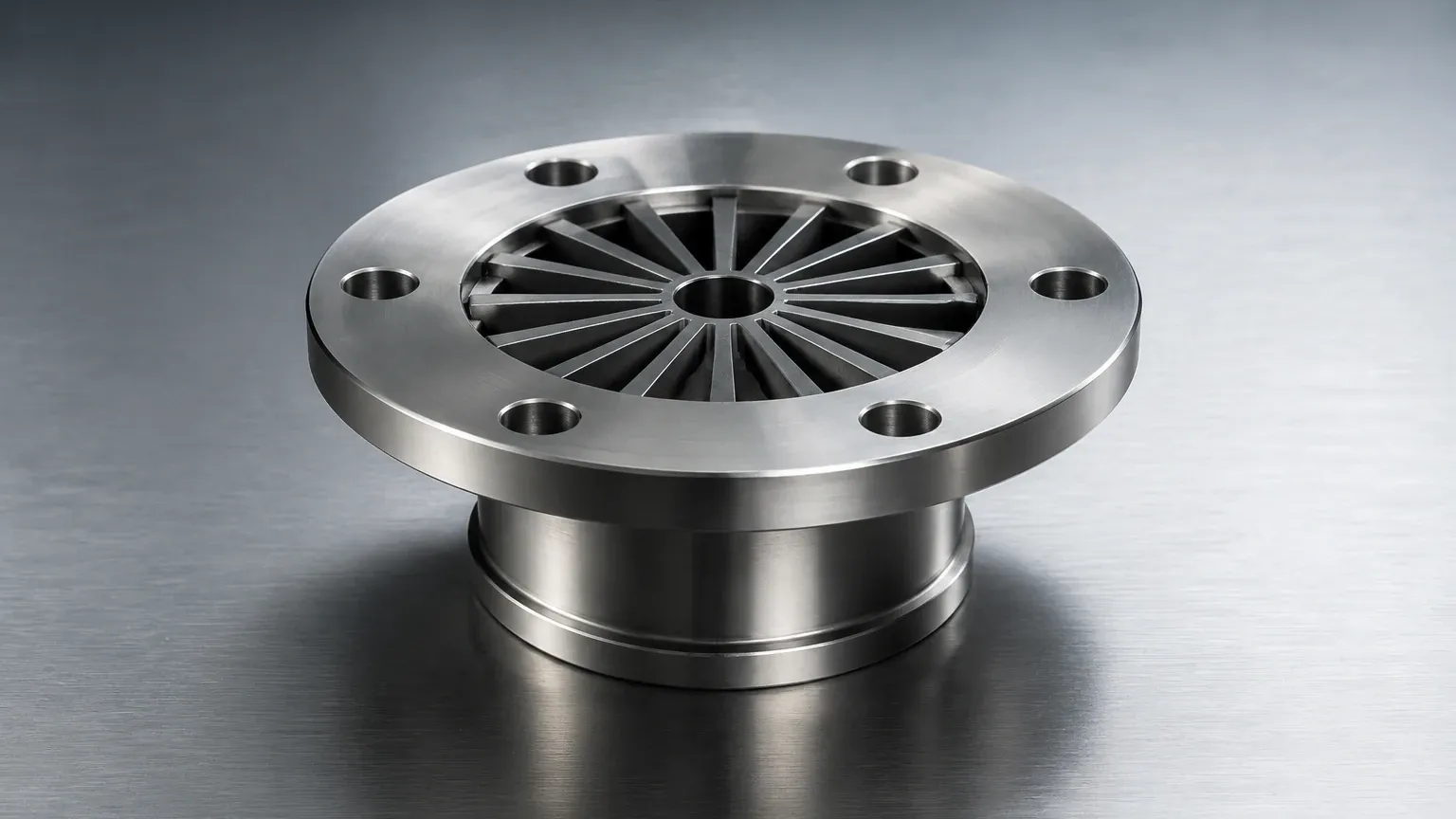
In industrial fluid handling and process control, the accuracy of measurement instrumentation is heavily dependent on the state of the fluid as it passes through the sensor. One of the most significant challenges engineers face is turbulent or swirling flow, which can lead to erratic readings and premature wear on equipment. The fs200 flow straightener is a critical component designed to address these issues by normalizing the velocity profile of a fluid within a pipeline. By transforming chaotic, non-uniform flow into a predictable, linear stream, this device ensures that flow meters and level sensors operate within their specified accuracy tolerances.
Fundamental Principles of Flow Conditioning
To understand the necessity of the fs200 flow straightener, one must first examine the behavior of fluids in industrial piping. When a liquid or gas travels through a straight section of pipe for a sufficient distance, it develops what is known as a "fully developed flow profile." In this state, the velocity is highest at the center of the pipe and gradually decreases toward the walls due to friction, forming a symmetrical parabolic shape.
However, industrial facilities rarely have the luxury of long, uninterrupted pipe runs. Bends, elbows, T-junctions, valves, and pumps introduce disturbances. These disturbances typically manifest in two forms:
1. Velocity Profile Distortion: Where the bulk of the fluid moves toward one side of the pipe, often caused by a single elbow.
2. Swirl or Vorticity: Where the fluid rotates around the longitudinal axis of the pipe, often caused by two or more elbows in different planes.
Most measurement technologies, particularly turbine, vortex, and ultrasonic meters, assume a symmetrical flow profile. Swirl can cause a turbine meter to over-spin or under-spin, while profile distortion can cause ultrasonic path timings to become unbalanced. The fs200 flow straightener works by passing the fluid through a series of parallel channels or a perforated plate system. This mechanical intervention breaks up large-scale vortices and redistributes the kinetic energy, forcing the fluid into a parallel stream and significantly reducing the length of straight pipe required before the instrument.
Technical Specifications and Design of the FS200
The fs200 flow straightener is typically engineered as a tube-bundle or a vane-style conditioner. Its design is optimized to balance the need for flow correction with the requirement to minimize permanent pressure loss (PPL).
Material Construction
In most B2B industrial applications, the FS200 is manufactured from high-grade alloys to withstand corrosive environments and high pressures. Common materials include:
* Stainless Steel 304/316L: Standard for water treatment and general chemical applications.
* Carbon Steel: Used in oil and gas applications where corrosion is managed via inhibitors.
* Hastelloy or Monel: Reserved for highly aggressive chemical processing.
Mechanical Configurations
| Feature | Specification |
| :— | :— |
| Nominal Diameters | DN50 (2") to DN600 (24") standard; custom sizes available |
| Pressure Ratings | PN10, PN16, PN40, or ANSI Class 150/300/600 |
| Connection Type | Flanged (DIN/ANSI), Wafer, or Butt-weld |
| Temperature Range | -50°C to +450°C (depending on material) |
| Standard Compliance | ISO 5167, ASME MFC-3M |
The internal geometry of the fs200 flow straightener usually consists of a bundle of 19 or more tubes welded into a housing. This configuration is particularly effective at eliminating swirl, which is often the most difficult disturbance to mitigate using straight pipe alone.
Selection Criteria for Flow Straighteners in Industrial Processes
Choosing the correct flow conditioner involves more than matching the pipe diameter. Engineers must evaluate the specific nature of the disturbance and the requirements of the downstream instrument.
1. Type of Disturbance: If the primary issue is swirl (e.g., after a centrifugal pump or out-of-plane elbows), a tube-bundle style FS200 is highly effective. If the issue is primarily velocity profile distortion, a perforated plate conditioner might be considered, though it often results in a higher pressure drop.
2. Allowable Pressure Drop: Every flow straightener introduces a restriction. In gravity-fed systems or low-pressure lines, the pressure loss across the fs200 flow straightener must be calculated to ensure it does not impede the process or cause cavitation in pumps.
3. Fluid Properties: The FS200 is best suited for clean liquids or gases. In applications involving slurries, fibers, or high-viscosity fluids, the small channels within the straightener can become clogged, leading to maintenance headaches and increased pressure loss.
4. Instrument Sensitivity: High-precision meters with narrow accuracy bands (e.g., ±0.5%) require more rigorous flow conditioning than basic indicators. For those integrating these components into broader measurement systems, reviewing product options and application support on the Main Page can help clarify which level and flow instruments benefit most from stabilized flow profiles.
Installation Guidelines and Straight-Run Requirements
The primary motivation for installing an fs200 flow straightener is to reduce the "footprint" of the measurement station. Without a conditioner, some meters require 20 to 50 pipe diameters (D) of straight run upstream to achieve their rated accuracy.
Recommended Placement
* Upstream Distance: The FS200 is typically installed between the source of the disturbance (the elbow or valve) and the flow meter. A common configuration is to place the straightener 2D to 5D downstream of the disturbance, and then allow another 5D to 10D of straight pipe between the straightener and the meter.
* Alignment: It is critical that the straightener is perfectly centered within the pipe. Misalignment or protruding gaskets can create new disturbances (eddies) that negate the benefits of the device.
* Orientation: For tube-bundle designs, the orientation is generally not sensitive to rotation, but the flow direction must strictly follow the arrow indicated on the housing.
Typical Straight-Run Reduction Table
| Disturbance Type | Without FS200 (Req. Run) | With FS200 (Req. Run) |
| :— | :— | :— |
| Single 90° Elbow | 20D | 10D |
| Two 90° Elbows (Out-of-Plane) | 50D | 15D |
| Partially Open Globe Valve | 40D | 12D |
| Centrifugal Pump | 50D+ | 20D |
The Impact of Flow Stability on Level and Flow Measurement Accuracy
While flow straighteners are most commonly associated with flow meters, they play a secondary but vital role in level measurement applications, particularly in dynamic tank environments. In many industrial processes, liquid is continuously pumped into or out of a vessel while level measurement is occurring.
If the inflow is turbulent or enters at a high velocity without conditioning, it can create surface ripples, foam, or internal currents. For ultrasonic and radar level sensors, a turbulent surface can scatter the signal, leading to "lost echoes" or fluctuating readings. By using an fs200 flow straightener in the inlet piping, the fluid enters the tank with less kinetic energy and a more uniform velocity, which helps maintain a calm surface. This is especially important for hydrostatic level transmitters, where turbulent currents can cause localized pressure fluctuations that the sensor interprets as changes in liquid level.
In chemical processing and water treatment, where Welk instruments are frequently deployed, ensuring that the fluid state is controlled before it reaches the sensor is a hallmark of good engineering practice. Reliable measurement starts with a stable process environment.
Maintenance, Limitations, and Operational Risks
Despite their benefits, fs200 flow straighteners are not "set and forget" components. They require periodic inspection and an understanding of their physical limits.
Limitations
* Permanent Pressure Loss (PPL): The energy required to straighten the flow comes from the fluid's pressure. In high-velocity systems, this loss can be significant. Engineers should use the Darcy-Weisbach equation to estimate the head loss across the device.
* Solids and Fouling: If the process fluid contains debris, the FS200 acts as a strainer. This will eventually lead to a total blockage or a distorted flow profile that is worse than the original turbulence.
* Cavitation Risk: If the pressure drop across the straightener is large enough to pull the local pressure below the fluid's vapor pressure, cavitation bubbles will form. This can erode the straightener and the downstream meter.
Maintenance Checklist
1. Differential Pressure Monitoring: Installing pressure gauges upstream and downstream of the FS200 allows operators to detect clogging. An increase in differential pressure is a clear indicator that the device needs cleaning.
2. Visual Inspection: During scheduled shutdowns, the internal vanes or tubes should be inspected for erosion, corrosion, or the buildup of scale.
3. Gasket Integrity: Ensure that gaskets have not slipped into the flow path, as this is a common source of secondary turbulence.
Frequently Asked Questions (FAQ)
Q: Can an FS200 flow straightener replace the need for all straight pipe runs?
A: No. While it significantly reduces the required distance, a flow meter still needs a short section of straight pipe (usually 5D to 10D) after the straightener to allow the micro-turbulence from the device's own vanes to settle.
Q: Is the FS200 suitable for gas applications?
A: Yes, the fs200 flow straightener is highly effective in gas lines, particularly before large-scale orifice plates or ultrasonic gas meters where swirl can cause significant billing errors in custody transfer.
Q: How do I calculate the pressure drop for my specific flow rate?
A: Pressure drop is a function of the fluid density, the square of the velocity, and the resistance coefficient (K-factor) of the straightener. Most manufacturers provide K-factors for their specific FS200 models to facilitate these calculations.
Q: Can I install the straightener vertically?
A: Yes, the FS200 functions independently of gravity. However, in vertical-down flow, ensure the pipe remains full to avoid air pockets which could disrupt the flow profile.
Conclusion
The fs200 flow straightener is an indispensable tool for the modern process engineer. By mitigating the negative effects of piping geometry, it allows for more compact plant designs without sacrificing the accuracy of critical measurement data. Whether you are managing a water treatment facility, a chemical plant, or an automated industrial line, the integration of flow conditioning ensures that your sensors provide the reliable data necessary for efficient operation. For more information on selecting the right instrumentation to pair with your flow conditioning solutions, explore the comprehensive resources available on the Main Page.