Fuel Level Switch
Fuel Level Switch
In industrial automation and process control, the reliable detection of fuel levels is critical for operational safety, inventory management, and equipment protection. A fuel level switch is a point-level detection device designed to trigger an alarm or control action when the fuel reaches a specific height within a tank or vessel. Whether used for high-level overflow prevention or low-level pump protection, selecting the correct technology requires a deep understanding of the physical properties of the fuel and the mechanical constraints of the storage system.
Welk, a professional manufacturer of industrial level measurement instruments, provides a comprehensive range of solutions tailored for these demanding environments. From diesel storage in power generation to jet fuel management in aviation, the choice of a fuel level switch impacts the long-term reliability of the entire system. This guide explores the underlying measurement principles, selection criteria, and installation best practices for engineering professionals.
Measurement Principles of Fuel Level Switches
Before selecting a specific model, it is essential to understand how different technologies interact with liquid fuels. Fuels are generally non-conductive hydrocarbon fluids with specific dielectric constants and viscosities that influence sensor performance.
Float-Operated Switches
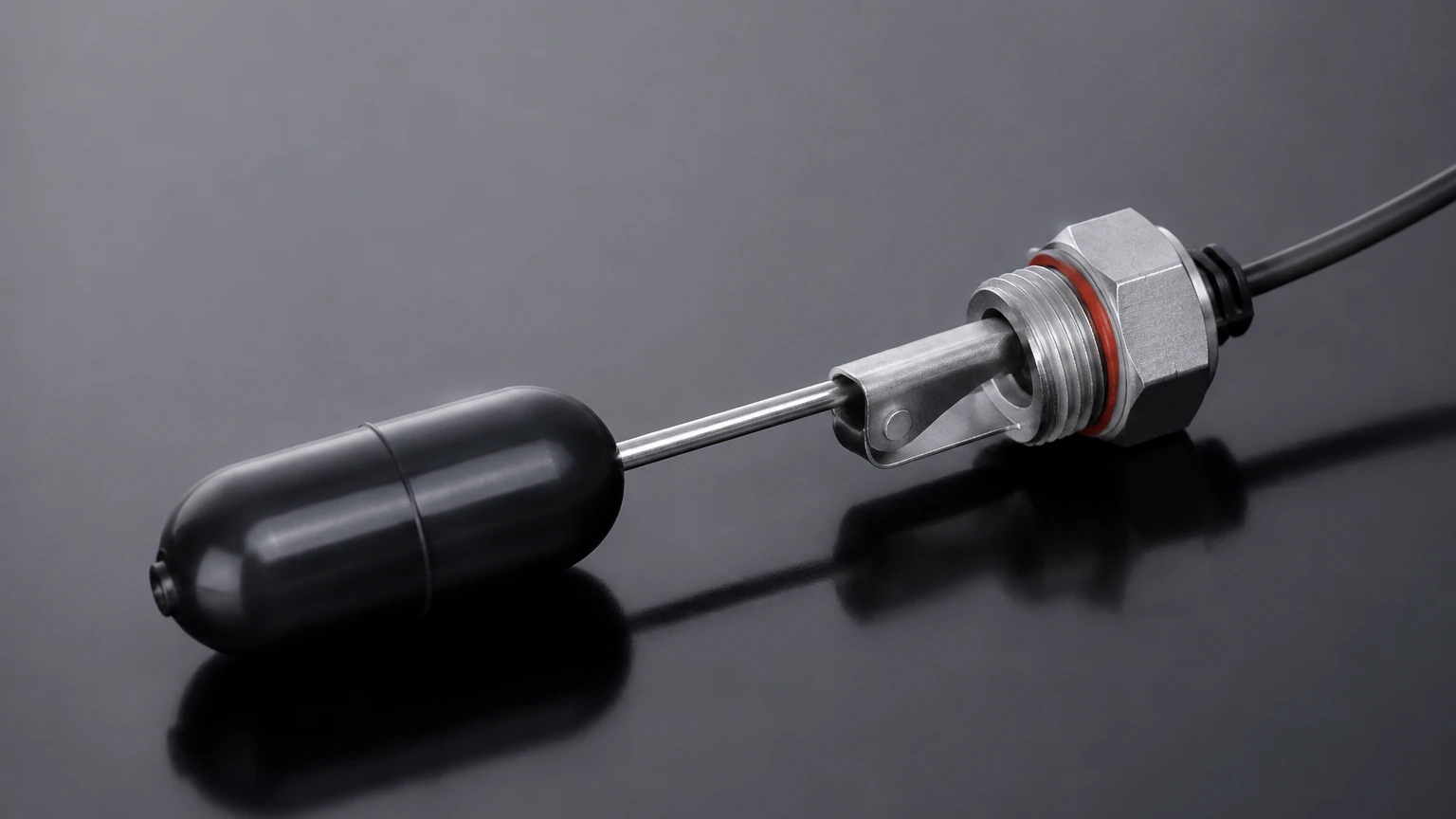
The float-operated fuel level switch is the most traditional and widely used technology due to its simplicity and low cost. It operates on the principle of buoyancy. A float, containing an internal magnet, moves vertically along a stem as the fuel level rises or falls. Inside the stem, a hermetically sealed reed switch is positioned at the desired set point. When the magnet in the float aligns with the reed switch, the magnetic field closes (or opens) the circuit.
* Advantages: No power supply required for the sensing element; highly reliable for clean fuels.
* Considerations: Moving parts are susceptible to sticking if the fuel contains heavy waxes or contaminants.
Capacitance Level Switches
Capacitance switches operate by measuring the change in electrical capacitance between a sensing probe and the tank wall (or a reference ground). Because fuels have a much lower dielectric constant (typically εr 1.9 to 2.2) compared to water (εr ≈ 80), the sensor must be sensitive enough to detect the presence of the hydrocarbon. When the fuel covers the probe, the capacitance increases, triggering the switch.
* Advantages: No moving parts; suitable for high-pressure and high-temperature environments.
* Considerations: Requires calibration to the specific fuel type; performance can be affected by significant moisture content in the fuel.
Vibrating Fork (Tuning Fork) Switches
This technology utilizes a fork-shaped sensing element that is vibrated at its natural resonant frequency by piezoelectric crystals. When the fork is immersed in fuel, the frequency changes due to the density of the liquid. The internal electronics detect this frequency shift and convert it into a switching signal.
* Advantages: Highly resistant to turbulence, bubbles, and foam; virtually maintenance-free.
* Considerations: Generally more expensive than float switches; requires a power source for the electronics.
Optical Level Switches
Optical switches use an infrared LED and a light receiver housed within a prism-shaped tip. When the tip is in the air, the infrared light is reflected internally within the prism back to the receiver. When the tip is submerged in fuel, the light is refracted into the liquid, causing the receiver to detect a loss of signal.
* Advantages: Extremely compact; ideal for small tanks and leak detection in double-walled pipes.
* Considerations: Not suitable for fuels that leave a thick, opaque coating on the sensor tip.
Technical Selection Criteria for Industrial Applications
Choosing the right fuel level switch involves more than just selecting a measurement principle. Engineers must evaluate the specific chemical and physical environment of the application.
1. Fuel Compatibility and Material Selection
Fuels such as diesel, gasoline, and kerosene can be chemically aggressive toward certain polymers. Standard materials for fuel switches include Stainless Steel 316L for the wetted parts and NBR (Nitrile Butadiene Rubber) or FKM (Viton) for seals. For aggressive biofuels or additives, specialized coatings may be required.
2. Explosion-Proof Requirements
Since fuels are flammable, the level switch must often comply with hazardous area certifications such as ATEX, IECEx, or UL/CSA. This involves using intrinsically safe (IS) circuits or explosion-proof (Ex d) housings to prevent any electrical spark from igniting the fuel vapors.
3. Process Pressure and Temperature
Standard atmospheric storage tanks may only require low-pressure ratings. However, fuel systems in heavy machinery or pressurized fuel lines may operate at pressures exceeding 10 bar (145 psi) and temperatures ranging from -40°C to +150°C. Ensure the switch housing and seals are rated for these extremes.
4. Mounting Configuration
* Top Mounting: Common for float and ultrasonic switches. Requires access to the top of the tank.
* Side Mounting: Ideal for high/low-level alarms where top access is restricted. Often uses horizontal float or vibrating fork designs.
* Bottom Mounting: Occasionally used for low-level detection, though it is prone to sediment buildup.
Selection Table: Comparing Switch Technologies
| Technology | Best For | Max Temp (Typical) | Pressure Rating | Viscosity Limit |
| :— | :— | :— | :— | :— |
| Float Switch | Clean diesel, cost-effective | 120°C | Up to 30 bar | Low |
| Vibrating Fork | Turbulent tanks, foam | 150°C | Up to 64 bar | Up to 10,000 cP |
| Capacitance | High-temp, non-coating fuels | 200°C+ | Up to 100 bar | Medium |
| Optical | Small tanks, leak detection | 85°C | Up to 25 bar | Low |
For a detailed look at specific models and technical datasheets, engineers can Review product options and application support to find the optimal fit for their infrastructure.
Installation and Maintenance Guidelines
Proper installation is the primary factor in the longevity of a fuel level switch. Even the highest quality instrument from Welk can fail if installed incorrectly.
Mechanical Installation
1. Avoid Turbulence: Do not install the switch directly beneath a fuel fill line. The force of the incoming liquid can damage floats or cause false triggers in vibrating forks. Use a stilling well if turbulence is unavoidable.
2. Clearance: For float switches, ensure there is sufficient clearance from the tank wall and internal baffles (typically a minimum of 50 mm) to prevent the float from snagging.
3. Orientation: Ensure horizontal switches are leveled according to the manufacturer’s markings (usually an arrow indicating "Top").
Electrical Wiring
* Cable Glands: Use certified explosion-proof cable glands in hazardous areas to maintain the integrity of the housing.
* Inductive Loads: If the switch is directly controlling a pump or motor, use an intermediate relay. Reed switches in float sensors are sensitive to current spikes and can weld shut if overloaded.
* Grounding: Ensure the instrument housing is properly grounded to prevent static buildup, which is a significant risk in fuel handling.
Maintenance
While many modern switches like the vibrating fork are "maintenance-free," periodic inspections are recommended. For float switches, check for sediment accumulation or "varnishing" from old fuel that might impede movement. For capacitance probes, ensure no moisture or conductive sludge has bridged the insulation.
Environmental and Operational Limitations
No single fuel level switch is universal. Understanding the limitations of each technology prevents operational downtime.
* Coating and Buildup: If a fuel is prone to leaving heavy deposits (like crude oil or heavy fuel oil), float switches and optical sensors may fail. Vibrating forks with "coating rejection" logic or heavy-duty capacitance probes are preferred here.
* Dielectric Variability: If the tank is used for different types of fuel (e.g., switching between diesel and biodiesel), a capacitance switch may require re-calibration because the dielectric constant changes.
* Interface Issues: In many fuel tanks, water settles at the bottom. A standard fuel level switch may not distinguish between fuel and water. Specialized interface switches are required if the goal is to detect the water-fuel boundary.
Frequently Asked Questions (FAQ)
Q: Can I use a water level switch for fuel?
A: Generally, no. Many water level switches use plastic components (like PVC) that degrade when exposed to hydrocarbons. Additionally, fuel has a lower density than water, meaning a float designed for water may not be buoyant enough to rise in fuel.
Q: How do I test a fuel level switch without filling the tank?
A: For float switches, most have a manual test lever or can be tested by removing the unit and moving the float by hand. For electronic switches (vibrating fork/capacitance), many Welk models feature a magnetic test point on the housing that simulates a liquid-present state when a magnet is held against it.
Q: What is the difference between an NPN and PNP output for electronic switches?
A: This refers to the type of transistor switching. PNP switches output a positive voltage (usually +24V) when triggered, while NPN switches pull the load to ground (0V). The choice depends on the PLC or controller you are connecting to.
Q: Is a fuel level switch the same as a fuel level transmitter?
A: No. A switch provides a discrete "on/off" signal at a specific point (point-level). A transmitter provides a continuous signal (e.g., 4-20mA or RS485) representing the exact percentage or height of the fuel in the tank. For continuous monitoring, visit the Main Page to view our range of radar and ultrasonic transmitters.
Conclusion
The selection of a fuel level switch is a critical decision in industrial system design. By matching the measurement principle—whether float, capacitance, or vibrating fork—to the specific properties of the fuel and the mechanical constraints of the tank, engineers can ensure high reliability and safety. Welk continues to lead the industry by providing robust, certified measurement solutions that stand up to the rigors of chemical and oil and gas applications. When specifying your next system, prioritize material compatibility and hazardous area certifications to ensure a long-lasting and compliant installation.