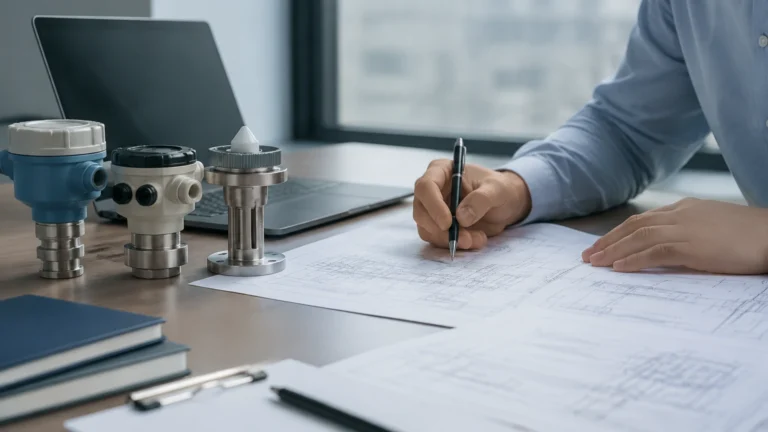
Gas Pressure Sensors
Gas Pressure Sensors
In the landscape of industrial automation and process control, gas pressure sensors serve as fundamental components for ensuring safety, efficiency, and precision. Whether monitoring the pressure within a chemical reactor, managing the airflow in HVAC systems, or compensating for headspace pressure in a sealed storage tank, these instruments provide the critical data required for real-time decision-making. For engineers and procurement specialists, selecting the appropriate gas pressure sensor requires a deep understanding of sensing principles, environmental constraints, and the specific requirements of the application.
As a professional manufacturer of industrial measurement instruments, Welk provides a range of solutions that integrate seamlessly with broader level and pressure monitoring systems. Understanding how these sensors function is the first step toward optimizing industrial performance.
Understanding Gas Pressure Measurement Principles
Before selecting a sensor, it is essential to understand the physical principles that allow an instrument to convert gas pressure into a measurable electrical signal. Most modern gas pressure sensors rely on the displacement or deformation of a sensing element, typically a diaphragm, which is then translated into data through various transduction methods.
Piezoresistive Sensing
Piezoresistive sensors are among the most common types used for gas applications. They utilize a diaphragm with integrated strain gauges. When gas pressure is applied to the diaphragm, it causes a physical deformation that changes the electrical resistance of the strain gauges. This change is measured using a Wheatstone bridge circuit. These sensors are highly sensitive and robust, making them suitable for a wide range of industrial gases at low to medium pressures.
Capacitive Sensing
Capacitive gas pressure sensors measure the change in electrical capacitance between a flexible diaphragm and a fixed backplate. As pressure moves the diaphragm, the distance between the plates changes, altering the capacitance. These sensors are known for their high accuracy and stability, particularly in low-pressure applications. They are also less sensitive to temperature fluctuations compared to some piezoresistive models.
Resonant Sensing
Resonant sensors use the change in the resonant frequency of a vibrating element (such as a silicon string or cylinder) to determine pressure. As pressure increases, the tension on the vibrating element changes, shifting its frequency. This method provides extremely high precision and long-term stability, often used in laboratory settings or high-stakes industrial processes where drift must be minimized.
The Role of Gas Pressure Sensors in Industrial Level Measurement
While gas pressure sensors are stand-alone instruments, they are frequently used in conjunction with level measurement technologies. In the context of the solutions found on the Main Page, gas pressure monitoring is often a critical component of hydrostatic level measurement in pressurized vessels.
In an open tank, a hydrostatic level transmitter measures the pressure exerted by the liquid column to determine the height. However, in a closed or pressurized tank, the gas in the headspace (the "blanket gas") exerts additional pressure on the liquid surface. To obtain an accurate level reading, the gas pressure must be measured and subtracted from the total pressure measured at the bottom of the tank. This is typically achieved using a differential pressure transmitter or two independent gas pressure sensors. Without accurate gas pressure compensation, the level reading would be significantly higher than the actual volume, leading to potential overflows or process errors.
Key Evaluation Criteria for Industrial Gas Pressure Sensors
Selecting the right sensor involves more than just matching a pressure range. Engineers must evaluate several technical parameters to ensure the instrument survives the process environment and provides reliable data.
1. Pressure Type:
* Gauge Pressure: Measured relative to atmospheric pressure. Used for most standard vented tank applications.
* Absolute Pressure: Measured relative to a perfect vacuum. Essential for processes affected by changes in barometric pressure or vacuum systems.
* Differential Pressure: Measures the difference between two pressure points. Critical for filter monitoring and pressurized tank level measurement.
2. Media Compatibility:
Gases can be inert (like Nitrogen), corrosive (like Chlorine), or flammable (like Hydrogen). The wetted materials of the sensor—typically 316L stainless steel, Hastelloy, or ceramic—must be compatible with the specific gas to prevent corrosion or sensor failure.
3. Accuracy and Linearity:
Standard industrial sensors typically offer accuracy between 0.1% and 0.5% of the full scale. High-precision applications may require 0.05% accuracy. It is also important to consider the "turndown ratio," which defines the range over which the sensor maintains its specified accuracy.
4. Output Signals:
In modern industrial plants, the 4-20 mA analog signal remains the standard due to its noise immunity. However, digital protocols such as HART, Modbus RS485, or Profibus are increasingly used to provide diagnostic data and easier calibration.
Comparison of Gas Pressure Sensing Technologies
The following table provides a general comparison of common sensing technologies used in industrial gas applications.
| Feature | Piezoresistive | Capacitive | Thin Film | Ceramic Thick Film |
| :— | :— | :— | :— | :— |
| Typical Accuracy | 0.25% to 0.5% | 0.075% to 0.1% | 0.5% | 0.5% to 1.0% |
| Pressure Range | Wide (mbar to 1000 bar) | Low to Medium | High (up to 2000 bar) | Medium |
| Stability | Moderate | High | High | Moderate |
| Corrosion Resistance | Depends on diaphragm | Excellent | Good | Excellent |
| Best Use Case | General Purpose | Precision/Low Pressure | High Pressure/Hydraulic | Corrosive Gases |
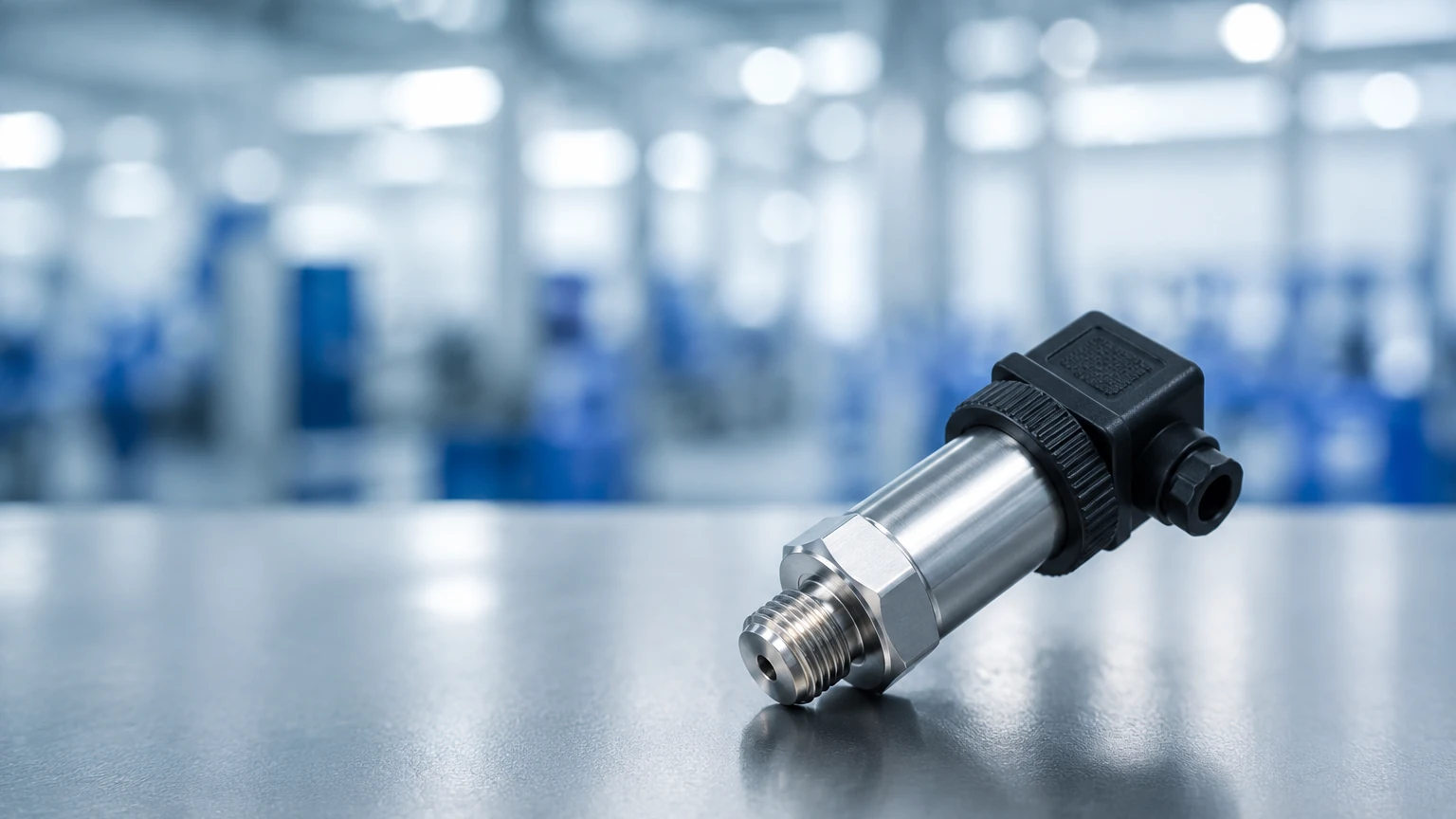
Installation Guidelines and Best Practices
Even the most accurate gas pressure sensor will fail to perform if installed incorrectly. Proper installation ensures the longevity of the device and the integrity of the signal.
* Mounting Orientation: For gas applications, sensors should ideally be mounted above the process tap. This allows any condensate or moisture in the gas line to drain back into the process rather than pooling on the sensor diaphragm, which could cause measurement errors or damage.
* Impulse Piping: The lines connecting the process to the sensor should be as short as possible to minimize lag. For high-temperature gases, a siphon or cooling tower should be used to protect the sensor electronics from heat damage.
* Isolation and Venting: Always install a block-and-bleed valve manifold. This allows the sensor to be isolated from the process and vented to the atmosphere for zero-point calibration without shutting down the entire system.
* Environmental Protection: In outdoor installations, sensors should be shielded from direct sunlight to prevent thermal drift. While most industrial sensors have built-in temperature compensation, extreme fluctuations can still impact accuracy.
Limitations and Operational Risks
Engineers must be aware of the inherent limitations of gas pressure sensors to avoid common pitfalls in the field.
Temperature Sensitivity: Gases are highly compressible and their pressure is directly related to temperature (as described by the Ideal Gas Law). Rapid temperature changes in the process can cause pressure spikes that are not related to volume changes. Sensors must be selected with adequate temperature compensation ranges.
Overpressure and Spikes: Sudden valve closures or pump starts can create pressure surges. If these surges exceed the sensor's "proof pressure," the diaphragm may be permanently deformed. Choosing a sensor with a high overpressure rating (typically 2x to 4x the rated range) is a standard safety measure.
Moisture and Condensation: In many gas systems, moisture is a significant risk. If gas cools within the sensor housing or impulse lines, it can condense. In freezing environments, this moisture can freeze and rupture the diaphragm. Heat tracing or the use of moisture traps is often necessary in these applications.
Frequently Asked Questions
Q: How often should gas pressure sensors be calibrated?
A: Calibration frequency depends on the criticality of the process and the stability of the sensor. For most industrial applications, an annual calibration check is standard. However, in highly regulated industries like pharmaceuticals or oil and gas, semi-annual calibration may be required.
Q: Can a liquid pressure sensor be used for gas?
A: While the internal sensing technology is often the same, the housing and port design may differ. Gas sensors are designed to prevent moisture buildup. Using a sensor designed specifically for liquids in a gas application may lead to issues with condensate accumulation.
Q: What is the difference between a pressure transmitter and a pressure transducer?
A: In common industrial parlance, a transducer typically outputs a voltage signal (e.g., 0-10V), while a transmitter outputs a current signal (e.g., 4-20mA). Transmitters are preferred for long-distance transmission because the current signal does not degrade over the length of the wire.
Conclusion
Gas pressure sensors are indispensable tools in the modern industrial toolkit. By understanding the underlying measurement principles—whether piezoresistive or capacitive—and carefully evaluating the environmental demands of the application, engineers can ensure long-term reliability. Whether used for direct process control or as a vital component in pressurized level measurement systems, these sensors provide the data necessary to maintain safe and efficient operations. For those seeking comprehensive measurement solutions, reviewing the diverse range of technologies on the Main Page can provide further insight into how pressure and level instruments work together to optimize industrial automation.