Gauge Pressure Transducer
Gauge Pressure Transducer
In the landscape of industrial instrumentation, the gauge pressure transducer serves as a fundamental component for monitoring process variables. Unlike absolute pressure sensors that measure against a vacuum, a gauge pressure transducer measures pressure relative to the local atmospheric pressure. This characteristic makes it the primary choice for applications where the process interacts with the surrounding environment, such as open-tank level measurement, pneumatic systems, and hydraulic monitoring.
For engineers and plant managers, understanding the nuances of how these devices function, their selection criteria, and their installation requirements is essential for maintaining system accuracy and longevity. This guide provides a technical overview of gauge pressure transducers, with a focus on their application in industrial level and process control.
Understanding the Measurement Principle
The fundamental principle of a gauge pressure transducer is the comparison of two pressures. The sensor contains a sensing element—typically a diaphragm—where one side is exposed to the process media and the other side is vented to the atmosphere.
Mathematically, gauge pressure ($P_g$) is expressed as:
$$P_g = P_s – P_{atm}$$
Where:
* $P_s$ is the system or process pressure.
* $P_{atm}$ is the local atmospheric pressure.
Because the sensor is vented to the atmosphere, any changes in barometric pressure caused by weather patterns or changes in altitude are automatically compensated for. If the atmospheric pressure rises, it exerts more force on the back of the diaphragm; however, since that same atmospheric pressure is also acting on the surface of the liquid or gas being measured, the two forces cancel each other out. This ensures that the transducer only reports the pressure generated by the process itself.
Hydrostatic Level Measurement Connection
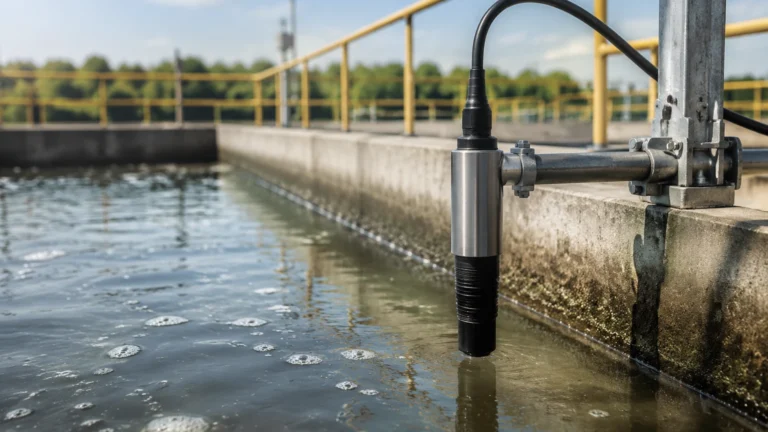
One of the most common uses for a gauge pressure transducer is hydrostatic level measurement. In an atmospheric (open) tank, the pressure at the bottom of the tank is directly proportional to the height of the liquid column. The formula used is:
$$P = \rho \cdot g \cdot h$$
Where:
* $P$ is the hydrostatic pressure (measured by the transducer).
* $\rho$ (rho) is the density of the liquid (kg/m³).
* $g$ is the gravitational constant (approx. 9.81 m/s²).
* $h$ is the height of the liquid (meters).
By using a gauge pressure transducer, the instrument ignores the air pressure pressing down on the liquid surface, providing an accurate reading of the liquid level ($h$). For professionals seeking high-quality instrumentation for these applications, manufacturers like Welk offer specialized Main Page resources to assist in selecting the correct sensor configuration.
Core Technologies in Pressure Sensing
Industrial transducers utilize several different technologies to convert mechanical displacement into an electrical signal. The choice of technology impacts the sensor's accuracy, thermal stability, and chemical resistance.
Piezoresistive Sensors
Piezoresistive transducers are among the most common in the water treatment and oil and gas industries. They utilize a silicon-based strain gauge diffused onto a diaphragm. When pressure is applied, the diaphragm flexes, changing the electrical resistance of the silicon.
* Advantages: High sensitivity, excellent linearity, and compact size.
* Limitations: Sensitive to temperature fluctuations, requiring internal compensation circuits.
Ceramic Capacitive Sensors
In these devices, a ceramic diaphragm acts as one plate of a capacitor. As pressure moves the diaphragm closer to a fixed ceramic substrate, the capacitance changes.
* Advantages: Extremely rugged, high overpressure resistance, and excellent compatibility with corrosive chemicals.
* Limitations: Generally larger in diameter than piezoresistive equivalents.
Strain Gauge Transducers
These use metal foil or thin-film strain gauges bonded to a metal diaphragm (often Stainless Steel 316L). As the diaphragm deforms, the resistance of the foil changes.
* Advantages: Very stable over long periods, suitable for high-pressure applications (up to 1000 bar or more).
* Limitations: Lower signal output compared to piezoresistive types, often requiring more complex amplification.
Technical Comparison: Gauge vs. Absolute Pressure
Choosing between a gauge pressure transducer and an absolute pressure transducer depends entirely on the reference point required by the process.
| Feature | Gauge Pressure Transducer | Absolute Pressure Transducer |
| :— | :— | :— |
| Reference Point | Local Atmospheric Pressure | Full Vacuum (0 PSIA) |
| Venting | Required (via vent tube or hole) | Sealed internal chamber |
| Weather Sensitivity | None (self-compensating) | High (reads barometric changes) |
| Typical Use | Tank level, pump discharge | Altitude, vacuum distillation |
| Standard Units | barg, psig | bara, psia |
Selecting a Gauge Pressure Transducer for Industrial Applications
When specifying a transducer, engineers must evaluate several environmental and process factors to ensure reliable data.
1. Material Compatibility and Media
The "wetted parts" of the transducer must be chemically compatible with the media.
* Water/Wastewater: 316L Stainless Steel is standard.
* Seawater/Brine: Duplex stainless steel or Titanium is preferred to prevent pitting.
* Corrosive Chemicals: Hastelloy-C or PTFE-coated diaphragms are necessary for acids and bases.
2. Pressure Range and Overpressure
The selected range should typically be 1.5 to 2 times the maximum expected operating pressure. This provides a safety margin for "water hammer" or pressure surges. Most industrial transducers from providers like Welk include an overpressure rating (e.g., 200% or 300% of the full scale) to prevent diaphragm rupture during system upsets.
3. Electrical Output and Integration
Modern industrial automation relies on standardized signals:
* 4-20mA (2-wire): The industry standard for long-distance transmission with high noise immunity.
* 0.5-4.5V Ratiometric: Common in automotive and OEM machinery.
* Digital (HART, RS485/Modbus): Allows for remote configuration and diagnostic feedback.
4. Accuracy Classes
Accuracy is usually defined as a percentage of the Full Scale (FS). Common industrial grades include:
* Standard: 0.5% FS
* High Precision: 0.25% or 0.1% FS
* Laboratory Grade: 0.05% FS
Installation and Maintenance Best Practices
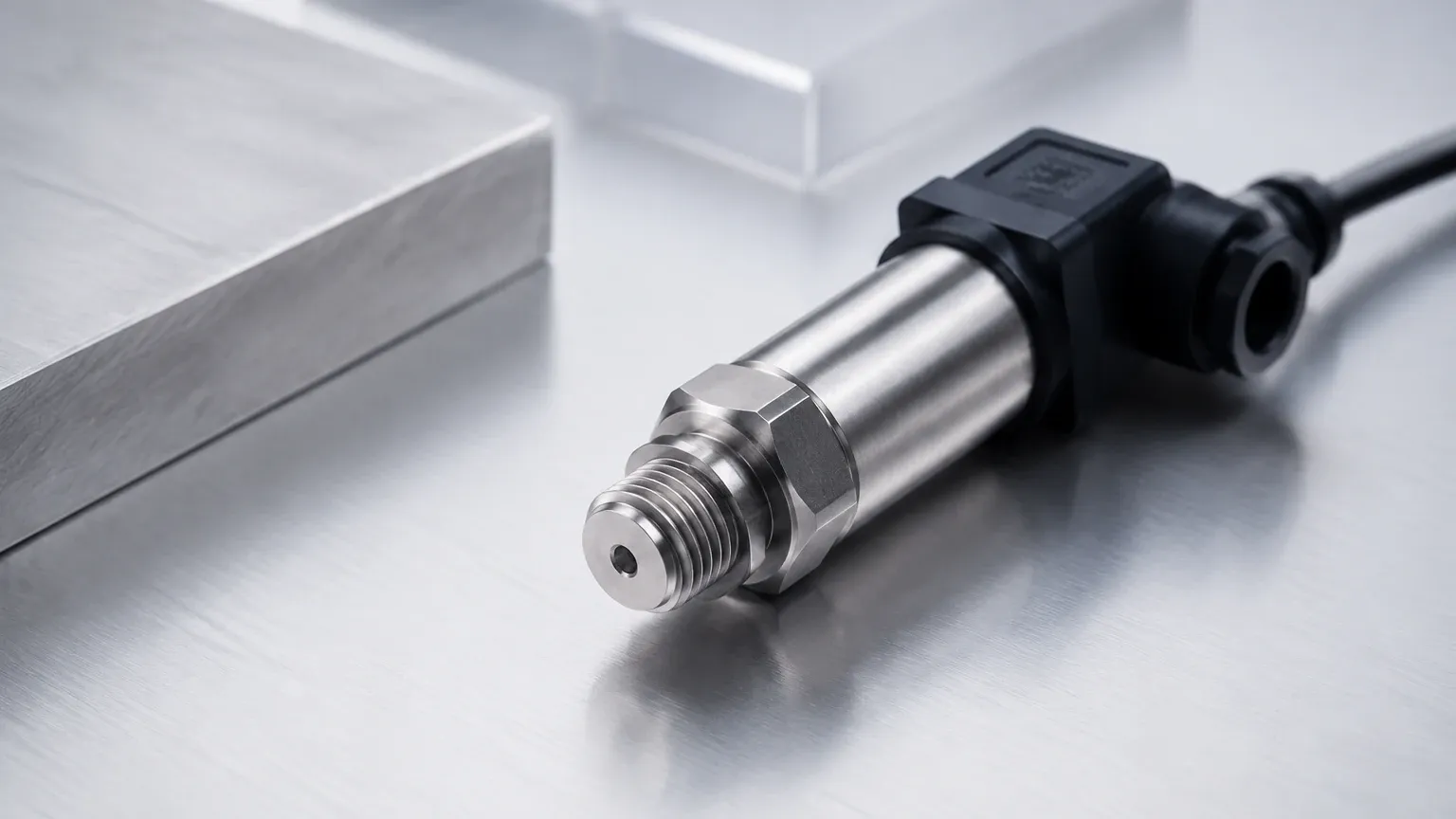
Proper installation is as critical as the sensor selection itself. A high-quality gauge pressure transducer will provide inaccurate data if installed incorrectly.
Preventing Moisture Ingress in Vent Tubes
For gauge pressure transducers, especially submersible hydrostatic level sensors, the vent tube is the most vulnerable point. This tube allows the sensor to "breathe" and reference the atmosphere. If moisture or condensation enters this tube, it can block the air path or damage the internal electronics.
* Solution: Use a desiccant filter or a specialized bellows at the end of the vent tube. Ensure the vent terminates in a dry, protected junction box.
Mounting Positions
While most transducers can be mounted in any orientation, the weight of the diaphragm can cause a "zero shift" in very low-pressure ranges (e.g., 0-50 mbar). It is best practice to calibrate the zero point after the sensor is installed in its final orientation.
Thermal Considerations
If measuring steam or high-temperature liquids, use a siphon or capillary tube to isolate the transducer from the heat. Most sensors are rated for media temperatures up to 80°C or 100°C; exceeding this can cause permanent drift or failure of the sensing element.
Limitations and Common Risks
Despite their versatility, gauge pressure transducers have specific limitations:
1. Vacuum Applications: While some gauge sensors can measure "vacuum gauge" (negative pressure relative to atmosphere), they are not suitable for high-vacuum processes where an absolute pressure sensor is required.
2. High Altitude Fluctuations: In extremely high-altitude locations with rapid weather shifts, the venting mechanism must be clear and unobstructed. Any lag in atmospheric equalization will result in measurement error.
3. Clogging: In wastewater or slurries, the pressure port can become blocked. In these cases, a flush-diaphragm design should be selected instead of a recessed port.
Frequently Asked Questions
Q: Can I use a gauge pressure transducer in a pressurized tank?
A: No. If the tank is pressurized (sealed), a single gauge pressure transducer will measure the sum of the liquid head and the gas blanket pressure. To measure the liquid level in a pressurized tank, you must use a differential pressure (DP) transmitter to subtract the headspace pressure from the total bottom pressure.
Q: How often should I calibrate my transducer?
A: For most industrial applications, an annual calibration check is recommended. However, in critical chemical processes or high-vibration environments, semi-annual checks may be necessary to ensure the "zero" and "span" remain within the specified accuracy limits.
Q: What is the difference between a transducer and a transmitter?
A: In technical terms, a *transducer* converts pressure into a basic electrical signal (like millivolts), while a *transmitter* amplifies and conditions that signal into a standard industrial format like 4-20mA or a digital protocol. In common B2B conversation, the terms are often used interchangeably.
Conclusion
The gauge pressure transducer remains a cornerstone of industrial process control. By referencing the local atmosphere, these devices provide the most practical and cost-effective means of monitoring pressure and level in the vast majority of industrial scenarios. Whether you are managing a municipal water facility or a complex chemical plant, selecting a device with the appropriate sensing technology and material specifications is the first step toward operational efficiency.
For technical assistance and a comprehensive range of measurement solutions, including radar and ultrasonic alternatives, visit the Welk Main Page to consult with application engineers and review detailed product specifications.