Pmd75b
Pmd75b
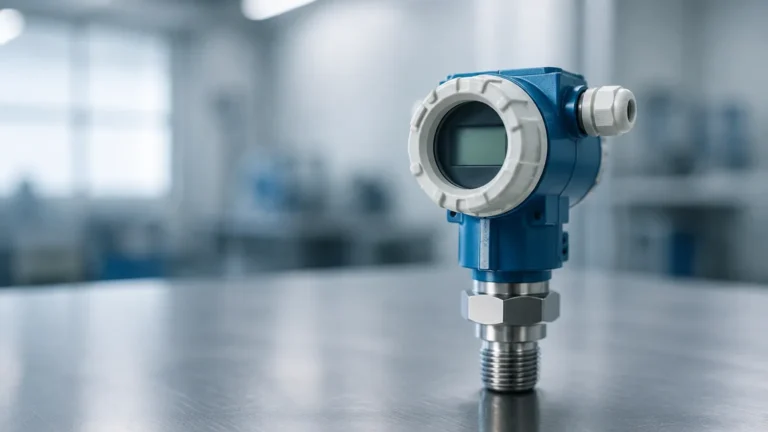
In the landscape of industrial process automation, precise pressure and level measurement are fundamental to operational safety and efficiency. The PMD75B represents a significant advancement in differential pressure (DP) transmitter technology. As a digital transmitter, it is designed to measure the pressure difference between two points in a process, which can then be used to calculate fluid level, volume, mass, or flow rate. This article provides a comprehensive technical overview of the PMD75B, its underlying measurement principles, application scenarios, and critical selection criteria for engineering professionals.
Understanding Differential Pressure Measurement Principles
Before evaluating the specific capabilities of the PMD75B, it is essential to understand the physics of differential pressure measurement. In level applications, differential pressure transmitters utilize the principle of hydrostatic pressure.
Hydrostatic Level Measurement
In an open tank, the level of a liquid is directly proportional to the pressure exerted by the liquid column at the bottom of the vessel. The formula used is:
P = ρ × g × h
Where:
* P is the hydrostatic pressure.
* ρ (rho) is the density of the liquid (kg/m³).
* g is the gravitational constant (approx. 9.81 m/s²).
* h is the height of the liquid column (m).
Differential Pressure in Closed Vessels
In closed or pressurized vessels, the total pressure at the bottom of the tank is the sum of the liquid's hydrostatic pressure and the gas-phase pressure (head pressure) above the liquid. To isolate the liquid level, a DP transmitter like the PMD75B measures the pressure at the bottom (high-pressure side) and subtracts the head pressure measured at the top (low-pressure side).
This subtraction isolates the hydrostatic pressure component, allowing for an accurate calculation of the liquid height regardless of changes in the vessel's internal pressure. The PMD75B utilizes high-precision sensor cells—often piezoresistive or metallic bellows—to detect these minute pressure variations and convert them into a standardized digital signal.
Key Features and Technical Specifications of the PMD75B
The PMD75B is engineered for high-performance environments where reliability and data integrity are paramount. It belongs to a class of "smart" transmitters that integrate advanced diagnostics and communication protocols.
Sensor Technology and Accuracy
Modern DP transmitters utilize metal membranes or ceramic cells. The PMD75B typically employs a metal membrane designed to withstand significant overpressure events without losing calibration. Its reference accuracy can reach up to ±0.035% of the set span, making it suitable for custody transfer and high-precision chemical dosing.
Digital Communication and Integration
The unit supports various industrial communication standards, including:
* 4-20 mA HART: The industry standard for transmitting a primary variable while allowing for digital configuration.
* PROFIBUS PA / FOUNDATION Fieldbus: For fully digital plant architectures.
* Bluetooth Connectivity: Modern iterations allow for wireless commissioning and maintenance via mobile devices, reducing the need for physical access in hazardous areas.
Safety and Diagnostics
For critical applications in the oil and gas or chemical sectors, the PMD75B is often developed according to IEC 61508 standards, achieving SIL2 or SIL3 (in redundant configurations) functional safety ratings. Internal diagnostic features, such as "Heartbeat Technology," provide continuous self-monitoring of the sensor and electronics, detecting drift or hardware failures before they result in process downtime.
Applications in Industrial Level and Flow Monitoring
The versatility of the PMD75B allows it to be deployed across a wide range of industrial sectors. Its primary use cases involve the measurement of liquids, gases, and steam.
Level Measurement in Pressurized Tanks
In chemical processing, many reagents are stored under a nitrogen blanket or at elevated pressures. The PMD75B is the preferred choice for these vessels because it compensates for the blanket pressure. It is frequently used in distillation columns, reactors, and liquefied gas storage.
Flow Measurement via Primary Elements
Beyond level, the PMD75B is widely used for flow measurement. By measuring the pressure drop across a primary element (such as an orifice plate, Venturi tube, or Pitot tube), the transmitter can calculate the flow rate of a fluid. This is based on Bernoulli's principle, where the square root of the differential pressure is proportional to the flow velocity.
Filter Monitoring
In water treatment and HVAC systems, the PMD75B monitors the pressure drop across filters. A rising differential pressure indicates that the filter is becoming clogged, triggering automated backwash cycles or maintenance alerts.
Selection Guide: When to Choose DP Transmitters
Choosing the right level measurement technology requires a comparison of DP transmitters against other common methods like radar or ultrasonic sensors. For a broader look at available technologies, engineers often Review product options and application support to ensure the best fit for their specific environment.
Technology Comparison Table
| Feature | PMD75B (Differential Pressure) | Radar Level Meter | Ultrasonic Level Sensor |
| :— | :— | :— | :— |
| Measurement Type | Contacting (Pressure) | Non-contacting (Time-of-Flight) | Non-contacting (Sound Waves) |
| Media Influence | Affected by density changes | Affected by dielectric constant | Affected by air temp/vapor |
| Vessel Type | Best for pressurized tanks | Excellent for all tanks | Best for open/sump tanks |
| Installation | Requires process penetrations | Top-mounted | Top-mounted |
| Accuracy | Very High (±0.035%) | High (±1mm to ±3mm) | Moderate (±0.25% of range) |
| Cost | Moderate to High | High | Low to Moderate |
Practical Selection Criteria
1. Fluid Density: If the liquid density is constant, DP measurement is exceptionally reliable. If density fluctuates significantly (e.g., due to temperature swings), compensation via a secondary temperature sensor or a multivariable transmitter may be required.
2. Process Temperature: For extremely high temperatures, DP transmitters can be coupled with diaphragm seals and capillary lines to isolate the electronics from the heat.
3. Chemical Compatibility: The wetted parts (membranes and flanges) must be compatible with the process media. Options typically include 316L Stainless Steel, Hastelloy, or Tantalum.

Installation Guidelines for Optimal Performance
The accuracy of a PMD75B is heavily dependent on correct installation. Unlike non-contacting sensors, DP transmitters require careful plumbing of impulse lines.
Impulse Line Configuration
Impulse lines are the small-diameter pipes that carry the process pressure to the transmitter.
* Gas Measurement: The transmitter should be mounted above the tapping point so that any condensate drains back into the process pipe.
* Liquid Measurement: The transmitter should be mounted below the tapping point to ensure the impulse lines remain full of liquid and air bubbles can escape upward.
Use of Manifolds
A 3-valve or 5-valve manifold is essential for the PMD75B. These valve blocks allow the operator to isolate the transmitter from the process, equalize the pressure for zero-point calibration, and bleed off trapped air or fluid without shutting down the entire system.
Wet Leg vs. Dry Leg
In level applications for closed tanks:
* Dry Leg: Used when the gas above the liquid does not condense at ambient temperatures. The low-pressure impulse line remains filled with gas.
* Wet Leg: Used when the gas is likely to condense (e.g., steam). The low-pressure line is intentionally filled with a reference liquid to prevent erratic readings caused by random condensation.
Limitations and Operational Challenges
While the PMD75B is a robust instrument, certain conditions can limit its effectiveness:
1. Density Variations: Since the transmitter measures weight (pressure), any change in liquid density—caused by temperature changes or concentration shifts—will be interpreted as a change in level unless compensated.
2. Clogging and Sediment: In applications with high solids content or slurries, impulse lines can become plugged. In these cases, a remote diaphragm seal (flat membrane) is recommended over standard impulse piping.
3. Mechanical Vibration: Although the PMD75B is designed for industrial use, extreme vibration can affect the sensitive electronics and the integrity of the impulse line connections. Proper mounting brackets and flexible conduits are necessary in high-vibration environments.
4. Zero Drift: Over time, all pressure sensors experience minor zero-point drift. Regular verification and calibration cycles are required to maintain the stated accuracy.
Frequently Asked Questions (FAQ)
Q: Can the PMD75B be used for interface measurement?
A: Yes. If two immiscible liquids with different densities are in a tank (e.g., oil and water), the DP transmitter can measure the interface level, provided the total level remains above the top tapping point.
Q: What is the difference between the PMD75B and a standard hydrostatic transmitter?
A: A standard hydrostatic transmitter usually has one pressure port and measures gauge pressure (relative to atmosphere). The PMD75B has two ports and measures the difference between them, which is necessary for pressurized tanks.
Q: How often should the PMD75B be calibrated?
A: This depends on the criticality of the process. In many regulated industries, an annual calibration check is standard. However, units equipped with advanced diagnostics may allow for extended calibration intervals based on the device's internal health reports.
Q: Does the PMD75B require a power supply?
A: Yes, it is a loop-powered device, typically requiring 10.5 to 35 VDC for a standard 4-20mA HART configuration.
Q: Can it measure vacuum?
A: Yes, the PMD75B is capable of measuring differential pressure in vacuum applications, though special care must be taken when selecting filling oils for diaphragm seals to prevent outgassing.
For engineers seeking reliable level measurement solutions, understanding the specific technical nuances of the PMD75B is the first step toward successful system integration. For further technical specifications and to explore a full range of industrial level instruments, visit the Main Page for expert guidance and product selection.