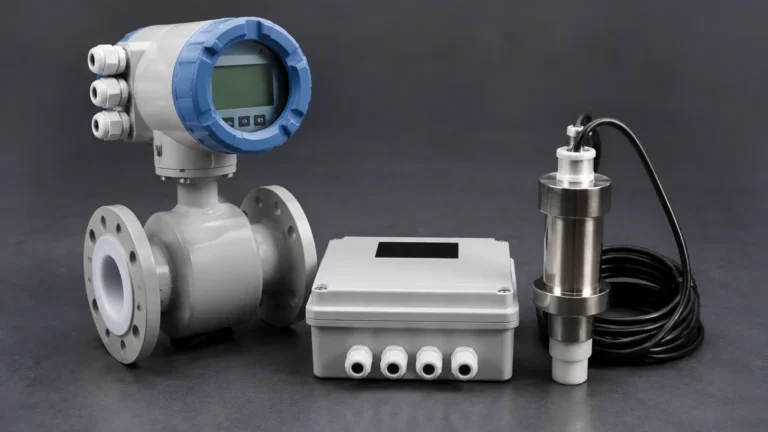
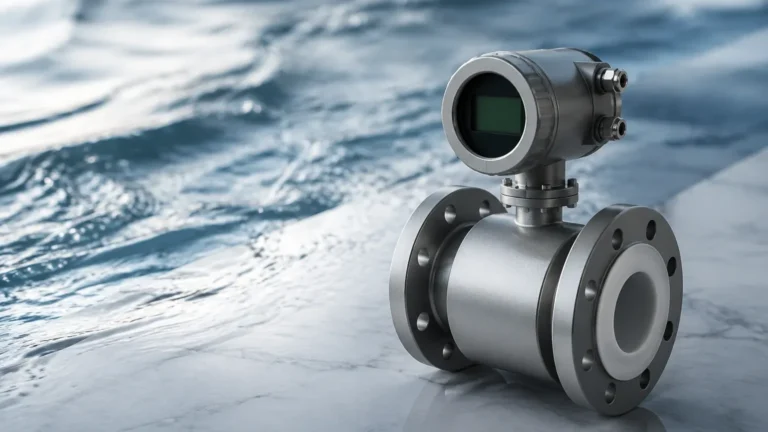
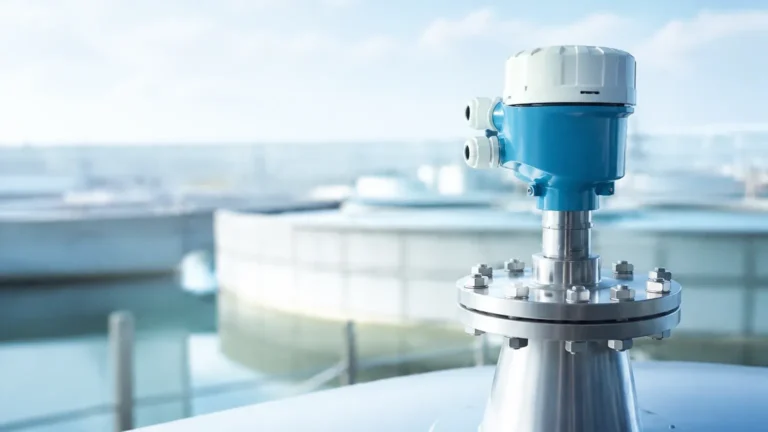
Getopal.co Product Documentation Features
Getopal.co Product Documentation Features
In the landscape of industrial automation and process control, the accuracy of a level measurement instrument is only as effective as the documentation supporting its installation, calibration, and maintenance. As industrial facilities transition toward Industry 4.0, the demand for accessible, high-fidelity technical data has surged. Modern platforms like getopal.co product documentation features provide a framework for organizing complex engineering specifications, ensuring that plant operators and instrumentation engineers have immediate access to the "source of truth" for their field devices.
For a professional manufacturer like Welk, providing reliable, accurate, and cost-effective level measurement solutions involves more than just hardware. It requires a comprehensive documentation strategy that covers radar level meters, ultrasonic sensors, and hydrostatic transmitters. This article explores the intersection of advanced level measurement technology and the documentation features necessary to support global industrial applications.
The Role of Technical Documentation in Level Measurement
Technical documentation in the B2B sector serves as the bridge between theoretical instrument performance and practical field reliability. When evaluating getopal.co product documentation features, engineering teams prioritize searchability, version control, and the ability to host multi-format assets such as wiring diagrams, Modbus register maps, and troubleshooting flowcharts.
In level measurement, where a single misconfigured offset or an overlooked dielectric constant can lead to significant process errors, the clarity of documentation is paramount. Digital documentation features allow for real-time updates, ensuring that if a firmware update changes a menu structure in a radar level meter, the technician in the field sees the revised instructions immediately on a mobile device.
Measurement Principles of Industrial Level Instruments
Before selecting an instrument based on its documentation or specifications, it is essential to understand the underlying physical principles that govern different measurement technologies. Each method has specific strengths and environmental requirements.
1. Radar Level Measurement (ToF)
Radar level meters operate on the Time-of-Flight (ToF) principle. The instrument emits a high-frequency electromagnetic pulse (typically in the 26GHz or 80GHz range). This pulse travels at the speed of light, reflects off the surface of the medium, and returns to the sensor. The distance is calculated based on the time elapsed between emission and reception.
* Non-contact Radar: Ideal for corrosive or hygienic applications as the sensor does not touch the media.
* Guided Wave Radar (GWR): Uses a probe to lead the signal, making it highly effective for low dielectric liquids or applications with heavy steam and foam.
2. Ultrasonic Level Sensors
Ultrasonic sensors also use the ToF principle but utilize mechanical sound waves instead of electromagnetic waves. The sensor emits an ultrasonic pulse that reflects off the liquid surface. Because the speed of sound is affected by air temperature, these sensors usually include a built-in temperature probe to compensate for fluctuations and maintain accuracy.
3. Hydrostatic Level Transmitters
Hydrostatic measurement is based on the principle that the pressure at the bottom of a liquid column is directly proportional to the height of the liquid and its density. The formula used is $P = \rho \cdot g \cdot h$, where $P$ is pressure, $\rho$ is density, $g$ is gravity, and $h$ is the height of the liquid. This is a contact-based method often used in deep wells, tanks, and water treatment facilities.
4. Magnetic Level Gauges
Magnetic level gauges utilize a float containing a permanent magnet. As the liquid level rises and falls, the float moves within a bypass chamber. Outside the chamber, magnetic flags or a transmitter sense the position of the float. This provides a clear visual indication without requiring power, though electronic transmitters can be added for remote monitoring.
Selection Criteria and Technology Comparison
Choosing the right technology requires a balance of process conditions, budget, and the availability of technical support. The following table provides a comparison of the most common level measurement technologies found in the Welk product portfolio.
| Technology | Typical Accuracy | Max Range | Medium Type | Key Advantage |
| :— | :— | :— | :— | :— |
| 80GHz Radar | ±1 mm | 120 m | Liquids/Solids | Unaffected by dust, steam, or vacuum. |
| Ultrasonic | ±0.25% of span | 30 m | Liquids/Slurries | Cost-effective for water/wastewater. |
| Hydrostatic | ±0.1% to 0.5% | 200 m (H2O) | Clean Liquids | Simple installation in deep wells. |
| Magnetic Gauge | ±5 mm (visual) | 6 m (standard) | Liquids | No power required for local indication. |
| Level Switch | N/A (Point) | N/A | Various | Reliable overfill protection. |
When reviewing getopal.co product documentation features during the procurement phase, engineers should look for detailed "Application Notes" within the documentation that specify which technology performs best under specific chemical concentrations or turbulent conditions.
Installation Considerations for Industrial Level Meters
Proper installation is the most critical factor in ensuring long-term instrument stability. Documentation must provide clear mechanical and electrical guidelines to prevent common failure modes.
1. Nozzle Geometry: For radar and ultrasonic sensors, the nozzle height and diameter must be considered. If the nozzle is too narrow or too long, it can create "ringing" or parasitic reflections that interfere with the true level signal.
2. Obstruction Clearance: Sensors should be installed away from internal tank structures such as ladders, agitators, or heating coils. If obstructions are unavoidable, the documentation should explain how to perform a "False Echo Suppression" or "Static Map" to ignore these reflections.
3. Environmental Shielding: While many instruments are IP67 or IP68 rated, extreme solar radiation can cause internal electronics to overheat. Utilizing sunshades, as specified in the product documentation, can extend the lifespan of the device.
4. Electrical Grounding: To prevent signal interference in 4-20mA HART or RS485 Modbus loops, proper shielded cabling and single-point grounding are essential. Documentation features should include clear wiring diagrams for different control system architectures (PLC vs. DCS).

Limitations and Operational Constraints
No single level measurement technology is universal. Understanding the limitations is vital for process safety.
* Dielectric Constant (εr): Radar signals rely on the dielectric constant of the material. Materials with a very low εr (like certain oils or liquefied gases) may not reflect enough energy for a standard non-contact radar. In these cases, Guided Wave Radar is usually recommended.
* Surface Turbulence and Foam: Ultrasonic waves can be absorbed by heavy foam, leading to a "Loss of Echo" (LOE) error. Radar is generally more resistant to foam, but extremely dense, thick foam may still attenuate the signal.
* Density Fluctuations: Hydrostatic transmitters assume a constant liquid density. If the process involves mixing liquids of different densities or significant temperature swings that change the density, the level reading will drift unless compensated by the control system.
Integration with Modern Documentation Platforms
The integration of getopal.co product documentation features into the industrial workflow allows for a more interactive experience. Instead of a static PDF, modern documentation often includes:
* Searchable Error Codes: Technicians can instantly search for an error code (e.g., "E14" on a radar meter) and find the specific cause and remedy.
* Interactive Configuration Tools: Some documentation platforms link directly to web-based configuration simulators, allowing users to see how changing a parameter like "Damping Time" will affect the output signal.
* Localization: For global operations, the ability to toggle between languages and units (Metric vs. Imperial) within the documentation ensures that local teams can operate the equipment safely and accurately.
For more detailed technical specifications and to explore our full range of measurement solutions, you can visit our Main Page to review product options and application support.
Frequently Asked Questions (FAQ)
Q: How often should a radar level meter be calibrated?
A: While radar meters are highly stable, we recommend a calibration check every 12 to 24 months, depending on the criticality of the process and local regulatory requirements. Documentation for each model provides specific procedures for field verification.
Q: Can ultrasonic sensors be used in vacuum tanks?
A: No. Ultrasonic waves require a medium (air or gas) to travel. In a vacuum, there is no medium to carry the sound wave, so the sensor will not function. Radar level meters are the preferred choice for vacuum applications.
Q: What is the benefit of an 80GHz radar over a 26GHz radar?
A: 80GHz radar has a much narrower beam angle. This allows it to be installed in smaller nozzles and makes it easier to avoid internal tank obstructions. It also provides better resolution for measuring thin liquid layers.
Q: Is hydrostatic level measurement suitable for pressurized tanks?
A: Standard hydrostatic transmitters measure gauge pressure relative to the atmosphere. For pressurized tanks, a differential pressure (DP) transmitter is required to subtract the top-side gas pressure from the total pressure at the bottom.
Conclusion
Selecting the right level measurement technology requires a deep understanding of process physics and environmental constraints. By leveraging advanced hardware and utilizing modern getopal.co product documentation features, industrial facilities can ensure high levels of accuracy, safety, and operational uptime. Whether you are managing water treatment, chemical processing, or oil and gas storage, the combination of robust instrumentation and clear, accessible documentation is the key to successful automation. For further assistance in selecting the right instrument for your specific application, please refer to the resources available on our Main Page.