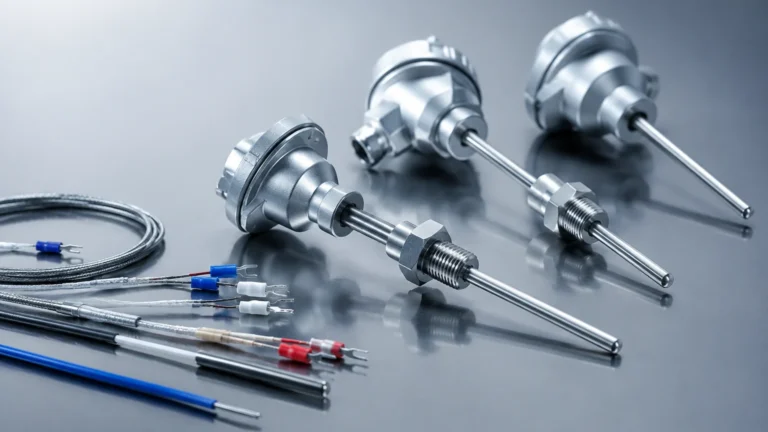
Grain Bin Level Indicator
Grain Bin Level Indicator
In the agricultural and food processing industries, the accurate monitoring of bulk solids is essential for inventory management, operational efficiency, and safety. A grain bin level indicator serves as the primary interface between physical storage and digital management systems. Whether managing small farm silos or large-scale industrial elevators, selecting the correct instrumentation requires an understanding of how different technologies interact with the unique physical properties of grain, such as dust, moisture, and the angle of repose.
As a professional manufacturer of industrial level measurement instruments, Welk provides a range of solutions designed to withstand the rigors of grain storage. For detailed technical specifications on various sensor types, engineers and facility managers can refer to the Main Page of our product documentation.
Measurement Principles for Grain Storage
Before selecting a grain bin level indicator, it is critical to understand the underlying physics of the measurement. Grain is a non-homogeneous bulk solid that presents challenges not found in liquid level measurement. These include high dust concentrations, uneven surface profiles, and varying dielectric constants.
Radar Level Measurement (FMCW and Pulse)
Radar technology is widely considered the gold standard for continuous grain level monitoring. It works by emitting electromagnetic waves toward the grain surface. The time it takes for the wave to reflect back to the sensor (Time of Flight) determines the distance.
* 80GHz High-Frequency Radar: Modern 80GHz radar sensors offer a narrow beam angle (often as small as 3°). This is particularly advantageous in grain bins containing internal structures like ladders, temperature cables, or bracing, as the narrow beam can bypass these obstacles to reach the grain surface.
* Dust Penetration: Unlike light-based or sound-based systems, radar waves are largely unaffected by the heavy dust clouds generated during filling and emptying cycles.
Ultrasonic Level Measurement
Ultrasonic sensors emit high-frequency sound pulses. The sensor measures the time interval between the emission of the pulse and the reception of the echo. While cost-effective, ultrasonic technology has limitations in grain applications. Sound waves can be absorbed by the porous surface of certain grains, and heavy dust can attenuate the signal, leading to "lost echo" errors.
Rotary Paddle Indicators (Point Level)
For simple high-level or low-level detection, the rotary paddle is a mechanical staple. A motor slowly rotates a paddle; when the grain rises to reach the paddle, the resistance stalls the motor, triggering a switch. This is a "point level" measurement rather than a continuous one, meaning it only tells you if the bin is full or empty at a specific height.
Guided Wave Radar (GWR)
Guided wave radar uses a cable or rod probe that extends to the bottom of the bin. The radar pulse travels along the probe. This method is highly accurate and unaffected by dust or bin geometry, but it subjects the bin roof to significant pull-down forces as the grain settles and moves, which must be accounted for in structural engineering.
Key Evaluation Criteria for Grain Bin Level Indicators
Selecting the appropriate grain bin level indicator involves more than just choosing a technology; it requires matching the sensor to the specific environmental conditions of the facility.
1. Dust and Atmospheric Conditions
Grain handling is inherently dusty. During a fill cycle, the interior of a silo can become an opaque environment. Sensors that rely on optical signals (like lasers) or sound (ultrasonic) may struggle. Radar is typically the preferred choice for high-dust environments due to its ability to penetrate airborne particulates.
2. Surface Profile and Angle of Repose
Unlike liquids, which maintain a flat surface, grain forms a cone when filled (angle of repose) and an inverted cone when emptied. A single-point continuous sensor measures the distance to one spot on this cone. Engineers must decide if they want to measure the peak, the valley, or an average. Advanced systems use multiple sensors or 3D scanners to map the entire surface for higher volume accuracy.
3. Dielectric Constant (εr)
The reflectivity of a radar signal depends on the dielectric constant of the material. Most grains (corn, wheat, soybeans) have a relatively low dielectric constant (typically between 2.0 and 5.0). This requires a sensitive receiver and sophisticated signal processing to distinguish the grain surface from the background noise of the bin floor.
4. Structural Integrity and Mounting
Bulk solids exert immense friction and downward force. If using a contact-based indicator like Guided Wave Radar or a diaphragm switch, the sensor must be rated for the tensile loads of the grain. For non-contact sensors, the mounting position is critical to avoid the direct path of the filling stream, which can damage the instrument or cause false readings.
Technical Selection Table
| Technology | Measurement Type | Dust Resistance | Accuracy | Maintenance Level |
| :— | :— | :— | :— | :— |
| 80GHz Radar | Continuous | Excellent | ±2 mm | Low (Non-contact) |
| Ultrasonic | Continuous | Moderate | ±10 mm | Moderate (Transducer cleaning) |
| Rotary Paddle | Point Level | High | N/A | Moderate (Mechanical wear) |
| Guided Wave Radar | Continuous | Excellent | ±3 mm | High (Cable tension) |
| Capacitance | Point/Continuous | Moderate | ±5 mm | Low (Solid state) |
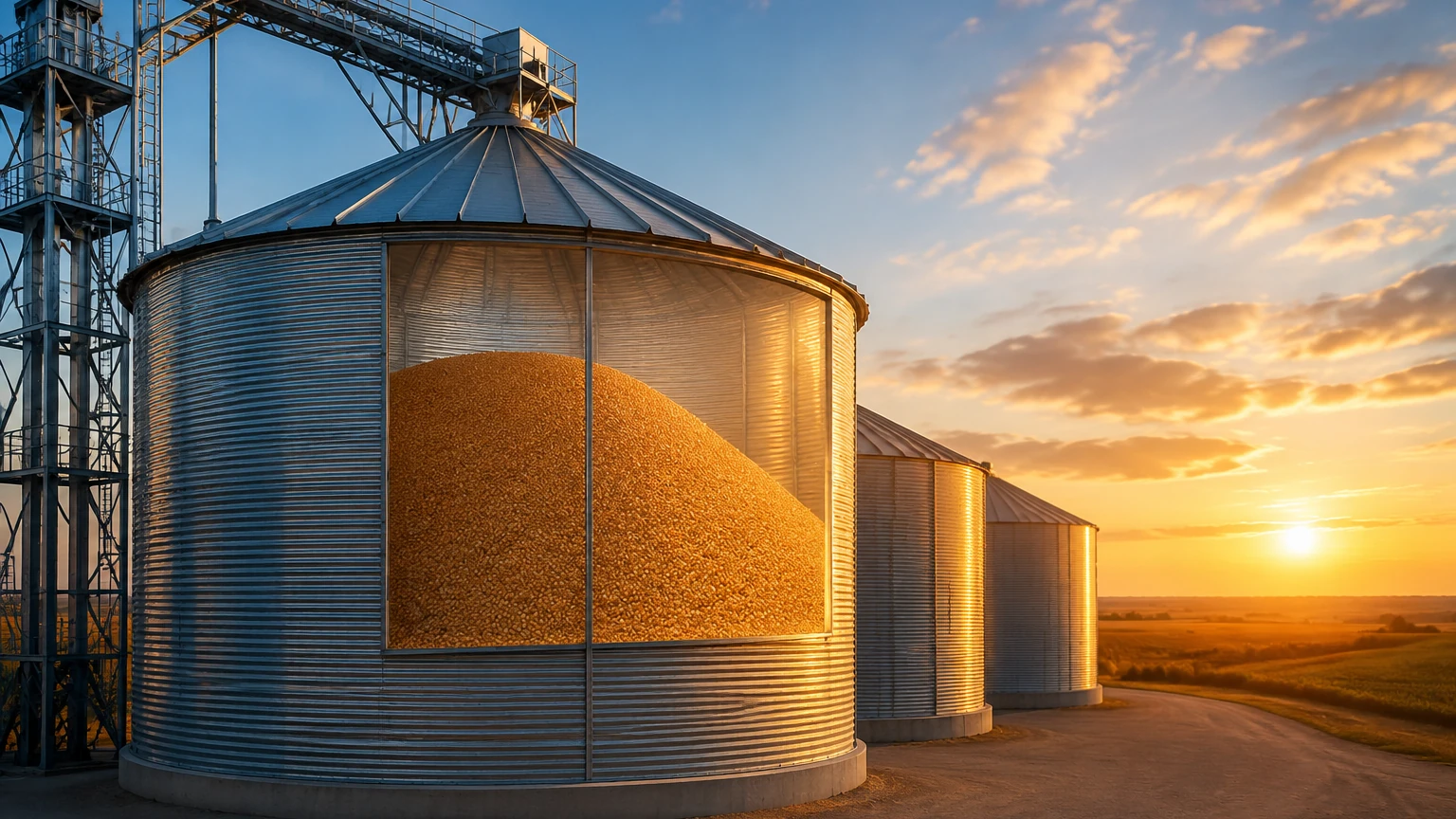
Installation Considerations
Correct installation is as important as the technology itself. For a grain bin level indicator to provide reliable data, several engineering factors must be addressed during the design phase.
* Avoid the Fill Stream: Never mount a sensor directly over the inlet. The falling grain will create constant noise and may physically erode the sensor face or probe over time.
* Beam Angle and Obstructions: For radar and ultrasonic sensors, calculate the "beam spread" at the bottom of the bin. Ensure the signal does not hit the bin wall or internal ladders. A 10-meter (approx. 33 ft) tall bin with a 10° beam angle will have a footprint of approximately 1.7 meters (5.6 ft) at the bottom.
* Mounting Flanges: Use adjustable flanges or aiming kits. Because of the grain's angle of repose, tilting the sensor slightly toward the middle of the grain slope can often improve signal return strength.
* Safety and Explosion Proofing: Grain dust is highly combustible. All electronic level indicators must be appropriately rated (e.g., ATEX/IECEx Zone 20/21 or Class II, Div 1) to prevent them from becoming an ignition source in the event of a dust explosion.
Common Risks and Limitations
While modern instrumentation is highly advanced, certain risks remain in grain level monitoring:
1. Signal Attenuation: In very tall silos (over 30 meters / 98 ft), the signal may weaken significantly by the time it returns to the sensor, especially if the grain has a low dielectric constant. Choosing a high-dynamic-range radar is essential here.
2. Condensation and Caking: Moisture in the grain can lead to condensation on the sensor face. If dust sticks to this moisture, it can create a "crust" that blocks the signal. Sensors with PTFE-coated faces or air-purge connections are recommended for high-moisture applications.
3. Bridging and Rat-holing: Level indicators only measure what is directly beneath them. If the grain "bridges" (sticks to the walls while the center empties), a sensor might report a full bin even though the discharge area is empty. This is a safety hazard and requires secondary verification or multiple sensor points.
Frequently Asked Questions (FAQ)
Q: Can I use one grain bin level indicator for different types of grain?
A: Yes, but the calibration may need adjustment. Different grains have different densities and dielectric constants. Radar sensors are generally the most versatile across different grain types without needing frequent recalibration.
Q: How do I handle the dust during the filling process?
A: The best approach is to use a high-frequency (80GHz) radar level meter. These devices operate at a wavelength that is unaffected by the particle size of grain dust, ensuring continuous measurement even during peak filling.
Q: What is the maintenance schedule for a non-contact radar sensor?
A: Non-contact sensors are generally low-maintenance. We recommend a visual inspection every 6 to 12 months to check for significant dust buildup on the antenna and to ensure the cable glands remain sealed against moisture.
Q: Is a point level switch necessary if I have a continuous radar sensor?
A: In many industrial applications, it is considered best practice to have a mechanical high-level switch (like a rotary paddle) as a redundant backup to the continuous radar. This provides an extra layer of protection against bin overfills in case of a power or signal failure.
For further assistance in selecting the right instrumentation for your specific silo dimensions and grain type, please consult our technical team via the Main Page. Accurate level measurement is the first step toward a fully automated and safe grain handling facility.