Handheld Ph Meters
Handheld Ph Meters
In the landscape of industrial process control and environmental monitoring, the measurement of hydrogen ion activity—commonly known as pH—is as fundamental as the measurement of liquid levels or flow rates. While continuous online sensors provide real-time data for automated systems, handheld pH meters serve as the primary tool for field verification, spot-checking, and laboratory analysis. For engineers and technicians managing water treatment facilities, chemical processing plants, or industrial automation lines, understanding the nuances of portable pH instrumentation is essential for maintaining process integrity.
This guide explores the engineering principles behind handheld pH meters, provides practical selection criteria, and outlines the operational protocols necessary to ensure long-term accuracy in demanding B2B environments.
Fundamental Principles of pH Measurement
pH is a logarithmic scale used to specify the acidity or basicity of an aqueous solution. Mathematically, it is defined as the negative base-10 logarithm of the molar concentration of hydrogen ions (H+). Most industrial handheld pH meters utilize a potentiometric measurement method, which involves measuring the electrical potential difference between two electrodes submerged in the liquid.
The Electrode System
A standard pH measurement system consists of three primary components, often integrated into a single "combination electrode" in modern handheld units:
1. The Measuring Electrode: This features a specialized glass membrane sensitive to hydrogen ions. When immersed, a thin hydrated layer forms on the outside of the glass. The exchange of ions between the solution and this layer creates a millivolt (mV) signal proportional to the pH of the liquid.
2. The Reference Electrode: To measure the potential of the glass electrode, a stable reference point is required. The reference electrode provides a constant voltage, typically using a silver/silver chloride (Ag/AgCl) system housed in a potassium chloride (KCl) electrolyte.
3. Temperature Sensor: Because the electrical potential of the electrode is temperature-dependent (as described by the Nernst Equation), a built-in Resistance Temperature Detector (RTD) or thermistor is used for Automatic Temperature Compensation (ATC).
The Nernst Equation
The relationship between the measured voltage and the pH value is governed by the Nernst Equation. At a standard temperature of 25°C (77°F), a change of one pH unit corresponds to a change of 59.16 mV. As temperatures fluctuate, this "slope" changes, which is why high-quality handheld pH meters must calibrate the slope against known buffer solutions to maintain accuracy.
Comparison of Handheld pH Meters and Online Process Monitoring
In industrial settings, there is often a strategic division between portable instrumentation and fixed-point monitoring. While the Main Page of a process control strategy usually focuses on continuous monitoring of physical parameters like level and pressure, handheld pH meters provide the necessary flexibility for mobile diagnostics.
| Feature | Handheld pH Meters | Online/Fixed Sensors |
| :— | :— | :— |
| Mobility | High; used across multiple sampling points. | Stationary; dedicated to a single tank or pipe. |
| Calibration | Frequent; usually before each shift or use. | Scheduled; often automated or via bypass loops. |
| Power Source | Battery-operated (AA, AAA, or Li-ion). | Hardwired (24V DC or 110/220V AC). |
| Data Integration | Manual logging or Bluetooth/USB export. | Real-time integration via 4-20mA, Modbus, or HART. |
| Primary Use | Validation, spot-checks, and field audits. | Continuous process control and automation. |
For facilities utilizing advanced level measurement solutions to manage chemical storage, handheld pH meters act as a secondary layer of quality control, ensuring that the chemical composition within those tanks remains within specified tolerances.
Key Evaluation Criteria for Industrial Handheld pH Meters
Selecting the right handheld pH meter requires more than just looking at the price point. Industrial applications demand durability and precision that consumer-grade "pen" meters cannot provide.
Accuracy and Resolution
For most industrial applications, an accuracy of ±0.01 pH is standard. However, the resolution (the smallest change the meter can display) should also be considered. A meter with 0.01 resolution is preferred over a 0.1 resolution model for chemical dosing and wastewater compliance.
Durability and Ingress Protection (IP Rating)
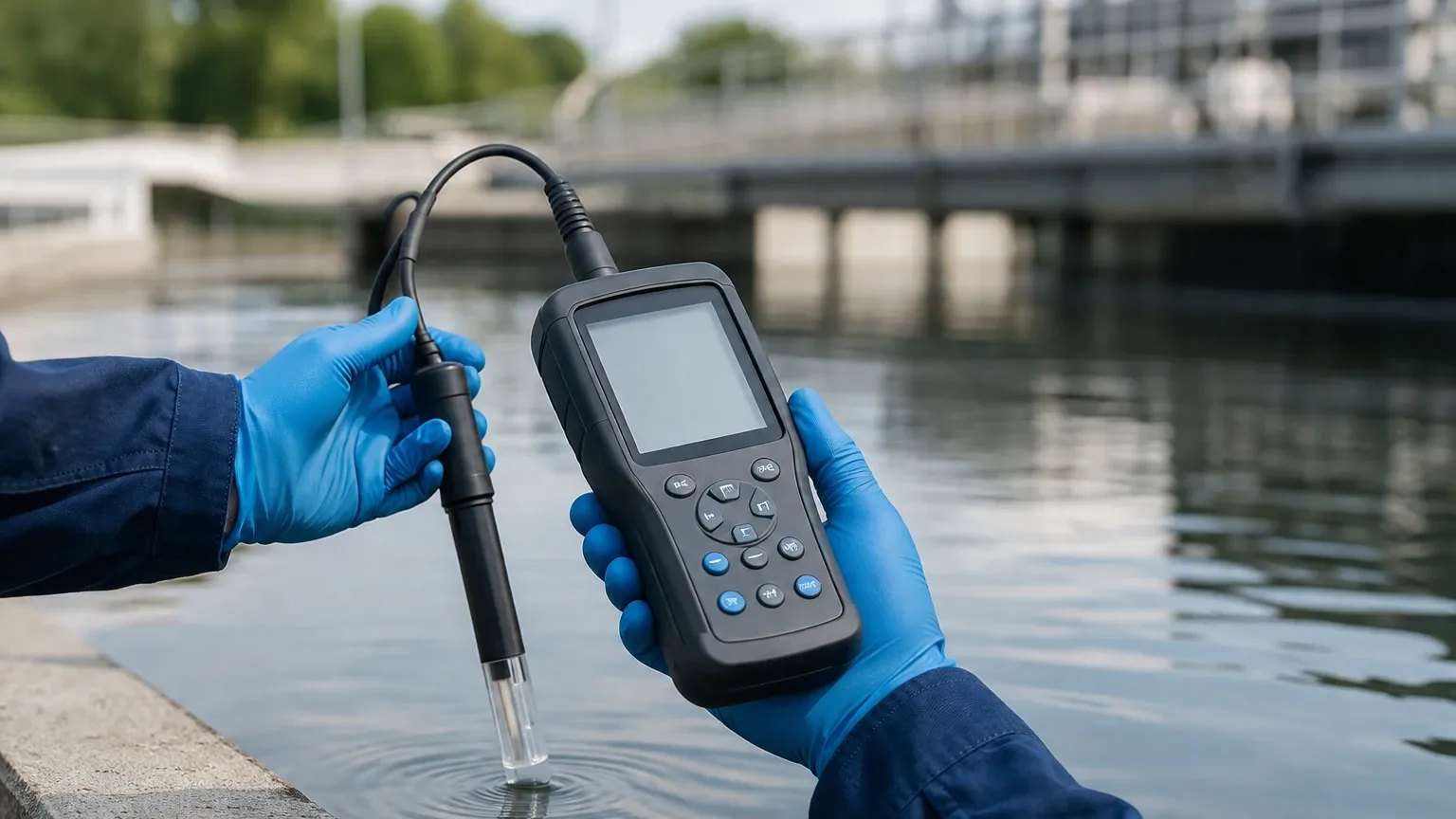
Fieldwork often involves exposure to moisture, dust, and corrosive vapors. Industrial handheld units should ideally possess an IP67 rating, meaning they are dust-tight and can withstand immersion in water up to 1 meter (3.3 feet) for 30 minutes. This ensures the device survives accidental drops into sumps or exposure to heavy rain.
Electrode Type and Replaceability
The electrode is a consumable part. In a B2B context, it is critical to choose meters with replaceable electrodes. Furthermore, the type of junction (the interface between the reference electrolyte and the sample) should match the application:
* Single Junction: Suitable for clean water and general-purpose use.
* Double Junction: Required for samples containing proteins, heavy metals, or sulfides, which can clog or poison a single junction electrode.
* Flat Surface Electrodes: Ideal for measuring pH on solid surfaces or in slurries where a standard bulb might break.
Practical Selection Table for Handheld Units
| Meter Category | Typical Accuracy | Best For | Key Limitation |
| :— | :— | :— | :— |
| Pocket/Pen Type | ±0.1 to ±0.2 pH | Quick screening, cooling towers. | Non-replaceable electrodes often common. |
| Standard Portable | ±0.01 pH | Wastewater, agricultural runoff, general lab. | Requires manual handling of separate probes. |
| Advanced Multi-parameter | ±0.005 pH | High-purity water, chemical manufacturing. | Higher initial investment and calibration complexity. |
| Ruggedized Field Meter | ±0.01 pH | Mining, heavy industrial, remote environmental. | Larger form factor; heavier than standard units. |
Operational Procedures and Maintenance
To maintain the reliability of handheld pH meters, strict adherence to operational protocols is required. Unlike level meters that may operate for years with minimal intervention, pH electrodes are electrochemical sensors that degrade over time.
Calibration Protocols
Calibration should be performed using at least two buffer solutions (typically pH 4.01, 7.00, and 10.01) that bracket the expected range of the sample. In industrial environments, a daily calibration is recommended. Modern meters often feature "Auto-Buffer Recognition," which reduces user error during this process.
Storage and Hydration
The glass membrane of a pH electrode must remain hydrated to function. Never store a pH probe in deionized (DI) or distilled water, as this will leach ions from the reference electrolyte and shorten the sensor's life. Instead, use a dedicated pH storage solution (usually 3M or 4M KCl).
Cleaning Procedures
Contaminants on the electrode surface will cause slow response times and drift. Cleaning agents should be selected based on the contaminant:
* General Scaling: Soak in 0.1M HCl (Hydrochloric Acid).
* Oils and Greases: Use a mild detergent or specialized solvent like ethanol.
* Proteins: Use a pepsin-based cleaning solution.
Limitations and Common Risks in Field Measurement
Even the highest-quality handheld pH meters face limitations in specific industrial environments. Awareness of these risks is vital for data integrity.
1. Sodium Error: In highly alkaline solutions (pH > 12), high concentrations of sodium ions can interfere with the hydrogen ion measurement, leading to a falsely low pH reading. Specialized "low sodium error" glass electrodes are required for these applications.
2. Sample Temperature: While ATC compensates for the electrode's change in sensitivity, it does not account for the actual chemical change in the sample's pH due to temperature. For consistent data, samples should ideally be measured at a consistent reference temperature (e.g., 25°C).
3. Electrical Interference: High-voltage equipment and variable frequency drives (VFDs) can create electromagnetic interference (EMI) that affects the high-impedance signal of the pH electrode. Ensure the handheld meter has adequate shielding when used near heavy machinery.
4. Electrode Aging: A typical pH electrode lasts 6 to 18 months. As it ages, the slope will drop (e.g., from 98% to 85%). Most industrial handheld meters will provide a "Slope" or "Condition" indicator after calibration; once the slope falls below 80-85%, the electrode must be replaced.
Frequently Asked Questions (FAQs)
Q: How often should I calibrate my handheld pH meter?
A: For industrial compliance and process control, daily calibration is recommended. For less critical applications, weekly calibration may suffice, provided the meter is stored correctly.
Q: Can I use one handheld meter for all types of liquids?
A: While the meter body is versatile, the probe must be compatible with the liquid. Highly viscous liquids, abrasive slurries, or samples with high oil content require specialized electrode junctions to prevent clogging.
Q: Why is my pH reading drifting and not stabilizing?
A: This is often caused by a clogged reference junction, an aging electrode, or the buildup of static electricity on the meter's casing. Cleaning the electrode or replacing the electrolyte (if refillable) usually resolves the issue.
Q: Does temperature affect pH readings?
A: Yes, significantly. Temperature affects both the electrical output of the electrode and the chemical equilibrium of the sample. Always use a meter with Automatic Temperature Compensation (ATC) for industrial fieldwork.
Conclusion
Handheld pH meters are indispensable tools for the modern industrial engineer, providing the mobility and precision needed to validate process conditions on the fly. By understanding the electrochemical principles of the sensors, selecting equipment with appropriate IP ratings and electrode types, and maintaining a rigorous calibration schedule, facilities can ensure their chemical processes remain within safe and efficient parameters. While continuous level measurement and process automation remain the backbone of industrial operations—as detailed on the Main Page—the handheld pH meter remains the definitive "boots-on-the-ground" instrument for quality assurance.