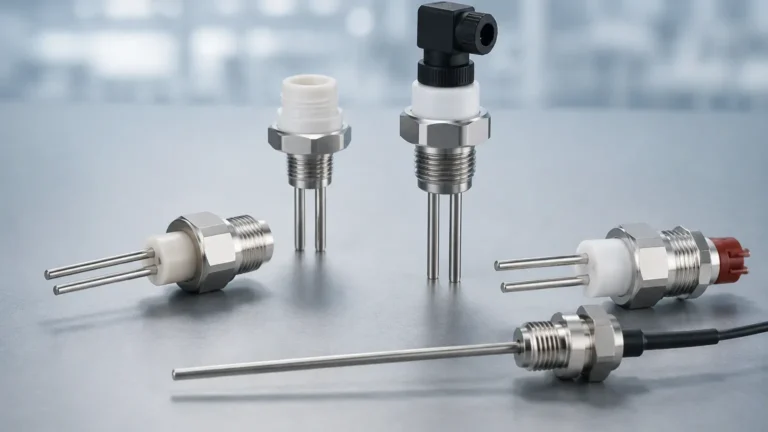
Heeling Pump
Heeling Pump
In the maritime and shipping industries, vessel stability and cargo efficiency are paramount. An essential component in achieving this is the anti-heeling system, at the heart of which lies the heeling pump. These systems are designed to counteract the "list" or tilt of a ship caused by the asymmetrical loading or unloading of heavy cargo, such as containers or vehicles on Ro-Ro (Roll-on/Roll-off) vessels.
To manage a heeling pump effectively, engineers must rely on precise, real-time data regarding the liquid levels within the heeling tanks. Without accurate level measurement, the automated control systems cannot determine the exact volume of ballast water to transfer, leading to potential safety risks or operational delays. This article explores the technical integration of heeling pumps with advanced level measurement technologies, providing a guide for selection, installation, and maintenance.
The Role of the Heeling Pump in Vessel Stability
A heeling pump is a high-capacity, reversible pump used to transfer ballast water between dedicated heeling tanks located on the port and starboard sides of a vessel. Unlike general ballast pumps, heeling pumps are specifically engineered for rapid response and high flow rates to maintain a level deck during intensive cargo operations.
When a heavy load is placed on the port side, the ship naturally tilts. Sensors detect this change in the angle of list. The control system then activates the heeling pump to move water from the port tank to the starboard tank (or vice versa) to restore equilibrium. The effectiveness of this operation depends entirely on the feedback loop between the inclination sensors and the level transmitters within the tanks. By knowing the exact level in each tank, the system can calculate the available capacity and ensure the pump does not run dry or overfill a tank.
Measurement Principles for Heeling Tank Monitoring
Before selecting a level measurement solution for a heeling pump system, it is vital to understand the underlying physical principles. In the marine environment, three primary technologies are commonly employed: hydrostatic pressure measurement, radar (microwave) technology, and ultrasonic sensing.
Hydrostatic Level Measurement
Hydrostatic transmitters are the most common choice for heeling tanks due to their reliability and ease of integration. The principle is based on the relationship between the height of the liquid column and the pressure exerted at the bottom of the tank. The formula used is $P = \rho \cdot g \cdot h$, where $P$ is pressure, $\rho$ is the density of the liquid (seawater or fresh water), $g$ is the gravitational constant, and $h$ is the height of the liquid.
In a heeling system, a submersible pressure transducer or a flange-mounted transmitter measures the weight of the water column above it. This value is then converted into a linear level signal. Because seawater density can vary slightly with temperature and salinity, high-end systems often include compensation factors to maintain accuracy.
Radar Level Measurement (Non-Contact)
Radar level meters use Frequency Modulated Continuous Wave (FMCW) or pulse technology. A sensor mounted at the top of the tank emits high-frequency electromagnetic waves toward the liquid surface. These waves reflect off the surface and return to the sensor. The time-of-flight or frequency shift is measured to calculate the distance.
Radar is particularly advantageous for heeling tanks because it is non-contact. It is unaffected by changes in liquid density, temperature, or the internal pressure of the tank. Furthermore, radar can penetrate heavy vapors, making it suitable for various ballast conditions.
Ultrasonic Level Measurement
Similar to radar, ultrasonic sensors use sound waves to measure distance. An ultrasonic transducer emits a sound pulse that bounces off the water surface. The time taken for the echo to return determines the level. While cost-effective, ultrasonic sensors can be sensitive to air temperature fluctuations and surface foam, which may occur during the rapid pumping cycles of a heeling pump.
Selection Criteria for Level Sensors in Heeling Applications
Choosing the right instrument requires balancing technical requirements with the harsh realities of the marine environment. The following table provides a comparison of the primary technologies used alongside heeling pump systems.
| Feature | Hydrostatic Transmitters | Radar Level Meters | Ultrasonic Sensors |
| :— | :— | :— | :— |
| Measurement Type | Contact (Pressure-based) | Non-contact (Microwave) | Non-contact (Sound) |
| Accuracy | High (±0.1% to 0.5% FS) | Very High (±2mm to 5mm) | Moderate (±0.25% FS) |
| Maintenance | Low (Requires cleaning) | Minimal | Low |
| Density Sensitivity| High (Density affects P) | None | None |
| Turbulence Impact | Low (Internal damping) | Moderate (Requires logic) | High (Signal scattering) |
| Cost | Economical | Premium | Mid-range |
| Best Use Case | Standard ballast tanks | Narrow tanks / High precision | Open vents / Simple monitoring |
For comprehensive technical specifications and to Review product options and application support, engineers should consult the Welk Main Page for detailed instrument datasheets.
Installation and Integration Considerations
The performance of a heeling pump system is often limited not by the pump itself, but by the placement and installation of the level sensors. In maritime applications, several factors must be addressed during the design phase:
1. Stilling Wells: Because heeling pumps move water at high velocities, the surface of the water in the tank can become extremely turbulent. For both radar and hydrostatic sensors, installing the probe inside a stilling well (a vertical pipe with small equalization holes) helps to dampen surface ripples and provide a stable reading.
2. Sensor Positioning: Sensors should be located away from the pump's suction and discharge points to avoid the effects of localized pressure drops or aeration. In heeling tanks, which are often wide and shallow, multiple sensors may be used to calculate a mean level, compensating for the ship’s dynamic movement.
3. Marine Certification: Any instrument used in conjunction with a heeling pump must carry appropriate marine type approvals (such as DNV, LR, or ABS). These certifications ensure the electronics can withstand the vibration, humidity, and electromagnetic interference common on ships.
4. Cabling and Sealing: Submersible hydrostatic sensors require high-quality, vented cables to equalize atmospheric pressure. Ensuring these vents remain clear and dry is critical for long-term accuracy.
Operational Risks and System Limitations
While heeling pump systems are robust, they are subject to specific limitations that can impact level measurement accuracy:
* Sloshing Effects: In heavy seas, the liquid in the heeling tanks will move violently. Level transmitters must utilize software-based damping or averaging algorithms to prevent the heeling pump from "hunting" (rapidly switching on and off) due to false level fluctuations.
* Sediment Accumulation: Ballast water often contains silt or sand. In hydrostatic systems, sediment can block the sensing diaphragm over time. Regular flushing of the tanks and inspection of the sensors are necessary.
* Aeration: High-speed pumping can introduce air bubbles into the water. Aerated water has a lower effective density, which can cause hydrostatic sensors to under-read the actual volume. Radar sensors are generally immune to this effect, making them a preferred backup in high-aeration scenarios.
Maintenance and Calibration Procedures
To ensure the heeling pump operates safely throughout the vessel's lifespan, a structured maintenance program for level instrumentation is required.
* Zero-Point Calibration: For hydrostatic sensors, the zero-point should be checked when the tank is empty. Atmospheric pressure sensors should be cross-referenced to ensure the differential calculation remains accurate.
* Cleaning: Non-contact sensors like radar should have their antenna faces inspected for salt crusting or biological growth, which can attenuate the signal.
* System Testing: The entire anti-heeling loop—from the level sensor to the PLC and finally the heeling pump motor starter—should be tested during scheduled dry-docking or maintenance intervals.
Frequently Asked Questions (FAQ)
Q: Can a heeling pump be controlled using only inclination sensors?
A: While inclination sensors (inclinometers) tell the system that the ship is listing, they do not provide information on the available capacity in the tanks. Level sensors are required to prevent overfilling and to ensure the pump does not cavitate by running when a tank is empty.
Q: Why is radar becoming more popular than hydrostatic sensors for heeling tanks?
A: Radar offers higher precision and is not affected by changes in water density or sediment buildup. As the cost of radar technology has decreased, many shipbuilders prefer its "fit and forget" nature compared to submersible pressure sensors.
Q: How does the heeling pump handle the transition between port and starboard?
A: Most modern heeling pumps are frequency-controlled and reversible. The level sensors provide the "stop" and "start" setpoints to the Variable Frequency Drive (VFD), allowing for a smooth ramp-up and ramp-down of water flow, which reduces mechanical stress on the piping.
Conclusion
The integration of a heeling pump with reliable level measurement technology is a critical factor in maritime safety and operational efficiency. Whether utilizing the rugged simplicity of hydrostatic transmitters or the high-precision capabilities of radar level meters, engineers must prioritize accuracy and durability. By following established measurement principles and rigorous installation standards, operators can ensure their anti-heeling systems provide the stability required for modern cargo handling. For further technical guidance on selecting the appropriate instrumentation for your vessel, visit the Welk Main Page to explore our full range of industrial level solutions.