Helicopter Refueling Station
Helicopter Refueling Station
In the specialized field of aviation infrastructure, a helicopter refueling station represents a critical intersection of mechanical engineering, safety protocols, and precise fluid management. Whether situated on an offshore oil platform, a hospital rooftop, or a remote military outpost, these stations must provide a continuous, uncontaminated supply of fuel while adhering to stringent international standards. At the core of these operations is the need for reliable level measurement, ensuring that fuel inventory is managed accurately and that safety risks, such as tank overfills or fuel starvation, are mitigated.
Effective fuel management in a helicopter refueling station requires a deep understanding of the physical properties of aviation fuels, such as Jet A-1 or Avgas, and the environmental conditions under which they are stored. Selecting the appropriate level measurement technology is not merely a matter of inventory control; it is a fundamental safety requirement that impacts the operational readiness of the aircraft and the safety of the facility.
The Role of Level Measurement in Helicopter Refueling Stations
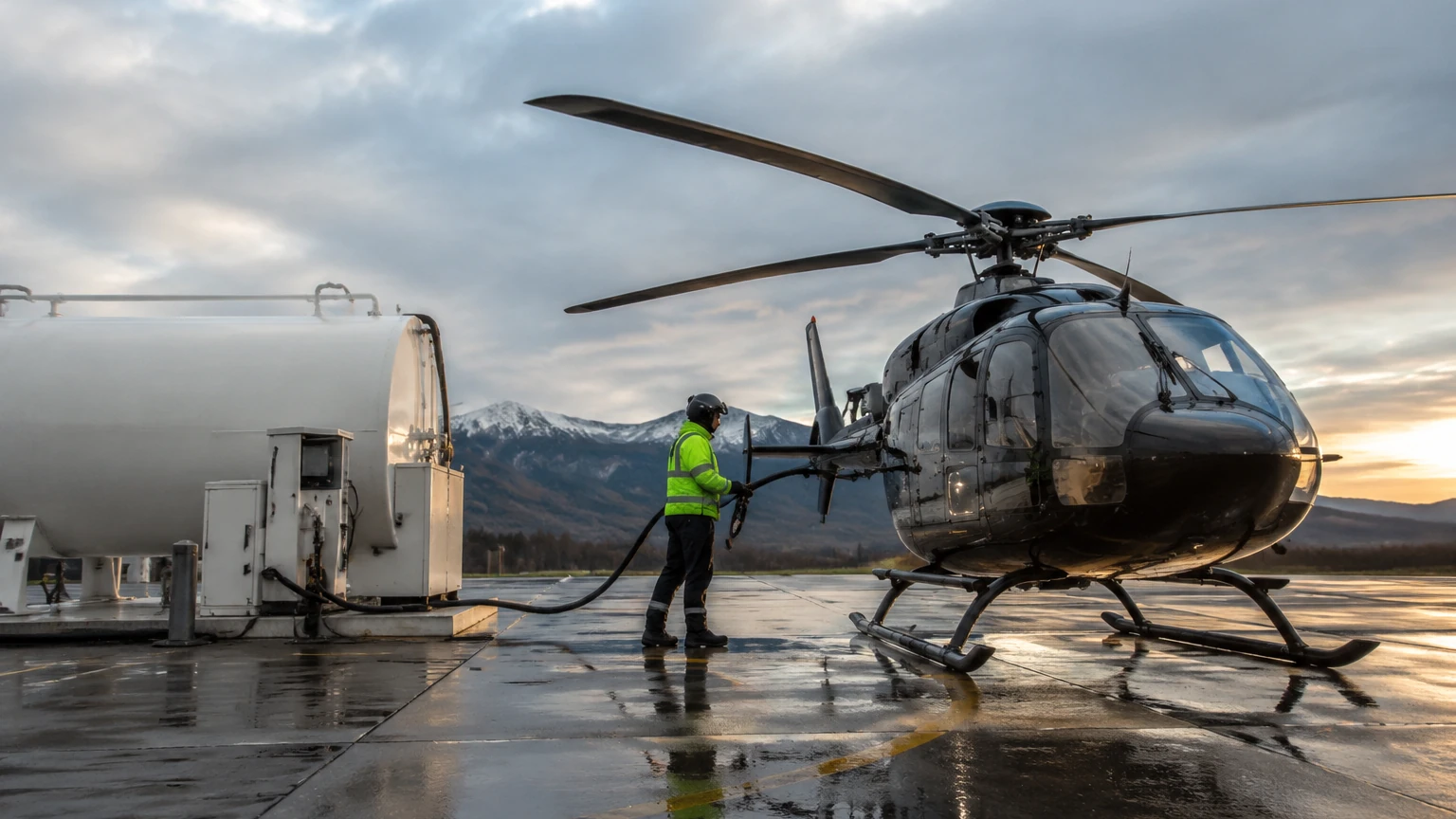
A helicopter refueling station typically consists of storage tanks, filtration systems, pumping units, and dispensing equipment. The storage tanks, which may be horizontal cylindrical tanks, vertical tanks, or specialized offshore transportable tanks, require continuous monitoring.
Level measurement instruments serve three primary functions in this context:
1. Inventory Management: Providing real-time data on the volume of fuel available to ensure that refueling operations are not interrupted.
2. Overfill Prevention: Acting as a safety barrier to prevent the hazardous release of flammable fuel during the filling process.
3. Leak Detection: Monitoring for unexpected drops in fuel levels that could indicate a breach in the primary containment vessel.
For engineers and facility managers, choosing the right instrument involves evaluating the measurement principle against the specific constraints of the refueling environment. To explore a comprehensive range of industrial level measurement instruments suitable for these applications, professionals often consult the Main Page of specialized manufacturers to compare technical specifications.
Measurement Principles for Aviation Fuel Storage
Before selecting a sensor for a helicopter refueling station, it is essential to understand the underlying physical principles of the most common measurement technologies. Each method interacts with the fuel and the tank environment differently.
Radar Level Measurement (Non-Contact and Guided)
Radar technology operates on the Time-of-Flight (ToF) principle. High-frequency microwave pulses are emitted toward the fuel surface and reflected back to the sensor.
* Non-Contact Radar: The sensor is mounted at the top of the tank and does not touch the fuel. This is ideal for volatile aviation fuels as it reduces the risk of contamination and mechanical wear.
* Guided Wave Radar (GWR): A probe or cable guides the microwave pulse directly to the surface. This is particularly effective in tanks with internal obstructions or where the fuel surface may be turbulent during high-speed pumping.
Hydrostatic Level Measurement
This principle relies on the relationship between the height of the liquid and the pressure it exerts at the bottom of the tank. A pressure transmitter measures the head pressure of the fuel column. Since the density of aviation fuel can vary slightly with temperature, high-precision systems often include temperature compensation to maintain accuracy.
Ultrasonic Level Measurement
Similar to radar, ultrasonic sensors use sound waves. A transducer emits an ultrasonic pulse that reflects off the fuel surface. While cost-effective, ultrasonic waves are sensitive to air temperature fluctuations and vapor concentrations, which can be significant in a helicopter refueling station environment.
Magnetic Level Gauges
For visual confirmation and redundant electronic measurement, magnetic level gauges are often used. A float containing a magnet moves with the fuel level inside a bypass chamber. This moves external magnetic flaps for a visual reading and can be equipped with a reed chain transmitter for remote data transmission.
Selection Criteria for Level Sensors in Refueling Applications
Selecting a level meter for a helicopter refueling station involves more than just measuring distance. The following criteria must be confirmed by the project engineering team:
* Hazardous Area Certification: Aviation fuels are highly flammable. All electronic components must carry appropriate explosion-proof certifications, such as ATEX or IECEx (Ex d or Ex ia).
* Accuracy and Repeatability: Given the high cost of aviation fuel and the precision required for flight planning, a measurement accuracy of ±2mm to ±5mm is typically required.
* Media Compatibility: The materials used in the sensor (316L stainless steel, PTFE, etc.) must be resistant to the chemical properties of Jet A-1 or Avgas to prevent corrosion and fuel contamination.
* Tank Geometry: The shape of the tank (e.g., dished ends vs. flat ends) and the presence of internal baffles or heating coils will dictate whether a non-contact or guided measurement approach is superior.
* Environmental Resilience: For offshore stations, the equipment must withstand salt spray and high humidity. For high-altitude stations, it must operate reliably in extreme cold.
Technical Comparison: Level Measurement Technologies
To assist in the selection process, the following table compares the primary technologies used in a helicopter refueling station.
| Technology | Accuracy | Installation | Best Use Case | Limitations |
| :— | :— | :— | :— | :— |
| Radar (80GHz) | Excellent (±1mm) | Top-mounted, non-contact | Tall tanks, volatile fuels | Higher initial cost |
| Guided Wave Radar | Very Good (±2mm) | Top-mounted, probe-based | Small tanks, turbulent surfaces | Probe can accumulate debris |
| Hydrostatic | Good (±0.1% FS) | Side or bottom-mounted | Underground storage tanks | Density dependent |
| Ultrasonic | Moderate (±0.25%) | Top-mounted, non-contact | Atmospheric pressure tanks | Sensitive to vapor/foam |
| Magnetic Gauge | Good (±5mm) | Side-mounted (Bypass) | Visual local indication | Requires side-wall penetrations |
Installation and Safety Guidelines for Refueling Systems
Proper installation is as critical as the choice of instrument. In a helicopter refueling station, the following engineering practices should be followed:
1. Minimizing Turbulence and Foam
Fuel entering the tank at high flow rates can create surface turbulence and foam. Radar sensors should be installed away from the inlet pipe. If turbulence is unavoidable, a stilling well (a perforated pipe) should be used to provide a calm surface for measurement.
2. Dead Zone Awareness
Every sensor has a "dead zone" (blocking distance) at the very top of its range where measurement is not possible. Ensure the sensor is mounted high enough (perhaps using a nozzle extension) so that the maximum fuel level does not enter this zone.
3. Grounding and Lightning Protection
Because these stations are often in exposed locations, such as helipads, robust electrical grounding is mandatory to prevent static discharge and protect sensitive electronics from lightning strikes.
4. Redundancy
High-level alarms should be independent of the continuous level measurement system. For example, a radar meter for inventory may be paired with a separate tuning fork level switch for high-high (HH) level shutdown to prevent spills.
Addressing Common Risks: Water Contamination and Overfill
A helicopter refueling station faces two primary operational risks: water ingress and tank overfill.
Water Contamination: Water is denser than aviation fuel and will settle at the bottom of the tank. If ingested into a helicopter engine, it can cause flameout. Level measurement systems, particularly hydrostatic sensors or specialized interface probes, can be calibrated to detect the water-fuel interface, allowing operators to drain the water before it reaches the pump intake.
Overfill Prevention: An overfill at a helicopter refueling station is not just an environmental hazard; it is a fire risk. Modern level transmitters are integrated into the station's Emergency Shutdown (ESD) system. If the fuel level reaches a critical threshold, the system automatically closes the inlet valves and shuts down the delivery pumps.
Frequently Asked Questions
Q: Can I use ultrasonic sensors for Jet A-1 storage?
A: While possible, it is generally not recommended if the tank is pressurized or if there are significant temperature variations. Radar is preferred for aviation fuel due to its immunity to vapor and temperature changes.
Q: How often should level meters in a refueling station be calibrated?
A: Most industry standards suggest an annual calibration check. However, for high-turnover stations, a semi-annual verification against a manual dip-tape reading is a common best practice.
Q: Are guided wave radar probes safe for fuel tanks?
A: Yes, provided they are intrinsically safe (IS) and properly grounded. They are excellent for small, horizontal tanks commonly found in skid-mounted refueling units.
Q: What is the impact of fuel density on hydrostatic measurement?
A: Hydrostatic sensors measure pressure. If the fuel density changes (due to temperature or fuel grade), the calculated level will change even if the actual volume is the same. In these cases, a multi-variable transmitter or a separate temperature sensor is required for compensation.
For technical support and to review specific product options for your next project, visit the Main Page to connect with application engineers who specialize in industrial level measurement solutions. Ensuring the accuracy of your helicopter refueling station starts with selecting the right technology for the specific demands of the aviation environment.