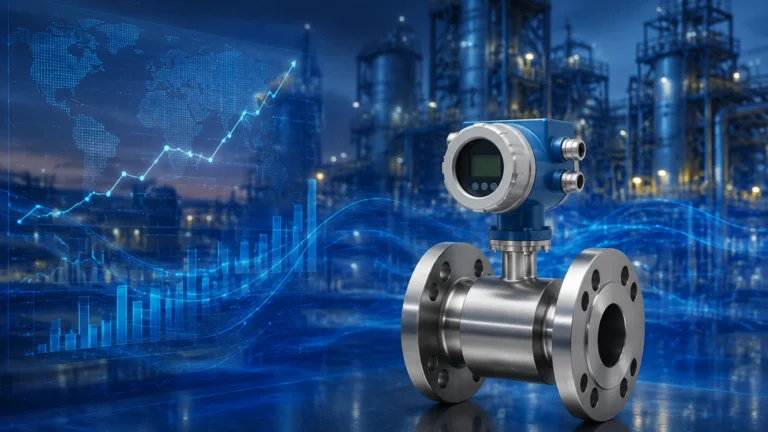
Wireless Level Sensor
Wireless Level Sensor
In the landscape of modern industrial automation, the wireless level sensor has emerged as a transformative tool for process monitoring and inventory management. Traditionally, level measurement required extensive cabling, conduit runs, and complex integration into local control panels. However, the integration of low-power wireless communication protocols with advanced sensing technologies—such as radar, ultrasonic, and hydrostatic pressure—has enabled engineers to monitor remote tanks, hazardous chemical stores, and mobile assets with unprecedented ease. This guide explores the technical foundations, selection criteria, and practical implementation of wireless level measurement systems in industrial environments.
Measurement Principles in Wireless Systems
Before selecting a wireless level sensor, it is essential to understand the underlying measurement physics. A wireless sensor is essentially a hybrid device: it combines a traditional sensing element with a low-power radio module and an internal power source (usually a high-capacity lithium battery). The sensing principle determines how the device interacts with the medium, while the wireless component determines how that data reaches the end-user.
1. Radar Level Measurement (ToF)
Radar sensors utilize Time-of-Flight (ToF) technology. The sensor emits a high-frequency electromagnetic wave (typically in the 26GHz or 80GHz range). This wave travels to the surface of the liquid or solid, reflects, and returns to the sensor antenna. The device calculates the distance based on the time interval between emission and reception.
In a wireless context, radar is highly valued because it is non-contact and unaffected by changes in temperature, pressure, or the presence of vapors. However, radar requires more power than simpler technologies, so wireless radar sensors often use sophisticated power-management algorithms to wake up, measure, transmit, and return to sleep.
2. Ultrasonic Level Measurement
Ultrasonic sensors emit acoustic pulses at frequencies above the range of human hearing. These pulses bounce off the surface of the medium and return to the transducer. The distance is calculated using the speed of sound.
Wireless ultrasonic sensors are cost-effective and ideal for water treatment or open-channel flow. Their primary limitation is their sensitivity to air temperature fluctuations and surface foam, which can absorb the acoustic signal. For wireless deployments, they are excellent for monitoring remote water tanks or wastewater pits where high precision (sub-millimeter) is not the primary requirement.
3. Hydrostatic Pressure Measurement
Hydrostatic sensors are contact-based. They are submerged at the bottom of a tank or well and measure the pressure exerted by the liquid column above them. This pressure is directly proportional to the liquid level based on the density of the fluid.
Wireless hydrostatic transmitters are common in groundwater monitoring and deep-well applications. Because they are submerged, the wireless transmitter unit is typically connected via a vented cable to a surface-mounted radio module to ensure the signal can reach the gateway without being attenuated by the liquid or underground structures.
Key Components of a Wireless Level Sensor
A professional-grade wireless level sensor consists of four primary modules that must work in harmony to ensure reliable data delivery:
1. The Sensing Element: The radar, ultrasonic, or pressure transducer that captures the raw physical data.
2. The Processing Unit: A microcontroller that converts the raw signal into a digital level value, often performing temperature compensation and signal filtering.
3. The Wireless Module: The radio hardware and protocol stack. Common industrial protocols include LoRaWAN (Long Range Wide Area Network), NB-IoT (Narrowband IoT), and Zigbee. LoRaWAN is particularly popular for its ability to transmit signals over several kilometers (up to 15 km in line-of-sight) while consuming minimal power.
4. Power Management System: Usually a high-energy density battery (e.g., Li-SOCl2). The longevity of a wireless sensor—often 3 to 10 years—depends on the frequency of data transmission and the efficiency of this system.
Practical Selection Criteria
Choosing the right wireless level sensor requires an evaluation of both the process medium and the site infrastructure. Use the following table as a preliminary engineering reference for comparing different wireless technologies.
Technology Comparison Table
| Feature | Wireless Radar | Wireless Ultrasonic | Wireless Hydrostatic |
| :— | :— | :— | :— |
| Measurement Type | Non-contact | Non-contact | Contact (Submerged) |
| Best For | Chemicals, oils, solids | Water, wastewater | Deep wells, vented tanks |
| Accuracy | High (±2mm to ±5mm) | Moderate (±0.25% of range) | High (±0.1% to ±0.5% FS) |
| Range | Up to 30m+ | Typically 0.5m to 15m | Up to 200m (depth) |
| Power Consumption | Moderate to High | Low | Very Low |
| Vapor/Dust Resistance| Excellent | Poor | N/A (Submerged) |
| Typical Application | Process vessels | Sumps and plastic tanks | Groundwater monitoring |
Installation and Signal Considerations
The success of a wireless level sensor deployment is often determined by the physical installation environment rather than the sensor itself. Engineers must account for signal attenuation and interference.
Antenna Placement and Line of Sight
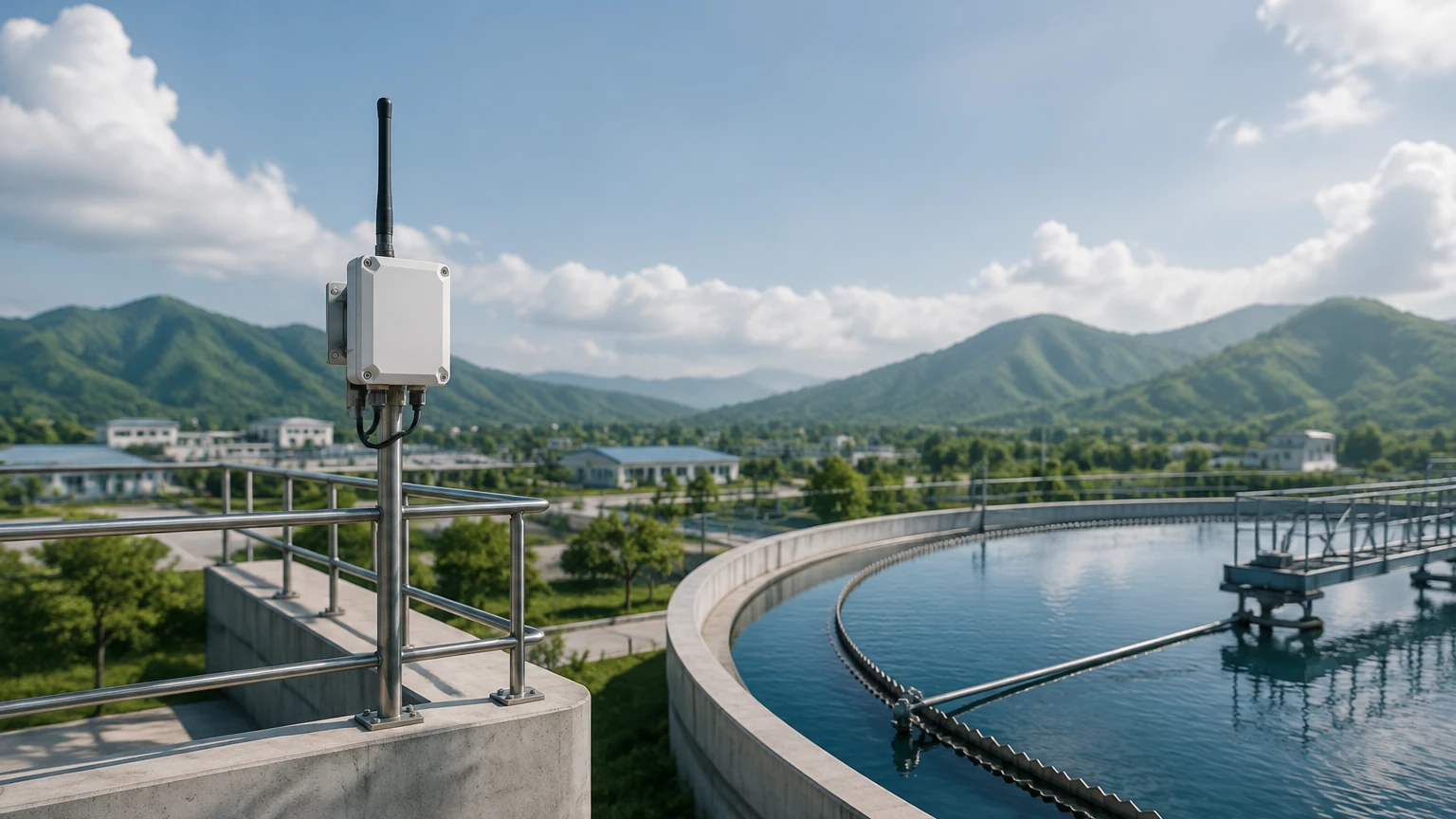
While many modern protocols like LoRaWAN can penetrate walls and steel structures, the range is significantly reduced in dense industrial environments. For optimal performance, the wireless level sensor's antenna should be mounted as high as possible. If the sensor is installed inside a metal tank, an external antenna or a remote-mounted wireless module is required, as the metal tank acts as a Faraday cage, blocking all radio signals.
Mounting Geometries
For non-contact sensors (Radar and Ultrasonic), the sensor must be mounted perpendicular to the liquid surface. Avoid mounting sensors too close to the tank wall to prevent false echoes from internal structures like ladders, agitators, or weld seams. For wireless radar, a clear "viewing" path of at least 200mm to 300mm in diameter is typically recommended to ensure signal integrity.
Battery Life Optimization
In wireless applications, data "freshness" is a trade-off against battery life. If a sensor transmits every minute, the battery may last only six months. If it transmits every hour, it may last five years. Engineers should determine the minimum required update frequency based on the rate of change of the process level. Many advanced sensors offer "threshold reporting," where the device only transmits if the level changes by a specific percentage, preserving battery during static periods.
Common Risks and Limitations
While wireless level sensors offer significant cost savings—often reducing installation costs by 60% or more compared to wired alternatives—they are not suitable for every application.
* Latency: Wireless networks introduce latency. If the level measurement is used for high-speed safety shutdowns or critical real-time control loops, a wired connection is generally preferred. Wireless is best suited for monitoring and inventory management.
* Signal Interference: In environments with high electromagnetic interference (EMI) from large motors or variable frequency drives (VFDs), wireless signals may be disrupted. Selecting a robust protocol with frequency-hopping capabilities is essential.
* Environmental Obstacles: Large metal buildings, hills, or dense foliage can block signals. A site survey using a signal strength meter is recommended before permanent installation.
* Cybersecurity: Wireless data transmission must be encrypted. Industrial protocols like LoRaWAN use AES-128 encryption to ensure that process data cannot be intercepted or spoofed.
Frequently Asked Questions (FAQ)
Q: Can a wireless level sensor be used in hazardous areas (Ex-zones)?
A: Yes, but the device must be specifically certified (e.g., ATEX, IECEx). Because wireless sensors are battery-powered, they are often designed to be intrinsically safe, meaning they do not store enough energy to ignite a flammable atmosphere.
Q: How do I integrate wireless sensor data into my existing PLC or SCADA system?
A: Most wireless systems use a gateway. The sensors talk to the gateway, and the gateway converts the wireless protocol into a standard industrial output such as Modbus RTU, Modbus TCP, or 4-20mA. This allows for seamless integration into existing control architectures.
Q: What happens if the battery dies? Will I lose my configuration?
A: Professional industrial sensors use non-volatile memory (EEPROM). All configuration settings, such as tank height and alarm thresholds, are retained even if the power is completely lost.
Q: Is there a limit to how many wireless sensors I can have on one site?
A: Modern gateways can often handle hundreds of sensors. However, the limit is usually defined by the "airtime" or bandwidth of the frequency band. In a typical industrial plant, dozens or even hundreds of sensors can coexist without significant interference.
Conclusion and Next Steps
The transition to wireless level measurement represents a significant step forward in operational efficiency. By eliminating the need for expensive cabling and allowing for rapid deployment in remote locations, these sensors provide the data necessary for optimized logistics and process safety. When selecting a solution, prioritize the measurement principle that matches your medium (radar for chemicals, ultrasonic for water, hydrostatic for deep wells) and ensure the wireless protocol matches your site's range requirements.
For engineers looking to explore specific hardware options, technical specifications, or customized OEM solutions, visiting the Main Page of a dedicated manufacturer like Welk provides access to a comprehensive range of industrial level measurement instruments. Confirming the chemical compatibility of the wetted parts and the expected signal range at your specific site are the final critical steps before procurement and installation.