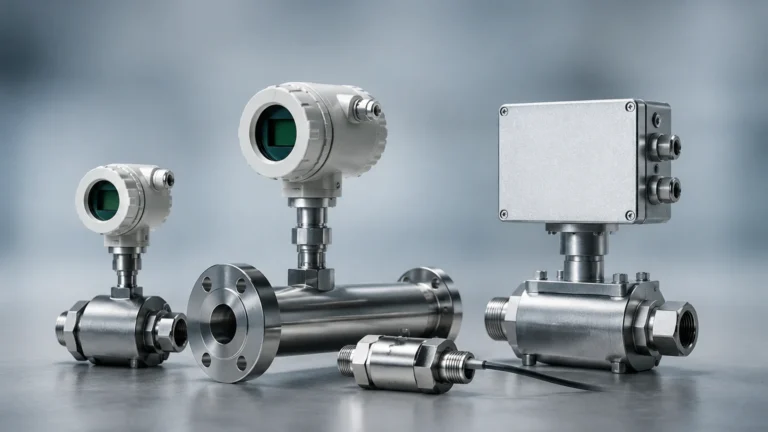
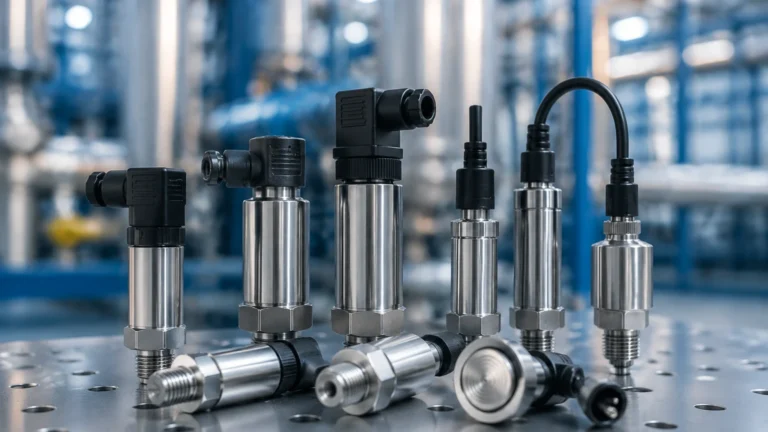
High Flow Meter
High Flow Meter
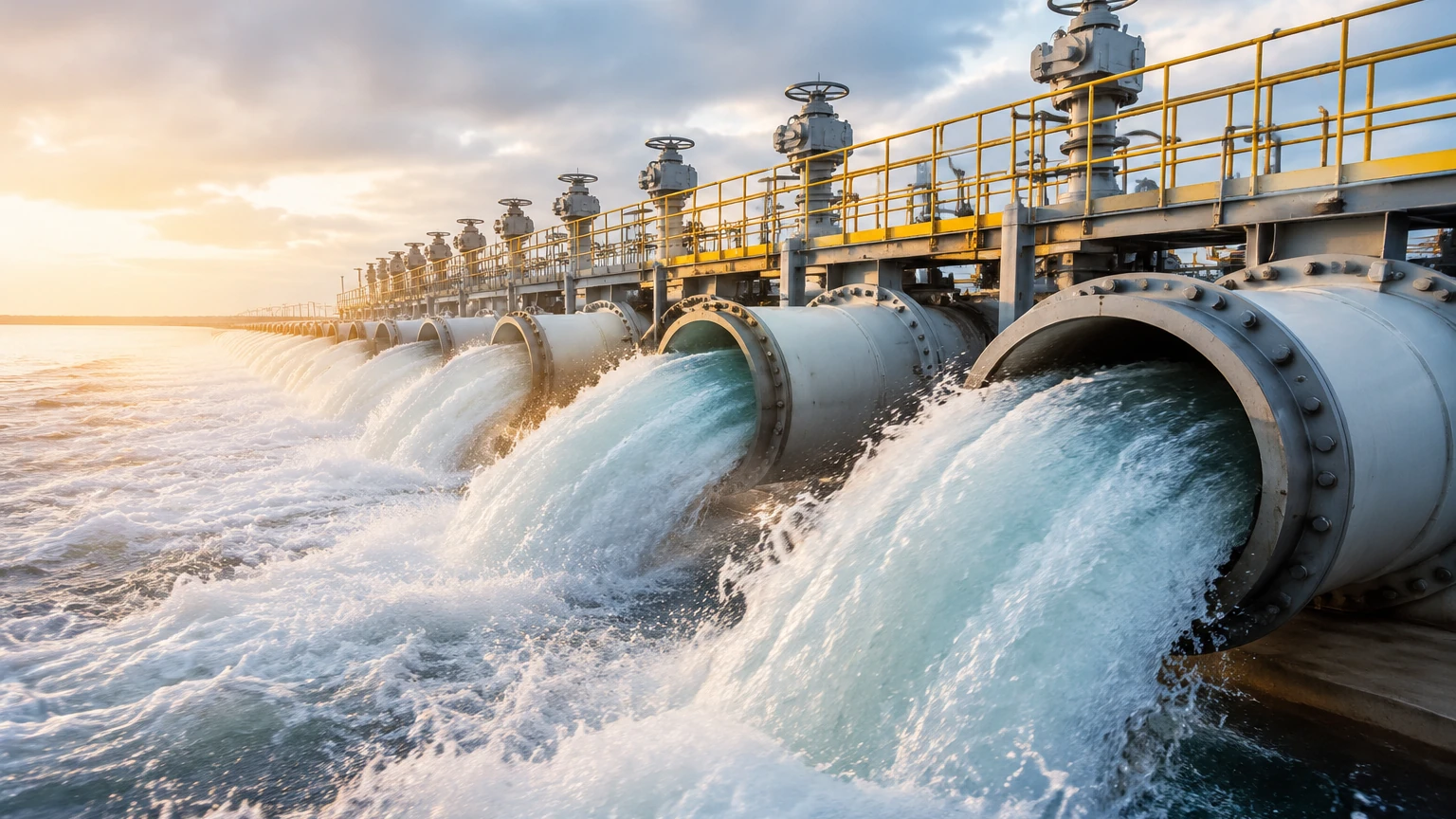
In industrial process control, measuring large volumes of fluid accurately and reliably is a fundamental requirement for operational efficiency, safety, and fiscal accountability. A high flow meter is specifically engineered to handle the unique challenges associated with large-diameter piping and high-velocity fluid streams. Whether managing municipal water distribution, cooling water for power plants, or large-scale chemical processing, selecting the correct flow measurement technology is critical to preventing excessive pressure drop and ensuring long-term instrument stability.
This guide examines the primary measurement principles utilized in high-flow applications, provides technical criteria for selection, and outlines the installation practices necessary to maintain accuracy in demanding industrial environments.
Measurement Principles for High Flow Applications
Before selecting a high flow meter, it is essential to understand the physics governing different measurement technologies. High-flow scenarios often involve high Reynolds numbers and significant kinetic energy, which can influence sensor performance.
Electromagnetic Induction (Magmeters)
Electromagnetic flow meters operate based on Faraday’s Law of Induction. This principle states that a conductor (the fluid) moving through a magnetic field generates an electrical voltage proportional to the velocity of the fluid. In a high flow meter application, the meter body is lined with an insulating material, and electrodes are placed on opposite sides of the pipe.
Because magmeters have no moving parts and do not obstruct the flow path, they offer negligible pressure drop. This is a significant advantage in high-flow systems where pumping costs are a concern. However, they require the fluid to be electrically conductive (typically >5 μS/cm).
Transit-Time Ultrasonic Technology
Ultrasonic flow meters utilize sound waves to determine fluid velocity. In high-flow applications, transit-time meters are most common. These devices use pairs of transducers that send and receive ultrasonic signals. Signals traveling with the flow move faster than those traveling against it. The difference in transit time is directly proportional to the fluid velocity.
For very large pipes (e.g., DN1000 or 40 inches and above), ultrasonic meters are often preferred because they can be installed as "clamp-on" units, avoiding the need to cut into the process line. This eliminates the risk of leaks and reduces installation costs significantly.
Vortex Shedding
Vortex meters operate on the Von Kármán effect. When a fluid flows past a bluff body (a non-streamlined object) placed in the flow stream, vortices are shed alternately from each side. The frequency of this shedding is directly proportional to the fluid velocity. Vortex meters are highly effective for high-velocity steam and gas applications, providing a wide turndown ratio and robust performance in high-temperature environments.
Differential Pressure (DP)
Differential pressure flow meters, such as Orifice plates or Venturi tubes, rely on Bernoulli’s principle. By creating a constriction in the pipe, the meter induces a pressure drop. The square root of the pressure difference between the upstream and downstream sections is proportional to the flow rate. While Venturi tubes are excellent for high-flow liquid applications due to their high pressure recovery, orifice plates are less common in very high-flow scenarios because they can cause significant permanent pressure loss.
Key Evaluation Criteria for High Flow Meters
When evaluating a high flow meter for a specific project, engineers must look beyond the basic flow rate and consider how the instrument interacts with the entire piping system.
1. Pressure Drop and Energy Efficiency
In high-flow systems, even a small increase in flow resistance can lead to substantial energy costs over time. Technologies like electromagnetic and ultrasonic meters have a clear bore design, meaning they do not introduce additional pressure drop. In contrast, mechanical meters or DP-based systems can significantly increase the load on pumps.
2. Turndown Ratio
The turndown ratio (or rangeability) defines the range over which the meter can maintain its specified accuracy. High-flow applications often involve seasonal or process-driven fluctuations. A meter with a 100:1 turndown ratio can measure both peak demand and low-flow leakage accurately, whereas a meter with a 10:1 ratio might fail to register flow during off-peak hours.
3. Fluid Properties
The physical and chemical characteristics of the fluid are decisive factors:
* Conductivity: Required for electromagnetic meters.
* Particulate Content: High concentrations of solids can interfere with ultrasonic signals or cause erosion in mechanical meters.
* Viscosity: High-viscosity fluids may require specialized calibration or specific technologies like positive displacement or Coriolis meters, though these are less common for very high flow rates due to size constraints.
4. Pipe Diameter and Scale
As pipe diameters increase, the cost of inline meters rises exponentially. For pipes exceeding 600 mm (24 inches), insertion-type meters or clamp-on ultrasonic meters often become the most cost-effective solutions. For more information on instrument sizing and technical specifications, engineers can consult the Main Page of professional equipment manufacturers to review available configurations.
Technical Comparison Table
The following table compares common technologies used for high-flow measurement in industrial settings.
| Technology | Suitable Fluids | Max Velocity (Typical) | Pressure Drop | Relative Cost (Large Pipe) |
| :— | :— | :— | :— | :— |
| Electromagnetic | Conductive Liquids | 10-12 m/s (33-39 fps) | Negligible | High (Inline) |
| Ultrasonic | Liquids / Gases | 15-30 m/s (49-98 fps) | Zero | Moderate (Clamp-on) |
| Vortex | Steam / Gas / Liquid | 70 m/s (230 fps) for Gas | Moderate | Moderate |
| Venturi (DP) | Clean Liquids / Gas | Variable | Low to Moderate | High |
| Turbine | Clean Liquids / Gas | 15-20 m/s (49-65 fps) | High | Moderate |
Installation and Engineering Considerations
The accuracy of a high flow meter is heavily dependent on the installation environment. High velocities often lead to turbulence, which can distort velocity profiles and cause measurement errors.
Straight Pipe Requirements
Most flow meters require a specific length of straight pipe upstream and downstream of the sensor to ensure a fully developed, laminar flow profile. For a high flow meter, these requirements are typically expressed in pipe diameters (D).
* Upstream: Usually 10D to 20D depending on the presence of elbows or valves.
* Downstream: Usually 5D.
If the installation site cannot accommodate these lengths, flow conditioners or rectifiers may be necessary to stabilize the flow.
Orientation and Air Pockets
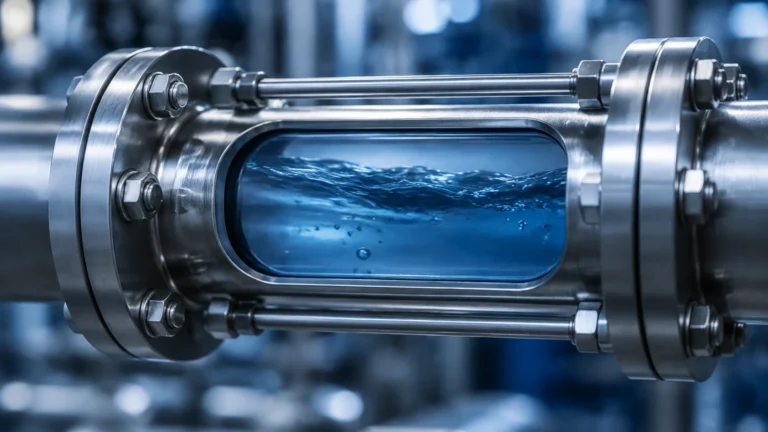
For liquid applications, the meter must always remain full. In high-flow systems, air entrainment can occur due to turbulence or pump cavitation. Installing the meter in a vertical line with upward flow is often the best way to ensure the pipe remains full and that any air bubbles pass through without settling on the sensors.
Grounding and Interference
Electromagnetic meters are particularly sensitive to electrical noise. In large-scale industrial plants, proper grounding to the process fluid is essential. This often involves the use of grounding rings, especially if the piping is lined or made of non-conductive materials like plastic or fiberglass.
Common Risks and Limitations
While modern high flow meters are highly advanced, they are not immune to environmental and process-related challenges.
1. Cavitation: In high-velocity liquid flows, if the local pressure drops below the vapor pressure of the liquid, vapor bubbles form and collapse. This can damage the internal components of vortex or turbine meters and cause significant measurement errors in ultrasonic and magmeters.
2. Erosion: High-velocity fluids carrying abrasive solids can wear down the internal linings of magmeters or the bluff bodies of vortex meters. Selecting hardened materials or sacrificial liners is necessary in these cases.
3. Signal Attenuation: In ultrasonic measurement, high flow rates can sometimes cause "signal blow-away," where the high velocity of the fluid deflects the ultrasonic beam so much that it fails to reach the receiving transducer. This requires high-power transducers or specialized signal processing.
Frequently Asked Questions (FAQ)
Q: Can I use a high flow meter for both liquid and gas?
A: It depends on the technology. Vortex and ultrasonic meters can often be configured for either, but electromagnetic meters are strictly for conductive liquids. Always verify the factory calibration before switching fluid types.
Q: What is the maximum velocity a magmeter can handle?
A: Most industrial magmeters are rated for velocities up to 10-12 m/s (approx. 33-39 feet per second). Exceeding this can lead to liner wear and increased electrical noise, which degrades accuracy.
Q: How often should a high flow meter be calibrated?
A: For critical custody transfer or regulated water billing, annual calibration is standard. For general process monitoring, a verification check every 2-3 years may suffice, provided the instrument diagnostics show no drift.
Q: Are insertion meters as accurate as full-bore inline meters?
A: Generally, no. Insertion meters measure velocity at a single point (or a few points) and calculate flow based on the pipe area. They are typically accurate to within 2-3%, whereas high-quality inline meters can achieve 0.25% to 0.5% accuracy. However, for very large pipes, the cost-to-accuracy trade-off often favors insertion models.
Conclusion
Selecting the right high flow meter requires a balance between technical requirements and economic constraints. By prioritizing technologies with low pressure drops and robust signal processing, industrial operators can ensure long-term reliability even in the most demanding high-velocity applications. For detailed product selection and application engineering support, visiting the manufacturer's Main Page provides access to technical datasheets and expert consultation services to ensure the chosen instrument meets the specific demands of the project.