High Pressure Transducers
High Pressure Transducers
In the realm of industrial automation and process control, the ability to accurately measure and monitor fluid forces is paramount. High pressure transducers serve as the critical interface between physical hydraulic or pneumatic systems and electronic control units. These specialized sensors are engineered to withstand extreme stress while providing precise data, ensuring the safety and efficiency of operations in sectors ranging from deep-sea oil exploration to high-pressure chemical synthesis.
For engineers and procurement professionals, selecting the correct instrument requires a deep understanding of how these devices function, their structural limitations, and how they integrate into broader level measurement and process control architectures. This guide explores the technical foundations of high pressure transducers, their role in hydrostatic level measurement, and the criteria necessary for robust industrial selection.
Measurement Principles of High Pressure Transducers
Before selecting a transducer for a specific application, it is essential to understand the underlying physics that allow the device to convert mechanical pressure into an electrical signal. Most modern high pressure transducers utilize one of three primary sensing technologies.
Piezoresistive Sensing
This is perhaps the most common technology used in industrial transducers. It relies on the piezoresistive effect, where the electrical resistivity of a semiconductor (usually silicon) changes when it is subjected to mechanical strain. In a high pressure transducer, a silicon sensing element is typically bonded to a diaphragm. As pressure deforms the diaphragm, the resistance of the silicon changes. This change is measured using a Wheatstone bridge circuit, which produces a voltage output proportional to the applied pressure.
Thin-Film Strain Gauge
For extremely high pressure applications—often exceeding 1,000 bar (14,500 psi)—thin-film strain gauges are frequently preferred. In this design, resistive material is deposited directly onto a stainless steel or ceramic diaphragm through a process called sputtering. This creates a molecular bond that is highly resistant to fatigue and vibration. Because there are no adhesives involved, thin-film sensors offer excellent long-term stability and are less prone to "creep" under sustained high pressure.
Capacitive Sensing
Capacitive transducers measure the change in electrical capacitance between a flexible diaphragm and a fixed backplate. As pressure moves the diaphragm, the distance between the two surfaces changes, altering the capacitance. These sensors are known for their high sensitivity and robustness, though they are more commonly found in low-to-medium pressure ranges or specialized vacuum applications. However, high-pressure variants exist that utilize rugged ceramic diaphragms to handle aggressive media.
The Role of High Pressure Transducers in Level Measurement
While pressure measurement is a primary function, high pressure transducers are integral to hydrostatic level measurement. According to the hydrostatic principle, the pressure at the bottom of a liquid column is directly proportional to the height of that column and the density of the liquid ($P = \rho gh$).
In pressurized tanks—such as those found in chemical processing or oil refining—the internal vapor space pressure must be accounted for. In these scenarios, high pressure transducers are used in a differential configuration. One sensor measures the total pressure at the bottom (liquid + vapor), while another measures the vapor pressure at the top. The difference between these two values yields the hydrostatic pressure of the liquid, allowing for an accurate level reading even when the vessel is under several hundred bars of pressure.
Welk provides a range of solutions that utilize these principles, ensuring that even in high-stress environments, level data remains accurate. For more information on specific instrument configurations, you can visit the Main Page for a comprehensive overview of available technologies.
Technical Selection Criteria
Choosing high pressure transducers involves more than simply matching a pressure range. Engineers must evaluate several technical parameters to ensure the longevity of the instrument.
Pressure Range and Overpressure Protection
The nominal pressure range should typically be 20% to 30% higher than the maximum expected operating pressure to account for surges. Furthermore, the "burst pressure"—the point at which the sensor will physically fail—must be significantly higher than the operating range to prevent catastrophic leaks in the event of a system failure.
Media Compatibility
The wetted parts of the transducer (the parts in contact with the fluid) must be chemically compatible with the process media. While 316L stainless steel is the standard, high-pressure applications involving corrosive chemicals or sour gas ($H_2S$) may require specialized alloys like Hastelloy C-276, Monel, or Tantalum.
Accuracy and Total Error Band (TEB)
Accuracy is often cited as a percentage of Full Scale (FS). However, the Total Error Band is a more realistic metric, as it includes errors from linearity, hysteresis, repeatability, and thermal effects. In high-pressure environments, temperature fluctuations can significantly impact accuracy, necessitating built-in temperature compensation.
Output Signals
In industrial B2B environments, the most common output signals are:
* 4-20 mA (Current Loop): Ideal for long-distance transmission as it is highly resistant to electrical noise.
* 0-10 V / 1-5 V: Common in laboratory settings or short-distance industrial applications.
* Digital (HART, Modbus, RS485): Allows for advanced diagnostics and remote calibration.
Practical Selection Table
| Feature | Piezoresistive | Thin-Film | Capacitive |
| :— | :— | :— | :— |
| Typical Pressure Range | 0.1 to 600 bar | 10 to 2,000+ bar | 0.05 to 100 bar |
| Accuracy (Typical) | 0.1% to 0.5% FS | 0.2% to 0.5% FS | 0.075% to 0.2% FS |
| Stability | Good | Excellent | Very Good |
| Vibration Resistance | Moderate | High | Moderate |
| Best Use Case | General industrial, water treatment | Hydraulics, heavy machinery, oil & gas | Chemical processing, high-precision level |
Installation and Maintenance Considerations
Proper installation is critical to the performance of high pressure transducers. Failure to follow engineering best practices can lead to premature sensor failure or inaccurate data.
1. Mounting Position: Transducers should be mounted in a location that minimizes exposure to extreme vibration and heat. If measuring liquid level, the sensor must be at or below the lowest point of the tank.
2. Pressure Snubbers: In hydraulic systems where rapid pressure spikes (water hammer) occur, a snubber should be installed. This device dampens the shock wave before it hits the sensing diaphragm, preventing mechanical damage.
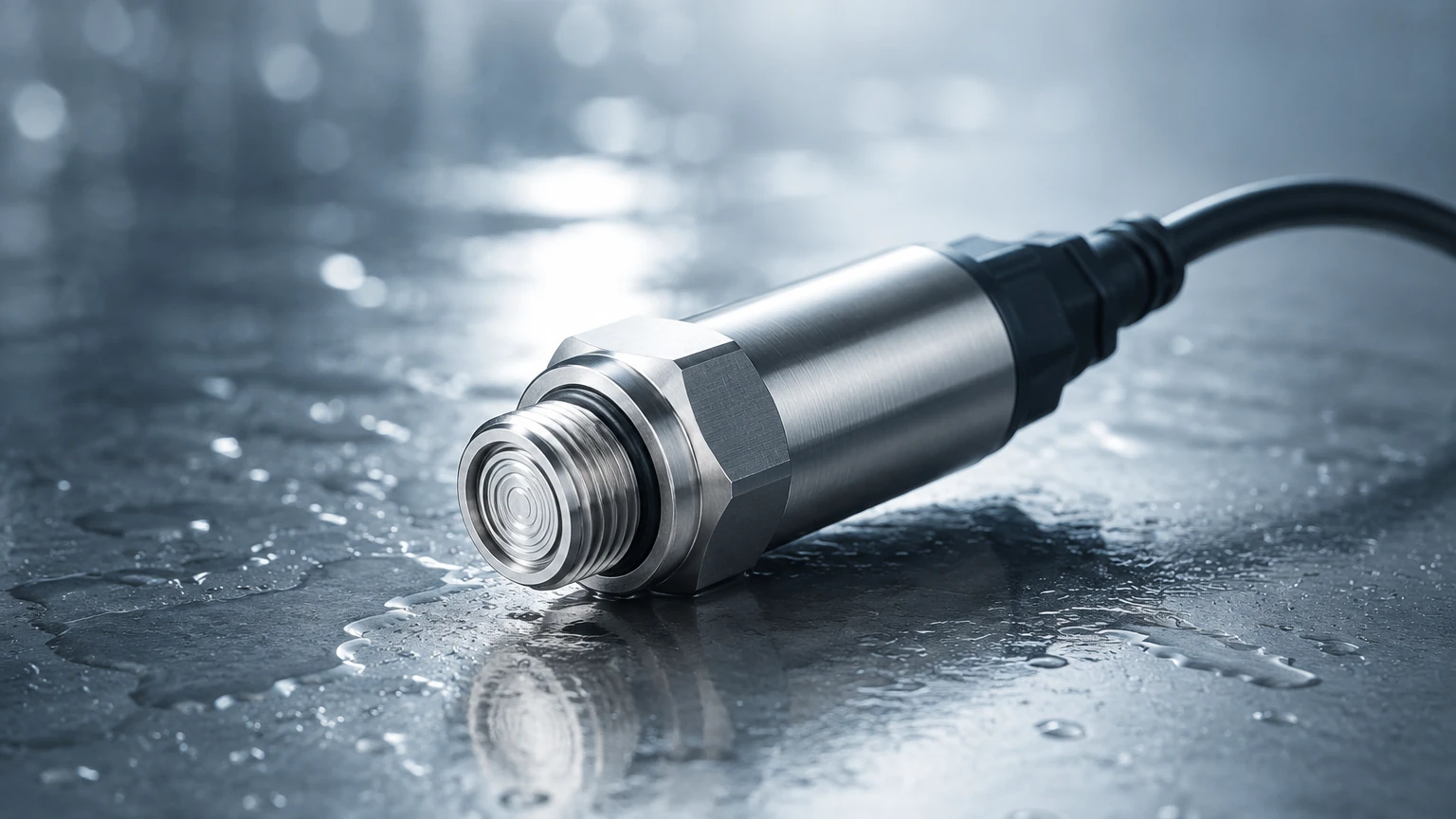
3. Sealing and Threading: High-pressure connections often use NPT, BSP, or specialized autoclaved fittings. Ensuring a leak-proof seal without over-torquing the sensor body is vital to prevent internal stress on the electronics.
4. Environmental Protection: For outdoor or wash-down environments, ensure the transducer has an appropriate Ingress Protection (IP) rating, such as IP67 or IP68. In hazardous areas, Explosion-proof (Ex d) or Intrinsically Safe (Ex i) certifications are mandatory.
Limitations and Risks
Despite their robust design, high pressure transducers are subject to certain limitations:
* Fatigue: Continuous pressure cycling can eventually lead to diaphragm fatigue, causing a shift in the zero-point calibration.
* Temperature Drift: Extreme heat can alter the electrical properties of the sensing element. While compensation helps, operating outside the rated temperature range will degrade accuracy.
* Cavitation: In high-velocity fluid systems, cavitation can occur near the sensor face, causing pitting and physical erosion of the diaphragm.
* Signal Interference: High-voltage machinery located near the transducer cables can induce electromagnetic interference (EMI) if the cables are not properly shielded.
Frequently Asked Questions (FAQs)
Q: What is the difference between a pressure transducer and a pressure transmitter?
A: While the terms are often used interchangeably, a transducer typically provides a basic voltage output, whereas a transmitter conditions that signal into a standardized current loop (e.g., 4-20 mA) or a digital protocol suitable for long-distance transmission.
Q: How often should high pressure transducers be calibrated?
A: Most industrial applications require annual calibration. However, in critical safety systems or environments with high pressure cycling, semi-annual checks are recommended to ensure the "zero" and "span" remain within tolerance.
Q: Can these sensors be used for both gas and liquid?
A: Yes, most high pressure transducers are compatible with both media, provided the wetted materials are resistant to the specific gas or liquid being measured. It is important to note that gas applications may require different safety venting procedures.
Q: What is the significance of a "flush diaphragm"?
A: A flush diaphragm sits level with the process connection, preventing media from clogging a pressure port. This is essential for viscous fluids, slurries, or food-grade applications where hygiene is a priority.
Conclusion
High pressure transducers are indispensable tools in modern industrial engineering. Whether they are monitoring the hydraulic pressure of a heavy-duty press or providing the data necessary for hydrostatic level measurement in a pressurized chemical reactor, their reliability directly impacts the safety and productivity of the facility. By understanding the measurement principles—from piezoresistive to thin-film technologies—and carefully evaluating selection criteria such as media compatibility and total error band, engineers can ensure they deploy the most effective solution for their specific needs.
For those seeking to integrate these sensors into a comprehensive level measurement system, reviewing the available product options and application support on the Main Page is a recommended next step. Selecting the right partner and the right technology ensures that your high-pressure systems remain under control, even in the most demanding environments.