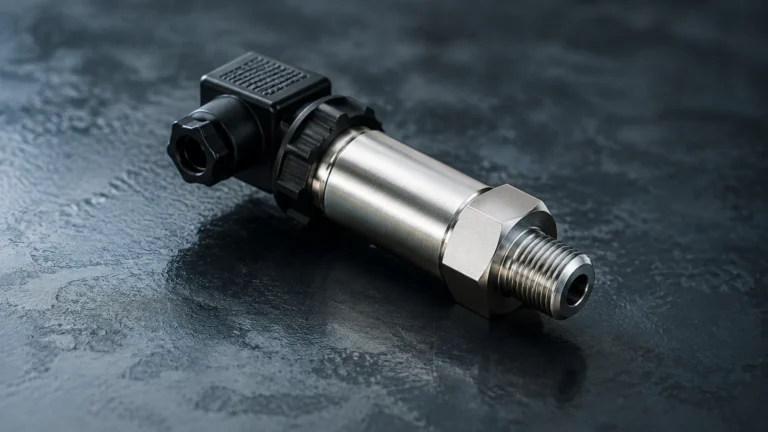
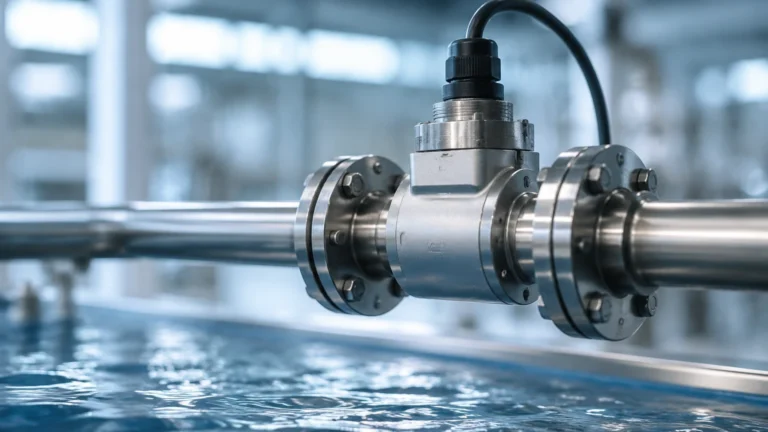
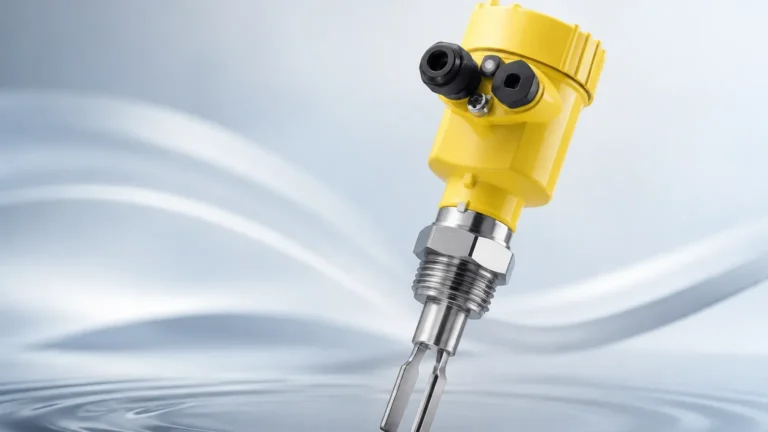
High Temp Temperature Sensor
High Temp Temperature Sensor
In industrial process control, the accurate monitoring of thermal conditions is as critical as the measurement of pressure or volume. A high temp temperature sensor is a specialized instrument designed to operate in environments where standard sensors would fail due to thermal degradation, oxidation, or mechanical stress. These sensors are integral to industries such as metallurgy, glass manufacturing, power generation, and chemical processing, where temperatures often exceed 500°C (932°F) and can reach as high as 1800°C (3272°F).
For engineers managing complex systems, understanding the synergy between temperature and other process variables is essential. For instance, in level measurement applications, temperature fluctuations directly influence fluid density and the velocity of signal propagation. Reliable data from a high temp temperature sensor ensures that automated systems can compensate for these variables, maintaining the integrity of the overall process. To explore integrated solutions for industrial monitoring, professionals often consult the Main Page of specialized manufacturers to align sensor specifications with specific vessel requirements.
Measurement Principles of High-Temperature Sensors
High-temperature measurement relies on several distinct physical principles, each offering different advantages depending on the thermal range and the nature of the medium being measured.
Thermocouples (Thermoelectric Effect)
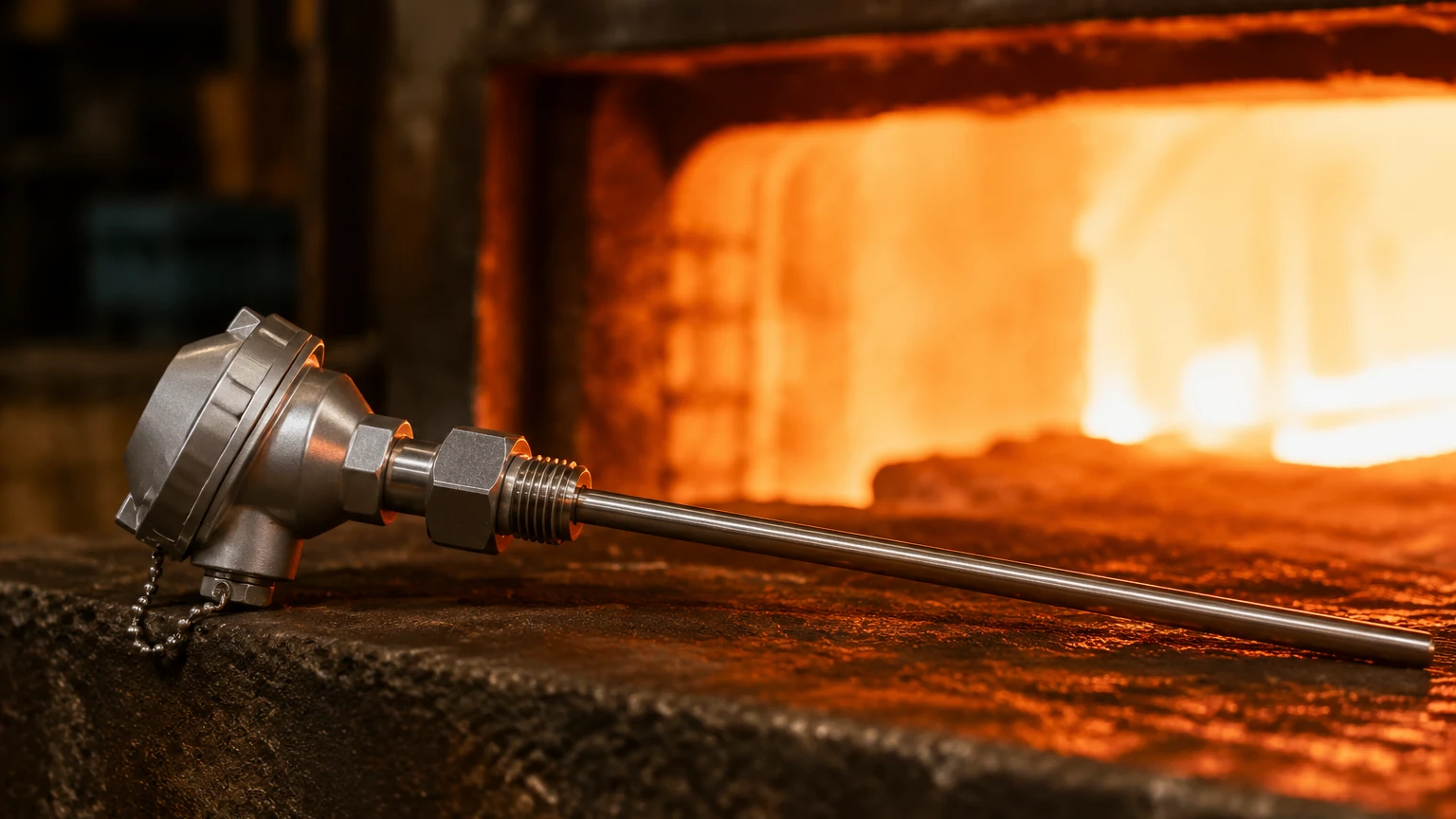
Thermocouples are the most common high temp temperature sensor type due to their durability and wide range. They operate on the Seebeck effect: when two dissimilar metal wires are joined at one end (the sensing junction) and exposed to a temperature gradient, a small voltage (millivolts) is generated. This voltage is proportional to the temperature difference between the sensing junction and the reference junction.
* Base Metal Thermocouples: Types K (Chromel-Alumel) and N (Nicrosil-Nisil) are widely used up to 1260°C (2300°F). Type N is particularly valued for its superior oxidation resistance at high temperatures compared to Type K.
* Noble Metal Thermocouples: Types R, S, and B utilize platinum and rhodium alloys. These are essential for extreme temperatures, with Type B capable of measuring up to 1700°C (3092°F) or even 1800°C in short bursts. They are highly stable but more expensive and fragile.
Resistance Temperature Detectors (RTDs)
RTDs operate on the principle that the electrical resistance of a metal increases predictably as temperature rises. While standard RTDs are often limited to 600°C (1112°F), specialized high-temperature RTDs using platinum (Pt100 or Pt1000) can reach 850°C (1562°F). They offer higher accuracy and repeatability than thermocouples but are more susceptible to mechanical vibration and have a narrower upper limit.
Infrared Pyrometers (Radiation Thermometry)
For temperatures exceeding the limits of physical probes, or where contact with the medium is impossible (such as molten metal or moving parts), infrared pyrometers are used. These sensors measure the thermal radiation emitted by an object. According to the Stefan-Boltzmann law, the intensity of this radiation is proportional to the fourth power of the object's absolute temperature. These are non-contact sensors and are vital for extreme heat applications where a physical high temp temperature sensor would melt or corrode.
The Role of Temperature in Level Measurement
In industrial automation, temperature measurement is rarely an isolated requirement. It is a fundamental component of accurate level detection. Welk’s range of level measurement instruments often requires temperature data to maintain precision.
1. Hydrostatic Pressure: The density of a liquid changes with temperature. A hydrostatic level transmitter measures the pressure exerted by a liquid column; if the temperature rises and the liquid expands (becoming less dense), the pressure reading will change even if the actual volume remains constant. A high temp temperature sensor provides the data necessary for the PLC to calculate the corrected density.
2. Ultrasonic and Radar Sensors: In ultrasonic level measurement, the speed of sound is highly dependent on the temperature of the air or gas through which the pulse travels. Without a temperature sensor to provide real-time compensation, the distance calculation will be significantly flawed. Similarly, while radar (microwave) is less affected by temperature, extreme heat can change the dielectric constant of certain materials, requiring fine-tuning of the signal processing.
3. Magnetic Level Gauges: High-temperature fluids can affect the buoyancy of the float and the magnetic properties of the coupling. Monitoring the temperature ensures the mechanical limits of the gauge are not exceeded.
Selection Criteria for High-Temperature Sensors
Selecting the correct high temp temperature sensor requires an evaluation of the environment beyond just the peak temperature. Engineers must consider the chemical atmosphere, mechanical stress, and required response time.
1. Temperature Range and Accuracy
Identify the normal operating temperature and the maximum potential excursion. While a Type K thermocouple is cost-effective, using it at its absolute limit for extended periods will lead to "drift" (a permanent shift in the calibration). For high-precision requirements below 800°C, a high-temperature RTD is usually preferred over a thermocouple.
2. Atmospheric Conditions
* Oxidizing Atmospheres: Standard for many furnaces. Noble metal thermocouples thrive here.
* Reducing Atmospheres: Environments with low oxygen can cause "green rot" in Type K thermocouples. Type N or specialized sheathing is required.
* Vacuum: Requires sensors that do not outgas and can withstand the lack of convective cooling.
3. Protection Tubes and Thermowells
At high temperatures, the sensor must be protected from the process media. Thermowells made of stainless steel (316L), Inconel, or ceramic materials (like Alumina) are used. Ceramic sheaths are essential for temperatures above 1200°C where metals would soften or oxidize rapidly.
4. Response Time
Thicker thermowells provide better protection but increase the thermal lag. If the process involves rapid temperature fluctuations, a balance must be found between the robustness of the high temp temperature sensor and its ability to react quickly to changes.
Comparison Table: High-Temperature Sensor Types
| Sensor Type | Max Operating Temp | Accuracy | Durability | Best Application |
| :— | :— | :— | :— | :— |
| Type K Thermocouple | 1260°C (2300°F) | Moderate | High | General industrial heating |
| Type N Thermocouple | 1260°C (2300°F) | High | Very High | High-temp oxidation environments |
| Type S/R (Platinum) | 1480°C (2700°F) | Very High | Fragile | Glass and steel manufacturing |
| Type B (Platinum) | 1700°C (3100°F) | High | Fragile | Ultra-high temperature furnaces |
| High-Temp RTD | 850°C (1562°F) | Excellent | Moderate | Precision chemical processing |
| Infrared Pyrometer | 3000°C+ (5432°F) | Moderate | N/A (Non-contact) | Molten metals, moving kilns |
Installation and Engineering Considerations
Correct installation is paramount to the longevity of a high temp temperature sensor. Failure to account for thermal expansion or signal interference can lead to premature sensor failure or dangerous inaccuracies.
Thermowell Insertion Depth
To avoid errors caused by heat conduction away from the sensor (stem conduction), the sensor must be inserted deep enough into the process. A general rule of thumb is an insertion depth of at least ten times the diameter of the protection tube.
Thermal Expansion
In high-temperature vessels, the vessel wall and the sensor assembly will expand at different rates. Use flanged connections or expansion loops in the wiring to prevent mechanical stress from snapping the sensor or breaking the seal.
Extension Wires and Cold Junction Compensation
For thermocouples, the wire connecting the sensor head to the control room must be of the same material (extension grade) as the thermocouple itself. If standard copper wire is used at the connection head, a new "junction" is created, which will introduce a massive error. Modern transmitters often include Cold Junction Compensation (CJC) to account for the temperature at the terminal block.
Signal Interference
High-temperature environments often involve large electric motors or heating elements that generate electromagnetic interference (EMI). Using shielded cables and 4-20mA transmitters located close to the sensor head (rather than running raw millivolt signals over long distances) is standard best practice for ensuring signal integrity.
Limitations and Risks
Even the most robust high temp temperature sensor has limitations. Awareness of these risks is critical for maintenance planning.
* Sensor Drift: Over time, the metallurgical structure of thermocouple wires changes when exposed to extreme heat, causing the voltage output to shift. Regular calibration is required.
* Thermal Shock: Rapid heating or cooling can crack ceramic protection tubes or cause mechanical failure in RTD elements. Pre-heating sensors before insertion into a hot process is sometimes necessary.
* Contamination: At high temperatures, metal vapors or chemicals can permeate protection tubes and "poison" the sensor element, particularly platinum-based thermocouples, leading to rapid degradation of accuracy.
Frequently Asked Questions (FAQ)
Q: How often should a high-temperature thermocouple be calibrated?
A: This depends on the operating temperature. Sensors operating near their maximum limit should be checked every few months. In stable, lower-temperature applications, annual calibration may suffice. If a sensor is exposed to a significant thermal excursion, it should be replaced or recalibrated immediately.
Q: Can I use a high temp temperature sensor for both liquid and gas?
A: Yes, but the heat transfer coefficients differ. A sensor in a liquid will respond much faster than one in a gas. The choice of thermowell is also different; gas applications may require aerodynamic profiles to prevent vibration in high-velocity flues.
Q: Why is my RTD failing in a high-vibration environment?
A: RTDs contain delicate platinum coils or thin films. High vibration can cause these to fatigue and break. In such cases, a mineral-insulated (MI) thermocouple is usually a more rugged alternative, as the wires are packed tightly in magnesium oxide powder.
Q: What is the benefit of a 4-20mA transmitter for these sensors?
A: A transmitter converts the low-level millivolt or resistance signal into a robust 4-20mA current loop. This is much less susceptible to electrical noise and allows for longer cable runs between the high temp temperature sensor and the control system.
Conclusion
Implementing a high temp temperature sensor is a technical necessity for modern industrial processes that demand safety, efficiency, and precision. By understanding the underlying physics of thermocouples and RTDs, and by carefully selecting materials that can withstand the rigors of the thermal environment, engineers can ensure reliable data for their control systems. Whether used for direct furnace control or as a compensation tool for level measurement, these sensors are foundational to industrial success. For detailed technical specifications and to find the right instrumentation for your specific application, visit the Main Page for a comprehensive overview of industrial measurement solutions.