High Temperature Liquid Flow Meter
High Temperature Liquid Flow Meter
In industrial process control, the measurement of liquids at elevated temperatures presents a unique set of engineering challenges. A high temperature liquid flow meter must not only maintain accuracy under thermal stress but also ensure long-term structural integrity and safety. These instruments are critical in sectors such as power generation, chemical processing, oil and gas refining, and concentrated solar power, where process fluids can reach temperatures well above 200°C (392°F) and sometimes exceed 500°C (932°F).
Selecting the appropriate technology requires a deep understanding of how heat affects fluid dynamics, material properties, and electronic components. This guide examines the primary measurement principles, selection criteria, and installation strategies for high-temperature flow applications.
Measurement Principles for High-Temperature Fluids
Before selecting a specific instrument, it is essential to understand how different measurement technologies interact with thermal energy. Not all flow measurement principles are suitable for high-heat environments.
1. Vortex Shedding Flow Meters
Vortex meters operate on the Von Kármán effect, where fluid passing a bluff body creates alternating vortices. The frequency of these vortices is proportional to the flow velocity. For high-temperature applications, vortex meters are highly effective because they have no moving parts that could seize due to thermal expansion. Manufacturers often use remote electronics or extended sensors to move sensitive transmitters away from the heat source.
2. Electromagnetic Flow Meters (Magmeters)
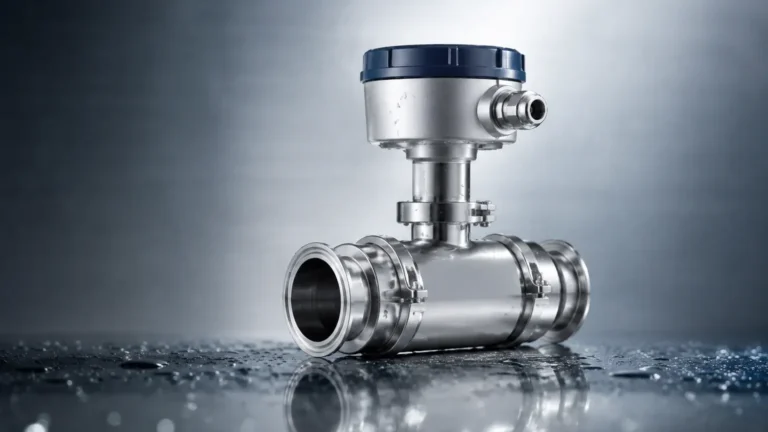
Magmeters use Faraday’s Law of Induction to measure the flow of conductive liquids. While the principle itself is not temperature-dependent, the physical construction is. High-temperature magmeters utilize specialized liners, such as PFA (Perfluoroalkoxy) or ceramic, and high-grade gaskets. Ceramic liners are particularly robust, capable of handling temperatures up to 250°C (482°F) or higher, depending on the electrode material.
3. Ultrasonic Flow Meters (Transit-Time)
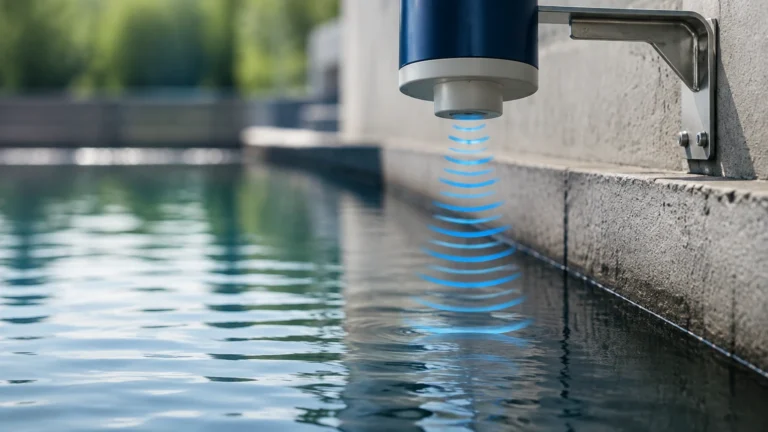
Ultrasonic meters measure the time difference between sound waves traveling upstream and downstream. In high-temperature scenarios, "clamp-on" ultrasonic meters are often preferred because the transducers do not come into direct contact with the hot fluid. However, high-temperature couplants and specialized transducers are required to maintain signal integrity through the pipe wall at temperatures exceeding 150°C (302°F).
4. Differential Pressure (DP) Flow Meters
DP meters, utilizing orifice plates, Venturi tubes, or Pitot tubes, are among the most traditional methods for high-heat measurement. The primary advantage is that the sensing element (the orifice plate) is purely mechanical and made of heat-resistant alloys. Impulse lines can be used to distance the electronic DP transmitter from the hot process pipe, allowing for the measurement of fluids at extremely high temperatures, often exceeding 500°C (932°F).
Key Selection Criteria for High Temperature Liquid Flow Meters
Choosing a high temperature liquid flow meter involves more than just checking the temperature rating. Engineers must evaluate the following technical parameters to ensure system reliability:
Thermal Expansion and Material Compatibility
As temperatures rise, the internal diameter of the flow meter and the pipe expands. This change in cross-sectional area can introduce measurement errors if not compensated for by the flow computer. Furthermore, the meter body must be constructed from materials like 316L Stainless Steel, Hastelloy, or Monel to prevent oxidation and maintain mechanical strength at peak temperatures.
Viscosity Changes
Many liquids, particularly oils and polymers, exhibit significant changes in viscosity as temperature fluctuates. A meter that works well at 200°C (392°F) might provide inaccurate readings if the process cools to 100°C (212°F) during startup or shutdown. Technologies like Coriolis or DP meters are particularly sensitive to these changes and require robust temperature compensation algorithms.
Electronics Protection
Standard industrial electronics are typically rated for ambient temperatures up to 60°C or 85°C (140°F to 185°F). In high-temperature applications, the heat conducted through the meter body or radiated from the pipe can easily exceed these limits. Look for meters with:
* Remote Mount Electronics: The transmitter is housed in a separate enclosure connected by a cable.
* Cooling Fins: Integrated heat sinks that dissipate heat before it reaches the sensor head.
* Extended Necks: Physical separation between the process flange and the transmitter housing.
For a detailed look at industrial measurement solutions and technical support for complex applications, you can visit the Main Page of professional instrumentation providers.
Practical Selection Table
| Technology | Typical Max Temp | Advantages | Limitations |
| :— | :— | :— | :— |
| Vortex | 400°C (752°F) | No moving parts; very stable. | Requires minimum Reynolds number; sensitive to vibration. |
| Electromagnetic | 250°C (482°F) | No pressure drop; handles slurries. | Requires conductive liquid; liner material limits. |
| Ultrasonic | 200°C+ (392°F+) | Non-invasive; no pressure drop. | Requires high-temp couplant; signal attenuation. |
| Coriolis | 350°C (662°F) | Direct mass flow; high accuracy. | High initial cost; bulky at large diameters. |
| DP (Orifice) | 500°C+ (932°F+) | Proven technology; very high temp. | Permanent pressure loss; requires regular inspection. |
Installation Considerations and Best Practices
Proper installation is as critical as the selection of the meter itself. High-temperature environments introduce mechanical stresses that can lead to leaks or instrument failure.
1. Thermal Insulation: While it is common to insulate process piping, the flow meter's transmitter and junction box should remain uninsulated to allow for convective cooling. Only the meter body and the pipe should be lagged.
2. Orientation: For steam or high-temperature liquid applications, mounting the meter in a horizontal pipe with the transmitter positioned to the side (rather than on top) can prevent rising heat from damaging the electronics.
3. Expansion Loops: Ensure that the piping system has adequate expansion loops or bellows. Thermal expansion can exert massive mechanical forces on flow meter flanges, potentially causing gasket failure or cracking the meter body.
4. Gasket Selection: Use spiral-wound gaskets or reinforced graphite gaskets. Standard rubber or low-grade PTFE gaskets will degrade rapidly at high temperatures, leading to hazardous leaks.
Common Risks and Limitations
Even with the correct high temperature liquid flow meter, certain risks remain inherent to high-heat operations:
* Signal Drift: Prolonged exposure to heat can cause the calibration of sensors to drift. Regular verification against a reference standard is recommended.
* Thermal Shock: Rapid changes in temperature (e.g., during a sudden process upset) can crack ceramic liners or damage sensitive internal components. Systems should be designed for gradual ramp-up and ramp-down.
* Scaling and Deposition: High temperatures can accelerate the buildup of scale or coke inside the meter, especially in chemical and oil applications. This changes the internal geometry and degrades accuracy.
Frequently Asked Questions (FAQs)
Q: Can I use a standard flow meter if I only exceed the temperature limit occasionally?
A: No. Exceeding the rated temperature even briefly can cause permanent damage to seals, liners, or electronic components, leading to immediate failure or safety hazards.
Q: How does temperature affect the accuracy of a flow meter?
A: Temperature affects fluid density and viscosity, as well as the physical dimensions of the meter. High-quality meters include integrated temperature sensors (like PT100s) to perform real-time compensation for these variables.
Q: Is a remote-mounted transmitter always necessary?
A: It is highly recommended for any application where the process temperature exceeds 120°C (248°F) or where the ambient temperature near the pipe is consistently high. It significantly extends the lifespan of the electronics.
Q: What is the best meter for high-temperature thermal oil?
A: Vortex and Ultrasonic (high-temp version) meters are frequently used for thermal oil because they handle the low conductivity and high temperature of the fluid effectively without the maintenance requirements of mechanical meters.
Conclusion
Successfully implementing a high temperature liquid flow meter requires a balance between robust mechanical design and sophisticated electronic compensation. By understanding the limitations of different measurement principles—such as the liner constraints of magmeters or the Reynolds number requirements of vortex meters—engineers can select a solution that provides accurate data while withstanding the rigors of high-heat environments. Always consult with the manufacturer to confirm that the specific alloy and seal materials are compatible with both the chemical composition and the thermal profile of your process fluid.