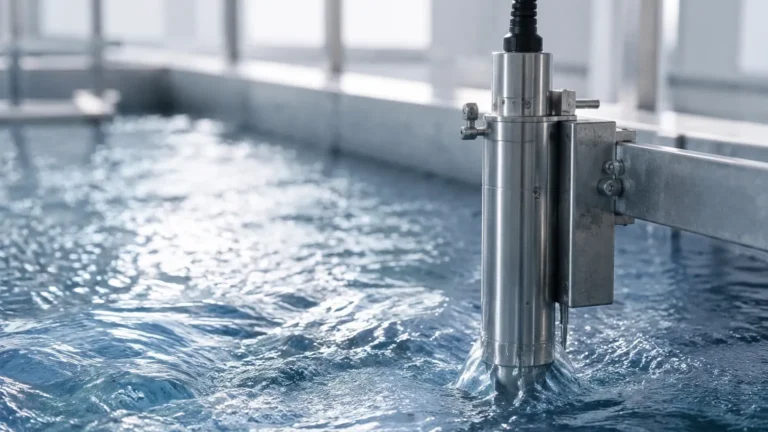
Non Contact Water Level Sensor
Non Contact Water Level Sensor
In industrial process control and environmental monitoring, the ability to measure liquid levels without physical contact is a significant advantage. A non contact water level sensor allows for precise monitoring while eliminating risks associated with sensor fouling, corrosion, or mechanical wear. These instruments are essential in sectors ranging from wastewater treatment and chemical processing to food production and irrigation management.
Choosing the right technology requires an understanding of the underlying physics, the environmental constraints of the application, and the specific requirements of the installation site. This guide examines the primary technologies used in non-contact level measurement, provides selection criteria, and offers practical engineering advice for implementation.
Measurement Principles of Non-Contact Sensors
Non-contact level measurement primarily relies on two technologies: Ultrasonic and Radar (Radio Detection and Ranging). Both operate on the "Time-of-Flight" (ToF) principle, but they utilize different types of waves and interact with the environment in distinct ways.
Ultrasonic Level Measurement
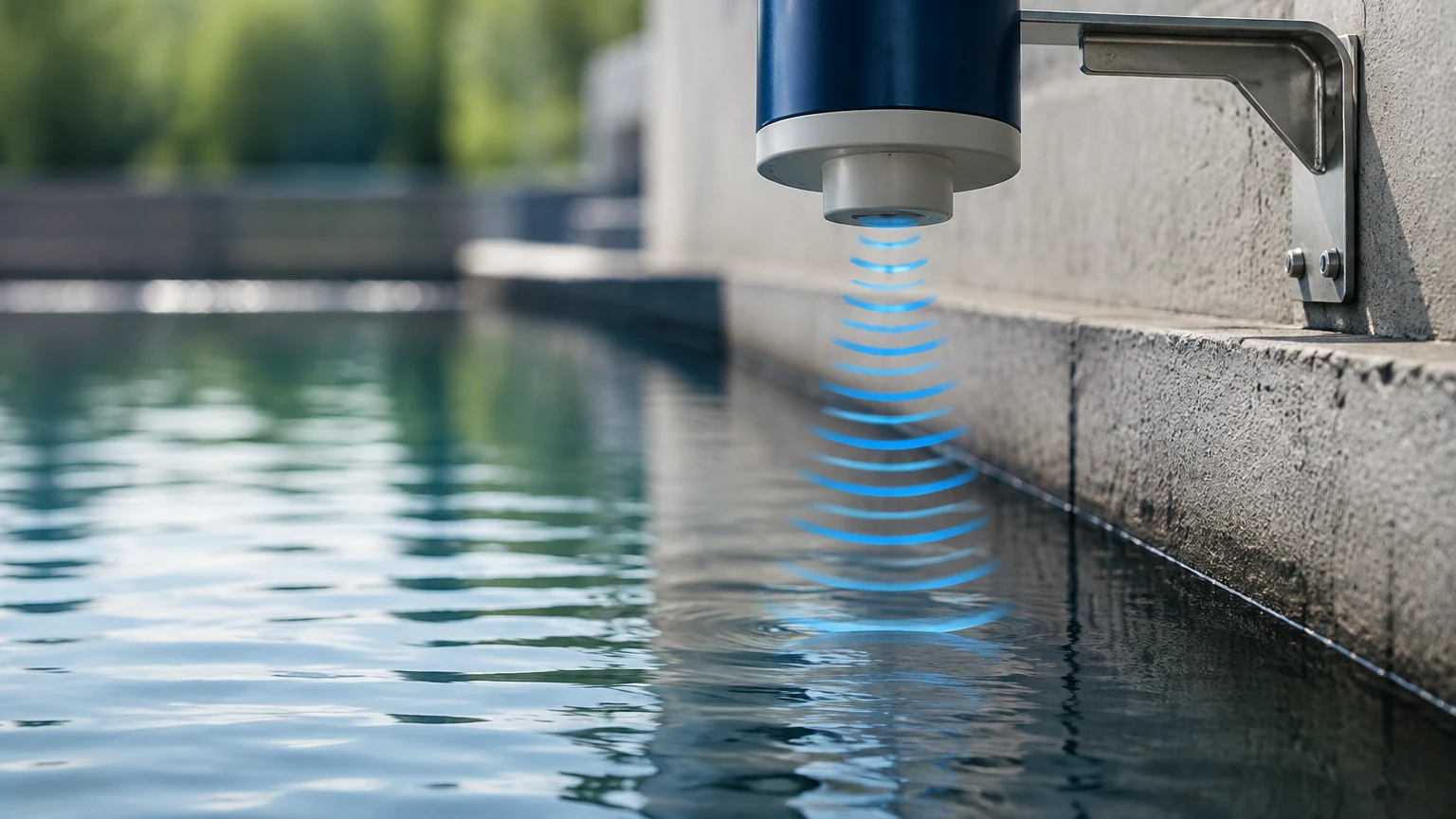
Ultrasonic sensors utilize a piezoelectric crystal to generate high-frequency sound waves (typically between 20 kHz and 200 kHz). These sound pulses travel through the air, reflect off the surface of the water, and return to the sensor. The sensor measures the time interval between the emission and the reception of the pulse.
Calculation formula:
`Distance = (Speed of Sound × Time) / 2`
Because the speed of sound in air is approximately 340 m/s at 20°C but varies significantly with temperature, most high-quality ultrasonic sensors include an integrated temperature probe to compensate for these changes. However, ultrasonic waves require a medium (air or gas) to travel, meaning they cannot function in a vacuum.
Radar Level Measurement
Radar sensors emit high-frequency electromagnetic waves, usually in the microwave spectrum. These waves travel at the speed of light. When they hit a surface with a different dielectric constant than air (such as water), a portion of the energy is reflected back to the antenna.
There are two main types of radar technology used in a non contact water level sensor:
1. Pulse Radar: Similar to ultrasonic, it sends a short pulse and measures the time of flight. It is energy-efficient and suitable for many standard applications.
2. FMCW (Frequency Modulated Continuous Wave): The sensor emits a continuous signal with a constantly changing frequency. The distance is calculated based on the frequency difference between the emitted and received signals. FMCW radar offers much higher accuracy and is better at filtering out noise in complex tank geometries.
Radar technology is generally divided by frequency bands, such as 26 GHz and 80 GHz. Higher frequencies (80 GHz) allow for narrower beam angles, which are critical for avoiding internal obstructions like ladders or agitators.
Technical Comparison: Ultrasonic vs. Radar
When selecting a non contact water level sensor, engineers must weigh the pros and cons of each technology based on the specific process conditions.
| Feature | Ultrasonic Sensors | Radar Level Meters |
| :— | :— | :— |
| Medium Requirement | Requires air/gas | Can operate in vacuum |
| Temperature Impact | High (requires compensation) | Negligible |
| Pressure Impact | Significant (affects sound speed) | Negligible |
| Dust/Steam Sensitivity | High (can attenuate sound) | Low (microwaves penetrate dust/steam) |
| Foam Sensitivity | High (absorbs sound) | Moderate (depends on foam density) |
| Typical Range | 0.25m to 15m | 0.1m to 30m+ (up to 120m for 80GHz) |
| Cost | Lower | Higher |
| Beam Angle | Wide (typically 10°–15°) | Narrow (as low as 3° for 80GHz) |
For a comprehensive overview of available technologies and specific model specifications, you may visit the Main Page of our product catalog.
Key Selection Criteria for Industrial Applications
Selecting the appropriate sensor involves more than just choosing a technology; it requires a detailed analysis of the application environment.
1. Measuring Range and Dead Zone
Every non-contact sensor has a "dead zone" or "blocking distance" directly beneath the sensor face where measurements are impossible. For ultrasonic sensors, this is typically 0.2m to 0.5m. Radar sensors usually have much smaller dead zones, sometimes as little as 0.05m. Ensure the sensor is mounted high enough so the water level never enters this zone.
2. Dielectric Constant (εr)
Radar sensors depend on the dielectric constant of the liquid to reflect the signal. Water has a high dielectric constant (εr ≈ 80), making it an excellent reflective surface for radar. However, if the water contains high levels of oil or other low-dielectric contaminants, signal strength may decrease.
3. Tank Geometry and Internal Obstructions
In confined spaces or tanks with internal structures (cooling coils, mixers, ladders), the beam angle is critical. A wide beam will hit these obstructions and create "false echoes." In such cases, an 80 GHz radar with a narrow beam is preferred over ultrasonic sensors.
4. Environmental Conditions
* Steam and Vapor: If the water is hot and creating heavy steam, ultrasonic signals may be scattered or absorbed. Radar is largely unaffected by vapor.
* Turbulence: Rapidly moving water surfaces can scatter signals. Signal processing software (False Echo Suppression) can help, but mechanical solutions like stilling wells may be necessary for extreme turbulence.
Installation Best Practices
Correct installation is the most critical factor in ensuring the reliability of a non contact water level sensor.
1. Vertical Alignment: The sensor must be mounted perfectly perpendicular to the liquid surface. Even a few degrees of tilt can cause the reflected signal to miss the receiver, especially in radar applications.
2. Avoid the Center: In cylindrical tanks, do not mount the sensor in the exact center. This can lead to multiple reflections (parabolic effect) that confuse the sensor's processing unit.
3. Nozzle Height and Diameter: If mounting on a nozzle, ensure the sensor face extends slightly past the bottom of the nozzle to prevent interference from the nozzle walls. If using a high-frequency radar, the nozzle diameter can be smaller.
4. Distance from Walls: Maintain a minimum distance from the tank wall (typically 1/10th of the tank height or at least 200mm) to avoid side-wall interference.
5. Inflow Protection: Never install the sensor directly above the point where water enters the tank. The falling liquid will create noise and false readings.
Limitations and Challenges
While non-contact sensors are highly versatile, they are not universal solutions. Engineers should be aware of the following limitations:
* Heavy Foam: Thick, dense foam can absorb both ultrasonic and radar signals. If the foam is light and airy, radar can often penetrate it to see the liquid below, but ultrasonic will usually fail. In cases of persistent heavy foam, a hydrostatic pressure transmitter or a magnetic level gauge might be more appropriate.
* Extreme Temperatures: While radar is unaffected by temperature, the sensor housing and electronics have limits (typically up to 150°C or 250°C for specialized models). Ultrasonic sensors are usually limited to below 80°C.
* Signal Attenuation in Solids: If the "water" is actually a slurry with high solids content, the reflective properties change. Testing is recommended for non-standard fluids.
Frequently Asked Questions (FAQ)
Q: Can a non contact water level sensor measure through a plastic tank lid?
A: Radar sensors can often measure through plastic or fiberglass tank tops because electromagnetic waves penetrate non-conductive materials. Ultrasonic sensors cannot, as the sound waves will reflect off the lid.
Q: How do I handle condensation on the sensor face?
A: Condensation can attenuate ultrasonic signals. Many modern radar sensors feature a PTFE or drip-off antenna design that allows droplets to run off without affecting the measurement. Regular cleaning or air purging may be required for ultrasonic sensors in high-humidity environments.
Q: What is the difference between 2-wire and 4-wire sensors?
A: 2-wire sensors use the same pair of wires for power and the 4-20mA output signal, making them easier to install. 4-wire sensors have separate wires for power and signal, which is often necessary for high-power devices or when integrated heaters/displays are used.
Q: Is calibration required frequently?
A: Generally, no. Since there are no moving parts and no contact with the medium, these sensors are very stable. Periodic verification against a manual measurement is recommended as part of standard maintenance protocols.
Conclusion and Engineering Support
Implementing a non contact water level sensor provides a low-maintenance, high-accuracy solution for industrial level monitoring. By understanding the differences between ultrasonic and radar technologies and following strict installation guidelines, facilities can significantly improve their process reliability.
For technical assistance in selecting the correct instrument for your specific chemical compatibility or range requirements, please refer to the detailed engineering resources on our Main Page. Our team provides customized OEM/ODM services and advanced level measurement solutions tailored to global industrial standards.