How Many Levels in the Silo
How Many Levels in the Silo
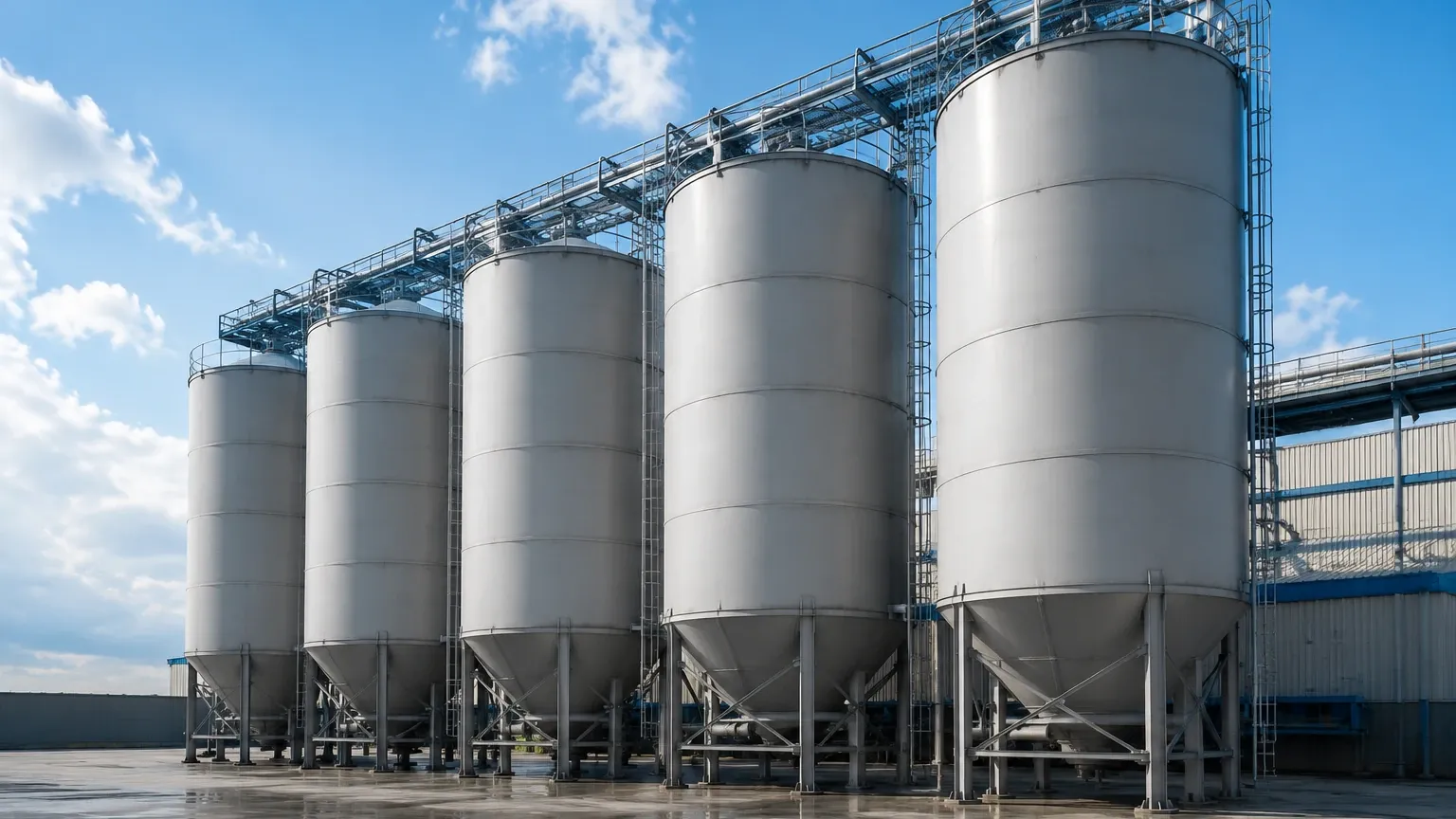
In industrial bulk storage, the question of "how many levels in the silo" refers to more than just a simple height measurement. It encompasses the complex task of determining the volume, inventory status, and safety margins of materials stored within large-scale vessels. For process engineers and facility managers, understanding the height of the material—whether it is grain, cement, chemical powder, or liquid—is essential for optimizing supply chains and preventing costly overfills or stockouts.
Accurate level measurement in silos is notoriously difficult due to the physical properties of bulk solids, such as the angle of repose, dust generation, and uneven surface profiles. To answer how many levels are currently present or required for monitoring, one must first understand the physics of measurement and the technologies available to capture these data points reliably.
Measurement Principles and Technologies
Before selecting a system to determine how many levels in the silo are occupied, it is vital to understand the underlying physical principles used by modern instrumentation. Level measurement is generally categorized into point level detection and continuous level measurement.
1. Radar Level Measurement (Non-Contact)
Radar technology, particularly high-frequency 80GHz FMCW (Frequency Modulated Continuous Wave) radar, is the current industry standard for silo applications. The instrument emits a high-frequency signal toward the material surface. The time it takes for the signal to reflect back is used to calculate the distance.
Because radar waves are electromagnetic, they are not affected by the heavy dust or vacuum conditions often found in silos. This makes them superior to ultrasonic sensors in environments like cement silos or flour mills. For a comprehensive look at these systems, engineers often visit the Main Page of specialized manufacturers to compare beam angles and frequency options.
2. Guided Wave Radar (GWR)
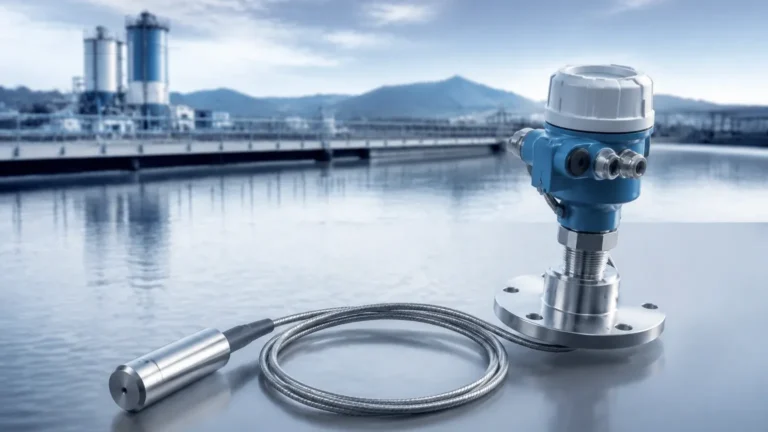
Unlike non-contact radar, GWR uses a cable or rod probe that extends into the silo. The radar pulse travels along the probe, reflects off the material surface, and returns. This method is highly effective for materials with low dielectric constants or in silos with narrow geometries where internal obstructions might interfere with a free-to-air radar beam.
3. Ultrasonic Level Sensors
Ultrasonic sensors use sound waves to measure distance. While cost-effective, they have significant limitations in silos. Sound waves can be absorbed by soft powders or scattered by heavy dust. Furthermore, changes in air temperature or pressure within the silo can alter the speed of sound, leading to inaccuracies unless the sensor includes sophisticated compensation algorithms.
4. Laser Level Transmitters
Laser sensors offer a very narrow beam, which is excellent for avoiding internal structures like ladders or agitators. However, they are highly sensitive to dust. If the silo environment is prone to clouding during filling, a laser sensor may lose its signal entirely.
Determining How Many Levels in the Silo: Point vs. Continuous
When designing a monitoring system, engineers must decide how many measurement points are necessary to ensure operational safety. This is the practical application of the query "how many levels in the silo."
Point Level Detection (Discrete Levels)
Many silos utilize point level switches to indicate specific thresholds, such as "High-High," "High," "Low," and "Low-Low."
* High-Level Alarms: Prevent overfilling and potential structural damage to the silo.
* Low-Level Alarms: Ensure that downstream processes do not run dry.
Common technologies for point detection include rotary paddle switches, vibrating fork sensors, and RF capacitance probes. If a facility only needs to know when a silo is nearly full or nearly empty, a few well-placed point level sensors are sufficient.
Continuous Level Measurement (Total Inventory)
For real-time inventory management, continuous measurement is required. This provides a constant 0-100% reading of the silo's capacity. In large-diameter silos, a single continuous sensor might not accurately reflect the total volume because solids do not sit flat. They form cones (filling) or craters (emptying). In these cases, the question of how many levels in the silo becomes a volumetric calculation requiring multi-point scanning or sophisticated software to account for the angle of repose.
Technical Selection Table
The following table provides a comparison of the most common technologies used to determine material levels in industrial silos.
| Technology | Best For | Accuracy | Dust Resistance | Typical Range |
| :— | :— | :— | :— | :— |
| 80GHz Radar | Fine powders, grains, aggregates | ±2 mm | Excellent | Up to 120m |
| Guided Wave Radar | Liquids, small silos, low dielectric | ±5 mm | Excellent | Up to 30m |
| Ultrasonic | Liquids, non-dusty solids | ±0.25% of range | Poor | Up to 15m |
| Rotary Paddle | Point level (High/Low) | N/A (Discrete) | High | N/A |
| Vibrating Fork | Fine powders, light solids | N/A (Discrete) | High | N/A |
Influencing Factors: Material Behavior and Silo Geometry
To accurately answer how many levels in the silo are currently active, one must account for the physical behavior of the stored medium.
The Angle of Repose
When bulk solids are poured into a silo, they form a conical pile. The angle between the horizontal plane and the slope of the pile is the angle of repose. If a sensor is mounted directly over the peak of the cone, it will report a higher level than the actual average volume. Conversely, if it is mounted near the wall, it will report a lower level. For precise volume mapping, the sensor should ideally be placed at 1/6th of the silo diameter from the wall, or multiple sensors should be used to average the height.
Bridging and Rat-Holing
In cohesive materials like wet sand or certain chemicals, the material may stick to the walls (bridging) or empty only from the center (rat-holing). In these scenarios, a level sensor might indicate that the silo is empty because the center is clear, while thousands of kilograms of material remain stuck to the sides. This is a critical safety concern, as the sudden collapse of a bridge can cause a catastrophic structural failure of the silo.
Installation Considerations
Proper installation is the difference between a reliable system and a constant source of maintenance headaches. When installing sensors to monitor how many levels in the silo are occupied, follow these engineering guidelines:
1. Avoid the Fill Stream: Never mount a sensor directly in the path of the incoming material. The falling product will cause false readings and may physically damage the instrument.
2. Nozzle Height and Diameter: For radar and ultrasonic sensors, the nozzle should be as short as possible. If the nozzle is too long or narrow, the signal may reflect off the internal edges of the nozzle (ringing), creating a "dead zone" at the top of the silo.
3. Internal Obstructions: Ensure the beam path is clear of ladders, braces, and pipes. Even a small bolt can reflect a radar signal, leading to an incorrect level reading.
4. Aiming Flanges: For solids, use an adjustable aiming flange (swivel mount). This allows the technician to point the sensor at the most representative part of the material surface, usually about halfway between the center and the wall.
Limitations of Level Measurement
No single technology is a universal solution. Understanding the limitations is key to answering the question of how many levels in the silo can be measured accurately.
* Dielectric Constant (εr): Radar depends on the reflectivity of the material. Materials with a very low dielectric constant (like plastic pellets or dry wood chips) reflect very little energy. In these cases, Guided Wave Radar or high-sensitivity non-contact radar is required.
* Extreme Temperatures: In applications like fly ash storage, temperatures can exceed 200°C. Sensors must be equipped with cooling jackets or stand-off pipes to protect the electronics.
* Signal Absorption: Heavy steam or chemical vapors can absorb ultrasonic signals. Radar is generally immune to this, but extremely dense dust clouds in very tall silos (over 60m) may occasionally attenuate even high-frequency radar signals.
Maintenance and Calibration
To ensure the system continues to accurately report how many levels in the silo are present, regular maintenance is required.
* Cleaning: Even "dust-proof" sensors can suffer from material buildup on the lens or probe. Many modern radar units feature an air purge connection to blow dust off the antenna automatically.
* Verification: Periodically verify the electronic reading against a manual "dip tape" measurement. This ensures that the sensor's calibration hasn't drifted and that no internal obstructions have developed.
Frequently Asked Questions (FAQs)
Q: How many sensors do I need for a 10-meter diameter silo?
A: For basic inventory, one high-quality 80GHz radar mounted at the 1/6th diameter position is usually sufficient. For high-accuracy custody transfer, three sensors or a 3D solids scanner may be required to account for surface irregularities.
Q: Can I use a liquid level sensor for solids?
A: Generally, no. Liquids have a flat surface, whereas solids have an angle of repose. Sensors designed for solids have specialized software algorithms to handle the diffuse reflections and uneven surfaces characteristic of bulk materials.
Q: How does dust affect the measurement?
A: Ultrasonic and laser sensors are significantly affected by dust. Radar (microwave) technology is largely unaffected because the wavelength is much larger than the dust particles, allowing the signal to pass through the cloud and reflect off the solid surface.
Q: What is the "Dead Zone" in level measurement?
A: The dead zone, or blocking distance, is the area directly below the sensor where it cannot take a measurement. For radar, this is usually 50mm to 200mm. For ultrasonic, it can be up to 500mm. It is important to account for this when calculating the maximum fill level.
Conclusion
Determining how many levels in the silo are occupied requires a combination of the right technology, correct installation, and an understanding of material physics. While point level switches provide essential safety backups, continuous radar measurement offers the most robust data for modern industrial automation. By selecting the appropriate instrument and following best practices for mounting and calibration, facilities can achieve precise inventory control and enhanced operational safety. For more detailed specifications on radar and ultrasonic hardware, you can Review product options and application support to find a solution tailored to your specific material and silo geometry.