Hydrocarbon Analyser
Hydrocarbon Analyser
In industrial process control and environmental monitoring, the hydrocarbon analyser serves as a critical instrument for detecting and quantifying organic compounds in gas or liquid streams. These devices are indispensable in industries ranging from petrochemical refining and natural gas processing to wastewater treatment and power generation. While level measurement instruments, such as those found on the Main Page of specialized manufacturers, track the volume and interface of liquids, the hydrocarbon analyser provides the qualitative and quantitative data necessary to ensure safety, regulatory compliance, and process efficiency.
Understanding the operational principles, selection criteria, and installation requirements of a hydrocarbon analyser is essential for engineers and plant managers tasked with maintaining complex industrial infrastructures.
Understanding Hydrocarbon Analysis in Industrial Processes
A hydrocarbon analyser is designed to measure the concentration of hydrocarbons—compounds consisting entirely of hydrogen and carbon. In industrial settings, these are often categorized as Total Hydrocarbons (THC), Non-Methane Hydrocarbons (NMHC), or specific volatile organic compounds (VOCs).
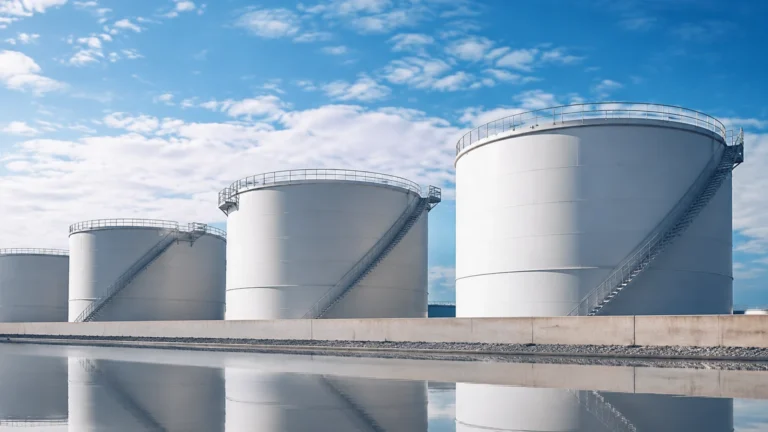
The primary role of these analysers is twofold: safety and process optimization. In storage tank farms, for example, monitoring the vapor space for explosive concentrations of hydrocarbons is a vital safety protocol. Similarly, in environmental applications, these instruments ensure that stack emissions or wastewater discharge levels remain within legal limits. When integrated with primary process hardware like level transmitters, they provide a comprehensive view of the health and safety of a storage or processing vessel.
Primary Measurement Technologies for Hydrocarbons
Before selecting a hydrocarbon analyser, it is necessary to understand the underlying measurement principles. Different technologies offer varying levels of sensitivity, selectivity, and durability.
Flame Ionization Detection (FID)
Flame Ionization Detection is widely considered the gold standard for measuring total hydrocarbon concentrations. The principle involves the combustion of organic compounds in a hydrogen-air flame. During this process, ions are produced. An electrode located near the flame collects these ions, creating an electrical current proportional to the number of carbon atoms in the sample.
* Advantages: High sensitivity, wide linear range, and excellent stability.
* Limitations: Requires a continuous supply of fuel gas (hydrogen) and support air, making it more complex to install in remote areas.
Non-Dispersive Infrared (NDIR)
NDIR analysers operate on the principle that hydrocarbon molecules absorb infrared (IR) light at specific wavelengths. A beam of IR light is passed through a sample cell, and a detector measures the amount of light absorbed by the target gas. This technology is highly effective for measuring specific hydrocarbons like methane ($CH_4$) or propane ($C_3H_8$).
* Advantages: No fuel gas required, low maintenance, and highly selective for specific gases.
* Limitations: Can be sensitive to cross-interference from other gases (like water vapor or $CO_2$) if not properly filtered.
Photoionization Detection (PID)
PID technology uses high-energy ultraviolet (UV) light to ionize hydrocarbon molecules. The resulting current is measured to determine the concentration. PID is most commonly used for detecting VOCs at very low concentrations (parts per billion or parts per million).
* Advantages: Extremely sensitive, fast response time, and often available in portable formats.
* Limitations: Not all hydrocarbons can be ionized by UV light; the lamp has a finite lifespan and requires periodic cleaning.
Integration with Level Measurement Systems
In the context of industrial automation, a hydrocarbon analyser rarely operates in isolation. It is frequently paired with level measurement instruments to provide a complete profile of a storage tank or process vessel. For instance, while a radar level meter or a magnetic level gauge (available via the Main Page) monitors the liquid level to prevent overfills, the hydrocarbon analyser monitors the headspace for leaks or hazardous gas buildup.
In wastewater treatment, hydrostatic level transmitters measure the depth of the water in a sump, while a hydrocarbon analyser monitors the surface for oil or fuel spills. This multi-sensor approach allows for automated emergency shutdowns or the activation of recovery systems if a hydrocarbon leak is detected alongside a sudden change in liquid level.
Key Selection Criteria for Hydrocarbon Analysers
Choosing the right hydrocarbon analyser requires an evaluation of the specific process conditions and the desired data output. The following table provides a comparison of common technologies used in industrial B2B applications.
| Feature | Flame Ionization (FID) | Non-Dispersive IR (NDIR) | Photoionization (PID) |
| :— | :— | :— | :— |
| Primary Target | Total Hydrocarbons (THC) | Specific Gases (e.g., Methane) | VOCs and Trace Organics |
| Detection Range | 0.1 ppm to 100% | 10 ppm to 100% | 1 ppb to 10,000 ppm |
| Response Time | < 2 seconds | 5–15 seconds | < 3 seconds |
| Calibration | Required (Propane/Methane) | Required (Target Gas) | Required (Isobutylene) |
| Utility Needs | Hydrogen, Air, Fuel | Power Only | Power Only |
| Best Use Case | Emission monitoring, high-accuracy process gas | Leak detection, safety monitoring | Environmental surveys, hazardous entry |
Environmental and Hazardous Area Ratings
Since many hydrocarbons are flammable, the analyser must often be installed in classified hazardous zones. Engineers must confirm that the device carries the appropriate ATEX, IECEx, or UL certifications for the specific zone (e.g., Zone 0, 1, or 2). Explosion-proof housings or intrinsically safe circuits are standard requirements for these environments.
Installation and Maintenance Best Practices
The accuracy of a hydrocarbon analyser is heavily dependent on the quality of the installation and the sample conditioning system.
1. Sampling System Design: For gas-phase analysers, the sample must be delivered to the sensor without condensation. This often requires heated sample lines (typically maintained at 150°C to 180°C) to keep heavy hydrocarbons in the vapor phase.
2. Filtration: Particulates and moisture can damage sensitive detectors like NDIR optics or FID burners. Multi-stage filtration is recommended to remove contaminants before they reach the measurement cell.
3. Venting: FID analysers produce a small amount of combustion exhaust. This must be safely vented to an area where it will not pose a hazard or interfere with other sensors.
4. Calibration Intervals: Regular calibration using certified span gases is mandatory. For critical safety applications, automated calibration cycles are often implemented to ensure the instrument has not drifted.
Limitations and Operational Risks
While highly effective, hydrocarbon analysers face several operational challenges:
* Sensor Poisoning: In PID and certain electrochemical sensors, exposure to high concentrations of silicones, lead, or sulfur compounds can "poison" the sensor, leading to a permanent loss of sensitivity.
* Cross-Sensitivity: NDIR sensors may misread moisture or other gases as hydrocarbons if the optical filters are not precisely tuned to the target hydrocarbon's absorption peak.
* Oxygen Dependency: FID sensors require a stable oxygen concentration in the sample or the support air to maintain a consistent flame. Fluctuations in oxygen can lead to false readings.
* Temperature Effects: Extreme ambient temperatures can affect the electronics and the physical properties of the gas sample. Analysers should be installed in climate-controlled enclosures if they are located in regions with high thermal variability.
Frequently Asked Questions (FAQs)
Q: Can a hydrocarbon analyser distinguish between different types of oil in water?
A: Standard THC analysers generally provide a total value. To distinguish between specific oil types, a gas chromatograph (GC) or a more sophisticated infrared spectrophotometer is required.
Q: How often does an FID analyser need a hydrogen cylinder change?
A: This depends on the flow rate, but a standard 50-liter cylinder typically lasts between 30 and 60 days of continuous operation. Many modern plants use hydrogen generators to eliminate the need for cylinders.
Q: Is it possible to use a hydrocarbon analyser for leak detection in underground pipes?
A: Yes, portable PID or FID units are frequently used for "sniffing" along pipeline routes. However, for fixed installations, point-source detectors or open-path IR systems are more common.
Q: What is the difference between a hydrocarbon analyser and a LEL (Lower Explosive Limit) detector?
A: A hydrocarbon analyser provides a precise concentration (e.g., in ppm), whereas an LEL detector is a safety device designed to trigger an alarm when the concentration reaches a percentage of the explosive threshold.
Conclusion and Confirmation
Before proceeding with the procurement of a hydrocarbon analyser, project teams should confirm the specific chemical composition of the process stream, the required detection limits, and the environmental conditions of the installation site. Ensuring compatibility between the analyser and existing level measurement infrastructure—such as the systems highlighted on the Main Page—is vital for a cohesive industrial automation strategy.
By selecting the appropriate measurement principle (FID, NDIR, or PID) and adhering to rigorous installation standards, facilities can achieve reliable hydrocarbon monitoring that protects personnel, the environment, and the bottom line.