Hydrocarbon Processing Research Equipment
Hydrocarbon Processing Research Equipment
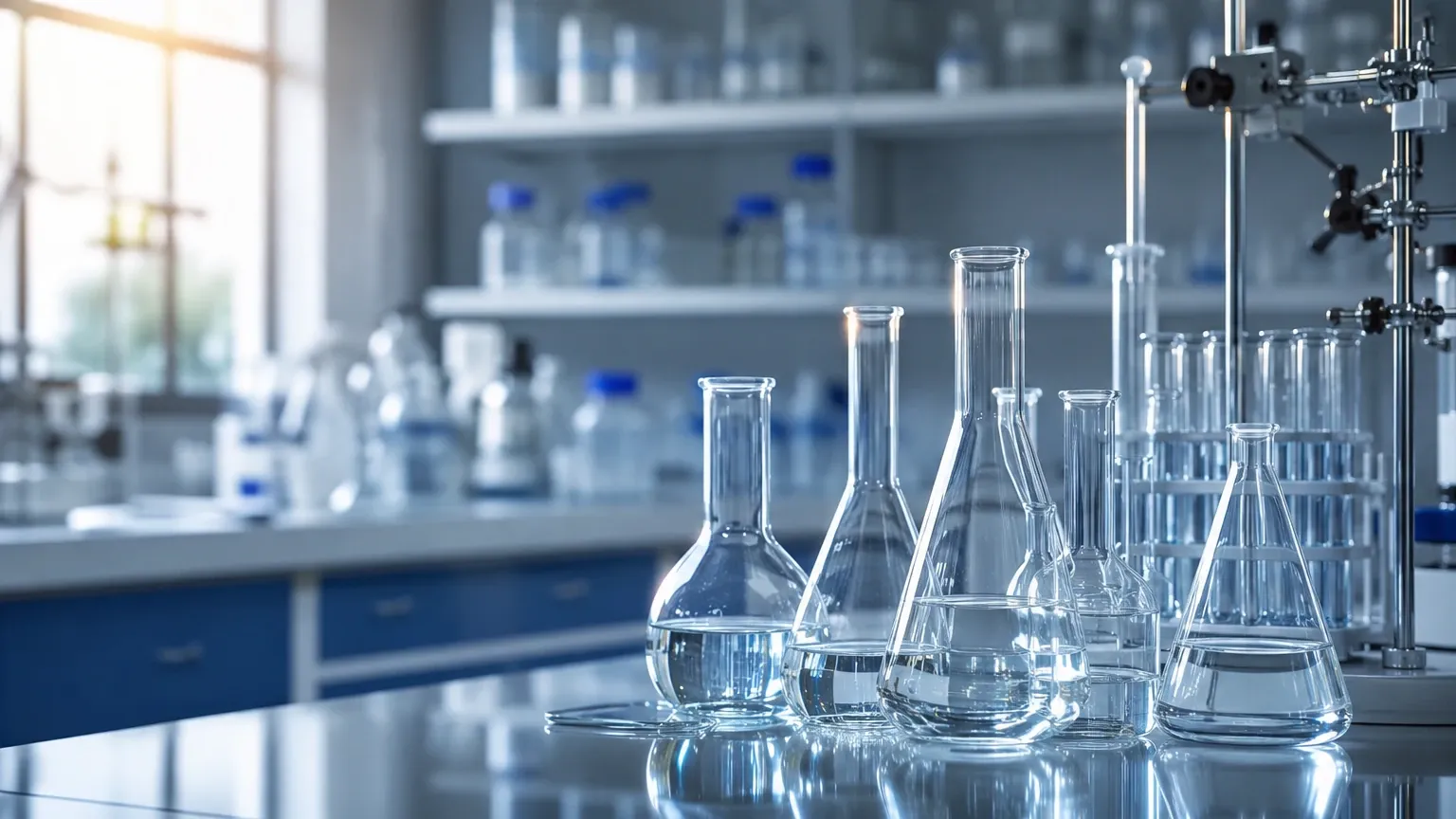
In the specialized field of petrochemical and refinery R&D, the precision of hydrocarbon processing research equipment directly dictates the validity of experimental data. Whether operating a bench-top reactor or a complex pilot plant designed for catalytic cracking, the ability to monitor and control fluid levels is critical. Hydrocarbons present unique challenges for instrumentation, including low dielectric constants, high volatility, and often extreme temperature or pressure conditions. Selecting the appropriate level measurement technology requires a deep understanding of the physical principles involved and the specific requirements of the research environment.
The Role of Level Measurement in Hydrocarbon Research
Hydrocarbon processing research equipment encompasses a wide range of systems, from distillation columns and separators to high-pressure reactors. In these environments, level measurement is not merely about inventory tracking; it is essential for mass balance calculations, residence time control, and safety interlocking.
Research-scale operations often involve smaller vessel sizes where traditional industrial sensors may encounter "dead zones" or interference from internal structures like agitators and baffles. Furthermore, the fluids being studied—ranging from light naphtha to heavy vacuum gas oils—exhibit varying physical properties that can affect sensor accuracy. Engineers must choose instruments that provide high repeatability and sensitivity to ensure that small-scale process changes are accurately captured and can be scaled up to industrial production.
Core Measurement Principles and Technologies
To select the right instrumentation for hydrocarbon processing research equipment, one must first understand the fundamental measurement principles. The following technologies are the most prevalent in modern research facilities.
1. Guided Wave Radar (GWR)
Guided Wave Radar operates on the principle of Time Domain Reflectometry (TDR). A low-energy electromagnetic pulse is guided along a probe (cable or rod) that submerged in the process medium. When the pulse hits the surface of the liquid, a portion of the energy is reflected back to the transmitter due to the change in the dielectric constant ($ε_r$).
For hydrocarbon research, GWR is often the preferred choice. Hydrocarbons typically have low dielectric constants (ranging from 1.7 to 4.0). Because the pulse is concentrated along a probe, GWR provides a much stronger return signal than non-contact radar, making it highly reliable for low-$ε_r$ fluids. Additionally, GWR is excellent for measuring the interface between two liquids, such as oil and water, which is a common requirement in separation research.
2. Non-Contact Radar (FMCW)
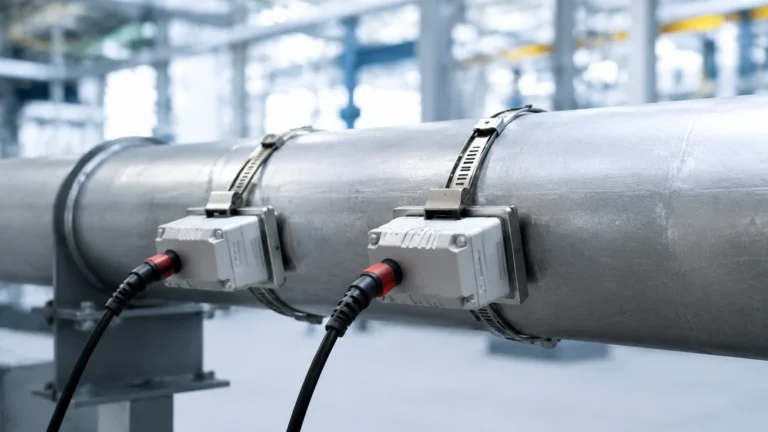
Frequency Modulated Continuous Wave (FMCW) radar transmits a continuous signal with a constantly changing frequency. The difference between the transmitted and received frequency is proportional to the distance. Unlike GWR, non-contact radar does not have a probe in the medium, which is advantageous when dealing with highly corrosive or viscous hydrocarbons that might coat a probe.
In research settings, high-frequency radar (e.g., 80 GHz) is frequently used because it offers a narrow beam angle. This allows the sensor to avoid internal obstructions in small-diameter vessels, a common constraint in hydrocarbon processing research equipment.
3. Magnetic Level Gauges (MLG)
Magnetic level gauges utilize a float containing an internal magnet assembly that moves with the liquid level inside a bypass chamber. Outside the chamber, a series of magnetic flags or a transmitter responds to the float's position.
MLGs provide a clear visual indication and are highly robust for high-pressure and high-temperature research. They are particularly useful when a physical visual reference is needed alongside an electronic signal for safety redundancy.
4. Hydrostatic Pressure Transmitters
This method measures the head pressure exerted by the liquid column. The level is calculated using the formula: $P = ρgh$, where $P$ is pressure, $ρ$ (rho) is the density, $g$ is gravity, and $h$ is the height. While simple and cost-effective, this method is density-dependent. In research where temperatures fluctuate significantly, the density of the hydrocarbon changes, requiring compensation to maintain accuracy.
Technical Selection Criteria for Research Environments
When evaluating instrumentation for hydrocarbon processing research equipment, several technical factors must be prioritized to ensure the equipment meets the rigorous demands of the lab or pilot plant.
* Dielectric Constant ($ε_r$): As noted, hydrocarbons have low dielectric constants. Instruments must be sensitive enough to detect reflections from these surfaces. If the $ε_r$ is below 1.9, guided wave radar or specialized high-sensitivity non-contact radar is usually required.
* Vessel Geometry: Research reactors are often small. The "blocking distance" or "dead zone" at the top and bottom of the sensor must be minimized to maximize the usable measurement range.
* Process Conditions: Research often involves extreme conditions. Sensors must be rated for the specific pressures (often exceeding 100 bar) and temperatures (up to 450°C or higher) encountered in hydrocracking or thermal processes.
* Materials of Construction: Compatibility with hydrocarbons and any catalysts or additives is essential. 316L stainless steel is standard, but exotic alloys like Hastelloy may be necessary for corrosive environments.
Comparison of Level Measurement Technologies
| Technology | Best For | Advantages | Limitations |
| :— | :— | :— | :— |
| Guided Wave Radar | Interface measurement, low dielectric fluids | Highly accurate, unaffected by foam or vapor | Probe can be fouled by heavy waxes |
| Non-Contact Radar | Corrosive or viscous media, small vessels | No contact with media, narrow beam angle | Can be affected by heavy surface turbulence |
| Magnetic Level Gauge | High pressure/temp, visual reference | Robust, no power needed for visual | Requires bypass piping, float can stick |
| Hydrostatic | Simple storage tanks, constant density | Low cost, easy installation | Dependent on fluid density and vessel pressure |
| Ultrasonic | Water-based fluids, open atmospheric tanks | Low cost, non-contact | Not suitable for vacuum or high-pressure hydrocarbons |
Installation and Engineering Considerations
Proper installation is as critical as technology selection. For hydrocarbon processing research equipment, space is often at a premium, and safety is paramount.
1. Nozzle Placement: For radar-based systems, the sensor should not be placed too close to the vessel wall to avoid false reflections. In small research vessels, using a stilling well or a coaxial probe (for GWR) can eliminate these interference issues.
2. Vapor Space Management: Hydrocarbons often generate heavy vapors or gas blankets (like Nitrogen or CO2). Radar technologies are generally unaffected by these, whereas ultrasonic sensors will fail due to changes in the speed of sound.
3. Hazardous Area Certification: Almost all hydrocarbon research environments are classified as hazardous zones. Instruments must carry appropriate ATEX, IECEx, or UL certifications (Explosion-proof or Intrinsically Safe).
4. Integration with Data Acquisition: Research equipment must interface seamlessly with LabVIEW, PLC, or DCS systems. Standard 4-20mA HART, Modbus, or Foundation Fieldbus protocols should be selected based on the facility's infrastructure. To explore specific integration options, researchers can consult the Main Page for detailed technical specifications.
Limitations and Common Risks
Despite advancements in technology, certain risks remain inherent in measuring hydrocarbons in a research context:
* Paraffin and Wax Buildup: In heavy oil research, waxes can precipitate and coat sensors. This is particularly problematic for GWR probes and magnetic floats. Heated jackets or non-contact sensors are often required in these cases.
* Boiling and Turbulence: In high-temperature reactors, surface turbulence can scatter radar signals. Selecting a radar with advanced signal processing algorithms can help filter out this noise.
* Phase Changes: If a hydrocarbon moves from liquid to gas phase (or vice versa) rapidly, it can create measurement instability. Understanding the thermodynamics of the process is vital for interpreting level data correctly.
Frequently Asked Questions (FAQ)
Q: Why is ultrasonic level measurement rarely used in hydrocarbon research?
A: Ultrasonic waves require a medium (air or gas) to travel. Changes in vapor composition, pressure, and temperature—all common in hydrocarbon processing—alter the speed of sound, leading to significant errors. Furthermore, hydrocarbons often absorb ultrasonic energy rather than reflecting it.
Q: How do I measure the interface between oil and water in a small separator?
A: Guided Wave Radar is the industry standard for interface measurement. It can detect the top of the upper layer (oil) and the interface with the lower layer (water) simultaneously, provided the upper layer has a lower dielectric constant than the lower layer.
Q: What is the impact of a vacuum on level measurement?
A: Vacuum conditions preclude the use of ultrasonic sensors. Radar (both GWR and non-contact) works perfectly in a vacuum because electromagnetic waves do not require a medium for propagation.
Q: Can I use a hydrostatic transmitter if the temperature of my hydrocarbon changes?
A: Yes, but you must use a system that includes temperature compensation. By measuring the temperature and knowing the fluid's thermal expansion coefficient, the DCS can calculate the corrected density and provide an accurate level reading.
Conclusion
Selecting the right level measurement components for hydrocarbon processing research equipment is a balance of physics, engineering, and practical constraints. By prioritizing technologies like Guided Wave Radar for low-dielectric fluids and ensuring robust installation practices, researchers can ensure the high-quality data necessary for innovation in the energy sector. For those designing new pilot systems or upgrading existing laboratory setups, reviewing a comprehensive range of industrial-grade sensors is the first step toward achieving process excellence. You can Review product options and application support to find the specific instrumentation that aligns with your research goals and safety requirements.