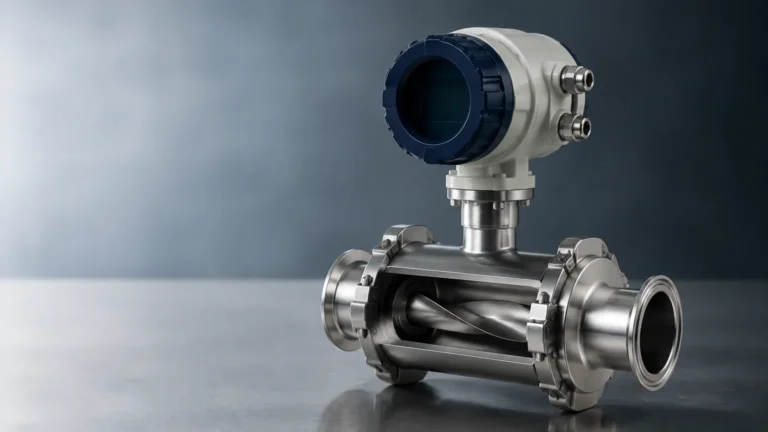
In Line Moisture Analyzer
In Line Moisture Analyzer
In industrial process control, moisture content is a critical parameter that directly influences product quality, shelf life, and processing efficiency. Traditional laboratory methods, such as the loss-on-drying (LOD) technique, often involve significant time delays, sometimes taking hours to produce a result. By the time a deviation is detected in a lab sample, thousands of kilograms of product may have already been processed out of specification. An in line moisture analyzer addresses this gap by providing real-time, continuous data directly from the production line, allowing for immediate automated adjustments to dryers, mixers, or hydration systems.
For engineers and plant managers, selecting the right in line moisture analyzer requires a deep understanding of the physical properties of the material being measured and the environment in which the sensor will operate. This guide explores the fundamental measurement principles, selection criteria, and installation best practices for modern moisture analysis systems.
Understanding In-Line Moisture Measurement Principles
Before selecting a specific instrument, it is essential to understand the physics behind how moisture is detected within a moving process stream. Most industrial moisture analyzers do not measure water directly but rather measure a physical property of the material that changes in proportion to its water content.
Near-Infrared (NIR) Spectroscopy
NIR technology utilizes the absorption characteristics of water molecules in the near-infrared spectrum (typically between 700 and 2500 nm). The sensor emits specific wavelengths of light onto the material. Water molecules absorb energy at specific bands; by measuring the ratio of reflected light at these absorption wavelengths versus reference wavelengths, the analyzer calculates the moisture percentage.
* Type: Non-contact.
* Depth: Surface measurement only (1–3 mm penetration).
* Suitability: Ideal for granules, powders, and flakes where surface moisture is representative of the whole.
Microwave Resonance and Transmission
Microwave moisture measurement exploits the high dielectric constant of water compared to most dry solids. Water has a dielectric constant of approximately 80, while most dry industrial materials range between 2 and 5. When microwaves pass through a material, the presence of water slows down the wave (phase shift) and reduces its amplitude (attenuation).
* Type: Contact or non-contact (through-transmission).
* Depth: Bulk measurement (penetrates the entire material cross-section).
* Suitability: Materials with varying particle sizes or where internal moisture differs from surface moisture, such as coal, ores, or thick grain layers.
Capacitance and Radio Frequency (RF)
These sensors measure the change in the dielectric constant of a material as it passes through an electromagnetic field generated by the sensor. Because the sensor forms a capacitor with the material as the dielectric, changes in moisture result in measurable changes in capacitance.
* Type: Contact-based.
* Depth: Penetrating (up to 100 mm depending on sensor design).
* Suitability: Lower-cost applications in silos, chutes, or conveyor belts for consistent materials like sand or wood chips.
Key Technologies for Real-Time Moisture Analysis
Choosing between these technologies depends on the physical state of the material (solid, liquid, or gas) and the required precision. While Welk provides a wide range of level measurement solutions on our Main Page, moisture analysis often serves as the secondary critical data point for comprehensive process automation.
1. NIR Reflectance Sensors
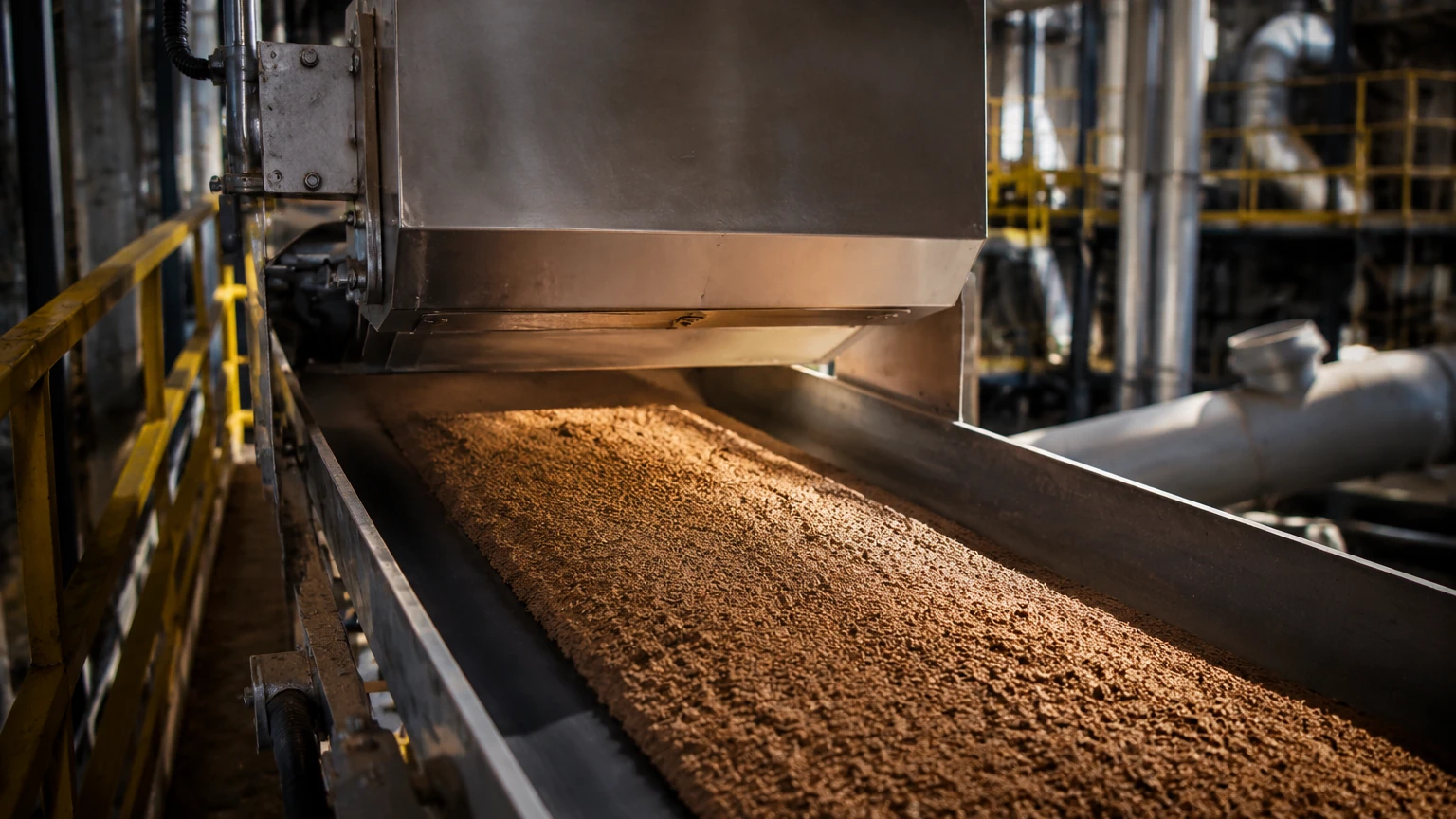
These are the most common in-line moisture analyzers for food and chemical processing. They are mounted above conveyor belts or at sight glasses. Because they are non-contact, they are highly hygienic and easy to maintain. However, they are sensitive to changes in material color and ambient light if not properly shielded.
2. Microwave Flow-Through Sensors
For liquids, slurries, or pastes moving through a pipe, microwave flow-through sensors are preferred. The pipe section is replaced with a specialized sensor body that measures the bulk moisture of the fluid as it flows. This is common in wastewater treatment (sludge dewatering) and oil-water cut measurements.
3. Capacitive Probes
Often used in the construction and agriculture sectors, these probes are designed to be embedded in the flow of material, such as inside a screw conveyor or at the exit of a silo. They are rugged and can withstand abrasive materials like gravel or aggregate.
Selection Criteria for Industrial Applications
When evaluating an in line moisture analyzer, use the following table to narrow down the technology based on your specific process requirements.
Technology Selection Table
| Feature | NIR (Near-Infrared) | Microwave | Capacitance/RF |
| :— | :— | :— | :— |
| Measurement Type | Surface | Bulk (Volume) | Bulk (Volume) |
| Contact Method | Non-contact | Contact or Non-contact | Contact |
| Accuracy | High (±0.1% to 0.5%) | High (±0.2% to 1.0%) | Moderate (±0.5% to 2.0%) |
| Material Color Sensitivity | High | None | None |
| Particle Size Sensitivity | Moderate | Low | High |
| Typical Applications | Food, Pharma, Chemicals | Mining, Pulp & Paper | Construction, Agriculture |
| Installation Point | Above belt, Sight glass | Pipe, Chute, Belt | Silo, Screw conveyor |
Critical Evaluation Factors
1. Moisture Range: Some sensors are optimized for trace moisture (0–1%), while others are designed for high-moisture slurries (up to 90%).
2. Material Consistency: If the material's density or temperature fluctuates wildly, a sensor with integrated temperature compensation and density normalization (common in microwave systems) is required.
3. Process Environment: Consider if the sensor needs to be ATEX/Ex-rated for explosive dust (like flour or coal) or if it needs a high IP rating for wash-down environments.
Installation Guidelines and Best Practices
Proper installation is as important as the technology itself. An in line moisture analyzer can only be as accurate as the sample it "sees."
Mounting and Positioning
* Stable Flow: For conveyor belt installations, ensure the material height is consistent. If the belt is only partially full, the sensor may read the belt surface instead of the product. Use a leveling plow if necessary to create a smooth, flat surface for NIR sensors.
* Distance: For NIR sensors, maintain the manufacturer-specified stand-off distance (typically 150 mm to 300 mm). Variations in distance can lead to focal errors and inaccurate readings.
* Pipe Orientation: For liquid moisture analysis, install the sensor in a vertical pipe section with an upward flow. This ensures the pipe is always full and prevents air pockets from interfering with the measurement.
Calibration and Validation
In-line analyzers are secondary measurement devices. They must be calibrated against a primary reference method (usually LOD oven drying).
1. Sample Collection: Collect samples directly from the process line at the exact moment the analyzer is taking a reading.
2. Representative Sampling: Ensure the lab sample is sealed immediately to prevent moisture loss before testing.
3. Multiple Points: Calibrate across the entire expected moisture range (e.g., if your process target is 10%, calibrate with samples at 8%, 10%, and 12%).
Limitations and Operational Challenges
While highly effective, an in line moisture analyzer is subject to certain physical limitations:
* Density Variations: Capacitance and microwave sensors are sensitive to the bulk density of the material. If the material is packed more tightly at some times than others, the dielectric reading will change even if the moisture remains constant. Advanced microwave systems use a dual-frequency approach to compensate for this.
* Temperature Effects: The dielectric constant of water changes with temperature. Most modern analyzers include an integrated PT100 or IR temperature sensor to automatically adjust the moisture calculation.
* Surface vs. Core: In large particles like wood chips or corn kernels, the surface may dry much faster than the core. An NIR sensor might report the material is dry, while the internal moisture remains high. In such cases, a penetrating microwave sensor is the better choice.
Frequently Asked Questions (FAQ)
Q: How often does an in-line moisture analyzer need to be recalibrated?
A: Once commissioned and validated, most solid-state sensors (NIR and Microwave) are extremely stable. Recalibration is usually only necessary if the raw material source changes significantly or if there is a major change in the mechanical setup of the production line. Monthly validation against lab samples is recommended for quality assurance.
Q: Can these sensors measure moisture in gases?
A: The technologies discussed here (NIR, Microwave, Capacitance) are primarily for solids and liquids. Gas moisture (humidity/dew point) requires different technologies such as aluminum oxide or chilled mirror sensors.
Q: Is it possible to measure moisture through a plastic or glass window?
A: Yes, NIR sensors can measure through specialized sapphire or quartz glass sight glasses. Microwave sensors can measure through non-metallic liners like PTFE or Ceramic, which is useful for highly abrasive or corrosive materials.
Conclusion
Implementing an in line moisture analyzer is a transformative step for any industrial process, moving from reactive quality control to proactive process optimization. By understanding the strengths and limitations of NIR, microwave, and capacitive technologies, engineering teams can select a solution that provides accurate, repeatable data.
For more information on integrating these sensors with broader plant automation and level control systems, please visit our Main Page to explore our full range of industrial instrumentation and technical support services.