Digital Pressure Sensor
Digital Pressure Sensor
In the landscape of modern industrial automation, the digital pressure sensor has become a cornerstone for precision monitoring and control. Unlike traditional analog transducers that output a continuous voltage or current signal, digital pressure sensors integrate sensing elements with sophisticated electronics to provide direct digital data. This transition from analog to digital has revolutionized how process industries—ranging from water treatment to chemical processing—manage their fluid systems.
For engineers and technicians, understanding the nuances of digital pressure sensors is essential for optimizing system performance, ensuring safety, and reducing maintenance overhead. As a professional manufacturer, Welk provides high-accuracy instrumentation designed to meet the rigorous demands of global industrial environments. This guide explores the principles, selection criteria, and practical applications of digital pressure sensing technology.
Measurement Principles of Digital Pressure Sensors
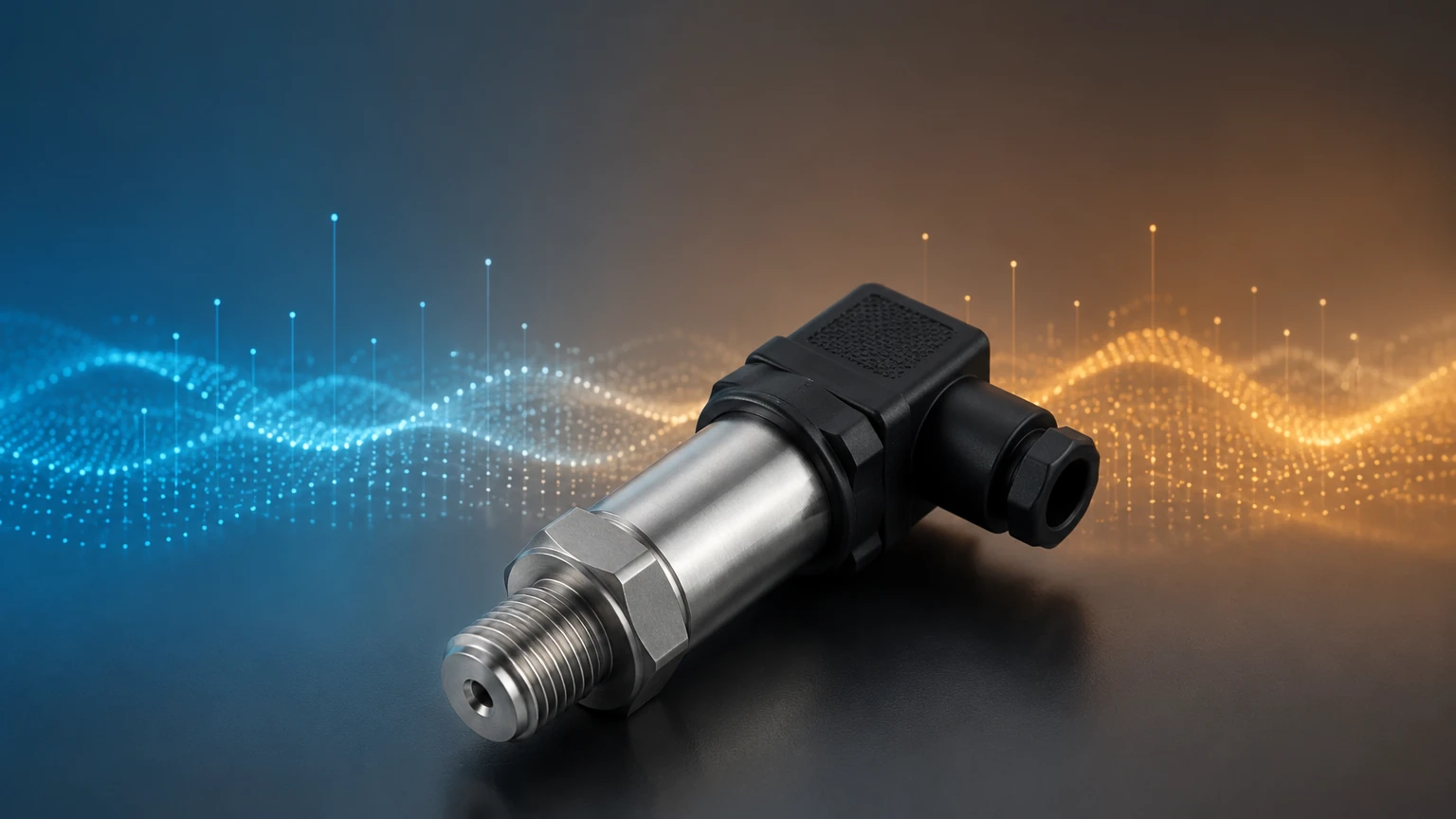
At its core, a digital pressure sensor consists of two primary components: a physical sensing element (transducer) and an integrated electronic circuit for signal conditioning and digital conversion. The sensing element reacts to mechanical force, while the electronics convert that reaction into a readable digital value.
1. Piezoresistive Sensing
This is the most common technology used in industrial digital pressure sensors. It utilizes a silicon or metallic diaphragm with integrated strain gauges. When pressure is applied, the diaphragm deforms, causing a change in the electrical resistance of the strain gauges. The integrated circuit measures this resistance change, compensates for temperature fluctuations, and converts the result into a digital signal (such as RS485 or Modbus).
2. Capacitive Sensing
Capacitive sensors measure the change in electrical capacitance between a flexible diaphragm and a fixed backplate. As pressure moves the diaphragm, the distance between the plates changes, altering the capacitance. Capacitive sensors are known for their high sensitivity and robustness, making them ideal for low-pressure applications and harsh environments where overpressure protection is critical.
3. The Digital Conversion Process
The "digital" aspect of these sensors comes from the onboard Analog-to-Digital Converter (ADC) and Microprocessor. The raw analog signal from the sensing element is sampled at high frequencies. The microprocessor then applies calibration coefficients to correct for non-linearity and thermal drift. The final output is a precise digital value transmitted via communication protocols, which eliminates the signal degradation often associated with long-distance analog wiring.
Digital Pressure Sensors in Level Measurement
While pressure measurement is a distinct field, it is inextricably linked to liquid level measurement through the principle of hydrostatic pressure. A digital pressure sensor installed at the bottom of a tank measures the force exerted by the liquid column above it.
The relationship is defined by the formula:
P = ρ × g × h
*(Where P is pressure, ρ is fluid density, g is gravity, and h is the height of the liquid.)*
By using a digital pressure sensor, operators can achieve high-resolution level data that is easily integrated into PLC (Programmable Logic Controller) or SCADA systems. For more information on how these sensors integrate into broader measurement systems, you can Review product options and application support on our main site.
Key Evaluation Criteria for Selection
Choosing the right digital pressure sensor requires a balance between technical specifications and environmental constraints. Engineers should evaluate the following factors:
Pressure Type
* Gauge Pressure: Measured relative to atmospheric pressure. Used in open tanks and standard piping.
* Absolute Pressure: Measured relative to a perfect vacuum. Necessary for atmospheric science and vacuum processes.
* Differential Pressure: Measures the difference between two pressure points. Essential for filter monitoring and flow measurement.
Accuracy and Resolution
Digital sensors often specify accuracy as a percentage of Full Scale (FS). High-precision industrial sensors typically offer accuracy ranging from ±0.1% to ±0.5% FS. Resolution refers to the smallest increment of pressure the sensor can detect, which is significantly higher in digital models compared to analog counterparts.
Communication Protocols
The choice of digital interface determines how the sensor talks to the rest of the system. Common options include:
* RS485 / Modbus RTU: Ideal for long-distance communication and multi-drop networks where multiple sensors are connected to a single pair of wires.
* HART: A hybrid protocol that superimposes digital data on a 4-20mA analog loop, allowing for digital diagnostics while maintaining compatibility with legacy systems.
* CANbus / Profibus: Used in specific automotive or heavy industrial automation environments.
Practical Selection Table
| Feature | Piezoresistive Digital Sensor | Capacitive Digital Sensor | Hydrostatic Level Transmitter |
| :— | :— | :— | :— |
| Best For | General industrial pressure | Low pressure & high overpressure | Deep well & tank level |
| Standard Accuracy | ±0.25% to ±0.5% FS | ±0.1% to ±0.2% FS | ±0.1% to ±0.5% FS |
| Pressure Range | 0.1 bar to 1000 bar | 0.01 bar to 40 bar | 1m to 200m H2O |
| Output Options | Modbus, RS485, 4-20mA | RS485, HART, 0-10V | RS485, Modbus, 4-20mA |
| Media Compatibility | Non-corrosive gases/liquids | Aggressive chemicals (with PTFE) | Water, fuel, wastewater |
Installation Considerations
Proper installation is critical to ensure the longevity and accuracy of a digital pressure sensor. Even the most advanced sensor will provide inaccurate data if installed incorrectly.
1. Orientation: While many digital sensors are compensated for orientation, installing a sensor horizontally or vertically can sometimes shift the zero point due to the weight of the internal diaphragm. Always perform a zero-calibration after installation.
2. Pressure Snubbers: In systems prone to water hammer or rapid pressure spikes (e.g., pump discharge lines), a pressure snubber should be installed to protect the sensitive digital diaphragm from mechanical shock.
3. Venting: For gauge pressure sensors, the back of the diaphragm must be vented to the atmosphere. Ensure the vent tube or breather is kept clear of moisture and debris to prevent measurement errors caused by internal pressure buildup.
4. Wiring and Grounding: Digital signals, especially RS485, require shielded twisted-pair cabling to prevent Electromagnetic Interference (EMI). Ensure the shield is grounded at only one point to avoid ground loops.
Limitations and Common Risks
Despite their advantages, digital pressure sensors are not infallible. Awareness of their limitations helps in designing more resilient systems.
* Temperature Sensitivity: Although digital sensors include temperature compensation, extreme fluctuations can still cause "thermal drift." Always check the compensated temperature range of the device.
* Overpressure Events: Exceeding the burst pressure of a sensor will cause permanent damage. Digital sensors often have a "proof pressure" (usually 1.5x to 2x the rated range) that they can withstand without losing accuracy, but exceeding this is a significant risk.
* Material Compatibility: The wetted parts (usually Stainless Steel 316L, Tantalum, or Hastelloy) must be compatible with the process fluid. For example, using a standard steel diaphragm in a highly acidic chemical line will lead to rapid corrosion and sensor failure.
* Latency: In extremely high-speed applications (like explosions or rapid combustion), the digital processing time (sampling rate) might introduce a slight delay compared to pure analog sensors.
Frequently Asked Questions (FAQs)
Q: Can a digital pressure sensor be used for vacuum measurement?
A: Yes, absolute pressure sensors or compound gauge sensors are designed to measure pressures below atmospheric levels (vacuum).
Q: What is the maximum distance for an RS485 digital signal?
A: Generally, RS485 can transmit data up to 1,200 meters (approx. 4,000 feet) without a repeater, provided high-quality shielded cabling is used.
Q: Do digital pressure sensors require periodic calibration?
A: Yes. While they are more stable than analog sensors, factors like mechanical fatigue and environmental aging can cause drift. Most industrial standards recommend annual calibration.
Q: How does a digital sensor handle "noise" compared to analog?
A: Digital sensors are significantly more resistant to electrical noise. Since the data is transmitted as a series of binary codes rather than a varying voltage level, the signal is much harder to distort by nearby motors or power lines.
Conclusion
The integration of a digital pressure sensor into an industrial process offers unparalleled benefits in terms of data accuracy, system diagnostics, and long-term reliability. By converting physical force into precise digital information at the point of measurement, these devices empower engineers to maintain tighter control over their operations.
Whether you are monitoring pipeline pressure in an oil refinery or managing water levels in a municipal treatment plant, selecting the correct sensor technology is the first step toward operational excellence. For detailed technical specifications and to explore our full range of industrial measurement solutions, visit our Main Page to find the right equipment for your specific application requirements.