Inline Flow Gauge
Inline Flow Gauge
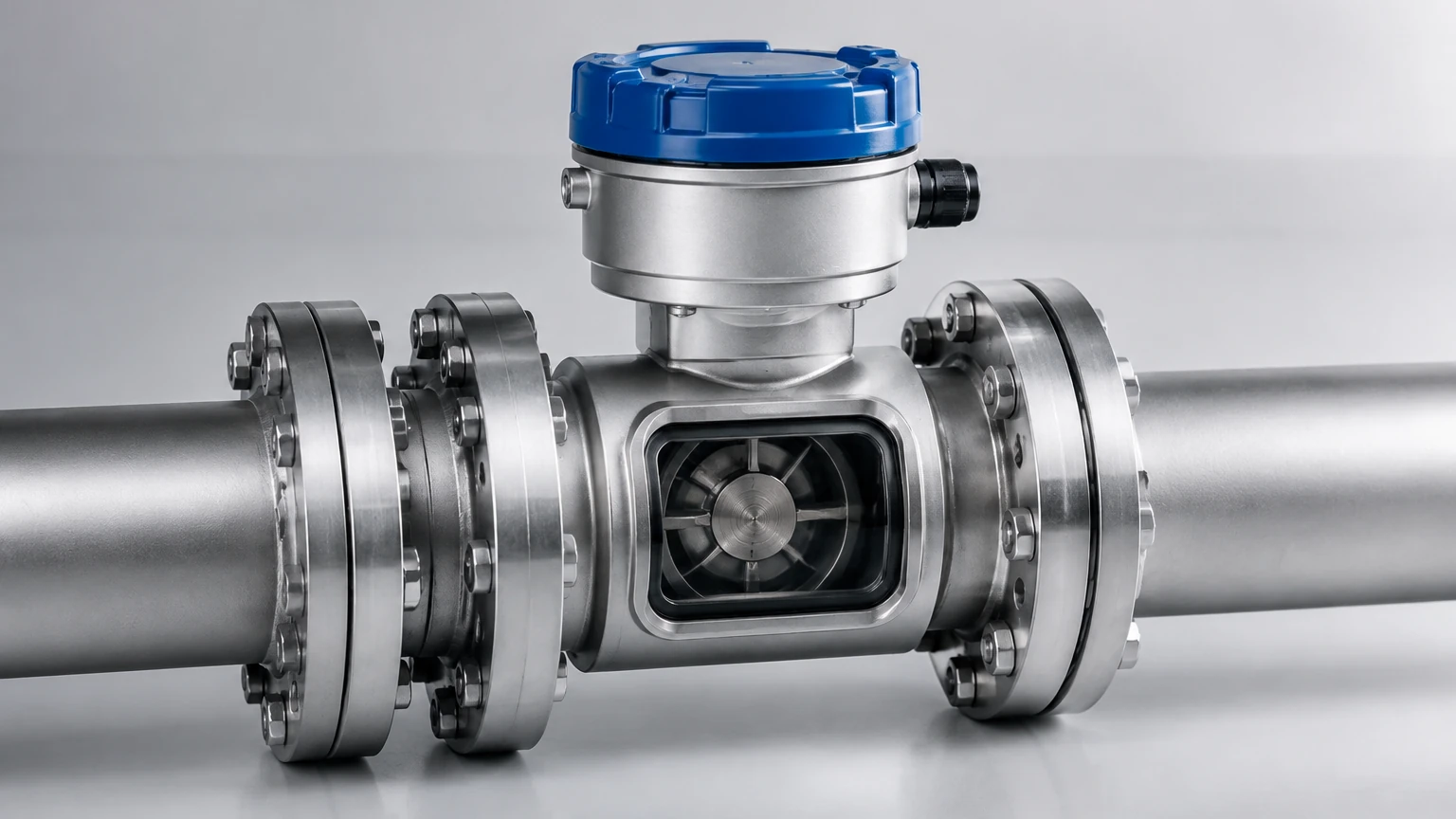
In industrial process control, the ability to monitor the movement of fluids through a piping system is as critical as monitoring the volume within a storage vessel. An inline flow gauge is a specialized instrument designed to be installed directly into a pipeline to provide real-time data on the flow rate of liquids, gases, or steam. Unlike external sensors, these devices are integrated into the fluid path, ensuring direct contact with the media for high-precision measurement.
For engineers and plant managers, selecting the correct inline flow gauge is essential for maintaining system efficiency, ensuring safety, and optimizing resource management. This guide examines the fundamental principles of flow measurement, provides technical selection criteria, and outlines best practices for installation and maintenance in B2B industrial environments.
Understanding Inline Flow Gauge Measurement Principles
Before selecting an instrument, it is necessary to understand the physical principles that govern different types of inline flow gauges. No single technology is universal; each is suited to specific fluid properties and environmental conditions.
Variable Area (Rotameters)
Variable area flow meters are among the most common types of inline flow gauges due to their simplicity and reliability. They consist of a tapered tube and a float. As fluid flows upward through the tube, the float rises until the upward force of the fluid balances the weight of the float. The position of the float corresponds to a specific flow rate on a graduated scale.
- Best for: Low-pressure liquids and gases.
- Advantage: No external power required.
Turbine Flow Meters
Turbine meters utilize a multi-bladed rotor mounted perpendicular to the fluid stream. As the fluid moves, it rotates the turbine at a speed proportional to the flow velocity. This rotation is typically sensed electronically via magnetic pickups or optical sensors.
- Best for: Clean, low-viscosity liquids like water or light oils.
- Advantage: High accuracy and fast response times.
Electromagnetic Flow Meters (Magmeters)
Operating on Faraday’s Law of Electromagnetic Induction, these gauges measure the flow of conductive liquids. When a conductive fluid moves through a magnetic field generated by the meter, it creates a voltage proportional to its velocity.
- Best for: Slurries, wastewater, and corrosive chemicals.
- Advantage: No moving parts and zero pressure drop.
Ultrasonic Flow Meters (Inline Type)
Inline ultrasonic gauges use transit-time technology. Two transducers send ultrasonic signals back and forth through the fluid. The difference in time taken for the signal to travel with the flow versus against the flow is used to calculate the velocity.
- Best for: High-purity water, chemicals, and large-diameter pipes.
- Advantage: Extremely high precision and minimal maintenance.
Differential Pressure (DP) Meters
DP meters, such as orifice plates or Venturi tubes, create a constriction in the pipe. The resulting pressure drop across the constriction is measured, and the square root of this pressure difference is proportional to the flow rate.
- Best for: Steam and high-pressure gas applications.
- Advantage: Well-standardized and robust for extreme temperatures.
Key Selection Criteria for Industrial Applications
Choosing the right inline flow gauge requires a detailed analysis of the process media and the operational environment. The following table provides a comparison of common technologies to assist in the initial selection phase.
| Technology | Fluid Compatibility | Accuracy (Typical) | Pressure Drop | Maintenance Level |
| :— | :— | :— | :— | :— |
| Variable Area | Liquids / Gases | ±2% to 5% | Low | Low |
| Turbine | Clean Liquids | ±0.25% to 0.5% | High | Medium |
| Electromagnetic | Conductive Liquids | ±0.5% | None | Very Low |
| Ultrasonic | Clean/Dirty Liquids | ±0.5% to 1% | None | Low |
| Vortex | Steam / Gases | ±1% | Medium | Low |
Technical Considerations
1. Fluid Viscosity: High-viscosity fluids (e.g., heavy oils) can cause significant errors in turbine meters but may be handled well by positive displacement or electromagnetic meters.
2. Chemical Compatibility: Ensure the wetted parts of the inline flow gauge (the materials in contact with the fluid) are resistant to corrosion. Common materials include 316L stainless steel, PTFE lining, and Hastelloy.
3. Operating Pressure and Temperature: Industrial processes often exceed 100°C (212°F) or 10 MPa (1450 PSI). Verify that the gauge housing and seals are rated for these extremes.
4. Turn-down Ratio: This is the range between the maximum and minimum flow the meter can accurately measure. A 10:1 ratio means the meter can measure from 100 m³/h down to 10 m³/h.
Installation Best Practices and Considerations
The performance of an inline flow gauge is heavily dependent on how it is installed. Improper piping configurations are the leading cause of measurement inaccuracy in industrial settings.
Straight Pipe Requirements
Most flow meters require a "fully developed flow profile" to measure accurately. Turbulence caused by elbows, valves, or pumps can distort readings.
- Upstream: Typically requires 10 to 20 pipe diameters (10D to 20D) of straight pipe.
- Downstream: Typically requires 5 pipe diameters (5D) of straight pipe.
- *Example:* For a 50 mm (2 inch) pipe, you would ideally need 500 mm to 1000 mm of straight pipe before the gauge.
Orientation and Mounting
- Horizontal vs. Vertical: Some meters, like variable area gauges, must be mounted vertically with upward flow. Electromagnetic meters can be mounted in any orientation, but the pipe must remain full of liquid at all times to prevent air pockets from causing errors.
- Grounding: For electromagnetic flow meters, proper electrical grounding to the fluid is mandatory to eliminate stray electrical noise that could interfere with the signal.
Environmental Protection
In outdoor or wash-down environments (common in food and beverage or chemical plants), ensure the gauge has an appropriate Ingress Protection (IP) rating. IP67 or IP68 is recommended for areas prone to moisture or temporary submersion.
Limitations and Operational Risks
While an inline flow gauge is a powerful tool, users must be aware of potential limitations:
* Pressure Drop: Mechanical meters like turbine or DP meters introduce a restriction in the line, causing a loss of pressure. This may require higher pump energy, increasing operational costs.
* Scaling and Fouling: In water treatment or mining applications, mineral deposits or debris can build up on the internal components of the gauge, leading to drift or total failure.
* Cavitation: If the pressure drops too low within the meter, vapor bubbles can form and collapse, damaging the internal components and causing erratic readings.
* Entrained Air: Most liquid flow meters cannot distinguish between liquid and air. If bubbles are present in the line, the meter will likely over-read the flow rate.
Integrating Flow and Level Measurement in Process Automation
In many B2B industrial scenarios, flow measurement and level measurement are used in tandem to provide a complete picture of a system's health. For instance, in a chemical dosing tank, a level transmitter monitors the inventory, while an inline flow gauge ensures the precise amount of chemical is being delivered to the process.
Welk provides a comprehensive suite of level measurement instruments, including radar and ultrasonic sensors, that complement inline flow systems. By integrating these technologies, facilities can implement mass balance calculations to detect leaks or process inefficiencies immediately. For a detailed look at how these instruments work together, you can review product options and application support on our Main Page.
Frequently Asked Questions (FAQs)
Q: Can an inline flow gauge measure both flow and temperature?
A: Yes, many modern digital flow meters (such as Vortex or Coriolis types) include integrated temperature and pressure sensors to provide "compensated" flow data, which is especially important for steam and gas applications.
Q: How often should an inline flow gauge be calibrated?
A: This depends on the industry and the criticality of the measurement. In regulated industries like pharmaceuticals, annual calibration is standard. In general industrial use, a check every 2 to 3 years is often sufficient unless drift is detected.
Q: What is the difference between an inline flow gauge and an insertion flow meter?
A: An inline flow gauge is part of the pipe itself (the fluid flows through the body of the meter). An insertion meter is a probe that is inserted through a hole in the pipe wall. Inline meters are generally more accurate for small to medium pipe sizes, while insertion meters are more cost-effective for very large pipes (above 300 mm / 12 inches).
Q: How do I handle fluids with high solids content?
A: For fluids with solids, such as mining slurries or raw sewage, electromagnetic flow meters are the preferred choice because they have no internal obstructions that could clog or be eroded by the particles.
Conclusion
The selection of an inline flow gauge is a technical decision that impacts the long-term reliability of an industrial process. By understanding the underlying measurement principles—whether it be the mechanical rotation of a turbine or the electromagnetic induction of a magmeter—engineers can match the technology to the specific demands of their application. Proper installation, particularly adhering to straight-run requirements, remains the most effective way to ensure the accuracy of the data collected.
For organizations looking to enhance their process automation, combining accurate flow data with robust level measurement is the key to operational excellence. To explore high-performance instrumentation designed for the most demanding industrial environments, visit the Main Page for technical specifications and expert guidance.