Instromet
Instromet
In the landscape of industrial automation and process control, the name Instromet is traditionally associated with high-precision gas measurement and regulation. As industries evolve toward more integrated monitoring systems, understanding how specialized instrumentation—such as that offered by Instromet—interfaces with broader process variables like liquid level becomes essential. For engineers and facility managers, the goal is to create a seamless data environment where flow, pressure, and level are monitored with equal precision.
This guide explores the technical context of Instromet within industrial measurement, the underlying physics of modern sensing technologies, and how to select complementary level measurement solutions to ensure operational efficiency. Whether you are maintaining a legacy gas metering station or designing a new chemical processing plant, the integration of reliable sensors is the foundation of safety and profitability.
The Role of Instromet in Industrial Instrumentation
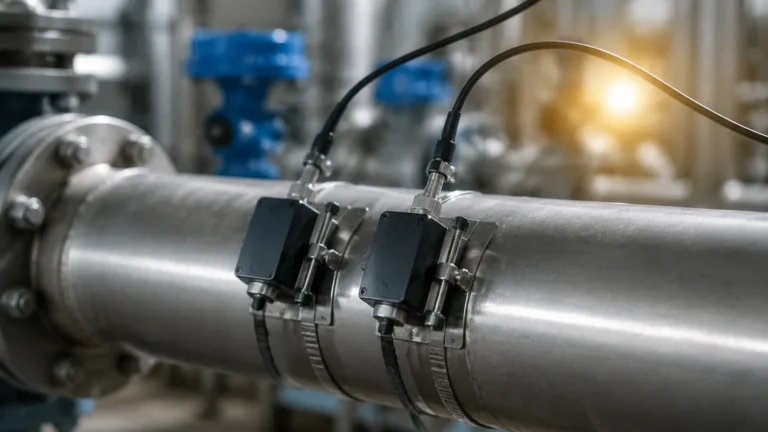
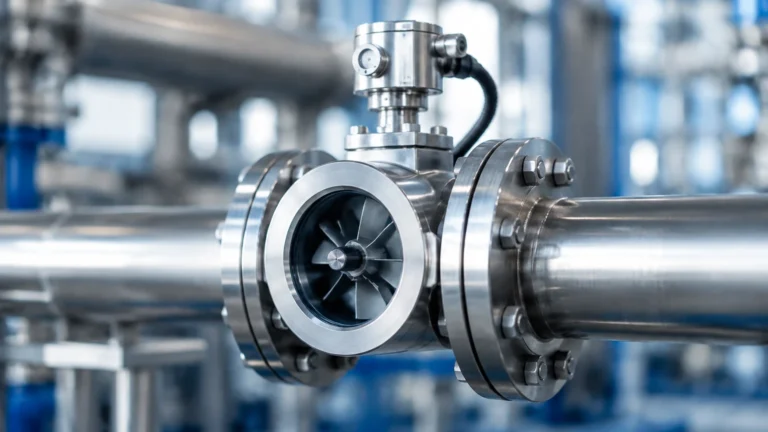
Instromet has historically established itself as a leader in the gas industry, particularly known for its ultrasonic flow meters, turbine meters, and gas chromatography solutions. The brand, now part of a larger industrial conglomerate, set high standards for accuracy in custody transfer and high-pressure gas transport.
In a B2B context, the requirement for "Instromet-level" accuracy extends beyond gas flow. When dealing with complex systems such as gas-liquid separators, storage terminals, or chemical reactors, the precision of the level measurement must match the precision of the flow measurement. If a flow meter is accurate to 0.1% but the level sensor in the surge tank has a 5% margin of error, the overall mass balance of the system remains compromised. Therefore, selecting high-quality level instruments from manufacturers like Welk is a necessary step in achieving the system-wide integrity that Instromet users expect.
Core Measurement Principles: Ultrasonic and Radar Technologies
To understand how to complement high-end flow instrumentation, one must first grasp the measurement principles that drive modern industrial sensors. Both Instromet flow meters and Welk level sensors frequently utilize ultrasonic and electromagnetic waves.
Ultrasonic Measurement Principle
Ultrasonic sensors operate on the "Time of Flight" (ToF) principle. The sensor emits a high-frequency sound pulse (typically between 20 kHz and 200 kHz) from a transducer. This pulse travels through the air, reflects off the surface of the medium (liquid or solid), and returns to the transducer.
The distance is calculated using the formula:
Distance = (Speed of Sound × Time) / 2
In level measurement, the speed of sound is assumed to be approximately 340 m/s at room temperature, but it must be compensated for temperature fluctuations, as sound speed varies significantly with air density. This technology is ideal for non-contact measurement in water treatment and simple chemical storage.
Radar (Microwave) Measurement Principle
Radar level meters, including both Pulse Radar and Frequency Modulated Continuous Wave (FMCW) types, use electromagnetic waves instead of sound. These waves travel at the speed of light, making them virtually immune to changes in temperature, pressure, or vacuum conditions.
* Pulse Radar: Sends short microwave bursts and measures the time taken for the echo to return.
* FMCW Radar: Transmits a continuous signal with a constantly changing frequency. The difference in frequency between the transmitted and received signal is proportional to the distance.
Radar is the preferred choice for high-precision applications, particularly where the vapor space above the liquid is volatile or where high pressure is present—environments where Instromet gas equipment is also commonly found.
Evaluating Instrumentation for High-Precision Environments
When integrating new sensors into a system that utilizes Instromet technology, several evaluation criteria must be prioritized to ensure compatibility and long-term reliability.
1. Signal Compatibility: Most modern industrial instruments use 4-20 mA HART, Modbus RS485, or Foundation Fieldbus. Ensure that the level measurement hardware can communicate seamlessly with existing PLC or SCADA systems.
2. Material Compatibility: In gas and oil applications, wetted parts must be resistant to corrosion. Stainless steel 316L, PTFE, and Hastelloy are common requirements for flanges and probes.
3. Hazardous Area Certification: Given that Instromet products are often used in explosive atmospheres, any complementary level sensor must carry equivalent certifications, such as ATEX, IECEx, or SIL2/SIL3 ratings.
4. Turn-down Ratio and Accuracy: Evaluate whether the instrument maintains its accuracy across the entire measurement range, especially at the very bottom or top of a tank.
For those seeking to review specific hardware options that meet these rigorous industrial standards, the Main Page of the Welk product catalog offers a comprehensive overview of radar and ultrasonic solutions designed for these demanding environments.
Comparison of Level Measurement Technologies
The following table provides a practical selection guide for engineers deciding between different level measurement technologies to use alongside their existing instrumentation suite.
| Technology | Best Application | Advantages | Limitations |
| :— | :— | :— | :— |
| Radar (80GHz) | Small tanks, agitated liquids, corrosive chemicals | Extremely high precision, small beam angle, ignores foam | Higher initial cost |
| Ultrasonic | Water/Wastewater, open channels, plastic tanks | Cost-effective, non-contact, easy to install | Affected by steam, dust, and temperature gradients |
| Hydrostatic | Deep wells, vented tanks, fuel storage | Simple, reliable, no moving parts | Contact-based, density-dependent |
| Magnetic Gauge | High-pressure boilers, toxic liquids | Clear visual indication, high safety | Requires bypass chamber installation |
| Level Switch | Overfill protection, pump control | Low cost, high reliability for point level | No continuous level data |

Installation Best Practices for Process Instruments
Even the highest quality instrument will fail to deliver accurate data if installed incorrectly. When installing level meters in a system that may also include Instromet flow components, follow these engineering guidelines:
* Avoid the "Dead Zone": Every non-contact sensor has a near-field blanking distance (dead zone). Ensure the maximum liquid level never enters this zone, typically 0.2m to 0.5m from the sensor face.
* Obstruction Clearance: For ultrasonic and radar sensors, ensure the signal beam does not hit ladders, pipes, or agitators. A 80GHz radar has a narrower beam (approx. 3 degrees), making it easier to install in crowded tanks compared to a 26GHz radar or ultrasonic sensor.
* Nozzle Geometry: The height and diameter of the mounting nozzle can cause signal interference. Ensure the transducer face extends slightly below the nozzle or use a nozzle with a smooth internal finish.
* Stilling Wells: In applications with heavy foam or extreme turbulence, consider installing the sensor inside a stilling well or bypass pipe to provide a calm surface for measurement.
Common Risks and Mitigation Strategies
In B2B industrial operations, downtime is the most significant risk. When dealing with high-precision instrumentation like Instromet or Welk sensors, be aware of the following risks:
* Signal Loss due to Condensation: In gas-rich environments, condensation can form on the sensor face. Mitigation: Use radar sensors with PTFE drip covers or integrated air purge systems to keep the antenna clean.
* Power Supply Noise: Industrial environments often have significant electrical noise from VFDs and motors. Mitigation: Use shielded twisted-pair cabling and ensure proper grounding of the instrument housing.
* Inaccurate Density Assumptions: For hydrostatic transmitters, if the liquid density changes due to temperature or composition, the level reading will drift. Mitigation: Use a dual-sensor setup or switch to a density-independent technology like radar.
Frequently Asked Questions (FAQ)
Q: Can I use an ultrasonic level sensor in a high-pressure gas tank?
A: Generally, no. Ultrasonic waves require a consistent medium (air or gas) to travel. High pressure changes the density of the gas, significantly altering the speed of sound and often absorbing the signal entirely. Radar is the preferred choice for pressurized vessels.
Q: How does the accuracy of Welk level meters compare to Instromet flow meters?
A: Welk radar level meters can achieve accuracies of ±2mm, which is comparable to the high-precision standards required in custody transfer applications where Instromet equipment is typically utilized.
Q: Is it possible to integrate these sensors into an existing Modbus network?
A: Yes, most industrial level transmitters provide Modbus RS485 outputs, allowing them to reside on the same digital bus as other process instruments, facilitating centralized data collection.
Q: What maintenance is required for non-contact level sensors?
A: Because they have no moving parts, maintenance is minimal. Periodic inspections to ensure no heavy buildup on the sensor face and checking the integrity of cable seals are usually sufficient for several years of operation.
Conclusion
Achieving excellence in process control requires a holistic approach to instrumentation. While Instromet provides the gold standard for gas flow measurement, the supporting level measurement infrastructure must be equally robust to ensure safety and accuracy. By understanding the measurement principles of ultrasonic and radar technologies and adhering to strict installation standards, engineers can build systems that are both reliable and cost-effective.
For professional-grade hardware and customized OEM/ODM support in level measurement, exploring the options available on the Main Page ensures that your facility is equipped with the latest in industrial sensing technology. Reliable measurement is not just about the sensor itself, but about choosing a partner who understands the complexities of the modern industrial environment.