Instruments That Measure Pressure
Instruments That Measure Pressure
In the landscape of industrial automation and process control, instruments that measure pressure serve as the fundamental sensory organs for a vast array of systems. While pressure measurement is a critical metric in its own right—ensuring the safety of boiler systems and the efficiency of hydraulic circuits—it is also the most widely used indirect method for determining liquid level. In the context of liquid level measurement, pressure-based instruments provide a robust, cost-effective, and highly accurate solution for everything from deep-well monitoring to chemical storage tank management.
Understanding the diverse range of instruments that measure pressure requires a deep dive into the physics of fluid dynamics, the materials science of diaphragms, and the engineering requirements of specific industrial environments. This guide examines the principles, applications, and selection criteria for pressure-based level measurement technology.
The Fundamental Principle: Hydrostatic Pressure
To understand how instruments that measure pressure function as level sensors, one must first master the principle of hydrostatic pressure. Hydrostatic pressure is the pressure exerted by a fluid at equilibrium at a given point within the fluid, due to the force of gravity.
The mathematical relationship is expressed as:
P = ρ × g × h
Where:
* P is the hydrostatic pressure (measured in Pascals or bar).
* ρ (rho) is the density of the liquid (kg/m³).
* g is the acceleration due to gravity (approximately 9.81 m/s²).
* h is the height of the liquid column above the measurement point (meters).
Because gravity is constant and the density of most process liquids is known, the pressure measured at the bottom of a tank is directly proportional to the height of the liquid. For example, a water column (density ~1000 kg/m³) with a height of 10 meters exerts approximately 1 bar (100 kPa or 14.5 psi) of pressure at the base. By utilizing sensitive instruments that measure pressure, engineers can convert these readings into precise level data.
Categories of Pressure-Based Level Instruments
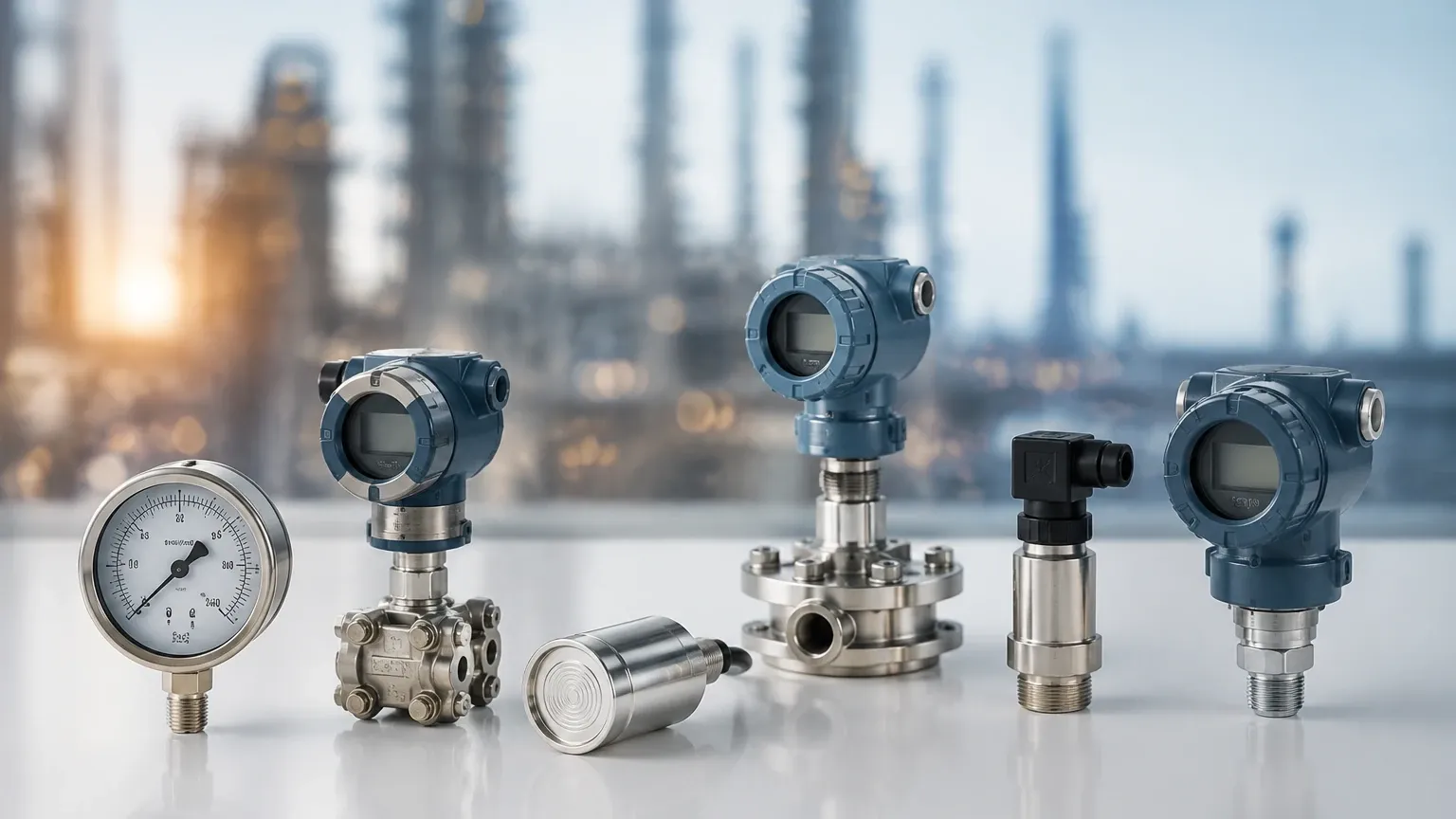
There are several distinct configurations of instruments that measure pressure, each suited to specific tank geometries and environmental conditions.
1. Submersible Pressure Transducers
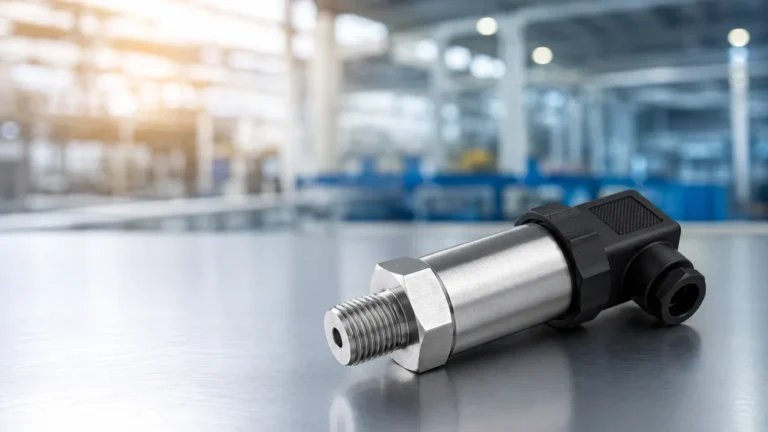
Commonly referred to as "level probes," these instruments are designed to be lowered directly into the liquid. They consist of a sensing element (usually piezo-resistive or ceramic) housed in a waterproof stainless steel body.
* Mechanism: The sensor measures the pressure of the liquid column above it. To compensate for changes in atmospheric pressure, the cable often includes a small vent tube that connects the back of the sensing diaphragm to the outside air. This ensures the instrument measures "gauge pressure" rather than absolute pressure.
* Applications: Deep wells, boreholes, reservoirs, and wastewater lift stations.
2. Externally Mounted Pressure Transmitters
These are mounted to the outside of a tank via a threaded connection or a flange. They are typically positioned at the lowest point of the vessel.
* Mechanism: The process liquid makes contact with an isolation diaphragm. The pressure is transmitted through a fill fluid (usually silicone oil) to the internal sensor. These are ideal for tanks where the liquid might be corrosive or where internal access is limited.
* Applications: Food and beverage storage, chemical processing, and fuel tanks.
3. Differential Pressure (DP) Transmitters
In closed or pressurized tanks, a standard pressure sensor cannot accurately measure level because the headspace pressure (the air or gas pressure above the liquid) adds to the total pressure at the bottom. Differential pressure instruments that measure pressure solve this by comparing the pressure at the bottom of the tank to the pressure in the headspace.
* Mechanism: The DP cell has two ports: a "high pressure" side connected to the bottom of the tank and a "low pressure" side connected to the top. The transmitter subtracts the headspace pressure from the total bottom pressure, leaving only the hydrostatic pressure generated by the liquid.
* Applications: Pressurized boilers, liquefied gas storage, and chemical reactors.
Selection Criteria for Industrial Applications
Choosing the correct instrument requires an evaluation of the process media and the physical environment. Below are the primary factors to consider:
Media Compatibility and Material Selection
The sensing diaphragm is the most vulnerable part of the instrument. While 316L stainless steel is the standard, certain chemicals require more exotic materials:
* Tantalum or Hastelloy C: Required for highly corrosive acids.
* Ceramic (Al2O3): Highly resistant to abrasion and chemical attack, though more brittle than metal.
* PTFE/PFA Coating: Used to prevent media buildup on the diaphragm.
Pressure Range and Overpressure Protection
Instruments that measure pressure must be sized correctly for the maximum possible liquid height. If a sensor is rated for 0–2 bar (approx. 20m of water) but is subjected to a 5-bar pressure spike, the diaphragm may suffer permanent deformation. Always specify a sensor with an overpressure rating that exceeds the maximum possible process surge.
Temperature Compensation
Liquid density changes with temperature. Most modern instruments include internal temperature sensors to compensate for the thermal expansion of the fill fluid and the electronics, but they cannot compensate for the change in the density of the process liquid itself. If the liquid temperature fluctuates significantly, the level reading may drift unless the control system accounts for density changes.
Technical Comparison Table
| Feature | Submersible Transducer | Externally Mounted Transmitter | Differential Pressure (DP) |
| :— | :— | :— | :— |
| Best Use Case | Open wells, sumps, large reservoirs | Vented tanks, chemical storage | Pressurized vessels, boilers |
| Installation | Suspended by cable | Flanged or threaded to tank wall | Dual piping (impulse lines) |
| Maintenance | Easy to pull up and clean | Requires tank drainage or isolation valve | Complex; requires manifold valves |
| Cost | Low to Moderate | Moderate | High |
| Atmospheric Comp. | Via vent tube in cable | Automatic (vented to atmosphere) | Inherent in DP design |
Installation and Engineering Considerations
Proper installation is paramount to ensuring the longevity and accuracy of instruments that measure pressure.
Venting and Moisture Protection
For submersible sensors, the vent tube in the cable is a common failure point. If moisture enters the vent tube, it can reach the internal electronics or block the reference pressure. High-quality installations use a desiccant box or a specialized bellows at the end of the cable to prevent humidity from entering the tube.
Avoiding Turbulence and Silt
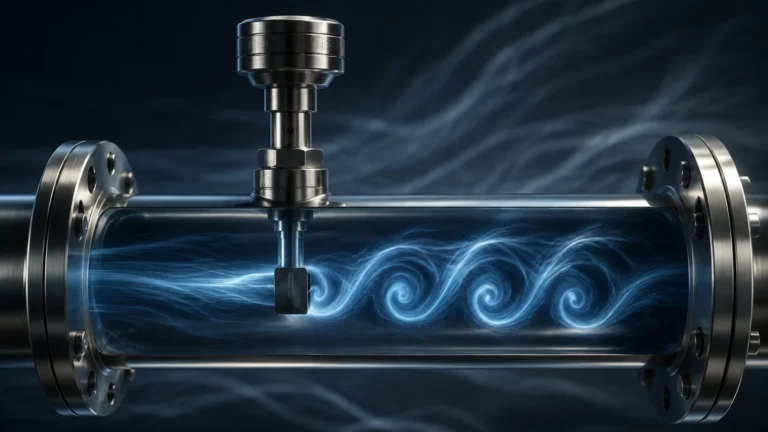
In wastewater or river applications, sensors should not be placed directly in the path of high-velocity flow or near an agitator. Turbulence creates dynamic pressure, which the sensor will interpret as a level change. Furthermore, the sensor should be mounted slightly above the bottom of the tank or well to prevent it from being buried in silt or sediment.
Impulse Line Management (for DP Transmitters)
When using DP transmitters, the "impulse lines" (the small pipes connecting the tank to the sensor) must be carefully managed. If the headspace gas can condense into a liquid, the low-pressure line may fill with fluid, creating a "wet leg" that adds its own hydrostatic pressure. Engineers must either use a "dry leg" with a condensate trap or intentionally fill the line with a stable fluid (a "wet leg") and calibrate the transmitter to account for that constant pressure.
Limitations of Pressure-Based Level Measurement
While instruments that measure pressure are versatile, they are not universal. Their primary limitation is their dependence on constant density. If a process involves mixing different fluids with varying densities, or if the temperature swings are so extreme that the density changes by more than 1–2%, the level reading will be inaccurate.
In such cases, non-contact technologies like radar or ultrasonic sensors may be more appropriate. However, for the vast majority of water treatment, fuel storage, and chemical processing applications, pressure-based measurement remains the gold standard for reliability. For a broader overview of all available technologies, you can visit our Main Page to compare these with other sensing methods.
Frequently Asked Questions (FAQ)
Q: How often should instruments that measure pressure be calibrated?
A: In standard water applications, annual calibration is usually sufficient. In corrosive or high-temperature environments, semi-annual checks are recommended to account for potential diaphragm fatigue or "zero drift."
Q: Can I use a standard pressure gauge for level measurement?
A: Yes, a mechanical pressure gauge can be calibrated in "meters of water" or "feet of head." However, for automation and remote monitoring, an electronic transmitter is required to provide a 4-20mA or digital signal.
Q: What happens if the liquid is viscous or contains solids?
A: Viscous liquids can clog small pressure ports. In these scenarios, a "flush diaphragm" design is used. The diaphragm is mounted flush with the tank wall so there are no cavities where material can accumulate.
Q: Is there a maximum depth for submersible sensors?
A: High-end submersible instruments can measure depths exceeding 500 meters (50 bar). The limitation is usually the tensile strength of the cable and the waterproof integrity of the seals at extreme pressures.
Conclusion
Instruments that measure pressure are the workhorses of industrial level monitoring. By converting the weight of a liquid column into an electrical signal, these devices provide essential data for inventory management, process safety, and environmental compliance. Whether you are selecting a submersible probe for a deep-well application or a complex differential pressure setup for a chemical reactor, understanding the relationship between pressure, density, and height is the key to a successful installation.
When evaluating your next project, ensure you verify the chemical compatibility of the wetted parts and the specific gravity of your media. For detailed technical specifications and to explore a wide range of industrial sensing solutions, Review product options and application support to find the ideal fit for your infrastructure.