Level Probes
Level Probes
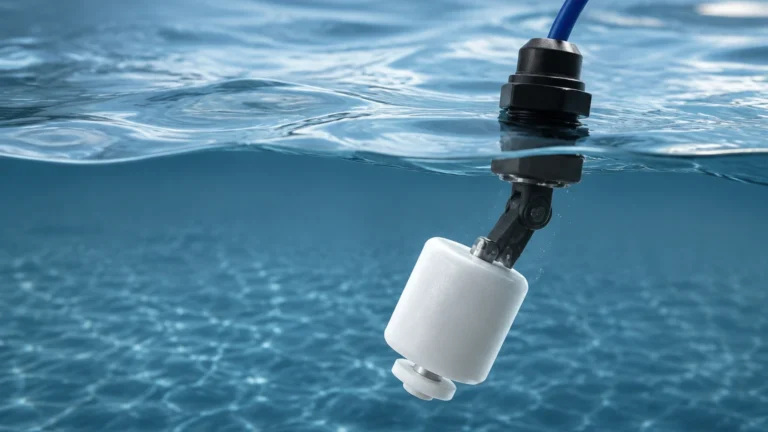
In the landscape of industrial process control, level probes serve as the primary sensory interface between a control system and the medium being measured. Whether managing water treatment facilities, chemical processing plants, or oil and gas storage, the selection of an appropriate probe is critical for operational safety, efficiency, and accuracy. A level probe is essentially a sensor designed to detect the height of liquids, slurries, or solids within a vessel, converting this physical parameter into an electrical signal for monitoring or control purposes.
Choosing the right technology requires a deep understanding of both the physical principles of measurement and the specific environmental constraints of the application. Welk offers a comprehensive range of industrial level measurement instruments, including radar, ultrasonic, and hydrostatic solutions, ensuring that engineers can find a tailored fit for their specific requirements. For a broader overview of available technologies, engineers can visit the Main Page to review product options and application support.
Understanding the Measurement Principles of Level Probes
Before selecting a probe, it is essential to understand the underlying physics that govern different measurement technologies. Level probes generally fall into two categories: continuous level measurement and point level detection.
Hydrostatic Level Probes
Hydrostatic probes measure the pressure exerted by a liquid column at a specific depth. The fundamental principle is based on the relationship $P = \rho \cdot g \cdot h$, where $P$ is the pressure, $\rho$ is the density of the liquid, $g$ is the gravitational constant, and $h$ is the height of the liquid.
These probes are typically submersible and feature a stainless steel diaphragm that deforms under the weight of the liquid. This deformation is converted into a 4-20mA signal. To ensure accuracy in vented tanks, these probes include a capillary tube in the cable to compensate for atmospheric pressure changes, ensuring that the sensor only measures the pressure of the liquid itself.
Capacitive Level Probes
Capacitance-based probes operate on the principle of an electrical capacitor. The probe acts as one plate of the capacitor, while the tank wall (if conductive) acts as the second plate. The medium between them serves as the dielectric. As the level of the medium rises, the total capacitance of the system changes because the dielectric constant of the medium is different from that of air.
For non-conductive tanks, a dual-pole probe or a reference rod is used. This technology is highly versatile and can be used for both liquids and solids, provided the dielectric constant of the material remains relatively constant.
Conductive Level Probes
Conductive probes are used for point level detection in conductive liquids. They operate by completing an electrical circuit when the liquid touches the probe electrode. These are often used for high-level alarms or pump control in water and wastewater applications. They are simple, cost-effective, but limited to liquids with a minimum conductivity (usually >10 µS/cm).
Guided Wave Radar (GWR) Probes
Guided Wave Radar uses Time Domain Reflectometry (TDR). A low-energy microwave pulse is sent along a physical probe (a rod or cable). When the pulse hits the surface of the medium, a portion of the energy is reflected back to the transmitter. The time delay between the sent and received pulse is used to calculate the distance. Because the pulse is guided by the probe, this method is less affected by turbulence, foam, or internal tank obstructions compared to non-contact radar.
Key Evaluation Criteria for Industrial Level Probes
Selecting the correct level probe involves more than just choosing a measurement principle; it requires a detailed analysis of the process environment.
1. Media Characteristics: The chemical compatibility of the probe material with the medium is paramount. For corrosive chemicals, probes made of PVDF, PTFE, or high-grade stainless steel (316L) are required. Furthermore, the viscosity and density of the liquid must be considered, especially for hydrostatic and float-based systems.
2. Process Temperature and Pressure: Standard probes may fail under extreme conditions. High-temperature applications (exceeding 100°C) require specialized seals and cooling fins for the electronics. Similarly, high-pressure vessels require probes with reinforced process connections, such as flanged or NPT threaded mounts rated for the specific bar/PSI requirements.
3. Measurement Range: The total height of the tank determines whether a rigid rod probe or a flexible cable probe is necessary. Rigid rods are typically limited to 3-6 meters, while cable-based probes can extend up to 30 meters or more.
4. Accuracy and Repeatability: In custody transfer or precise chemical dosing, high accuracy (e.g., ±2mm) is required. For simple overflow protection, a lower accuracy point-level switch may suffice.
Selection Guide and Application Matrix
The following table provides a general guideline for selecting level probe technologies based on common industrial scenarios.
| Application | Recommended Probe Type | Key Advantage | Limitation |
| :— | :— | :— | :— |
| Deep Wells/Boreholes | Hydrostatic Submersible | Easy installation in narrow spaces | Sensitive to density changes |
| Corrosive Chemical Tanks | Capacitance (PTFE Coated) | Excellent chemical resistance | Requires calibration for different media |
| Wastewater Sumps | Ultrasonic (Non-contact) | No contact with debris/sludge | Affected by heavy foam and steam |
| High-Pressure Boilers | Guided Wave Radar | Reliable in steam and turbulence | Probe can be subject to coating/buildup |
| Conductive Liquids | Conductive Switch | Low cost and simple logic | Only for point level, not continuous |
| Oil/Water Interface | Capacitance or GWR | Can distinguish between layers | Requires specific dielectric calibration |

Installation Best Practices and Considerations
Proper installation is as important as selecting the right technology. Even the most advanced level probe will provide inaccurate data if installed incorrectly.
* Avoid the Inflow Stream: Probes should never be installed directly under a fill pipe. The turbulence and force of the incoming liquid can cause false readings or physical damage to the probe.
* Stilling Wells and Bypass Chambers: In tanks with heavy agitation or surface foam, installing the probe inside a stilling well (a vertical pipe) can provide a calm surface for more accurate measurement. This is particularly useful for GWR and hydrostatic probes.
* Grounding: For capacitance probes, proper grounding to the metal tank or the use of a ground reference rod is essential. Without a stable ground, the capacitance signal will drift.
* Dead Zones (Blocking Distance): Many probes, especially ultrasonic and radar, have a "dead zone" near the top of the sensor where measurement is impossible. Ensure the probe is mounted high enough so that the maximum liquid level does not enter this zone.
* Cable Protection: For submersible hydrostatic probes, the cable should be secured to prevent it from swinging in turbulent tanks. Use a cable hanger or conduit to protect the vented cable from moisture ingress, which could block the atmospheric compensation tube.
Limitations and Troubleshooting Common Risks
Every level probe technology has inherent limitations that must be managed during the engineering phase.
* Material Buildup: In applications involving sticky liquids or slurries, material can accumulate on the probe. For capacitance probes, this can cause "ghost" readings where the sensor thinks the level is higher than it is. Using probes with "active shield" technology or non-contact sensors can mitigate this risk.
* Vapor and Gas Layers: High-pressure steam or heavy chemical vapors can affect the speed of sound, leading to errors in ultrasonic measurements. In such cases, radar or hydrostatic probes are preferred as they are not affected by the gas composition.
* Dielectric Constant (dk) Changes: Capacitance and Radar probes are sensitive to the dielectric constant of the medium. If a tank is used for different liquids with varying dk values without recalibration, the readings will be inaccurate.
* Turbulence and Foam: Surface foam can absorb ultrasonic signals or cause scattering in non-contact radar. Guided wave radar is generally more robust in these conditions, as the probe guides the signal through the foam to the actual liquid surface.
Frequently Asked Questions
Q: Can a hydrostatic level probe be used in a pressurized tank?
A: Only if a differential pressure transmitter is used. A standard submersible probe measures total pressure (liquid + head pressure). In a pressurized tank, you must subtract the gas pressure at the top to find the liquid level.
Q: How often do level probes need calibration?
A: This depends on the technology. Conductive switches rarely need calibration. Capacitance probes should be checked annually or whenever the media changes. Hydrostatic probes are generally stable but should be zero-checked periodically to account for sensor drift.
Q: What is the benefit of a 4-20mA HART output?
A: HART (Highway Addressable Remote Transducer) allows for digital communication over the analog 4-20mA wire. This enables remote configuration, diagnostics, and the transmission of multiple variables (like temperature and level) over a single pair of wires.
Q: Are there probes suitable for hygienic applications in food and beverage?
A: Yes, probes with Tri-Clamp connections and polished stainless steel surfaces (Ra < 0.8 µm) are designed specifically for CIP (Clean-In-Place) and SIP (Steam-In-Place) processes to prevent bacterial growth.
For technical assistance in selecting the specific probe for your industrial application, or to explore the full range of Welk instrumentation, please refer to the Main Page for detailed specifications and engineering support. Selecting the right probe today ensures long-term reliability and minimizes maintenance costs in your process automation journey.