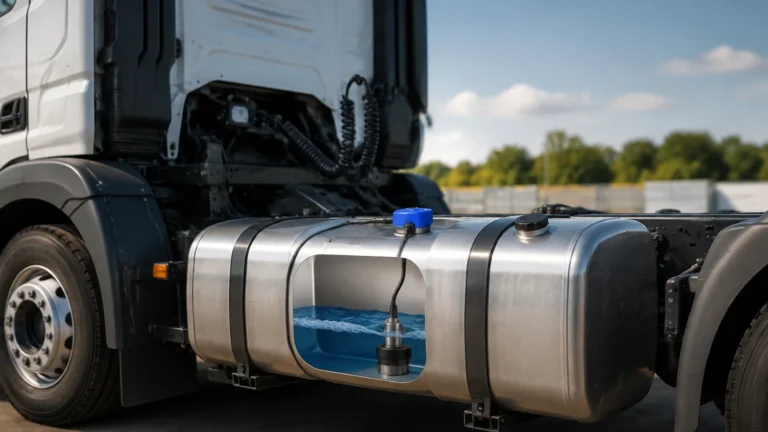
Interstitial Sensor
Interstitial Sensor
In the landscape of industrial fluid management and environmental protection, the interstitial sensor serves as a critical line of defense. These specialized devices are designed to monitor the "interstitial space"—the narrow gap between the primary and secondary containment layers of double-walled tanks or piping systems. Whether managing hazardous chemicals, petroleum products, or industrial wastewater, the ability to detect a breach in the primary containment before it reaches the environment is a fundamental requirement for modern engineering safety protocols.
As a professional manufacturer of industrial level measurement instruments, Welk provides a broad spectrum of solutions including radar level meters and ultrasonic sensors. However, understanding the specific role of an interstitial sensor is essential for engineers designing comprehensive leak detection and level monitoring systems. This article explores the measurement principles, selection criteria, and installation best practices for these vital components.
Measurement Principles of Interstitial Sensors
Interstitial sensors operate on various physical principles to detect the presence of liquids or gases where they should not be. Selecting the correct principle depends on the nature of the stored medium and the environmental conditions of the containment system.
1. Optical Refraction
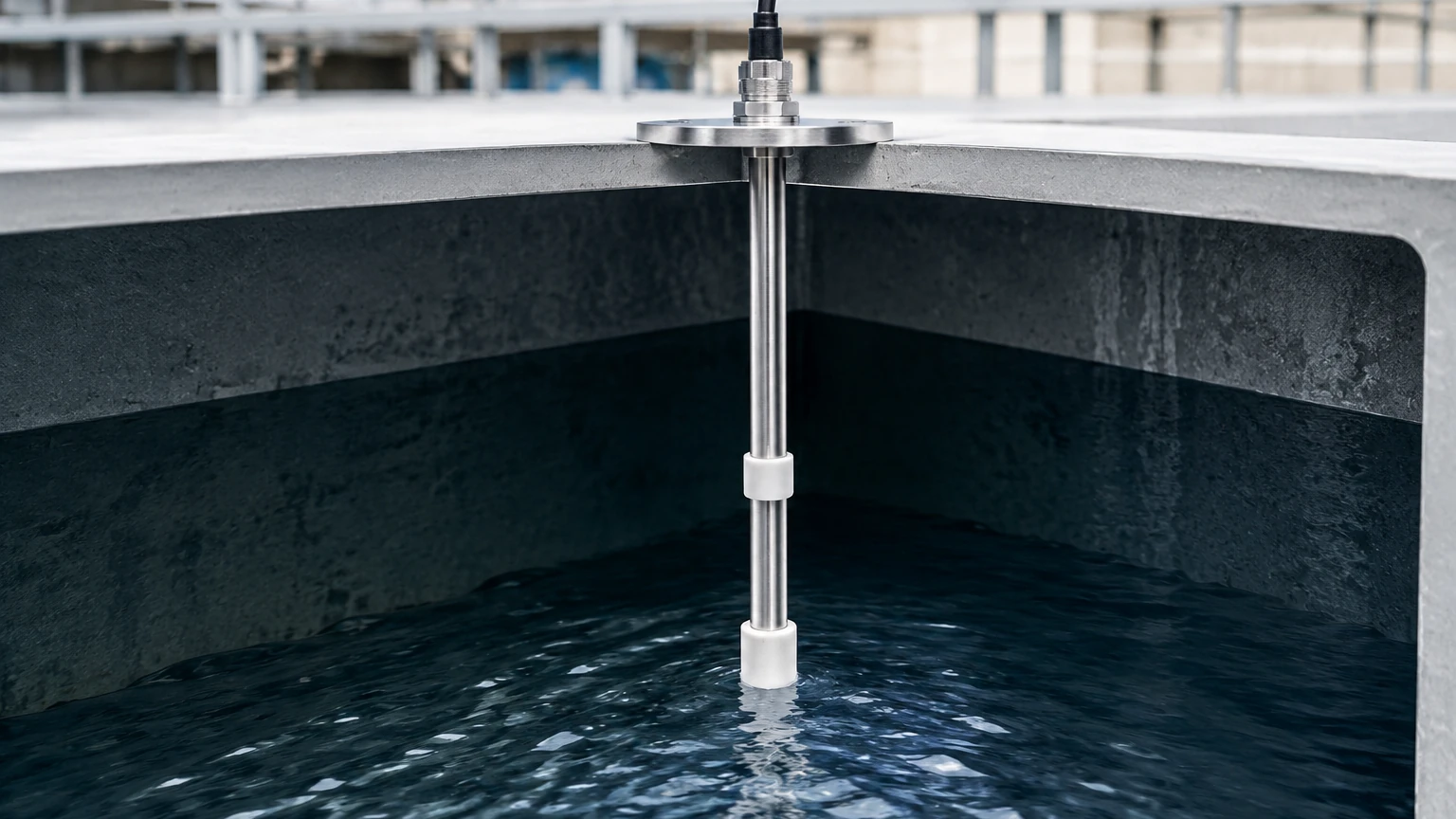
Optical interstitial sensors utilize an infrared light-emitting diode (LED) and a phototransistor. In a dry state, the infrared light is reflected within a prism back to the receiver. When liquid contacts the sensor tip, the refractive index changes, causing the light to disperse into the liquid rather than reflecting back. This break in the optical path triggers an alarm. This method is highly sensitive and has no moving parts, making it reliable for long-term monitoring.
2. Conductive Sensing
Conductive sensors rely on the electrical conductivity of the liquid being detected. Two electrodes are placed at a fixed distance. If a conductive liquid (such as water or certain chemicals) enters the interstitial space and bridges the gap between the electrodes, an electrical circuit is completed. This change in resistance is detected by the control unit. While effective, this principle is limited to conductive fluids and may not detect non-conductive hydrocarbons like pure oil or gasoline.
3. Float-Based (Mechanical) Sensing
Float sensors use the principle of buoyancy. A small float containing a magnet moves along a stem as liquid levels rise in the interstitial space. This movement actuates a reed switch within the stem. These sensors are simple and robust but require a certain depth of liquid (typically 10 mm to 20 mm) to actuate, making them slightly less sensitive to pinhole leaks than optical variants.
4. Hydrostatic and Vacuum Monitoring
In some advanced double-walled systems, the interstitial space is filled with a brine solution or kept under a vacuum. A hydrostatic sensor monitors the level of the brine; a drop in level indicates a leak in the outer wall, while a rise indicates a leak in the inner wall. Similarly, vacuum sensors monitor pressure changes. If the vacuum is lost, it signals a breach in either the primary or secondary containment layer.
Discriminating vs. Non-Discriminating Sensors
A key distinction in interstitial monitoring is the ability to discriminate between different types of liquids.
* Non-Discriminating Sensors: These detect the presence of any liquid. They are commonly used in dry interstitial spaces where any fluid ingress is considered a failure. They are cost-effective but cannot tell the difference between groundwater leaking in from the outside and product leaking from the inside.
* Discriminating Sensors: These sensors can distinguish between water and hydrocarbons (oil/fuel). This is achieved through a combination of technologies, such as using a conductive element for water and an optical or polymer-string element for hydrocarbons. For facility managers, this data is crucial for determining whether a leak requires environmental remediation (product leak) or simple maintenance (groundwater ingress).
Practical Selection Table
Choosing the right interstitial sensor requires balancing sensitivity, fluid compatibility, and cost. The following table provides a comparison of common technologies.
| Sensor Type | Principle | Best Suited For | Limitations |
| :— | :— | :— | :— |
| Optical | Light Refraction | High-sensitivity leak detection in dry spaces. | Can be affected by heavy coating or highly viscous fluids. |
| Conductive | Electrical Resistance | Aqueous solutions, acids, and wastewater. | Cannot detect non-conductive oils or fuels. |
| Float | Buoyancy | General-purpose liquid detection in larger sumps. | Requires higher liquid volume to trigger; moving parts. |
| Polymer Cable | Chemical Reaction | Long-distance monitoring in double-walled piping. | Often one-time use; must be replaced after a leak. |
| Vacuum/Pressure | Pneumatic Change | Continuous integrity testing of both walls. | High initial system cost and complexity. |
Application Environments
Interstitial sensors are integrated into various industrial infrastructures to ensure compliance with environmental regulations (such as EPA standards in the US or similar international directives).
Underground Storage Tanks (UST)
In fuel stations and chemical depots, USTs are almost exclusively double-walled. The interstitial sensor is placed at the lowest point of the tank's annulus. Because these tanks are buried, the sensor must be rugged enough to withstand potential moisture and temperature fluctuations ranging from -20°C to +60°C.
Aboveground Storage Tanks (AST)
For ASTs with secondary containment floors or double bottoms, sensors monitor for product loss. Here, the sensors are often integrated into a wider automated system that might include ultrasonic or radar level meters on the Main Page of the facility's control interface to provide a holistic view of inventory and safety.
Double-Walled Piping
In high-risk chemical transfer lines, the space between the carrier pipe and the containment pipe is monitored. Because these spaces are often very tight, specialized thin-profile or cable-type interstitial sensors are used to ensure that a leak at any point along the line is detected immediately.
Installation Considerations
Proper installation is as important as the sensor technology itself. An incorrectly placed sensor may fail to detect a leak until significant damage has occurred.
1. Lowest Point Placement: Gravity dictates that leaked liquid will collect at the lowest point of the containment system. For horizontal tanks, this is usually the center or one end, depending on the pitch. Sensors must be positioned precisely at these collection points.
2. Wiring and Conduit: In hazardous areas (Class I, Div 1), sensors must be installed with intrinsically safe barriers and sealed conduits to prevent the migration of flammable vapors through the electrical system.
3. Accessibility for Testing: Regulatory bodies often require periodic "pull tests" where the sensor is removed and manually triggered to ensure the alarm circuit is functional. Installation should allow for easy removal without dismantling major piping components.
4. Cable Length and Signal Integrity: For large-scale facilities, the distance between the sensor and the control panel can be significant. Using shielded cables and ensuring proper signal amplification is necessary to prevent false alarms from electromagnetic interference (EMI).
Limitations and Maintenance
While interstitial sensors are highly effective, they are not infallible. Understanding their limitations is key to a robust safety strategy.
* Fouling and Debris: In older tanks, rust flakes or sediment can accumulate in the interstitial space. This debris can trap a float sensor or coat an optical prism, leading to a failure to alarm or a permanent false alarm.
* Condensation: In humid environments, temperature swings can cause condensation within the interstitial space. This small amount of water may trigger sensitive non-discriminating sensors, causing "nuisance alarms."
* Power Dependency: Most interstitial sensors are "normally closed" or "normally open" electronic circuits. A power failure or a cut wire must be interpreted by the control system as a fault condition to ensure fail-safe operation.
Regular maintenance should include a visual inspection of the sensor head and a functional test of the alarm panel. If a sensor is exposed to a chemical leak, it should be thoroughly cleaned or replaced, as some chemical residues can degrade the sensor housing or optics over time.
Frequently Asked Questions (FAQs)
Q: How often should interstitial sensors be tested?
A: Most industrial guidelines and environmental regulations suggest a functional test at least once a year. However, in high-risk chemical applications, quarterly testing is often recommended to ensure system integrity.
Q: Can one sensor monitor multiple tanks?
A: While a single control panel can monitor multiple sensors, each interstitial space requires its own dedicated sensor to accurately identify the location of a potential breach.
Q: What is the difference between a leak sensor and an interstitial sensor?
A: A leak sensor is a general term. An interstitial sensor specifically refers to a leak sensor designed to operate within the confined space between two containment walls.
Q: Are these sensors compatible with all chemicals?
A: No. You must verify the material compatibility of the sensor housing (e.g., Stainless Steel, PVC, or PTFE) with the liquid stored in the tank. For example, highly corrosive acids require specialized fluoropolymer-coated sensors.
Conclusion
The interstitial sensor is a specialized but indispensable component in the broader field of level measurement and industrial safety. By providing early warning of primary containment failure, these devices prevent environmental disasters and significant financial loss. When designing a containment system, engineers should evaluate the physical properties of the medium, the geometry of the interstitial space, and the specific regulatory requirements of the region.
For those seeking comprehensive level measurement solutions, from primary tank monitoring with radar and ultrasonic technology to secondary leak detection, reviewing the technical specifications and product options on the Main Page of professional instrumentation providers is a recommended next step in project planning. Reliable data starts with selecting the right sensor for the specific rigors of the industrial environment.