How Much Water Should Be in the Brine Tank
How Much Water Should Be in the Brine Tank
In industrial water treatment and chemical processing, the brine tank is a critical component for ion exchange and regeneration cycles. Whether managing a small-scale facility or a large industrial plant, engineers and maintenance teams must ensure that the brine solution is maintained at optimal levels. A common question encountered during system calibration is: how much water should be in the brine tank?
Maintaining the correct water-to-salt ratio is not merely about system efficiency; it is about preventing equipment failure, ensuring complete resin regeneration, and avoiding the costly downtime associated with "salt bridging" or "mushing." This guide provides a comprehensive technical overview of brine tank level management, the principles of measurement, and how to select the right instrumentation for these corrosive environments.
Principles of Level Measurement in Brine Environments
Before determining the ideal water level, it is essential to understand how level measurement is achieved in industrial brine tanks. Brine is a highly corrosive, saturated salt solution, which presents unique challenges for instrumentation. Standard sensors may succumb to corrosion or provide inaccurate readings due to salt crystallization.
Radar Level Measurement
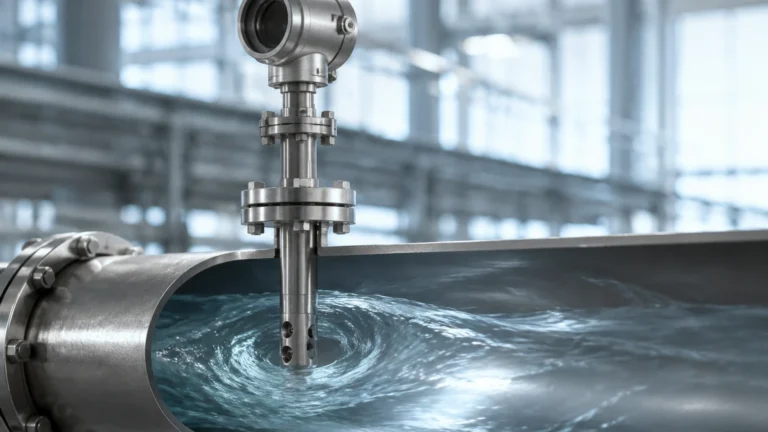
Non-contact radar, particularly high-frequency 80GHz radar, is often the preferred choice for industrial brine tanks. It operates on the Time-of-Flight (ToF) principle, emitting microwave pulses that reflect off the surface of the liquid or salt. Because it does not come into contact with the brine, it is immune to the corrosive nature of the medium. Furthermore, radar is unaffected by vapor or temperature fluctuations within the tank.
Ultrasonic Level Sensors
Ultrasonic sensors use sound waves to determine the distance to the liquid surface. While cost-effective, they are sensitive to the air composition above the liquid. In brine tanks where significant evaporation or temperature gradients exist, the speed of sound can vary, potentially leading to measurement errors. However, for many standard water softening applications, they remain a reliable choice.
Hydrostatic Pressure Transmitters
Hydrostatic sensors measure the pressure exerted by the liquid column. In brine applications, the density of the fluid is significantly higher than that of pure water (typically around 1.2 g/cm³ for a saturated solution). When using hydrostatic transmitters, the sensor must be calibrated for this specific gravity, and the diaphragm must be constructed from corrosion-resistant materials like ceramic or Tantalum.
Magnetic Level Gauges
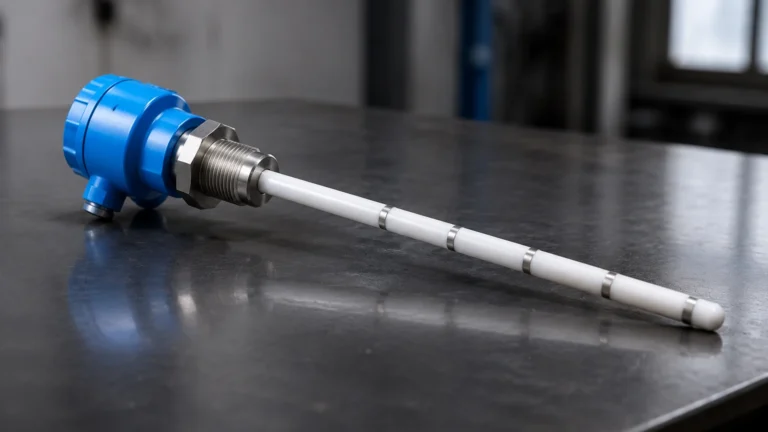
For visual confirmation alongside electronic signaling, magnetic level gauges use a float equipped with a magnet that moves a series of external flags. These are robust and provide a clear physical indication of the level, which is useful for manual inspections.
For those seeking specific hardware specifications and technical support for these technologies, you can visit the Main Page of Welk to review product options and application support.
Determining the Correct Water Level: Wet vs. Dry Systems
The answer to "how much water should be in the brine tank" depends primarily on whether the system is designed as a "wet" or "dry" brine tank. Each configuration has different operational requirements.
Wet Brine Tanks
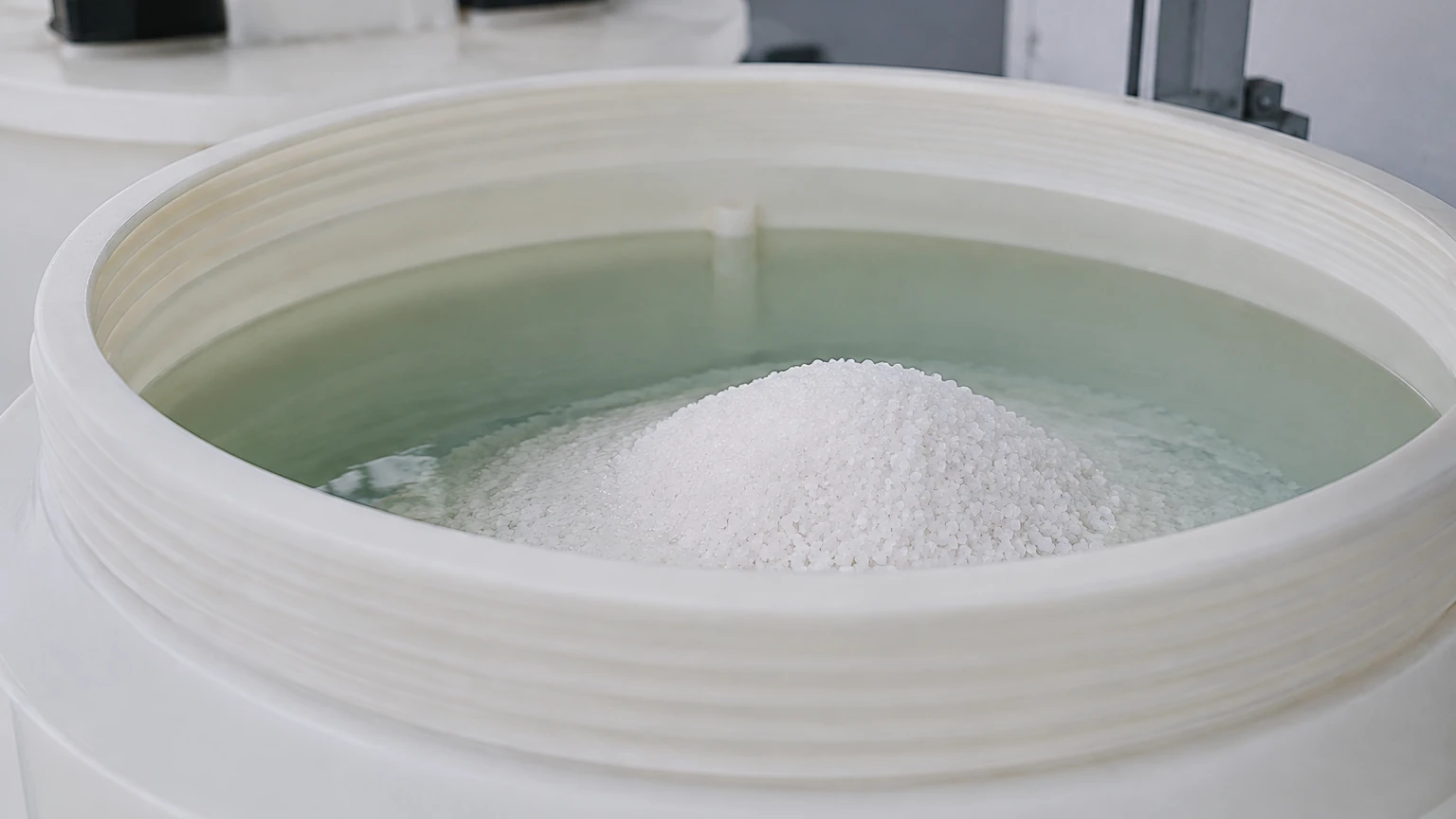
In a wet brine tank system, water is present in the tank at all times. This design ensures that a saturated brine solution is always ready for the next regeneration cycle.
* Ideal Level: Generally, the water level should be approximately 15 cm to 30 cm (6 to 12 inches) from the bottom of the tank, or about one-quarter to one-half full.
* The Salt-to-Water Relationship: The most critical rule for wet tanks is that the salt level should always remain above the water level. Ideally, the water should be 5 cm to 7.5 cm (2 to 3 inches) below the top of the salt. This prevents the salt from forming a hard crust, known as a salt bridge.
Dry Brine Tanks
Dry brine tanks are common in modern, high-efficiency industrial softeners. In these systems, the tank remains dry between regeneration cycles. Water is only pumped into the tank a few hours before the regeneration process begins.
* Ideal Level: The amount of water added is precisely controlled by the system’s control valve based on the capacity of the resin bed. Typically, after the refill stage, you might see 15 cm to 25 cm (6 to 10 inches) of water at the bottom.
* Operational Note: If you find several inches of water in a dry tank system *after* the regeneration cycle is complete, it may indicate a blockage in the brine line or a failure in the injector system.
Selection Criteria for Brine Level Instrumentation
Choosing the right sensor to monitor how much water should be in the brine tank involves evaluating several technical factors. The table below compares common technologies used in industrial brine management.
| Technology | Accuracy | Chemical Resistance | Maintenance Requirement | Best Application |
| :— | :— | :— | :— | :— |
| 80GHz Radar | High (±2mm) | Excellent (Non-contact) | Very Low | Large industrial tanks with vapors |
| Ultrasonic | Moderate (±0.25%) | Good (PVDF/PTFE) | Low | Standard atmospheric tanks |
| Hydrostatic | High (±0.1%) | Variable (Requires Alloy) | Moderate | Deep tanks or pressurized vessels |
| Level Switch | N/A (Point) | Good | Moderate | Overfill protection/Low-level alarm |
Key Evaluation Factors:
1. Material Compatibility: Ensure all wetted parts are made of PVC, PP, PTFE, or high-grade stainless steel with specialized coatings to withstand high salinity.
2. Measurement Range: The sensor must be able to detect levels from the very bottom (to ensure the tank isn't empty) to the very top (to prevent overflow).
3. Output Signal: Most industrial systems require a 4-20mA or RS485 Modbus signal to integrate with a PLC or SCADA system.
Installation Considerations for Level Sensors
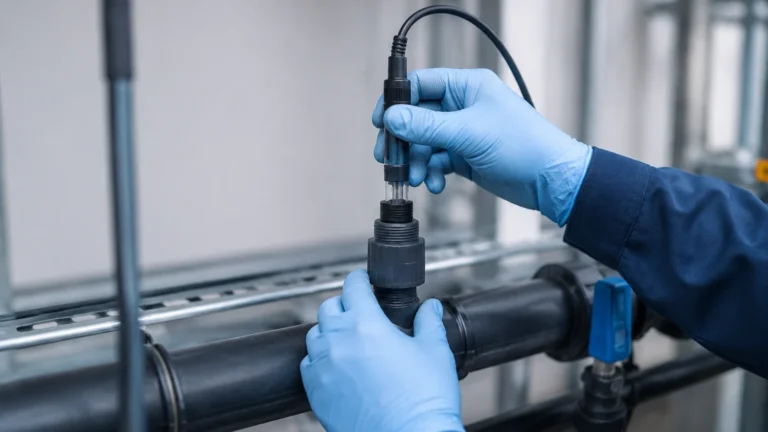
Proper installation is just as important as selecting the right technology. When installing a sensor to monitor the brine level, consider the following:
* Dead Zones (Blocking Distance): Every non-contact sensor has a "dead zone" near the face of the transducer where it cannot measure. Ensure the sensor is mounted high enough so that the maximum possible water level does not enter this zone.
* Mounting Position: Sensors should be mounted away from the brine refill inlet to avoid turbulence and false readings during the refill cycle. They should also be positioned away from the tank walls to prevent signal interference from side-wall reflections.
* Stilling Wells: In tanks with significant agitation or where salt is added frequently, a stilling well (a vertical pipe) can be used to provide a calm surface for the sensor to measure, ensuring a stable reading of how much water should be in the brine tank.
Common Risks and Troubleshooting
Incorrect water levels in a brine tank can lead to several operational issues that engineers must be prepared to troubleshoot.
1. Salt Bridging
A salt bridge occurs when a hard crust forms over the water, creating an empty space between the water and the salt. This results in the water not being able to dissolve the salt, leading to a failure in the regeneration process.
* Symptom: The level sensor shows the water level is correct, but the water hardness remains high after regeneration.
* Solution: Manually break the bridge and ensure the water level is kept below the salt level in wet systems.
2. Brine Mushing
When salt is crushed or dissolved into very fine particles, it can form a thick sludge at the bottom of the tank. This "mush" can clog the brine draw-off tube.
* Prevention: Use high-quality pellet salt and periodically clean the tank to remove sediment.
3. Overflowing Tanks
If the level sensor fails or the brine valve does not close properly, the tank may overflow. This is a significant environmental and safety hazard in industrial settings.
* Redundancy: Always install a secondary high-level float switch as a fail-safe to shut off the water supply regardless of the primary sensor's reading.
Frequently Asked Questions (FAQ)
Q: Why is there more water in my brine tank than usual?
A: This usually indicates a failure in the brine draw cycle. Possible causes include a clogged injector, a kinked brine line, or low water pressure during the regeneration cycle.
Q: Can I use a standard water level sensor for brine?
A: Standard sensors may work temporarily, but the high salinity will eventually corrode metallic components. It is highly recommended to use sensors with plastic housings (like PVDF) or non-contact radar.
Q: How often should I check the brine level?
A: In industrial applications, the level should be monitored continuously via a PLC. Manual inspections of the salt level should occur weekly to ensure no bridging has occurred.
Q: What is the impact of water temperature on brine levels?
A: Higher temperatures increase the solubility of salt, which can slightly alter the density of the brine. While this doesn't significantly change the volume of water needed, it can affect hydrostatic pressure sensors if they are not temperature-compensated.
Conclusion
Understanding how much water should be in the brine tank is fundamental to the longevity and efficiency of water treatment systems. By distinguishing between wet and dry systems and employing advanced measurement technologies like radar or ultrasonic sensors, industrial operators can ensure precise control over their processes. For comprehensive technical data and to explore high-precision measurement solutions, professionals are encouraged to consult the Main Page of Welk for further engineering guidance and product specifications.
Download How Much Water Should Be in the Brine Tank as a PDF