Level Probe Endress Hauser
Level Probe Endress Hauser
In the landscape of industrial automation, level probes represent a fundamental category of instrumentation used to monitor the volume or height of liquids and solids within tanks, wells, and process vessels. Selecting a level probe, such as those within the Endress+Hauser portfolio or equivalent high-precision instruments from manufacturers like Welk, requires a deep understanding of the underlying physical principles and the specific demands of the operating environment. This guide examines the technical specifications, measurement principles, and selection criteria for industrial level probes to assist engineers in making informed procurement decisions.
Measurement Principles of Level Probes
Before selecting a specific model, it is essential to understand how different probes interact with the media. Level probes generally fall into three primary technological categories: hydrostatic, capacitance, and conductive.
Hydrostatic Level Measurement
Hydrostatic probes, often referred to as submersible pressure transmitters, operate on the principle that the pressure at a specific depth is proportional to the height of the liquid column above it. The formula used is $P = \rho \cdot g \cdot h$, where $P$ is pressure, $
ho$ (rho) is the density of the liquid, $g$ is the gravitational constant, and $h$ is the height of the liquid.
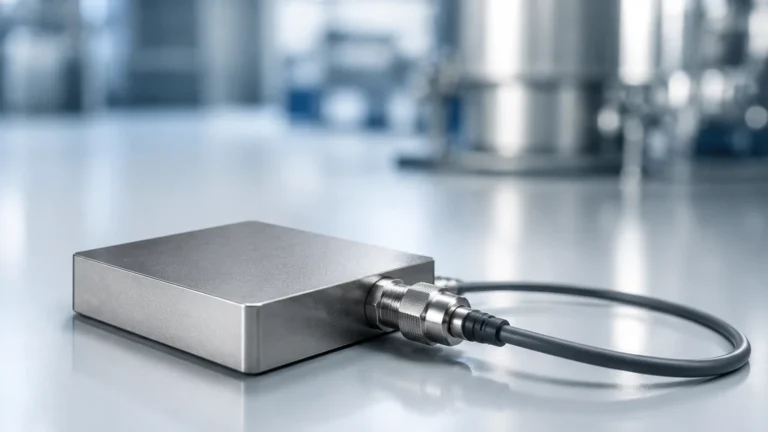
These probes are suspended by a reinforced cable into the medium. A sensor diaphragm at the bottom of the probe detects the pressure. To ensure accuracy, these probes typically include a capillary tube within the cable to vent the internal side of the sensor to atmospheric pressure, compensating for changes in barometric pressure.
Capacitance Level Measurement
Capacitive level probes utilize the electrical property of capacitance to determine level. The probe and the tank wall (or a second reference electrode) act as two plates of a capacitor. As the level of the medium rises, it displaces air, changing the dielectric constant between the electrodes. Because most liquids have a significantly higher dielectric constant than air, the total capacitance increases proportionally with the level. This method is effective for both continuous measurement and point level detection.
Conductive Level Measurement
Conductive probes are primarily used for point level detection in conductive liquids. The system consists of a power source and at least two electrodes. When the liquid reaches the electrodes, it completes an electrical circuit. This technology is highly reliable for overflow protection or pump control in water treatment and chemical processing, provided the medium has a minimum conductivity (typically > 10 µS/cm).
Technical Selection Criteria
When evaluating a level probe Endress Hauser or a similar industrial-grade solution, engineers must confirm several technical parameters to ensure long-term reliability and accuracy.
Media Characteristics
* Density and Viscosity: Hydrostatic probes require a constant density for accurate height calculation. If the density fluctuates due to temperature or concentration changes, the error margin increases. For highly viscous media, non-contact radar or ultrasonic sensors may be preferable to avoid probe fouling.
* Chemical Compatibility: The wetted parts of the probe (the housing, diaphragm, and cable) must be resistant to the process media. Common materials include 316L stainless steel, Hastelloy, and various polymers like PUR, FEP, or PE for cables.
* Conductivity: For conductive probes, the liquid must be able to carry a current. For capacitive probes, the dielectric constant must be stable.
Process Conditions
* Temperature Range: Standard probes typically operate between -10°C and +80°C. High-temperature applications require specialized sensors with remote electronics or cooling fins.
* Pressure: While hydrostatic probes measure pressure, they also have a maximum immersion depth (overpressure limit). Exceeding this can rupture the sensing diaphragm.
* Turbulence and Foam: Mechanical probes can be affected by heavy turbulence. In such cases, the use of a stilling well or a non-contact radar level meter is recommended.
Comparison of Level Probe Technologies
The following table provides a comparative overview of common level probe technologies used in industrial applications.
| Technology | Typical Application | Advantages | Limitations |
| :— | :— | :— | :— |
| Hydrostatic | Deep wells, water reservoirs, fuel tanks | Simple installation, independent of foam | Sensitive to density changes |
| Capacitance | Chemical tanks, solids, interface measurement | No moving parts, high temperature capability | Requires calibration for different media |
| Conductive | Pump control, leak detection | Cost-effective, very reliable | Only works with conductive liquids |
| Radar (Non-contact) | Corrosive chemicals, agitated vessels | Highest accuracy, no media contact | Higher initial investment |
For a comprehensive range of professional level measurement instruments, including advanced radar and ultrasonic options, you may visit the Main Page of Welk's technical catalog.
Installation and Engineering Considerations
Proper installation is as critical as sensor selection. Failure to follow engineering best practices can lead to signal drift or premature sensor failure.
1. Mounting Location: Probes should be installed away from tank inlets to avoid the direct force of falling liquid or the influence of localized turbulence. If the tank has an agitator, the probe should be shielded or mounted in a stilling well.
2. Cable Management: For submersible hydrostatic probes, the cable should be secured to prevent the probe from moving. Excess cable should be coiled loosely, ensuring the atmospheric vent tube is not kinked or blocked. A moisture filter or vent bellows is often installed at the termination point to prevent condensation from entering the capillary tube.
3. Grounding and Shielding: In environments with high electromagnetic interference (EMI), shielded cables are mandatory. The probe housing should be properly grounded to the vessel to ensure a stable reference point for capacitive and conductive measurements.
4. Calibration: Most modern probes are pre-calibrated, but field adjustment is often necessary to account for specific gravity (for hydrostatic) or the dielectric constant (for capacitive).

Limitations and Common Risks
While level probes are versatile, they are not universal solutions. Engineers should be aware of the following risks:
* Build-up and Coating: In many chemical and wastewater applications, media can adhere to the probe surface. In capacitive and conductive systems, this can lead to "false positives" where the sensor indicates a high level even when the tank is empty. Self-cleaning probes or non-contact sensors are better suited for coating media.
* Atmospheric Venting Issues: In hydrostatic probes, if the vent tube becomes clogged with dust or moisture, the sensor will no longer compensate for barometric pressure changes. This can result in an error of several centimeters of water column height.
* Lightning and Surges: Because many level probes are installed in outdoor tanks or deep wells, they are susceptible to lightning strikes. Integrated surge protection is a critical feature for these installations.
Frequently Asked Questions (FAQ)
Q: Can a hydrostatic level probe be used in a pressurized tank?
No, standard submersible hydrostatic probes are designed for vented (atmospheric) tanks. In a pressurized vessel, the sensor would measure the sum of the liquid head and the headspace pressure. For pressurized tanks, a differential pressure transmitter or a radar level meter is required.
Q: How often should a level probe be calibrated?
Frequency depends on the stability of the medium and the criticality of the process. For water applications, an annual check is usually sufficient. In corrosive chemical processes, semi-annual verification is recommended.
Q: What is the maximum cable length for a submersible probe?
Most manufacturers offer cable lengths up to 300 meters (approx. 1000 feet). However, signal degradation and the weight of the cable must be considered. For very long runs, a 4-20mA signal with HART protocol is standard to maintain data integrity.
Q: Are level probes suitable for dry solids?
Capacitive probes are frequently used for solids like grain or plastic pellets. Hydrostatic probes, however, are strictly for liquids as they rely on fluid pressure.
Conclusion
Selecting the correct level probe Endress Hauser or an equivalent industrial solution involves a systematic evaluation of the physical properties of the liquid, the mechanical constraints of the vessel, and the required accuracy of the data. By understanding the principles of hydrostatic, capacitive, and conductive measurement, and by adhering to strict installation guidelines, process engineers can ensure reliable level monitoring across a wide range of industrial applications. For those seeking alternative high-performance measurement technologies, exploring the Main Page of a specialized manufacturer like Welk provides access to a broad spectrum of radar, ultrasonic, and magnetic level solutions tailored for global industrial automation needs.