Level Probe Sensor
Level Probe Sensor
In the landscape of industrial process control, the level probe sensor stands as a fundamental component for monitoring and managing liquid and solid volumes. These instruments, often characterized by their probe-like form factor that extends into a vessel or borehole, utilize various physical principles to detect the presence or height of a medium. Selecting the correct level probe requires a deep understanding of the fluid dynamics, chemical compatibility, and environmental conditions of the application.
For engineers and plant managers, the choice of a level probe sensor is rarely about a single feature but rather the alignment of sensor physics with process requirements. This guide explores the primary measurement technologies, selection criteria, and installation protocols necessary for reliable industrial level measurement.
Core Measurement Principles of Level Probes
Before selecting a device, it is essential to understand the underlying physics that govern how different level probe sensors function. Industrial probes generally fall into four technical categories: hydrostatic, capacitance, conductive, and magnetic.
Hydrostatic Pressure Probes
Hydrostatic level probes, often referred to as submersible level transmitters, operate on the principle that the pressure at a specific point in a static liquid is proportional to the height of the liquid column above it. The relationship is defined by the formula:
P = ρ × g × h
*(Where P is pressure, ρ is the density of the liquid, g is the gravitational constant, and h is the height of the liquid.)*
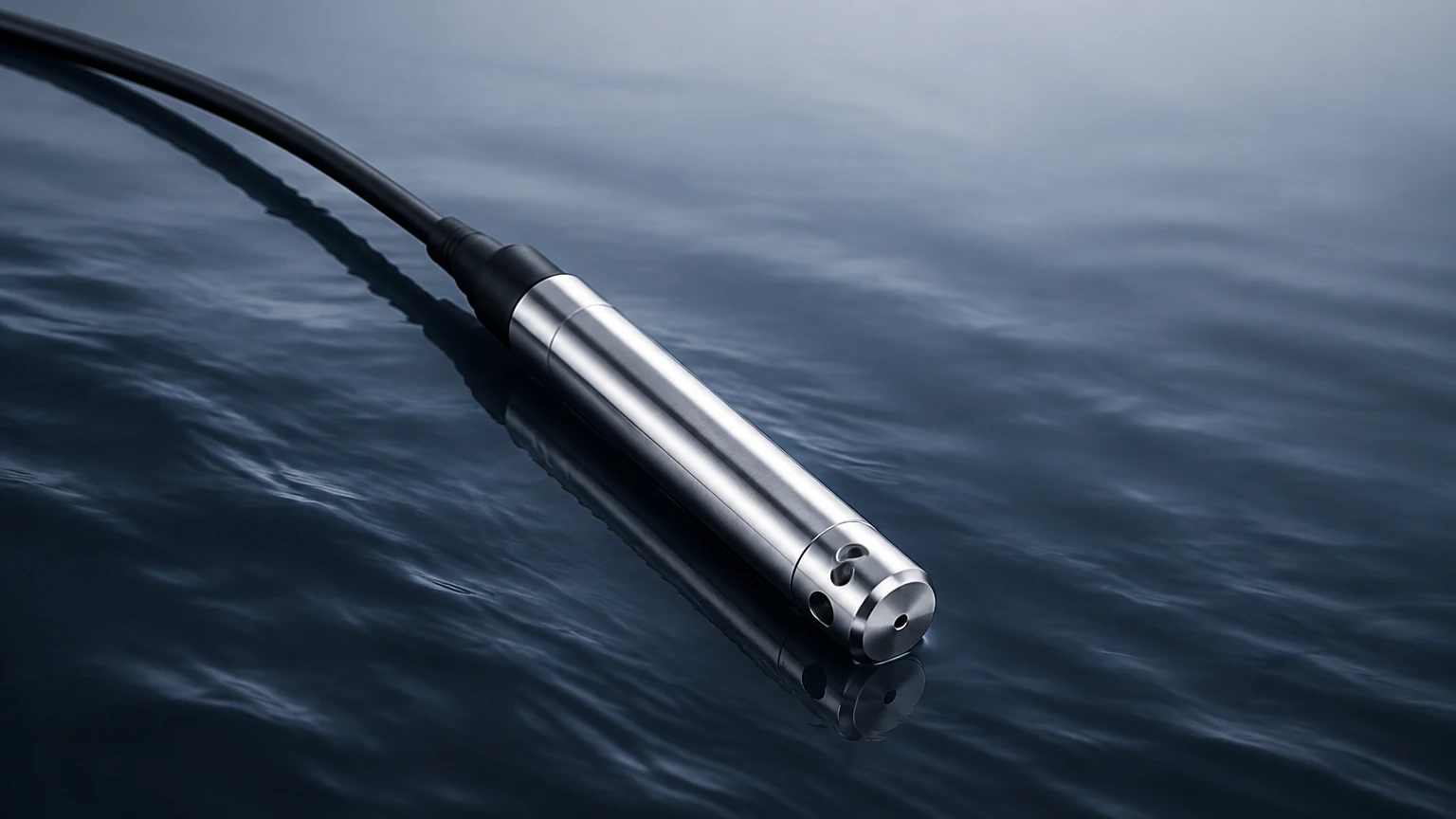
These sensors typically consist of a stainless steel housing containing a pressure sensing element (piezoresistive or ceramic). The probe is lowered to the bottom of the tank or well. A vented cable allows the sensor to compensate for atmospheric pressure changes, ensuring that the measurement reflects only the liquid's weight.
Capacitance Level Probes
Capacitance sensors treat the probe and the tank wall (or a second reference probe) as two plates of a capacitor. The medium between them acts as the dielectric. As the level of the medium rises, it displaces air (which has a dielectric constant of approximately 1), changing the overall capacitance of the system. This change is converted into a linear level signal. Capacitance probes are highly versatile, capable of measuring both conductive and non-conductive liquids, as well as granulated solids.
Conductive Level Probes
Conductive probes are used primarily for point-level detection in conductive liquids. The system uses a low-voltage, AC signal between a reference electrode and a detection electrode. When the liquid touches the probe, it completes an electrical circuit. Because they rely on the electrical conductivity of the medium, they are unsuitable for oils, hydrocarbons, or pure distilled water.
Magnetic Level Probes
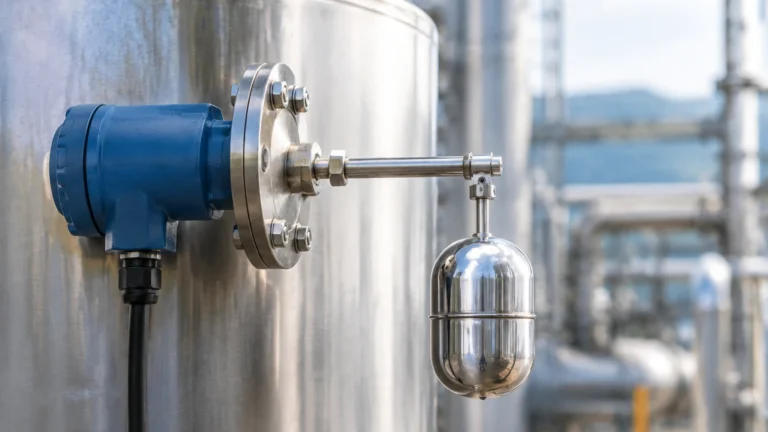
Magnetic probes usually involve a float containing a permanent magnet that moves along a sealed stem. Inside the stem are reed switches or a magnetostrictive wire. As the float moves with the liquid level, the magnetic field triggers the internal components to provide either a stepped or continuous output. These are robust and provide excellent isolation between the process media and the electronics.
Industrial Applications and Media Compatibility
The application environment dictates the material construction and technology of the level probe sensor. In water treatment, submersible hydrostatic probes are the standard for monitoring reservoir levels and deep-well depths. These probes must withstand constant immersion and potential silt buildup.
In chemical processing, compatibility is the primary concern. Probes must often be constructed from 316L stainless steel, Hastelloy, or coated with PTFE (Teflon) or PVDF to prevent corrosion. For example, a capacitance probe used in a sulfuric acid tank requires a fully insulated probe to prevent a direct short circuit and to protect the metal from the acid.
In the food and beverage industry, hygienic design is paramount. Probes must feature "tri-clamp" fittings and smooth surfaces (Ra < 0.8 µm) to prevent bacterial growth and facilitate Clean-in-Place (CIP) processes. For a broader look at how these technologies integrate into complete industrial systems, engineers can review product options and application support on the Main Page of professional instrumentation providers.
Technical Selection Criteria
Choosing the right level probe sensor involves evaluating several technical parameters. Use the following table as a preliminary guide for technology selection based on common process variables.
Technology Selection Table
| Technology | Best Suited For | Limitations | Typical Accuracy |
| :— | :— | :— | :— |
| Hydrostatic | Deep wells, open tanks, water, oils | Sensitive to density changes | ±0.1% to ±0.5% FS |
| Capacitance | Chemicals, solids, high temp/pressure | Affected by material buildup | ±0.5% to ±1.0% FS |
| Conductive | Conductive liquids, pump control | Only for point level; no oils | N/A (Switching) |
| Magnetic | Clean liquids, pressurized tanks | Moving parts can jam in dirty media | ±1 mm to ±5 mm |
Key Evaluation Factors:
1. Media Density: Hydrostatic probes require a constant density for accurate height calculation. If the density varies due to temperature or concentration changes, the sensor will report an error unless compensated.
2. Dielectric Constant (εr): For capacitance probes, the medium must have a dielectric constant significantly different from air. Most oils have an εr of 1.8 to 2.2, while water is approximately 80.
3. Pressure and Temperature: Ensure the probe housing and seals (O-rings) are rated for the maximum process temperature and pressure. Standard probes might handle up to 80°C, while specialized ceramic-faced probes can exceed 150°C.
4. Conductivity: Conductive probes typically require the medium to have a conductivity of at least 10 μS/cm.
Installation Best Practices for Reliable Measurement
Even the most advanced level probe sensor will fail if installed incorrectly. Proper placement and mounting are critical for long-term accuracy.
Positioning and Mounting
* Avoid Turbulence: Do not install probes directly near an inlet pipe or an agitator. If turbulence is unavoidable, use a stilling well (a perforated pipe) to protect the probe and provide a stable surface for measurement.
* Dead Zones: Be aware of the "dead zone" or "unmeasurable range" at the very top and bottom of some probes. For magnetic floats, the measurement cannot start until the float begins to rise, which may be 50 mm to 100 mm from the bottom of the stem.
* Grounding: For capacitance probes, the tank must be properly grounded. If the tank is plastic or lined, a reference rod or a ground strap must be used to provide the second "plate" for the capacitor.
Cable Management
For submersible hydrostatic probes, the cable is a critical part of the instrument. It contains a vent tube that must remain unobstructed to allow for atmospheric pressure compensation.
* The Vent Tube: Ensure the end of the cable is terminated in a dry junction box with a desiccant filter to prevent moisture from entering the vent tube, which can cause internal corrosion or sensor drift.
* Bending Radius: Avoid sharp bends in the cable that could kink the vent tube or damage the internal conductors.
Operational Limitations and Risk Mitigation
While level probe sensors are reliable, they are not without risks. Understanding these limitations allows for the implementation of redundant systems or better maintenance schedules.
1. Material Buildup: In capacitance and conductive probes, the accumulation of sticky or viscous material on the probe surface can lead to false readings. Using "active shield" technology in capacitance probes can help ignore the buildup, but regular cleaning may still be required.
2. Density Fluctuations: In hydrostatic applications, if a tank is filled with water (density 1000 kg/m³) and then filled with a light oil (density 800 kg/m³), the sensor will report a lower level for the oil even if the physical height is the same. Modern transmitters allow for density input via HART protocol to mitigate this.
3. Mechanical Wear: Magnetic floats and reed switches have a finite mechanical life. In high-vibration environments, reed switches may chatter or fail prematurely. In such cases, non-contact methods like radar or ultrasonic might be preferred, or heavy-duty magnetostrictive probes should be specified.
Maintenance and Troubleshooting Guide
A proactive maintenance schedule ensures that level probe sensors continue to operate within their specified accuracy limits.
* Visual Inspection: Every 6 to 12 months, remove the probe to check for corrosion, scaling, or physical damage to the diaphragm (for hydrostatic) or the insulation (for capacitance).
* Calibration Verification: Perform a zero-point check by lifting the probe out of the liquid. The output should return to 4mA (or the equivalent zero signal). A span check can be performed by immersing the probe to a known depth.
* Cleaning: Use a soft cloth and a compatible solvent to clean the probe. Never use a sharp object to clean a hydrostatic sensor's diaphragm, as it is extremely thin and easily damaged.
Common Troubleshooting Steps:
* Unstable Signal: Check for loose wiring or electromagnetic interference (EMI). Ensure the cable shield is grounded at only one end (usually the controller end).
* Fixed Output (at 20mA or Max): This often indicates a short circuit in a capacitance probe or a submerged vent tube in a hydrostatic probe.
* Slow Response: This may indicate a clogged protective nose cap on a submersible sensor or a heavily coated probe in a capacitance system.
Frequently Asked Questions (FAQ)
Q: Can a hydrostatic level probe be used in a pressurized tank?
A: Standard submersible probes are designed for vented (atmospheric) tanks. For pressurized tanks, a differential pressure transmitter is required, which measures the difference between the liquid head pressure and the top gas pressure.
Q: What is the maximum length for a level probe?
A: This depends on the technology. Cable-based hydrostatic probes can reach depths of 500 meters or more. Rigid capacitance or magnetic probes are typically limited to 4–6 meters due to shipping and structural stability, though flexible cable-type capacitance probes can be longer.
Q: Do level probes require specialized tools for calibration?
A: Many modern probes are "plug-and-play" for standard ranges. However, for precise industrial calibration, a HART communicator or manufacturer-specific software is often used to adjust the zero and span points digitally.
Q: How do I choose between a probe-type sensor and a non-contact sensor?
A: Probe-type sensors (contact) are often more cost-effective and are not affected by foam or vapor in the same way as ultrasonic sensors. However, non-contact sensors (like radar) are better for extremely corrosive, boiling, or high-purity media where contact must be avoided.
For further technical specifications and to explore the full range of level measurement solutions, including radar and ultrasonic alternatives, professionals should visit the Main Page to consult with engineering experts.