Analyzer for Silica
Analyzer for Silica
In high-pressure industrial environments, particularly in power generation and semiconductor manufacturing, the presence of dissolved silica ($SiO_2$) can lead to catastrophic equipment failure. An analyzer for silica is a specialized analytical instrument designed to monitor these levels in real-time, ensuring that water purity remains within strict operational limits. While these analyzers focus on chemical composition, they operate as part of a broader process control ecosystem that includes pressure, flow, and level measurement.
This guide explores the technical principles of silica analysis, selection criteria for industrial applications, and how these instruments integrate with comprehensive plant automation systems, such as those supported by the level measurement solutions found on our Main Page.
Understanding Silica Measurement Principles
To select the correct analyzer for silica, it is first necessary to understand how these devices detect such minute concentrations of a mineral that is otherwise chemically inert in most environments.
The Colorimetric Method (Molybdosilicate)
The vast majority of online silica analyzers utilize colorimetric analysis, specifically the heteropoly blue method. This process involves several precisely timed chemical reactions:
1. Reagent Addition: Ammonium molybdate is added to the water sample at a controlled pH (typically acidic, around 1.2 to 1.5 pH).
2. Formation of Molybdosilicic Acid: The silica in the sample reacts with the molybdate to form yellow-colored molybdosilicic acid complexes. This is often referred to as "moly-reactive" silica.
3. Reduction to Heteropoly Blue: A reducing agent (such as amino-naphthol-sulfonic acid or ascorbic acid) is added. This converts the yellow complex into an intense blue color, known as heteropoly blue.
4. Photometric Measurement: The analyzer passes a light beam through the sample cell. A photometer measures the absorbance of light at a specific wavelength (usually around 810 nm to 820 nm). According to the Beer-Lambert Law, the intensity of the blue color—and thus the light absorbed—is directly proportional to the concentration of silica in the sample.
Reactive vs. Non-Reactive Silica
It is critical for engineers to distinguish between reactive and non-reactive silica. Standard analyzers for silica detect "moly-reactive" silica, which includes dissolved silicates and silicic acid. Non-reactive silica, or colloidal silica, consists of larger suspended particles that do not readily react with reagents. In systems where colloidal silica is a concern, specialized digestion steps or ultrafiltration may be required before analysis.
The Importance of Silica Analysis in Industrial Water Treatment
Silica is a primary concern in steam-raising plants. As water turns to steam in high-pressure boilers, silica can volatilize and carry over into the steam phase. Once the steam reaches the turbine, the drop in pressure and temperature causes the silica to precipitate, forming a hard, glass-like scale on the turbine blades. This scaling reduces aerodynamic efficiency, causes imbalances, and can eventually lead to mechanical failure.
In the semiconductor industry, silica must be removed to sub-parts-per-billion (ppb) levels in ultrapure water (UPW) systems to prevent defects in wafer fabrication. Here, the analyzer for silica serves as the final gatekeeper for water quality after ion exchange and reverse osmosis processes.
Key Selection Criteria for a Silica Analyzer
When evaluating an analyzer for silica, technical specifications must align with the specific needs of the process. The following table provides a comparison of typical requirements based on application type.
Silica Analyzer Selection Table
| Feature | Power Generation (Boiler/Turbine) | Semiconductor/Ultrapure Water | Industrial Wastewater/Raw Water |
| :— | :— | :— | :— |
| Measurement Range | 0–100 ppb (parts per billion) | 0–20 ppb | 0–100 ppm (parts per million) |
| Detection Limit | < 0.5 ppb | < 0.1 ppb | 0.1 ppm |
| Measurement Method | Low-range Colorimetric | High-sensitivity Colorimetric | High-range Colorimetric |
| Reagent Life | 45–90 days | 60–90 days | 30–60 days |
| Typical Accuracy | ±2% of reading | ±5% of reading or 0.1 ppb | ±5% of reading |
| Number of Channels | Multi-channel (up to 6) | Single or Dual channel | Single channel |
Multi-Stream vs. Single-Stream
In many power plants, it is cost-effective to use a single analyzer for silica to monitor multiple points (e.g., makeup water, condensate polisher outlet, and boiler drum). Multi-stream sequencers allow the analyzer to cycle through different sample lines. However, the cycle time must be considered; if an analyzer takes 10 minutes per sample and is monitoring six streams, each point is only checked once per hour.
Installation and Sampling Requirements
The accuracy of an analyzer for silica is heavily dependent on the quality of the sample delivery system. Because these instruments measure at the ppb level, contamination is a significant risk.
Sample Conditioning
Industrial water samples are often at high temperatures and pressures. Before reaching the analyzer, the sample must pass through a conditioning system:
* Cooling: High-temperature boiler water must be cooled to between 20°C and 30°C (68°F to 86°F) using a sample cooler. Temperature fluctuations can affect the rate of chemical reaction within the analyzer.
* Pressure Regulation: The sample pressure must be reduced to a stable, low pressure (typically 0.2 to 2.0 bar / 3 to 30 psi) to protect the analyzer's internal tubing and valves.
* Filtration: A 60-micron filter is usually recommended to prevent particulate matter from clogging the small-bore capillary tubing or the optical cell.
Material Compatibility
Sampling lines should be constructed from stainless steel or high-density polyethylene (HDPE). Standard glass containers or lines must be avoided, as silica can leach from the glass into the sample, leading to artificially high readings.

Limitations and Operational Challenges
While modern analyzers for silica are highly automated, they are not "set and forget" instruments. Engineers must account for several operational limitations:
1. Phosphate Interference: In some boiler water treatments, phosphate is added for pH control. Phosphate can react with ammonium molybdate similarly to silica, creating a positive interference. High-quality analyzers include a reagent (often tartaric or oxalic acid) specifically to mask phosphate interference.
2. Temperature Sensitivity: The chemical reaction kinetics are temperature-dependent. If the analyzer is installed in an environment with extreme temperature swings (e.g., an unconditioned outdoor cabinet), the results may drift.
3. Reagent Stability: Reagents have a finite shelf life. Ammonium molybdate is light-sensitive and can degrade if not stored in opaque containers. Regular calibration using a known silica standard is essential to verify reagent potency.
Integration with Level Measurement Systems
A silica analyzer does not operate in isolation. It is a component of a larger water management infrastructure where level control is equally critical. For example, in a demineralization plant, the analyzer for silica monitors the output of the ion exchange beds. Simultaneously, level meters are required to manage the inventory of the chemicals used in the process.
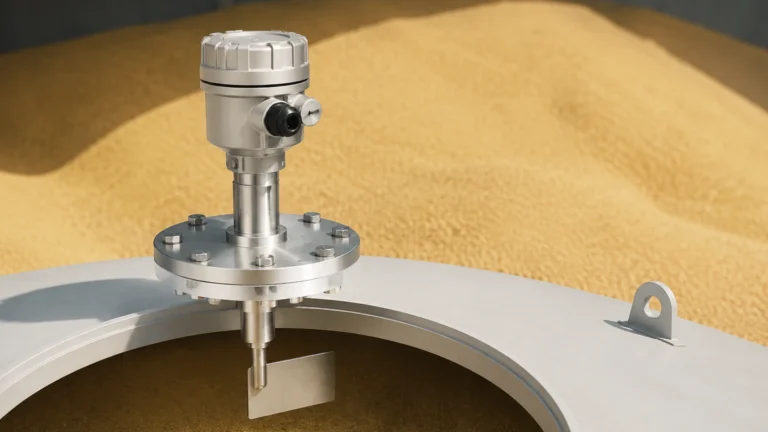
* Chemical Dosing Tanks: Reagents for the silica analyzer and chemicals for resin regeneration (like hydrochloric acid or sodium hydroxide) are stored in tanks that require precise level monitoring. Ultrasonic or radar level sensors, such as those provided by Welk, ensure that these tanks never run dry, which would otherwise lead to analyzer downtime or process failure.
* Treated Water Storage: Once the silica analyzer confirms the water meets purity standards, the water is moved to storage tanks. Hydrostatic level transmitters provide continuous feedback to the PLC to manage pump cycles and prevent tank overflows.
By integrating the analytical data from an analyzer for silica with the physical data from level measurement devices, plant operators can achieve a holistic view of their water treatment efficiency. You can explore various industrial level measurement technologies to complement your analytical setup on our Main Page.
Frequently Asked Questions (FAQs)
Q: How often should a silica analyzer be calibrated?
A: Most industrial applications require a weekly or bi-weekly calibration using a certified silica standard. Many modern analyzers feature an auto-calibration function that can be programmed to run at specific intervals.
Q: Can an analyzer for silica detect sand or silt in the water?
A: Generally, no. Sand and silt are forms of crystalline or colloidal silica. The standard colorimetric method only detects dissolved (reactive) silica. If silt is present, it will likely be caught by the analyzer's pre-filter or may cause physical wear on the pumps.
Q: What is the typical reagent consumption?
A: Consumption varies by manufacturer, but most analyzers are designed to operate for 30 to 90 days between reagent refills. Using an analyzer with a "low reagent consumption" design can significantly reduce the total cost of ownership (TCO) over the instrument's lifespan.
Q: Why is my analyzer reading higher than my lab results?
A: This is often due to contamination in the sampling line or the use of glass containers for lab samples. Always use plastic (PTFE or HDPE) containers for silica-sensitive samples and ensure the online analyzer's sample line has been properly flushed.
Summary of Installation Best Practices
To ensure the longevity and accuracy of your analyzer for silica, follow these engineering guidelines:
* Location: Install the analyzer as close to the sampling point as possible to minimize lag time, but ensure it is in a vibration-free environment with stable temperature.
* Drainage: These analyzers produce chemical waste (the reacted sample). Ensure there is a dedicated chemical drain or a neutralization system in place to handle the effluent.
* Power Stability: Use a surge protector or Uninterruptible Power Supply (UPS). Microprocessor-based analyzers and their photometric detectors are sensitive to power fluctuations.
* Maintenance Access: Leave at least 0.5 meters (approx. 20 inches) of clear space around the unit for reagent replacement and tubing maintenance.
By carefully selecting an analyzer for silica that matches the specific range and sensitivity requirements of the application, and by supporting it with reliable peripheral instrumentation like level meters, industrial facilities can protect their high-value assets and maintain peak operational efficiency.