Liquid Level Electrode
Liquid Level Electrode
In the landscape of industrial automation, point level detection remains a fundamental requirement for process safety, pump control, and inventory management. Among the various technologies available, the liquid level electrode stands out as one of the most reliable and cost-effective solutions for conductive media. Utilizing the principle of electrical conductivity, these sensors provide a robust method for detecting specific levels within tanks, sumps, and pressurized vessels. As a specialized manufacturer, Welk provides high-performance level measurement instruments designed to meet the rigorous demands of water treatment, chemical processing, and industrial automation.
Understanding the Conductivity Principle
The operation of a liquid level electrode is based on the electrical conductivity of the process medium. Unlike float switches that rely on buoyancy or ultrasonic sensors that use sound waves, conductivity-based electrodes use the liquid itself as a conductor to complete an electrical circuit.
The Electrical Circuit
In a typical setup, a low-voltage alternating current (AC) is applied to the electrodes. When the liquid level rises and touches the electrode, the circuit between the electrode and a reference point is closed. This reference point can be the conductive wall of a metal tank or a separate "common" electrode in a non-conductive (plastic or concrete) vessel. Once the circuit is completed, a small current flows to a level controller or relay, which then triggers an output signal, such as starting a pump or sounding an alarm.
Why Use Alternating Current (AC)?
It is critical to note that industrial liquid level electrode systems use AC rather than direct current (DC). The use of DC would lead to electrolysis, causing the buildup of ions on the electrode surface (polarization) and the gradual erosion of the metal rods. AC prevents these chemical reactions, ensuring long-term stability and reducing maintenance requirements.
Types of Liquid Level Electrode Systems
Depending on the application depth and the nature of the liquid, different electrode configurations are employed. Choosing the right type is essential for ensuring the longevity of the measurement system.
1. Rigid Rod Electrodes
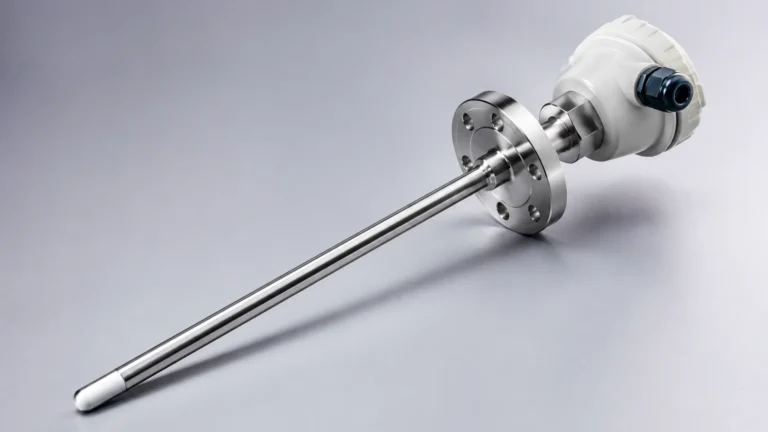
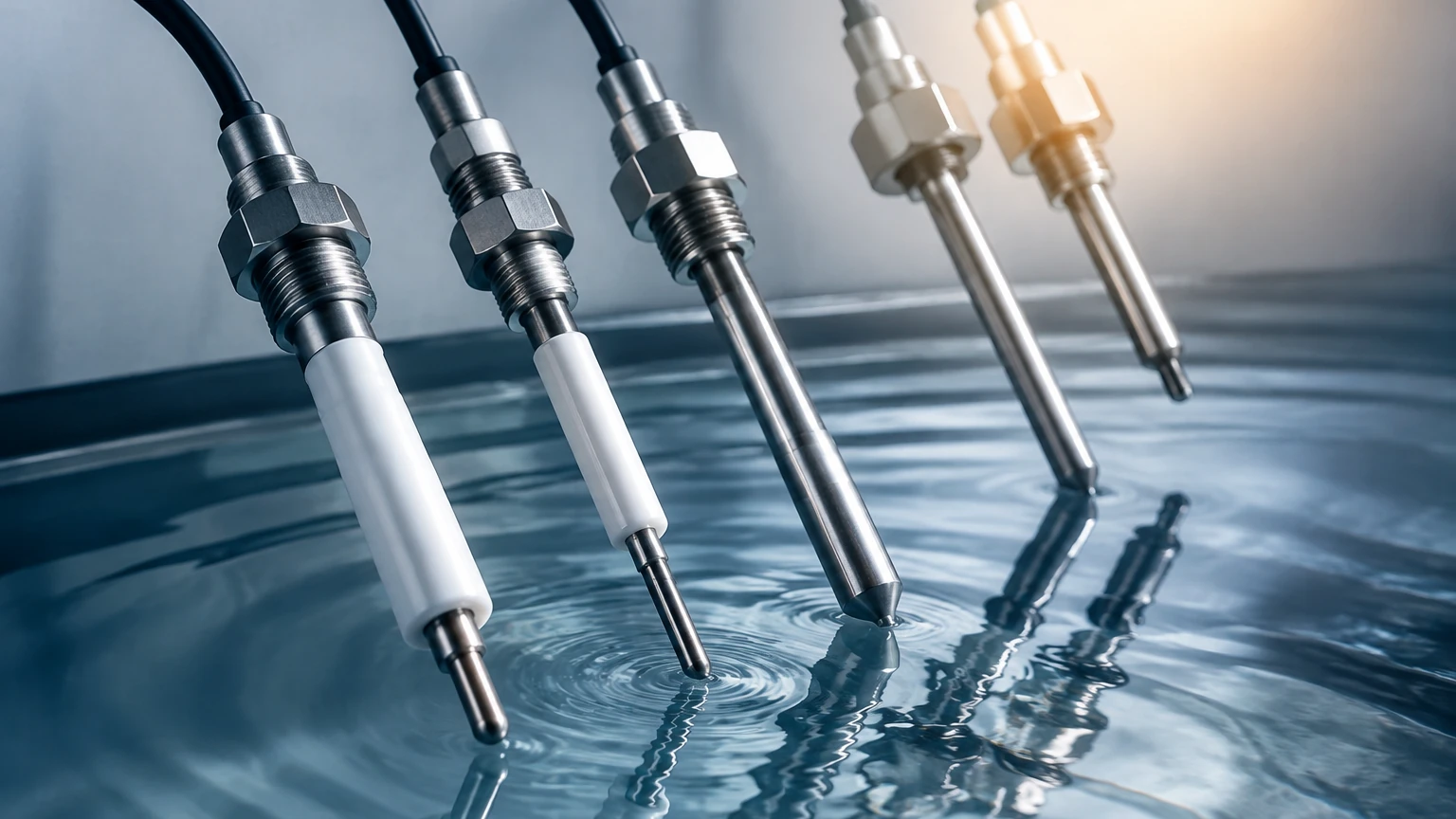
These are the most common type for process tanks and small sumps. They consist of stainless steel or alloy rods, often coated with an insulating material like PTFE or Polyolefin, leaving only the tip exposed. They are ideal for heights ranging from 100 mm to 3,000 mm. For deeper applications, rod electrodes may become unwieldy and prone to bending under turbulent conditions.
2. Suspended Cable Electrodes
For deep wells, boreholes, or large reservoirs, suspended cable electrodes are preferred. These consist of a weighted electrode head attached to a chemical-resistant cable. The flexibility of the cable allows for measurement across several dozen meters. The weight ensures the electrode remains vertical even if there is slight movement in the water.
3. Multi-Point Electrode Holders
In many industrial scenarios, multiple levels need to be monitored—such as High-High (HH), High (H), Low (L), and Low-Low (LL). Multi-point holders allow several rods of varying lengths to be mounted through a single process connection. This simplifies installation and reduces the number of tank penetrations required.
Material Selection and Technical Specifications
Selecting the correct materials for the liquid level electrode is vital to prevent corrosion and ensure chemical compatibility. The following table provides a general guideline for material selection based on common industrial media.
| Medium | Recommended Electrode Material | Insulation Material | Typical Conductivity |
| :— | :— | :— | :— |
| Potable Water | SS304 / SS316L | PVC / Polyolefin | 50 – 1,000 µS/cm |
| Wastewater / Sewage | SS316L | Heat-shrinkable tubing | 200 – 2,000 µS/cm |
| Dilute Acids | Hastelloy C / Titanium | PTFE / FEP | > 5,000 µS/cm |
| Caustic Soda | SS316L / Nickel Alloys | PTFE | > 10,000 µS/cm |
| Demineralized Water | SS316L (High Sensitivity) | PTFE | 0.5 – 5.0 µS/cm |
Sensitivity Considerations
The conductivity of liquids varies significantly. While seawater and acids are highly conductive, purified water has very low conductivity. Modern controllers used with a liquid level electrode often feature adjustable sensitivity settings, allowing the system to distinguish between the actual liquid and heavy foam or moisture film on the probe.
Installation Best Practices for Industrial Applications
Proper installation is the most significant factor in the reliability of a conductivity-based level system. Engineers should adhere to the following guidelines to avoid false triggering or equipment failure.
1. Positioning and Clearance
Electrodes should be installed vertically. If the tank has internal structures like ladders, agitators, or heating coils, the electrodes must be positioned at a safe distance (minimum 50 mm) to prevent accidental contact or electrical interference. In tanks with high turbulence, the use of a stilling well (a perforated pipe) is recommended to protect the rods from mechanical stress and to provide a stable liquid surface for measurement.
2. The Reference Electrode (Common)
In a metal tank, the tank wall serves as the ground or common reference. However, in plastic, fiberglass (FRP), or lined tanks, a dedicated "Common" electrode must be installed. This electrode must be longer than the lowest detection electrode to ensure the circuit can always be completed.
3. Wiring and Cable Protection
The connection between the electrode holder and the control panel should be made using shielded cables if the distance exceeds 50 meters. This prevents electromagnetic interference (EMI) from high-voltage power lines or variable frequency drives (VFDs) from causing false signals. All junction boxes should be rated for the environment (e.g., IP65 or IP68 for wet areas).
4. Avoiding Bridging
One common issue in wastewater applications is "bridging," where debris or conductive sludge builds up between two electrodes or between an electrode and the tank wall. To prevent this, ensure that the uninsulated tips of the electrodes are sufficiently spaced apart and that the insulation extends well below the mounting head.
Common Limitations and Application Boundaries
While the liquid level electrode is highly effective, it is not a universal solution. Understanding its limitations is key to successful process design.
* Non-Conductive Liquids: This technology cannot be used for oils, hydrocarbons, pure alcohols, or distilled water with conductivity below 0.1 µS/cm. For these applications, Main Page solutions such as radar or ultrasonic meters are more appropriate.
* Coating and Fouling: If the liquid is highly viscous or prone to crystallization (like heavy syrups or certain polymers), a coating may form on the electrode. This coating can act as an insulator or, if conductive, cause the sensor to stay "on" even after the level drops.
* Pressurized Vessels: While electrodes can be used in pressurized environments, the seals in the electrode holder must be rated for the specific pressure and temperature of the vessel. Standard holders are often limited to 1.0 MPa (10 bar) and 100°C, though specialized ceramic-insulated versions can handle much higher limits.
Maintenance and Troubleshooting FAQ
Q: How often should electrodes be cleaned?
A: In clean water applications, electrodes can last years without maintenance. In wastewater or chemical processes, a bi-annual inspection is recommended to check for scale buildup or corrosion. If the rods are coated with calcium or grease, they should be cleaned with a non-abrasive cloth or mild solvent.
Q: Why is my pump not stopping even though the liquid is below the electrode?
A: This is often caused by moisture or conductive residue in the electrode holder head or a "bridge" of material between electrodes. Check the insulation of the rods and ensure the interior of the junction box is dry.
Q: Can I cut the electrode rods to size on-site?
A: Yes, most stainless steel rod electrodes are designed to be cut to the desired length during installation. Ensure that after cutting, any burrs are removed and the insulation is trimmed back approximately 10–20 mm from the tip to ensure good contact with the liquid.
Q: Is the voltage on the electrodes dangerous?
A: No. Industrial level controllers typically use a secondary voltage of 8V to 24V AC with very low current. This is safe for personnel and prevents significant sparking in hazardous areas, though explosion-proof housings and intrinsic safety barriers should be used in flammable environments.
Conclusion
The liquid level electrode remains a cornerstone of point level control due to its simplicity and lack of moving parts. By understanding the conductivity of the medium and selecting the appropriate materials and installation methods, engineers can implement a level control system that requires minimal intervention over its operational life. For complex applications involving aggressive chemicals or extreme temperatures, consulting with a professional manufacturer like Welk ensures that the selected measurement solution is perfectly aligned with the technical requirements of the facility. For more detailed technical specifications and product comparisons, please visit our Main Page to review product options and application support.