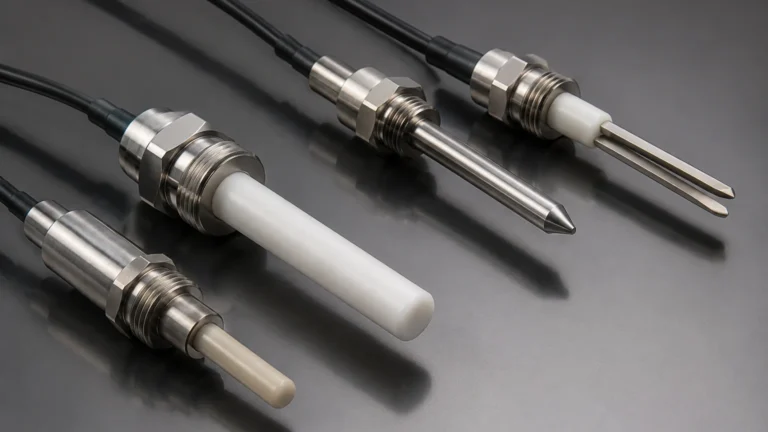
Liquid Level Sensor Non-contact
Liquid Level Sensor Non-contact
In modern industrial automation, the demand for high-precision, low-maintenance monitoring has led to the widespread adoption of the liquid level sensor non-contact approach. Unlike traditional contact-based methods—such as float switches or displacers—non-contact sensors do not touch the process media. This characteristic is critical when dealing with corrosive chemicals, sterile liquids, or viscous materials that would otherwise foul or damage a physical probe.
By utilizing wave-based technologies like ultrasonic and radar, industrial facilities can achieve continuous monitoring without the risk of mechanical wear or contamination. This guide explores the engineering principles, selection criteria, and installation best practices for non-contact level measurement solutions.
Measurement Principles
To select the correct liquid level sensor non-contact technology, it is essential to understand the physics behind the two primary methods: Ultrasonic and Radar (Microwave).
Ultrasonic Level Measurement
Ultrasonic sensors function by emitting high-frequency sound pulses (typically between 20 kHz and 200 kHz) from a transducer located at the top of a vessel. These sound waves travel through the air, reflect off the surface of the liquid, and return to the sensor.
The sensor calculates the distance ($D$) based on the Time of Flight ($ToF$):
$$D = \frac{c \times t}{2}$$
Where $c$ is the speed of sound and $t$ is the elapsed time. Since the speed of sound is affected by air temperature, most high-quality ultrasonic sensors include an integrated temperature sensor to compensate for these variations automatically.
Radar Level Measurement (FMCW and Pulsed)
Radar sensors use electromagnetic waves rather than sound. There are two main types of non-contact radar:
1. Pulsed Radar: Similar to ultrasonic, it sends a short microwave pulse and measures the time it takes to return. It is effective for long ranges but may have lower resolution compared to FMCW.
2. FMCW (Frequency Modulated Continuous Wave): This technology emits a continuous signal with a changing frequency. The distance is determined by the frequency difference between the emitted and received signals. FMCW radar is widely considered the gold standard for accuracy in complex industrial environments.
Unlike sound, electromagnetic waves travel at the speed of light and are not affected by air temperature, vacuum, or high pressure, making radar a more robust choice for extreme process conditions.
Technology Selection Table
The following table provides a comparison for engineers evaluating which liquid level sensor non-contact technology fits their specific application requirements.
| Feature | Ultrasonic Sensors | Radar (26GHz / 80GHz) |
| :— | :— | :— |
| Medium | Liquids and some solids | Liquids, Slurries, and Solids |
| Standard Range | 0.25m to 15m (0.8ft to 49ft) | 0.1m to 120m (0.3ft to 393ft) |
| Accuracy | ±0.25% of range | ±1mm to ±5mm |
| Pressure Limit | Ambient (typically < 0.3 MPa) | Up to 4.0 MPa or higher |
| Temperature Limit | -40°C to +80°C | -40°C to +250°C (standard) |
| Foam Sensitivity | High (absorbs sound) | Moderate (frequency dependent) |
| Dust/Vapor | Significant interference | Minimal interference |
| Cost | Cost-effective | Higher initial investment |
Key Evaluation Criteria
When specifying a liquid level sensor non-contact system, several environmental and process variables must be confirmed to ensure reliable signal return.
Dielectric Constant ($ε_r$)
In radar measurement, the dielectric constant of the liquid determines how much energy is reflected. Water has a high $ε_r$ (approx. 80) and provides a strong reflection. Hydrocarbons and oils have low $ε_r$ (typically 1.9 to 4.0), which results in weaker signals. Modern 80GHz radar sensors are designed to handle low-dielectric media more effectively than older 6GHz or 26GHz models.
Surface Conditions
Turbulence, surface ripples, or heavy foam can scatter or absorb the sensor's signal.
* Turbulence: Can be mitigated through software filtering (damping) or by using a stilling well.
* Foam: While ultrasonic signals are often completely absorbed by foam, high-frequency radar can sometimes penetrate thin foam layers or detect the top of the foam, depending on the application goal.
Tank Geometry and Obstructions
Non-contact sensors have a "beam angle." Any internal structure—such as ladders, agitators, or heating coils—that enters this beam path will create a false reflection. Engineers must calculate the beam diameter at the maximum distance to ensure clear line-of-sight. For more information on sensor specifications and beam angles, you can review product options and application support on the Main Page.
Installation Considerations
Proper installation is the most critical factor in the success of a liquid level sensor non-contact application. Failure to follow these guidelines often results in "lost echoes" or erratic readings.
1. Blocking Distance (Dead Zone)
Every non-contact sensor has a minimum distance (dead zone) near the transducer face where it cannot measure. For ultrasonic sensors, this is typically 0.25m to 0.5m (10" to 20"). If the liquid level enters this zone, the sensor will provide an error or a fixed maximum reading. Ensure the sensor is mounted high enough to avoid this.
2. Mounting Location
* Avoid the Center: In cylindrical tanks with domed tops, mounting the sensor in the exact center can cause multiple reflections (parabolic effect), leading to signal interference.
* Avoid the Wall: Mounting too close to the tank wall will cause the signal to reflect off the wall or catch weld seams. A general rule is to mount the sensor at least 200mm (8") or 1/6th of the tank diameter away from the wall.
* Inflow Interference: Never mount a sensor directly above the liquid inlet, as the falling stream will obstruct the signal path.
3. Nozzle Design
The mounting nozzle should be as short as possible. If the nozzle is too long or narrow, the signal may reflect off the inside of the nozzle before reaching the tank, creating a "ringing" effect that masks the actual liquid level.
Limitations and Common Risks
While non-contact sensors offer significant advantages, they are not universal solutions. Engineers should be aware of the following risks:
* Vacuum Conditions: Ultrasonic sensors cannot operate in a vacuum because sound waves require a medium (air/gas) to travel. Radar is required for vacuum applications.
* Heavy Condensation: Droplets forming on the face of an ultrasonic transducer can dampen the vibration and cause signal loss. Radar sensors with PTFE drop-shaped antennas are better suited for heavy condensation environments.
* High Dust Environments: In silos or tanks where heavy dust is present during filling, ultrasonic signals are often scattered. High-frequency radar (80GHz) is typically preferred here due to its narrow beam and ability to penetrate dust.
Frequently Asked Questions (FAQs)
Q: Can a non-contact sensor measure through a plastic tank wall?
A: Some radar sensors can measure through the top of a plastic or fiberglass tank without a hole, provided the material is not conductive and the thickness is within limits. Ultrasonic sensors cannot do this, as the sound reflects off the plastic surface.
Q: How does temperature affect the accuracy of a liquid level sensor non-contact?
A: For ultrasonic sensors, temperature changes the speed of sound. Without compensation, a 10°C change can result in a 1.7% error. Radar sensors are electromagnetic and are virtually unaffected by gas temperature changes.
Q: What is the benefit of 80GHz radar over 26GHz radar?
A: 80GHz radar has a much narrower beam angle (often as small as 3°). This allows it to avoid internal obstructions more easily and provides a stronger reflection from the liquid surface, especially in small tanks or with low-dielectric media.
Q: Is maintenance required for non-contact sensors?
A: Maintenance is minimal compared to contact sensors. However, periodic inspection of the sensor face for buildup (e.g., crystallized chemicals or heavy grease) is recommended to ensure signal integrity.
Conclusion
Selecting the right liquid level sensor non-contact technology requires a balance of process understanding and environmental analysis. Ultrasonic sensors remain a cost-effective choice for simple water and wastewater applications, while radar technology provides the precision and durability needed for complex chemical and high-pressure oil and gas processes. By adhering to strict installation guidelines and understanding the limitations of each wave type, facilities can ensure long-term, maintenance-free level monitoring. For technical assistance in selecting the right instrument for your facility, visit the Main Page.