Liquiline M Cm42
Liquiline M Cm42
In the landscape of industrial process automation, the integration of liquid analysis and level measurement is fundamental for ensuring safety, quality, and efficiency. The Liquiline M CM42 stands as a highly versatile, two-wire transmitter designed for liquid analysis in various process applications, including chemical, water treatment, and pharmaceutical industries. While analytical transmitters focus on the chemical properties of a medium, such as pH or conductivity, they are almost always used in conjunction with robust level measurement systems to provide a complete picture of the process environment.
This guide explores the technical framework of the Liquiline M CM42, its measurement principles, and how it pairs with industrial level measurement technologies like radar and ultrasonic sensors to optimize plant performance.
Measurement Principles of the Liquiline M CM42
The Liquiline M CM42 is a modular transmitter that supports several types of liquid analysis sensors. Its primary innovation lies in the transition from analog to digital signal processing through Memosens technology. Understanding how these measurements are conducted is essential for selecting the right configuration for your facility.
Digital Memosens Technology
Traditional analog sensors are susceptible to moisture, corrosion, and electrical interference at the cable connection. The CM42 utilizes Memosens technology, which converts the measured value into a digital signal within the sensor head itself. This signal is then transferred inductively to the transmitter. This non-contact connection eliminates the risk of leakage or signal loss, allowing for pre-calibration of sensors in a laboratory environment rather than in the field.
pH and ORP Measurement
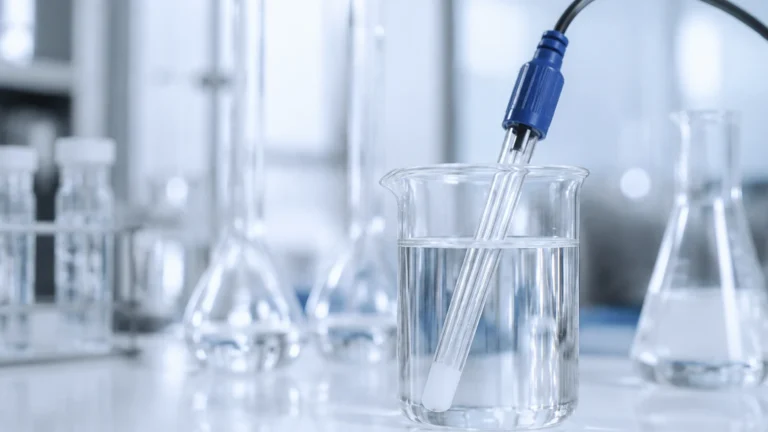
pH measurement is typically conducted using a glass electrode that generates a voltage proportional to the hydrogen ion activity in the liquid. The CM42 processes this millivolt signal and converts it into a standard 4-20 mA output or a digital fieldbus protocol. Oxidation-Reduction Potential (ORP) follows a similar principle, measuring the tendency of a chemical species to acquire electrons.
Conductivity Measurement
The CM42 supports both conductive and inductive conductivity sensors.
1. Conductive Sensors: Use two or four electrodes in direct contact with the medium. This is ideal for pure water and low-conductivity applications.
2. Inductive Sensors: Use two internal coils to generate and measure an alternating current in the liquid. This non-contact method is preferred for highly corrosive or fouling media, as there are no metal parts exposed to the process.
Dissolved Oxygen
Measurement is usually performed via amperometric or optical sensors. Amperometric sensors use a membrane and an electrolyte to produce a current proportional to the oxygen partial pressure. Optical sensors use fluorescence quenching to determine oxygen concentration, offering lower maintenance requirements.
Integrating Level Measurement with Analytical Transmitters
In most B2B industrial applications, monitoring the chemical composition of a liquid is only half the task. Operators must also know the volume or height of the liquid within the vessel to prevent overflows, dry running of pumps, or incorrect chemical dosing. High-precision instruments, such as those found on the Main Page of specialized manufacturers like Welk, provide the necessary data to complement the Liquiline M CM42.
Radar Level Meters for Chemical Tanks
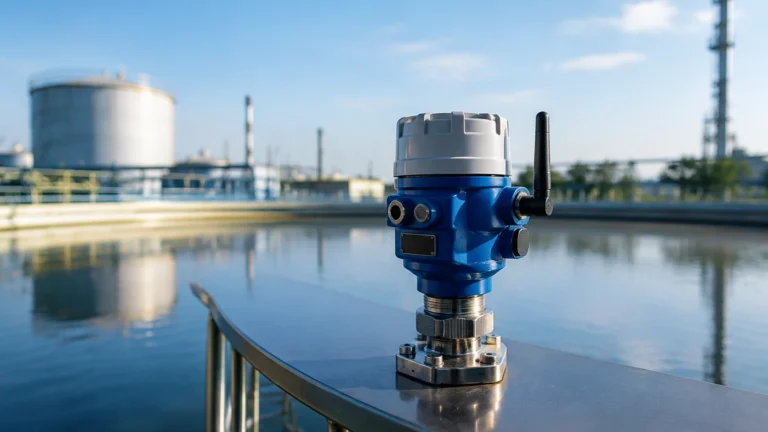
When using a CM42 to monitor the pH of a corrosive acid, non-contact radar level meters are the preferred choice. Operating at frequencies such as 80 GHz, these meters emit microwave pulses that reflect off the liquid surface. Because they do not touch the medium, they are immune to the chemical properties that the CM42 is busy analyzing. This combination ensures that the transmitter monitors the "quality" while the radar monitors the "quantity."
Ultrasonic Sensors in Water Treatment
In open channels or water storage tanks, ultrasonic level sensors are often paired with CM42 units measuring dissolved oxygen or turbidity. Ultrasonic sensors calculate level by measuring the time-of-flight of sound waves. They are cost-effective and reliable for aqueous solutions where the speed of sound is relatively constant.
Hydrostatic Pressure for Deep Tanks
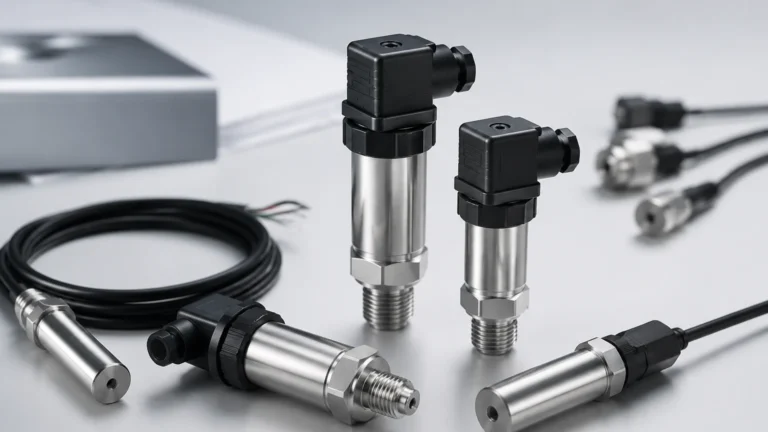
For pressurized vessels or very deep tanks, hydrostatic level transmitters measure the pressure exerted by the liquid column. This data is critical when the CM42 is used in fermentation or bioreactor applications, where liquid density might change slightly, requiring precise pressure-to-level calculations.
Key Technical Specifications and Selection Criteria
Choosing the right configuration for the Liquiline M CM42 requires an evaluation of the process environment and the required communication protocols. The following table provides a practical overview of the selection criteria for both analytical transmitters and the level meters that support them.
Selection Table: Instrumentation Comparison
| Feature | Liquiline M CM42 | Radar Level Meter | Ultrasonic Level Sensor |
| :— | :— | :— | :— |
| Primary Function | Liquid Analysis (pH, Cond, O2) | Distance/Level Measurement | Distance/Level Measurement |
| Communication | 4-20 mA, HART, PROFIBUS, FF | 4-20 mA, HART, Modbus | 4-20 mA, HART |
| Mounting | Wall, Pipe, or Panel | Flange or Thread (Top-down) | Thread or Bracket (Top-down) |
| Medium Contact | Sensor dependent (Contact/Non-contact) | Non-contact | Non-contact |
| Max Pressure | Process dependent (up to 10 bar typical) | Up to 40 bar+ | Typically Atmospheric |
| Accuracy | ±0.5% of measured range | ±1 mm to ±5 mm | ±0.25% of range |
Evaluation Criteria for Project Managers
When specifying these systems, consider the following:
* Power Supply: The CM42 is a two-wire device, meaning it is powered via the 4-20 mA loop. Ensure your PLC/DCS can provide sufficient loop power, especially if multiple level transmitters are on the same circuit.
* Hazardous Areas: If the tank contains flammable chemicals, both the analytical transmitter and the level sensor must carry appropriate certifications (e.g., ATEX, IECEx, or FM).
* Modular Expansion: The CM42 allows for easy switching between sensor types. If your process changes from measuring pH to measuring conductivity, you only need to change the sensor module and the sensor itself, rather than replacing the entire transmitter.

Installation Best Practices for Process Instrumentation
Proper installation is the most significant factor in long-term reliability for both the liquiline m cm42 and associated level measurement devices.
Mounting the Transmitter
The CM42 housing is typically rated IP66/IP67 (NEMA 4X). While it is rugged, it should be mounted in a location that is easily accessible for maintenance but protected from extreme direct sunlight or mechanical vibration. For outdoor installations, a weather protection cover is recommended to prevent display degradation.
Sensor Positioning
* Analytical Sensors: Ensure the pH or conductivity sensor is always submerged. In tanks with fluctuating levels, sensors should be installed in a bypass line or at the lowest point of the tank.
* Level Sensors: Radar and ultrasonic meters must be mounted perpendicular to the liquid surface. Avoid placing them near internal tank structures like ladders, agitators, or heating coils, as these can create false echoes.
Wiring and Shielding
To maintain signal integrity, use shielded twisted-pair cables for the 4-20 mA loops. Ensure the shielding is grounded at only one end (usually the control room side) to prevent ground loops, which can cause erratic readings in both the analytical and level data.
Limitations and Operational Challenges
While the liquiline m cm42 is a robust instrument, it has limitations that must be addressed during the engineering phase.
1. Temperature Sensitivity: Analytical sensors are highly sensitive to temperature. The CM42 includes temperature compensation algorithms, but the sensors themselves have physical limits (typically up to 135°C for Memosens pH probes). Similarly, ultrasonic level sensors can fail if high-temperature steam distorts the sound waves.
2. Coating and Fouling: In applications like wastewater or lime slurry, sensors can become coated. While inductive conductivity sensors handle this well, pH electrodes may require automated cleaning systems. Level sensors like radar are less affected by coating on the tank walls but can be impacted by heavy buildup on the antenna itself.
3. Two-Wire Power Constraints: Being a loop-powered device, the CM42 has limited power for advanced features like backlighting or high-speed wireless transmission. If these are required, a four-wire transmitter may be necessary.
Frequently Asked Questions (FAQ)
Q: Can the Liquiline M CM42 measure two parameters at once?
A: The CM42 is a single-channel transmitter. To measure two different parameters (e.g., pH and Conductivity) simultaneously in the same unit, you would typically look at a multi-channel transmitter like the CM44 series. However, the CM42 can switch between parameters by changing the internal module.
Q: How often should I calibrate the sensors?
A: Calibration frequency depends on the process. In stable water applications, once every few months may suffice. In aggressive chemical processes, weekly calibration might be required. The use of Memosens allows you to swap a used sensor with a pre-calibrated one in minutes.
Q: Does the CM42 support level measurement directly?
A: No, the CM42 is dedicated to liquid analysis. Level measurement requires a separate instrument, such as a radar or ultrasonic meter. These two instruments are usually integrated at the PLC level to provide comprehensive tank monitoring.
Q: What is the maximum distance between the sensor and the CM42 transmitter?
A: With Memosens digital technology, the cable length can extend up to 100 meters without signal loss, which is a significant advantage over traditional analog cables that are limited to about 10-20 meters.
For engineers and procurement specialists looking to build a complete measurement loop, it is vital to source high-quality hardware. You can Review product options and application support to find the level measurement instruments that best fit your specific industrial requirements and complement your analytical transmitters.