Memosens Ph Sensor
Memosens Ph Sensor
In the landscape of industrial liquid analysis, the transition from analog to digital signal processing has redefined how process parameters are monitored. The Memosens ph sensor represents a significant technological shift, moving away from traditional high-impedance analog cables toward a robust, digital, and non-contact connection system. This article examines the fundamental principles of pH measurement, the specific innovations introduced by Memosens technology, and how these sensors integrate into broader process automation systems alongside level measurement instrumentation.
Fundamentals of pH Measurement Principles
To understand the value of a Memosens ph sensor, one must first understand the electrochemical principles of pH measurement. pH is a measure of the hydrogen ion activity in a solution, typically expressed on a scale of 0 to 14.
The Glass Electrode
The most common method for measuring pH involves a glass electrode. This sensor consists of a pH-sensitive glass membrane that develops a potential (voltage) when in contact with an aqueous solution. This potential is proportional to the hydrogen ion concentration. Inside the glass electrode is an internal buffer solution with a known pH value, usually pH 7.0.
The Reference System
Because a single potential cannot be measured in isolation, a second reference electrode is required to provide a stable, constant potential. Most modern sensors are "combination electrodes," housing both the measuring glass electrode and the reference electrode in a single body. The reference electrode typically uses a silver/silver chloride (Ag/AgCl) system submerged in a potassium chloride (KCl) electrolyte. This electrolyte makes contact with the process medium through a junction (diaphragm), completing the electrical circuit.
The Nernst Equation
The relationship between the measured voltage and the pH value is governed by the Nernst Equation. At 25°C, a change of one pH unit corresponds to a change of approximately 59.16 mV. However, this "slope" is temperature-dependent, requiring integrated temperature compensation (usually via a Pt100 or Pt1000 RTD) to ensure accuracy across varying process conditions.
The Memosens Innovation: Digital and Inductive Coupling
Traditional analog pH sensors face several challenges in industrial environments. High-impedance signals are extremely sensitive to moisture, electromagnetic interference (EMI), and cable length. Even a small amount of humidity in the connector can lead to signal drift or total failure.
Inductive Signal Transfer
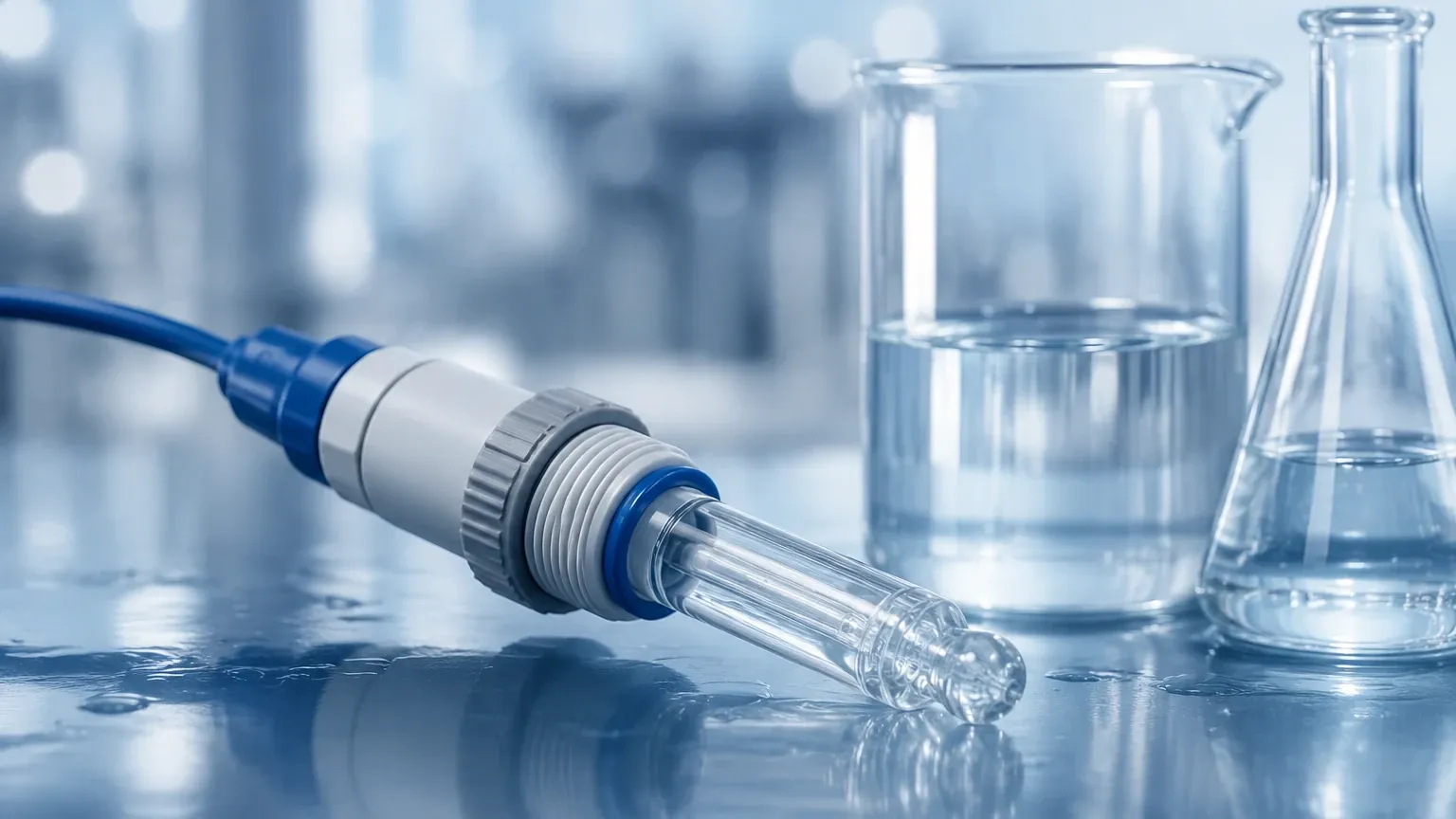
The Memosens ph sensor solves these issues by converting the analog voltage signal into a digital signal directly within the sensor head. This digital data is then transmitted to the transmitter via inductive coupling. There are no metal contacts between the sensor and the cable; instead, energy and data are transferred through an electromagnetic field. This design provides several critical advantages:
1. Galvanic Isolation: The inductive connection eliminates ground loops and interference from electrical potential in the process medium.
2. Moisture Immunity: Since there are no exposed metal pins, the connection can be made underwater or in high-humidity environments without affecting signal integrity.
3. Digital Integrity: The digital protocol includes error checking, ensuring that the value received by the transmitter is exactly what the sensor measured.
Integrated Data Storage
Each Memosens ph sensor contains an integrated microprocessor and memory chip. This allows the sensor to store vital information, including:
* Calibration constants (slope and zero point).
* Operating hours and time spent at extreme temperatures or pH levels.
* Serial numbers and manufacturing data.
* Calibration history.
This "intelligence" enables a fundamental shift in maintenance workflows: lab-based calibration. Instead of calibrating sensors at the process site—often in difficult or hazardous conditions—technicians can calibrate sensors in a controlled laboratory environment and then simply swap them in the field. The transmitter automatically recognizes the new sensor and uploads the stored calibration data.
Selection Criteria for Memosens pH Sensors
Choosing the correct sensor requires matching the electrode materials and junction type to the specific process chemistry. The following table outlines common configurations found in industrial applications.
| Application Type | Membrane Glass Type | Junction Type | Pressure/Temp Limits |
| :— | :— | :— | :— |
| General Water Treatment | Standard clear glass | PTFE or Ceramic | 6 bar / 0–80°C |
| Chemical Processing | High-alkali resistant | Open aperture or Ceramic | 16 bar / 0–135°C |
| Biotech / Pharma | Steam-sterilizable glass | Ceramic (pressurized) | 6 bar / 0–140°C (SIP) |
| Wastewater/Slurries | Impact-resistant glass | PTFE Ring or Hole | 10 bar / -20–110°C |
| Low Conductivity | Low-impedance glass | Refillable Liquid KCl | Atmospheric / 0–100°C |
Material Compatibility
The sensor body is typically constructed from glass, but the outer housing and seals must be compatible with the process. Common materials include Ryton (PPS), PEEK, and various O-ring elastomers like EPDM or Viton. For highly aggressive media, specialized coatings or solid-state reference systems may be required.
Installation and Engineering Considerations
Proper installation is paramount for sensor longevity and accuracy. Because pH sensors are consumable items that degrade over time, the mounting hardware must facilitate easy removal for cleaning and calibration.
Mounting Orientations
Most pH sensors must be installed at an angle of at least 15° above the horizontal. This ensures that the internal electrolyte stays in contact with the glass membrane and that air bubbles do not become trapped inside the electrode, which would break the electrical circuit.
Process Assemblies
* Immersion Assemblies: Used for tanks and open channels. The sensor is protected by a dip pipe.
* Flow-through Cells: Used for bypass lines where the sample is diverted from the main process pipe.
* Retractable Assemblies: These allow the sensor to be removed, cleaned, and calibrated while the process is under pressure. This is essential for critical 24/7 operations where process shutdown is not an option.
Synergy with Level Measurement Systems
In industrial tank management and chemical processing, pH monitoring is rarely a standalone requirement. It is almost always integrated with level measurement to provide a complete picture of the vessel's status. For instance, in a neutralization tank, the Main Page level instrument ensures the tank does not overflow while the Memosens ph sensor controls the dosing of acid or caustic agents.
Welk provides a range of level measurement solutions, such as radar and ultrasonic transmitters, that complement analytical sensors. While the pH sensor monitors the chemical state, the level meter monitors the physical volume. In automated systems, these two data points are often fed into the same PLC or DCS to manage pump control, safety interlocks, and chemical inventory. For example, a high-level alarm from a radar sensor might trigger a shut-off valve to prevent a spill, while a pH deviation might trigger an emergency neutralization sequence.
Maintenance and Troubleshooting
Despite the robustness of the Memosens ph sensor, the electrochemical element is subject to aging and fouling. Maintenance typically involves three steps: cleaning, conditioning, and calibration.
1. Cleaning: Depending on the process, sensors may need cleaning with water, dilute acids (for scale), or detergents (for oils).
2. Conditioning: After cleaning, the glass membrane must be hydrated. If a sensor dries out, it may require soaking in a KCl solution for several hours to restore the hydration layer.
3. Calibration: Using certified buffer solutions (e.g., pH 4.01 and 7.00), the sensor's slope and zero point are verified. Memosens technology allows the transmitter to calculate the "sensor health" based on how far these values have drifted from the ideal Nernstian response.
Common Limitations
* Temperature Extremes: While Memosens can handle high temperatures, the lifespan of any pH electrode is significantly shortened as temperature increases. Continuous operation at 130°C may reduce sensor life to weeks rather than months.
* Hydrofluoric Acid (HF): HF attacks glass. In processes containing even small amounts of HF, specialized HF-resistant glass or non-glass (ISFET) sensors must be used.
* Dehydration: pH sensors must remain wet. If a tank is drained and the sensor is left dry, the reference junction may clog, and the glass membrane may lose its sensitivity.
Frequently Asked Questions (FAQ)
Q: How far can the cable run be between a Memosens sensor and the transmitter?
A: Because the signal is digital, Memosens cables can typically reach up to 100 meters (approx. 330 feet) without signal degradation, which is significantly further than traditional analog cables.
Q: Does the Memosens head require a battery?
A: No. The sensor is powered via the inductive coupling from the transmitter cable. There are no internal batteries to replace.
Q: Can I use a Memosens sensor with any transmitter?
A: No, the transmitter must support the Memosens digital protocol. However, the protocol is an industry standard used by several major manufacturers.
Q: How do I know when to replace the sensor?
A: The Memosens system tracks the sensor's "slope" and "zero point." When the slope drops below a certain percentage (typically 80-85%) or the zero point drifts significantly, the transmitter will issue a maintenance request or error code.
Q: Can Memosens sensors be used in hazardous areas?
A: Yes, many Memosens sensors and cables are rated for use in ATEX/IECEx hazardous zones, as the inductive coupling is inherently non-sparking.
By combining the reliability of digital signal processing with the proven accuracy of glass electrodes, the Memosens ph sensor has become a standard in modern process industries. When paired with reliable physical measurement tools like those found on the Welk Main Page, operators can achieve a high level of process safety and efficiency.