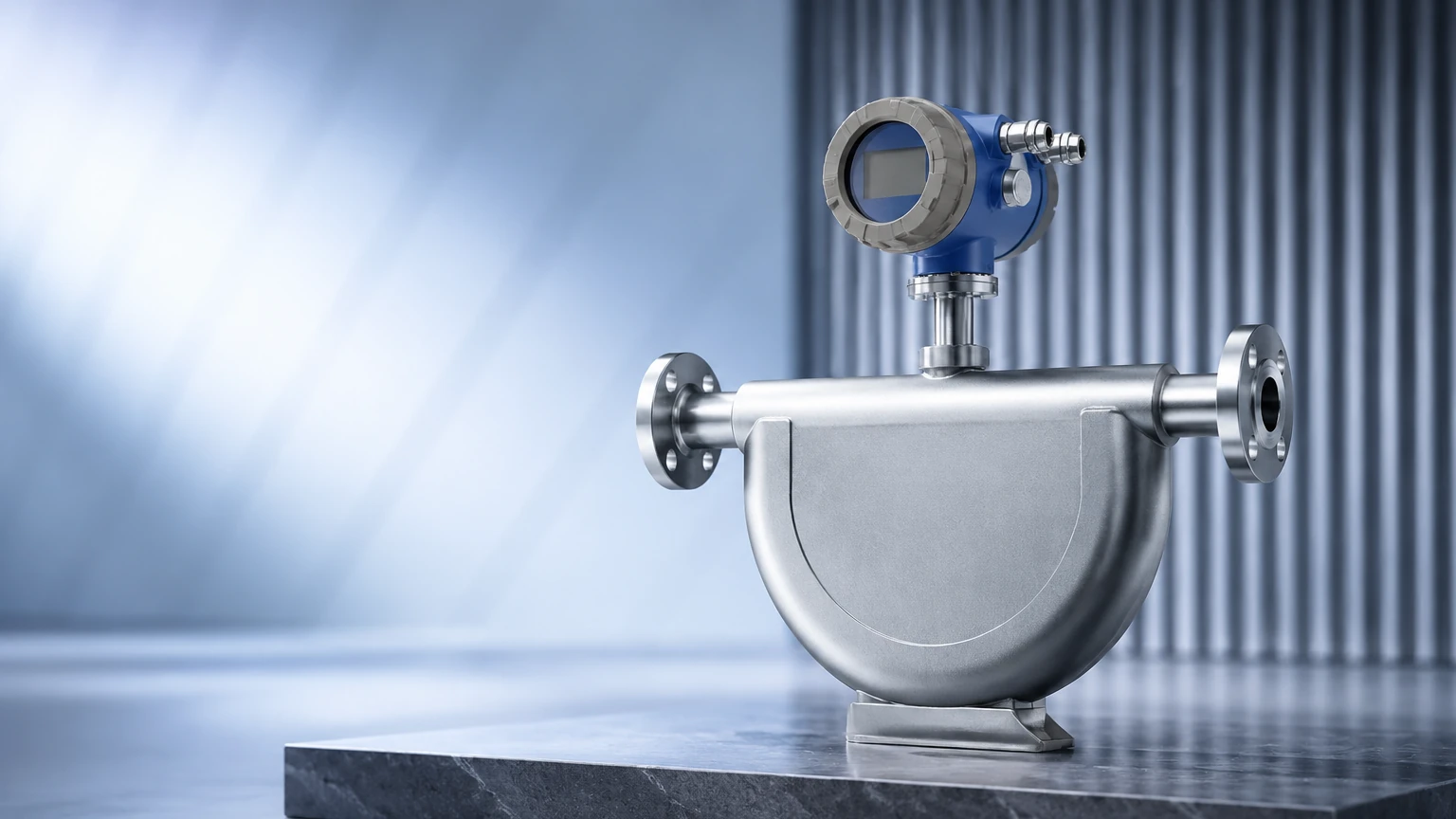
Micro Motion Coriolis Mass Flow Meter
Micro Motion Coriolis Mass Flow Meter
In the landscape of industrial process control, the ability to measure mass flow directly, rather than inferring it from volume, represents a significant leap in accuracy and reliability. The micro motion coriolis mass flow meter has become a benchmark for precision in sectors ranging from chemical processing to oil and gas. Unlike traditional volumetric meters that require compensation for temperature and pressure, Coriolis technology utilizes the physical properties of motion to provide highly accurate data for mass flow, density, and temperature simultaneously.
The Fundamental Principle of Coriolis Measurement
To understand the efficacy of a micro motion coriolis mass flow meter, one must first examine the Coriolis effect. In an industrial meter, this principle is applied by inducing vibration in a flow tube or a pair of flow tubes.
When no fluid is moving through the tubes, they vibrate in a uniform, symmetrical fashion. However, as fluid begins to flow, it is forced to take on the vertical momentum of the vibrating tubes. As the fluid moves toward the point of peak vibration, it resists being pushed up and pushes back down on the tube. Conversely, fluid moving away from the peak vibration point resists the decrease in vertical motion and pushes up on the tube.
This opposing force causes the tubes to twist. This phenomenon is known as the Coriolis effect. The degree of twist is directly proportional to the mass flow rate of the fluid. Sensitive pick-off coils located at the inlet and outlet of the tubes detect this twist as a time shift (phase shift) between the two signals. This time difference, measured in microseconds, is translated by the transmitter into a precise mass flow reading.
Furthermore, the frequency at which the tubes vibrate is used to determine the density of the fluid. A denser fluid increases the mass of the vibrating system, thereby lowering the natural frequency of vibration. By measuring this frequency, the meter can provide real-time density data, which is essential for quality control and phase detection.
Key Evaluation Criteria for Selection
Selecting the appropriate micro motion coriolis mass flow meter requires a detailed analysis of the process conditions and the specific requirements of the application. Engineers must consider the physical properties of the fluid, the environmental conditions, and the required accuracy levels.
Material Compatibility
Corrosive fluids require specific wetted materials. While stainless steel (316L) is standard, high-nickel alloys like Hastelloy are often necessary for aggressive chemical environments. Ensuring the sensor material is compatible with the process fluid prevents premature failure and contamination.
Flow Range and Turndown Ratio
Coriolis meters are known for their wide turndown ratios, often exceeding 20:1 while maintaining high accuracy. It is critical to select a meter size that allows the process flow to fall within the optimal range of the sensor. Operating at the very low end of a meter's range can increase the relative uncertainty of the measurement.
Pressure Drop and Velocity
Because Coriolis meters often feature curved tubes or internal flow splitters, they introduce a pressure drop into the system. High-velocity flows can lead to excessive pressure loss and potential cavitation in liquids. Designers must balance the need for high-sensitivity (which often comes with smaller tube diameters) against the allowable pressure drop in the piping system.
Practical Selection Table
| Parameter | Requirement | Typical Specification |
| :— | :— | :— |
| Measurement Type | Direct Mass Flow | Liquid, Gas, or Slurry |
| Accuracy (Liquid) | High Precision | ±0.05% to ±0.10% of rate |
| Accuracy (Gas) | Standard | ±0.25% to ±0.50% of rate |
| Density Accuracy | Process Monitoring | ±0.0005 g/cm³ to ±0.002 g/cm³ |
| Temperature Range | Cryogenic to High Temp | -240°C to +350°C |
| Pressure Rating | High Pressure | Up to 400 bar (approx. 5800 psi) |
| Line Sizes | Versatility | 1 mm to 300 mm (DN1 to DN300) |
Integration with Level Measurement Systems
While the micro motion coriolis mass flow meter provides exceptional data for flowing fluids, it is frequently used in conjunction with level measurement technologies to provide a complete picture of plant inventory and process efficiency. For instance, in bulk storage applications, a Coriolis meter might measure the mass of product being offloaded from a tanker, while a radar level meter or ultrasonic sensor provides continuous monitoring of the tank's headspace.
Integrating flow data with level data allows for "mass balance" calculations. If the mass flow entering a vessel does not match the change in mass calculated from level and density data, it can indicate leaks, measurement drift, or unauthorized diversions. For comprehensive instrumentation solutions including advanced level sensors, engineers often consult the Main Page of specialized manufacturers to ensure compatibility between flow and level systems.
Installation Considerations and Best Practices
The performance of a micro motion coriolis mass flow meter is heavily dependent on proper installation. Although these meters are less sensitive to flow profile distortions than ultrasonic or orifice plate meters, they are highly sensitive to mechanical vibration and mounting stress.
1. Orientation for Fluid Phase:
- Liquids: The meter should be installed with the tubes pointing downward (the "U" shape facing down) or in a vertical line with upward flow. This ensures the tubes remain full and prevents gas bubbles from becoming trapped.
- Gases: The meter should be installed with the tubes pointing upward. This allows any condensed liquids to drain out of the sensor tubes, preventing measurement errors.
2. Support and Vibration Isolation:
The meter must be rigidly supported on both the upstream and downstream sides. Because the measurement principle relies on internal vibration, external vibrations from pumps or heavy machinery can interfere with the sensor's signals. Flexible couplings or dedicated mounting brackets are often recommended in high-vibration environments.
3. Zeroing the Meter:
After installation and under actual process conditions (temperature and pressure), the meter must be "zeroed." This involves filling the meter with the process fluid, ensuring there is zero flow, and then running the zero-calibration routine on the transmitter. This accounts for any residual stresses introduced during the bolting and piping process.
4. Avoid Stress:
Piping should be aligned correctly before the meter is installed. Forcing a meter into a gap that is too small or misaligned can create mechanical stress on the sensor tubes, leading to a shift in the zero point or even structural damage over time.
Limitations and Challenges
Despite their versatility, Coriolis meters are not a universal solution for every application. Understanding their limitations is key to successful deployment.
* Entrained Gas: In liquid applications, entrained gas (bubbles) can significantly disrupt the vibration of the tubes. This often results in "slug flow" conditions where the meter may lose its signal or provide highly erratic readings. Advanced digital signal processing in modern transmitters can mitigate this to an extent, but it remains a primary challenge.
* Initial Cost: The micro motion coriolis mass flow meter is generally more expensive than volumetric technologies like vortex, turbine, or electromagnetic meters. The investment is typically justified by the reduction in maintenance and the higher accuracy provided, but it may be prohibitive for non-critical applications.
* Size and Weight: High-capacity Coriolis meters can be extremely heavy and bulky compared to other flow technologies. This requires robust structural support and can complicate installation in tight spaces.
Frequently Asked Questions (FAQ)
Q: Can a Coriolis meter measure the flow of non-conductive liquids?
A: Yes. Unlike electromagnetic flow meters, which require a conductive fluid, the Coriolis meter relies on mass and motion. It can measure oils, deionized water, and various hydrocarbons regardless of conductivity.
Q: Does the viscosity of the fluid affect the accuracy?
A: Generally, no. Coriolis meters are largely independent of viscosity changes. However, extremely high viscosity fluids will result in a higher pressure drop across the meter, which must be accounted for during the pump sizing and system design phase.
Q: How often does a micro motion coriolis mass flow meter need recalibration?
A: Because there are no moving parts in the fluid stream to wear out (like bearings in a turbine meter), the calibration is very stable. Many industries perform a "zero check" annually, but full factory recalibration is often only required if the meter has been subjected to extreme process upsets or physical damage.
Q: Is a straight run of pipe required before the meter?
A: One of the advantages of the Coriolis technology is that it is relatively immune to flow profile disturbances. While it is good practice to avoid placing the meter immediately after a high-turbulence source like a partially closed valve, the extensive straight-run requirements (e.g., 10D or 20D) associated with other technologies are usually not necessary.
Conclusion
The micro motion coriolis mass flow meter remains a cornerstone of modern industrial measurement due to its ability to provide direct mass flow and density data with unparalleled precision. By understanding the underlying physics of the Coriolis effect and adhering to strict installation and selection guidelines, engineers can significantly improve process efficiency and product quality. When combined with reliable level measurement systems, these instruments provide the data-driven foundation required for sophisticated industrial automation and inventory management. For those seeking to integrate these flow solutions with a broader range of level measurement instruments, exploring the technical resources available on the Main Page is a recommended next step for system optimization.