Online Chlorine Analyser
Online Chlorine Analyser
In industrial water treatment and process automation, the continuous monitoring of disinfectant levels is a critical safety and quality requirement. An online chlorine analyser provides real-time data on chlorine concentration, ensuring that disinfection processes are effective without exceeding regulatory limits or damaging downstream equipment. For plant engineers and process managers, selecting the correct analytical technology is as vital as choosing the right level measurement instruments for chemical storage tanks.
This guide examines the technical principles, selection criteria, and installation requirements for online chlorine analysers, providing a practical reference for industrial applications ranging from municipal water treatment to complex cooling tower management.
Measurement Principles of Online Chlorine Analysers
Before selecting a device, it is essential to understand the two primary measurement technologies used in modern industrial environments: Colorimetric (DPD) and Amperometric. Each has distinct operational characteristics and maintenance requirements.
1. Colorimetric (DPD) Method
The DPD (N,N-diethyl-p-phenylenediamine) method is widely considered the "gold standard" for chlorine measurement due to its high accuracy and compliance with regulatory laboratory standards.
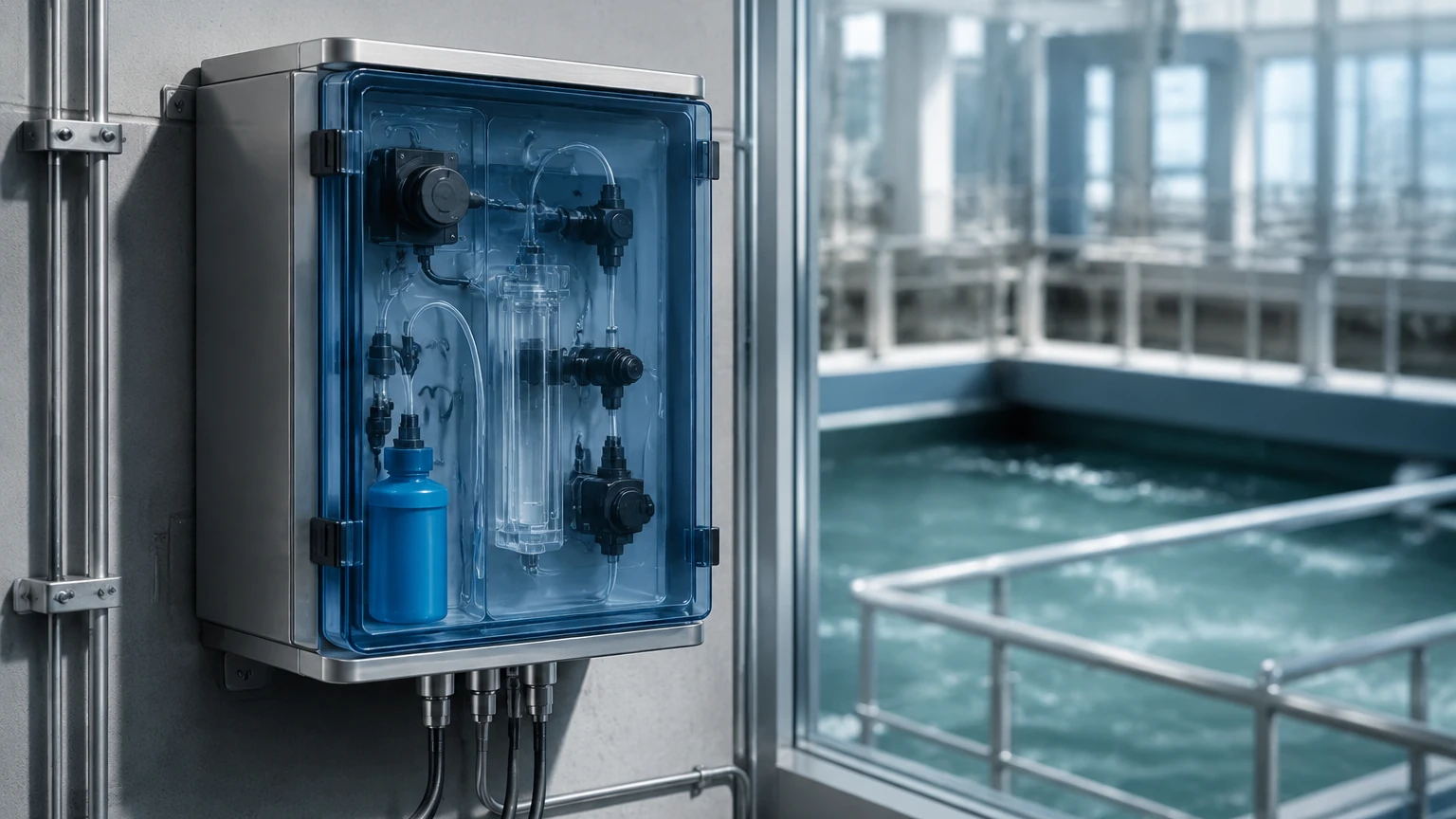
* Principle: The analyser automatically takes a sample of water and adds a buffer and a DPD indicator. The chlorine reacts with the DPD, turning the sample a shade of pink. The intensity of the color is proportional to the chlorine concentration. An internal photometer measures the light absorbance at a specific wavelength (typically around 510 nm to 565 nm) and converts this into a concentration reading in mg/L or ppm.
* Advantages: Highly accurate, less sensitive to changes in pH or temperature, and capable of measuring both free and total chlorine.
* Limitations: Requires a continuous supply of chemical reagents, leading to higher operational costs and the need for regular reagent replacement.
2. Amperometric Method
Amperometric sensors are electrochemical devices that measure the change in current resulting from the chemical reduction of chlorine at a gold or platinum cathode.
* Principle: Chlorine molecules diffuse across a membrane or interact directly with electrodes. The resulting current flow between the anode and cathode is directly proportional to the concentration of chlorine in the water.
* Membrane-Covered Sensors: These use a gas-permeable membrane to isolate the electrodes from the sample water, reducing interference from other ions and minimizing electrode fouling.
* Bare-Electrode Sensors: These operate without a membrane and are often used in high-flow or high-pressure applications, though they require more frequent cleaning.
* Advantages: Reagent-free operation, fast response time, and lower long-term maintenance costs.
* Limitations: Highly sensitive to changes in flow rate and pH. Most amperometric systems require pH compensation to provide accurate free chlorine readings.
Key Evaluation Criteria for Industrial Applications
When evaluating an online chlorine analyser for a specific project, engineers must look beyond the initial purchase price and consider the total cost of ownership (TCO) and the specific chemistry of the process water.
Chlorine Species: Free vs. Total
One must determine whether the application requires the measurement of free chlorine (hypochlorous acid and hypochlorite ions) or total chlorine (free chlorine plus combined chloramines).
* Free Chlorine: Typically measured in drinking water and cooling towers for disinfection efficiency.
* Total Chlorine: Measured in wastewater effluent or where chloramines are used as a secondary disinfectant.
Sensitivity and Range
Most industrial applications require a range of 0–5 mg/L or 0–10 mg/L with a resolution of 0.01 mg/L. However, high-concentration applications, such as initial bleaching stages in pulp and paper, may require specialized sensors capable of measuring up to 20 or 50 mg/L.
Process Compatibility
The presence of interfering substances can significantly impact accuracy. For example, high levels of manganese or iron can cause false positives in DPD systems, while surfactants or oils can coat the membranes of amperometric sensors.
Integrating Chlorine Analysis with Chemical Inventory Management
A chlorine analyser is only one part of a larger disinfection loop. For a system to operate reliably, the delivery of the disinfectant—whether it be sodium hypochlorite, chlorine gas, or chlorine dioxide—must be precisely controlled. This requires a holistic approach to process monitoring.
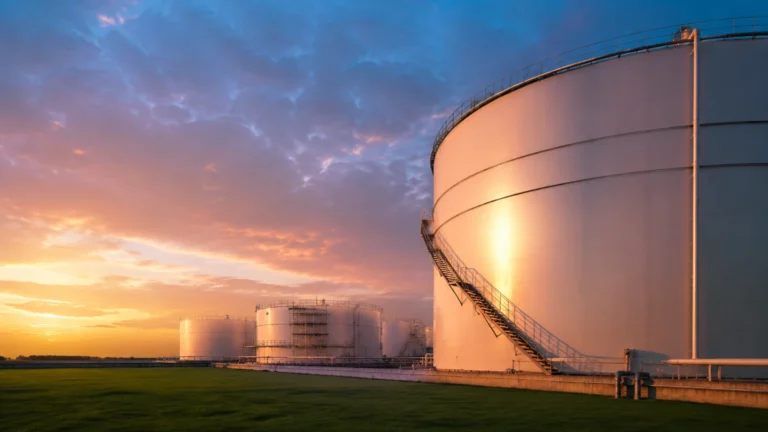
Effective disinfection relies on the synergy between analytical data and inventory data. While the online chlorine analyser monitors the residual concentration, industrial level measurement instruments are required to monitor the supply of the chemical itself. For instance, using a hydrostatic level transmitter or an ultrasonic level sensor on a sodium hypochlorite storage tank ensures that the dosing pump never runs dry, which would lead to a loss of disinfection and potential system alarms.
For engineers designing these integrated systems, reviewing comprehensive Main Page resources for level measurement can help in selecting the right sensors to complement the chlorine analysis loop. Accurate level data prevents process interruptions and allows for automated chemical reordering, which is essential for maintaining the continuous operation of the online chlorine analyser.
Installation and Engineering Best Practices
The reliability of an online chlorine analyser is often determined by the quality of the installation. Improper sample handling is the leading cause of measurement errors.
1. Sample Line Considerations
* Material: Use inert materials such as PVC, PTFE, or Kynar. Avoid copper or reactive metals that can consume chlorine before it reaches the sensor.
* Length: Keep sample lines as short as possible to minimize lag time. A long sample line can result in "old" water being measured, which does not reflect the current state of the process.
* Flow Rate: Amperometric sensors require a constant, regulated flow (typically between 30 and 60 L/h). Use a flow regulator or a constant-head overflow tank to maintain stability.
2. Pressure and Temperature
Most sensors are designed for atmospheric pressure or very low back-pressure. If the process line is under high pressure, a pressure-reducing valve must be installed. Similarly, extreme temperature fluctuations can affect the reaction rate in colorimetric units and the membrane permeability in amperometric units. Temperature compensation is a standard feature in high-quality analysers but must be verified during commissioning.
3. Waste Disposal
For DPD-based analysers, the waste stream contains chemical reagents. This waste must be disposed of according to local environmental regulations. Amperometric systems, being reagent-free, allow the sample water to be returned to the process or sent to a standard drain without chemical treatment.
Practical Selection Table: Colorimetric vs. Amperometric
| Feature | Colorimetric (DPD) | Amperometric (Membrane) |
| :— | :— | :— |
| Primary Use Case | High accuracy, regulatory reporting | Process control, rapid response |
| Reagents Required | Yes (Buffer & Indicator) | No |
| Maintenance Frequency | Monthly (reagent swap) | Quarterly/Bi-annually (membrane/electrolyte) |
| pH Sensitivity | Low (buffered) | High (requires compensation) |
| Flow Sensitivity | Low | High (requires constant flow) |
| Response Time | 2–5 minutes (batch cycle) | Real-time (continuous) |
| Typical Accuracy | ±5% of reading | ±2% to ±10% (depends on pH stability) |
Common Risks and Operational Limitations
Engineers should be aware of several factors that can compromise the performance of an online chlorine analyser:
* Air Bubbles: In amperometric systems, air bubbles can collect on the membrane surface, creating an insulating layer that leads to false low readings. Proper debubbling in the sample flow cell is necessary.
* Biofouling: In warm water or nutrient-rich environments, biofilm can grow on the sensor or inside the sample lines. This consumes chlorine locally, resulting in a reading that is lower than the actual process concentration.
* pH Fluctuations: For free chlorine measurement using amperometric sensors, the ratio of hypochlorous acid (HOCl) to hypochlorite ion (OCl⁻) changes with pH. Since sensors are primarily sensitive to HOCl, a shift in pH without proper compensation will lead to significant measurement errors.
* Reagent Degradation: In colorimetric systems, reagents have a limited shelf life, especially when exposed to heat or light. Degraded reagents will result in a loss of color intensity and inaccurate data.
Maintenance and Calibration Protocols
Routine maintenance is essential to ensure the longevity of the instrument. For DPD analysers, this involves cleaning the optical cell to remove any staining or scaling. For amperometric sensors, it involves replacing the electrolyte solution and the membrane cap at intervals specified by the manufacturer.
Calibration should be performed using a high-quality handheld DPD photometer. It is important to calibrate the online instrument against a sample taken from the same point in the process at the same time.
1. Zero Calibration: Use chlorine-free water (deionized or carbon-filtered) to establish the zero point.
2. Slope Calibration: Adjust the analyser to match the value determined by the laboratory or handheld reference test.
Frequently Asked Questions
Q: How often should I calibrate my online chlorine analyser?
A: For most industrial applications, a weekly check against a handheld photometer is recommended. If the deviation is greater than 10%, a full calibration should be performed.
Q: Can I use an online chlorine analyser in seawater?
A: Yes, but you must select a sensor specifically designed for high-salinity environments. In seawater, chlorine reacts with bromide to form bromine; therefore, the analyser must be calibrated to measure "Total Oxidant" rather than just chlorine.
Q: What is the impact of zero-flow on the sensor?
A: Amperometric sensors can be damaged or lose their polarization if left in stagnant water for extended periods. Most modern controllers include a "flow switch" input to disable the sensor output and protect the electrode during pump shutdowns.
Q: Is it better to measure chlorine before or after a filter?
A: This depends on the objective. To protect membranes (like in Reverse Osmosis), measure before the filter to ensure dechlorination was successful. To ensure disinfection of the final product, measure after the last treatment step.
By understanding these technical nuances and ensuring that chemical levels are properly monitored via the Main Page of the facility's control strategy, operators can maintain a safe and efficient water treatment process.