Mt11 Hw
Mt11 Hw
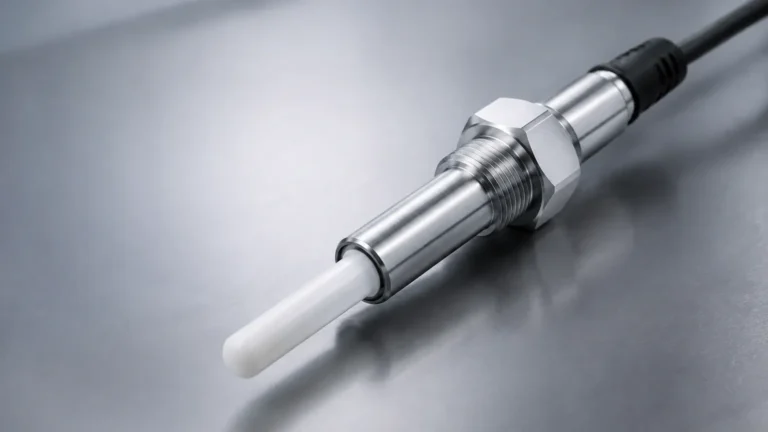
In the landscape of industrial automation and process control, precision in liquid level measurement is a fundamental requirement for safety, efficiency, and inventory management. Among the various technologies available, the mt11 hw configuration represents a specific hardware standard often associated with high-precision magnetostrictive level transmitters. This hardware is engineered to provide continuous level measurement with high repeatability, making it a staple in industries ranging from petrochemicals to food and beverage processing.
Understanding the technical nuances of the mt11 hw is essential for engineers and plant managers who must select the right instrumentation for challenging environments. This guide explores the underlying principles, technical specifications, and practical application considerations for this hardware to ensure optimal performance in the field.
Understanding the Measurement Principle
The mt11 hw typically utilizes magnetostrictive technology. This principle is based on the Wiedemann effect and offers a non-contact method (relative to the sensor wire) for determining the exact position of a float on a probe.
The Wiedemann Effect
At the core of the mt11 hw hardware is a tensioned magnetostrictive wire housed within a stainless steel probe. The measurement cycle begins when the sensor's electronics send a short current pulse (the interrogation pulse) down the wire. This current creates a circular magnetic field around the wire.
A magnetic float, which moves freely along the probe as the liquid level changes, has its own longitudinal magnetic field. When the circular magnetic field from the current pulse reaches the magnetic field of the float, the interaction of the two fields creates a torsional strain or "twist" in the wire. This twist travels back up the wire as a sonic wave at a known, constant speed.
Signal Processing
The electronics in the mt11 hw head detect the arrival of this torsional wave. By measuring the precise time interval between the initiation of the current pulse and the return of the wave, the transmitter calculates the distance to the float with extreme accuracy. Because the speed of sound in the specific wire material is highly stable, this method provides much higher resolution and accuracy than traditional float-based or hydrostatic systems.
For those evaluating different measurement technologies, the Main Page provides a broader context on how magnetostrictive sensors compare to radar and ultrasonic alternatives.
Technical Specifications of the MT11 HW
The mt11 hw is designed for reliability in industrial settings. While specific configurations may vary based on the manufacturer, the following specifications are characteristic of this hardware class:
* Accuracy: Typically ±1 mm or 0.01% of the full scale, whichever is greater.
* Repeatability: Better than 0.5 mm.
* Measuring Range: Available from 300 mm up to 6,000 mm (standard) with custom lengths reaching 15 meters for flexible probe versions.
* Output Signals: Standard 4-20 mA analog output, often supplemented with HART (Highway Addressable Remote Transducer) protocol for digital communication and diagnostics.
* Material Construction: The wetted parts (probe and float) are usually constructed from 316L stainless steel, though specialized coatings like PTFE are available for corrosive media.
* Pressure Rating: Standard probes handle up to 40 bar (4.0 MPa), with high-pressure variants available.
* Temperature Range: Process temperatures typically range from -40°C to +150°C, though the electronics housing is usually rated for -40°C to +85°C.
Selection Criteria and Application Suitability
Choosing the mt11 hw requires an assessment of the process fluid and the tank environment. Use the following table to evaluate whether this hardware meets your application needs.
Selection Table: MT11 HW vs. Alternative Technologies
| Feature | MT11 HW (Magnetostrictive) | Radar (GWR/Non-Contact) | Ultrasonic | Hydrostatic |
| :— | :— | :— | :— | :— |
| Accuracy | Excellent (±1 mm) | High (±2-5 mm) | Moderate (±0.25%) | Moderate |
| Foam Resistance | Excellent (Ignores foam) | Good (GWR) / Poor (NC) | Poor | Good |
| Vapor Sensitivity | None | Low | High | None |
| Moving Parts | One (Float) | None | None | None |
| Interface Level | Excellent (Dual float) | Good | Not Recommended | Difficult |
| Installation | Top-down | Top-down | Top-down | Bottom/Side |
Ideal Applications
1. Fuel Storage: High accuracy is required for custody transfer and inventory control of gasoline, diesel, and aviation fuel.
2. Chemical Processing: Measuring hazardous liquids where high reliability and chemical resistance are paramount.
3. Clean Water Treatment: Monitoring levels in treated water tanks where precision ensures optimal pump control.
4. Interface Measurement: The mt11 hw is particularly effective at measuring the interface between two immiscible liquids (e.g., oil and water) by using two floats with different densities.
Installation Guidelines for MT11 HW
Proper installation of the mt11 hw is critical to maintaining its high-accuracy specifications. Engineers should follow these practical steps during the integration phase:
Mechanical Mounting
* Vertical Alignment: The probe must be mounted vertically. A deviation of more than 5 degrees can increase friction between the float and the probe, leading to "stiction" and measurement errors.
* Obstruction Clearance: Ensure the float has at least 50 mm of clearance from tank walls, agitators, or internal baffles to prevent the magnetic field from being distorted or the float from getting snagged.
* Stilling Wells: In tanks with high turbulence or agitation, the use of a stilling well (a perforated pipe) is highly recommended. This protects the probe and stabilizes the float.
Electrical Considerations
* Shielded Cabling: Use twisted-pair shielded cable for the 4-20 mA signal to prevent electromagnetic interference (EMI) from nearby motors or variable frequency drives (VFDs).
* Grounding: Ensure the transmitter housing is properly grounded to the tank or a dedicated instrument ground to protect the mt11 hw electronics from surges.
* Loop Power: Verify that the power supply provides sufficient voltage (typically 12-36V DC) considering the voltage drop over long cable runs.

Limitations and Operational Constraints
While the mt11 hw is a robust solution, it is not universal. Understanding its limitations prevents costly failures.
1. Fluid Viscosity: Highly viscous liquids or those that tend to crystallize can impede the movement of the float. If the liquid "gums up" the probe, the float will stick, resulting in a frozen level reading.
2. Specific Gravity Requirements: The float must be matched to the specific gravity (SG) of the liquid. A float designed for water (SG 1.0) will likely sink in a light hydrocarbon (SG 0.7).
3. Particulate Matter: Large particles or magnetic debris in the fluid can adhere to the magnetic float or bridge the gap between the float and the probe, causing mechanical failure.
4. Coating and Scaling: While magnetostrictive sensors are more tolerant of coating than ultrasonic sensors, heavy scaling can eventually prevent the float from moving freely.
Comparison with Radar Technology
In many B2B procurement scenarios, the choice boils down to the mt11 hw versus Guided Wave Radar (GWR).
* Precision: The mt11 hw generally offers superior precision for inventory-grade measurements. While GWR is accurate, the magnetostrictive timing method is inherently more stable over short distances.
* Dielectric Constant: Radar relies on the dielectric constant of the liquid to reflect the signal. If the dielectric constant is too low, radar may struggle. The mt11 hw is independent of the liquid's dielectric properties, as it only cares about the float's position.
* Maintenance: Radar has no moving parts, which is an advantage in dirty or high-viscosity fluids. The mt11 hw has a moving float, which requires the liquid to be relatively clean.
To see a full range of radar and magnetostrictive options, consulting the Main Page of a specialized manufacturer can help clarify which technology aligns with specific budget and performance targets.
Frequently Asked Questions (FAQ)
Q: Can the mt11 hw be used in pressurized tanks?
A: Yes, the hardware is designed for pressurized environments. Standard versions handle up to 40 bar, but the float must be rated for the collapse pressure of the application.
Q: How do I calibrate the mt11 hw?
A: Most modern mt11 hw units come factory-calibrated. Field adjustments are typically done via HART communicators or on-board buttons to set the 4mA (zero) and 20mA (span) points relative to the physical tank dimensions.
Q: Is the probe trimable in the field?
A: Generally, no. Magnetostrictive probes have a specific wire length and internal dampening at the tip. Cutting the probe will destroy the sensor. Always specify the exact "L" dimension required during the ordering process.
Q: What happens if the float is installed upside down?
A: The magnetic polarity of the float is specific. If installed upside down, the sensor may not detect the float at all, or the measurement may be offset and non-linear. Most floats are marked with an "Up" arrow or a specific weight bias.
Conclusion
The mt11 hw remains a premier choice for industrial liquid level measurement where accuracy and reliability are non-negotiable. By leveraging the magnetostrictive principle, it provides a stable signal that is immune to many of the environmental factors—such as vapor, foam, and pressure changes—that plague other technologies. When integrated with a clear understanding of its mechanical requirements and fluid compatibility, the mt11 hw serves as a cornerstone of modern process instrumentation. For further technical assistance or to explore customized OEM/ODM options for level measurement, visiting the Main Page provides access to professional engineering support and a wide array of industrial solutions.