Municipal Water Treatment Monitoring
Municipal Water Treatment Monitoring
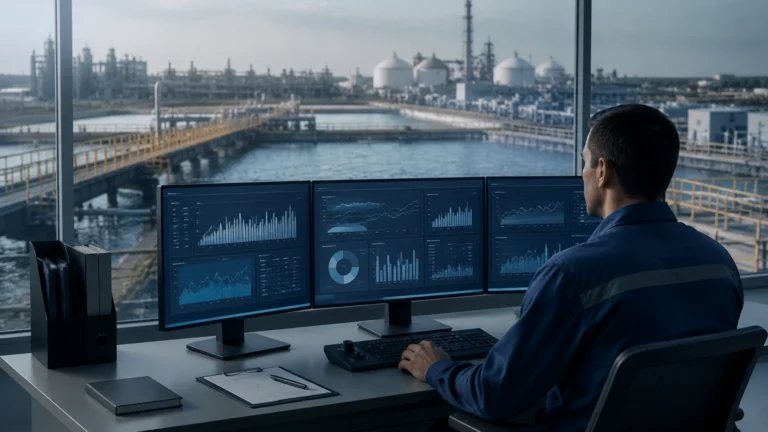
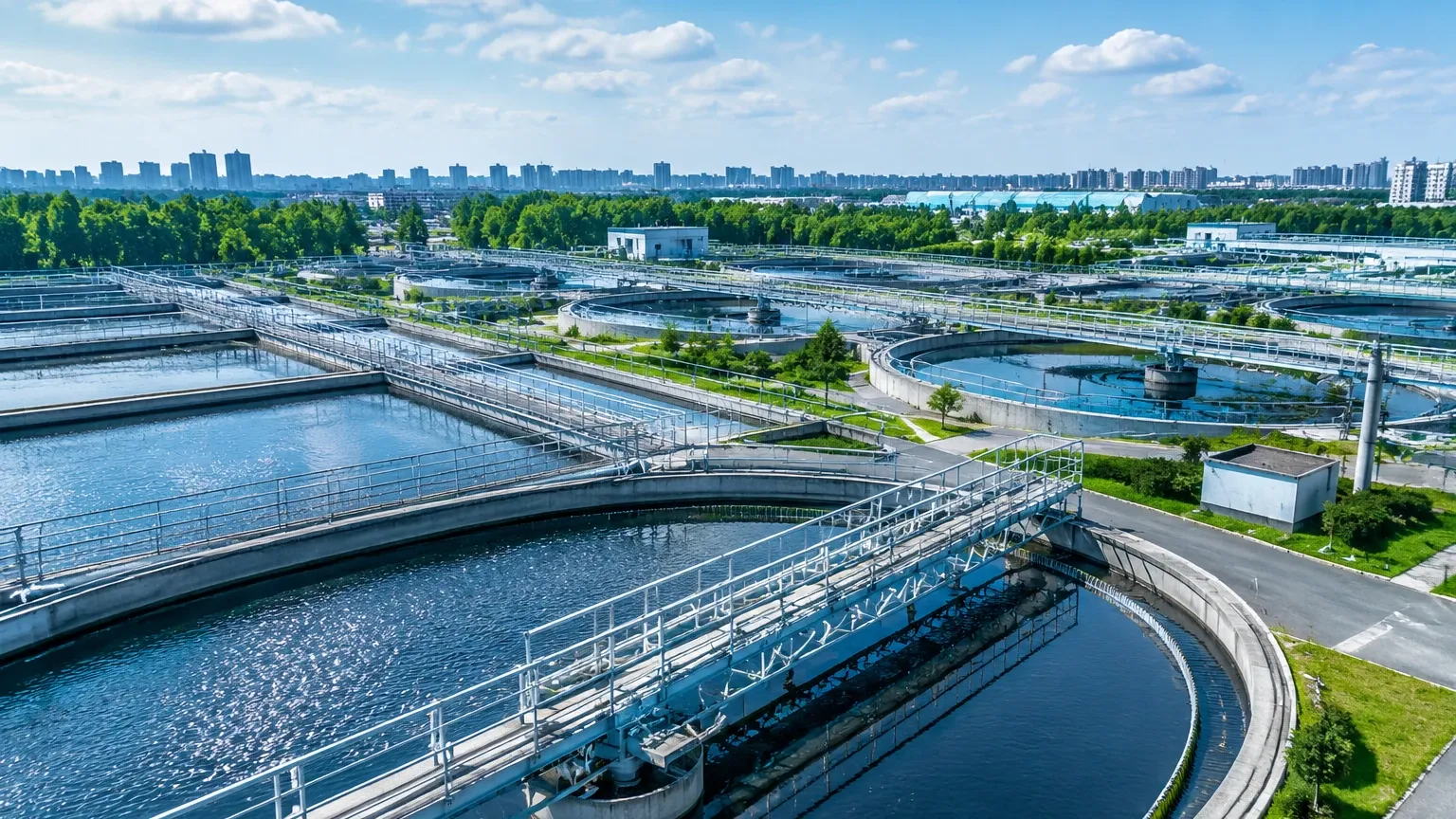
Municipal water treatment monitoring is a complex engineering challenge that requires the integration of various sensing technologies to ensure the safety, efficiency, and reliability of public water supplies. From the initial intake of raw water to the final distribution of potable water and the treatment of wastewater, accurate level measurement serves as the backbone of process automation. Reliable data allows plant operators to optimize chemical dosing, prevent tank overflows, manage pump cycles, and maintain compliance with environmental regulations.
In modern municipal facilities, the choice of instrumentation is dictated by the physical properties of the medium, the environmental conditions of the installation site, and the required precision of the data. As a professional manufacturer, Welk provides a range of industrial instruments designed to meet these rigorous demands. This guide explores the fundamental principles of level measurement technologies and their specific roles in municipal water treatment monitoring.
Fundamental Measurement Principles
Before selecting an instrument for municipal water treatment monitoring, it is essential to understand the underlying physics of the primary measurement technologies used in the industry. Each principle offers distinct advantages depending on the application environment.
Ultrasonic Level Measurement
Ultrasonic sensors operate on the "Time-of-Flight" (ToF) principle. The sensor head contains a piezoelectric crystal that emits high-frequency sound pulses. These waves travel through the air, reflect off the surface of the liquid, and return to the transducer. The instrument calculates the distance based on the time elapsed between emission and reception.
Because the speed of sound is affected by air temperature, high-quality ultrasonic sensors include integrated temperature compensation. This technology is highly effective for non-contact measurement in open channels, sumps, and atmospheric tanks where the liquid surface is relatively calm.
Radar Level Measurement
Radar level meters also use the Time-of-Flight principle but employ electromagnetic waves (microwaves) rather than sound waves. These waves travel at the speed of light and are largely unaffected by air temperature, pressure, or the presence of vapors and dust.
Modern 80GHz high-frequency radar sensors offer narrow beam angles, which are particularly useful in municipal water treatment monitoring for avoiding internal tank obstructions like ladders or agitators. Radar is the preferred choice for chemical storage tanks and digesters where the environment may be volatile or corrosive.
Hydrostatic Level Measurement
Hydrostatic transmitters measure the pressure exerted by a liquid column. The principle is based on the formula: $P = \rho \cdot g \cdot h$, where $P$ is pressure, $\rho$ is the density of the liquid, $g$ is the gravitational constant, and $h$ is the height of the liquid.
A submersible pressure transducer is lowered to the bottom of a tank or well. It measures the total pressure and subtracts the atmospheric pressure (usually via a vent tube in the cable) to determine the liquid level. This method is highly reliable for deep wells, reservoirs, and water towers where non-contact sensors might face mounting difficulties.
Magnetic Level Gauges
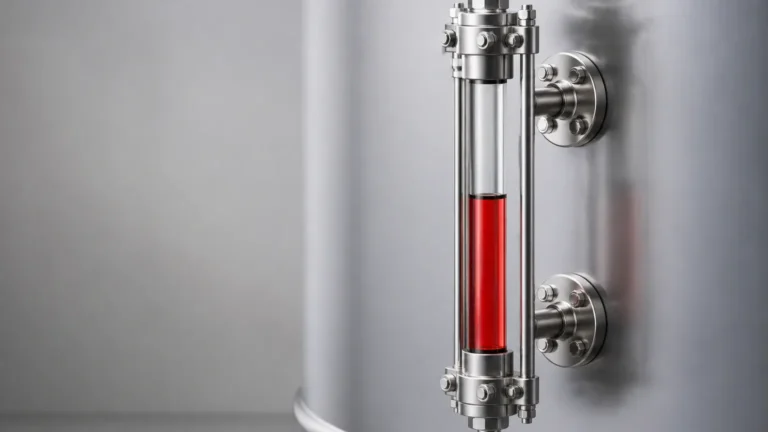
Magnetic level gauges are used for visual indication and point-level control. A float containing a permanent magnet moves with the liquid level inside a bypass chamber. This magnet flips colored flaps on an external scale and can trigger reed switches or transmit a continuous signal via a magnetostrictive probe. These are commonly used in boiler feed water and chemical bypass systems where local visual confirmation is required alongside electronic monitoring.
Key Applications in Municipal Water Treatment Monitoring
The municipal water cycle involves several distinct stages, each requiring specific monitoring strategies to ensure process stability.
Raw Water Intake and Reservoirs
In the initial stage, monitoring the level of rivers, lakes, or groundwater wells is critical for managing supply. Hydrostatic transmitters are frequently used in deep wells due to their robust design and ability to withstand submersion. For open-air reservoirs, ultrasonic or radar sensors are often mounted on bridges or platforms to provide continuous level data without contacting the water, reducing maintenance needs caused by debris or biological growth.
Chemical Dosing and Storage
Water treatment involves the precise application of chemicals such as alum, sodium hypochlorite, and fluorosilicic acid. These chemicals are often stored in small to medium-sized tanks. Because these substances can be highly corrosive, non-contact radar level meters are the industry standard. They provide high accuracy (up to ±1mm) without risking sensor degradation. Accurate monitoring in these tanks ensures that the plant never runs out of essential reagents and that dosing pumps operate within their intended parameters.
Clarifiers and Sedimentation Basins
In sedimentation basins, the goal is to monitor the water level to manage weir overflow and sludge accumulation. Ultrasonic sensors are widely applied here due to their cost-effectiveness in open-air environments. However, if the process generates significant foam or steam, radar technology is substituted to ensure the signal penetrates the surface disturbance and provides an accurate reading of the actual liquid level.
Filtration and Backwash Systems
Rapid sand filters and membrane filtration systems require precise level control to manage head loss. As filters become clogged, the water level above the filter media rises. Monitoring this rise allows the SCADA system to trigger backwash cycles automatically. Hydrostatic sensors are often used here for their high resolution and ability to be integrated into the piping or the filter gallery floor.
Selection Criteria for Level Instrumentation
Choosing the right technology for municipal water treatment monitoring involves evaluating several technical factors. The following table provides a comparison of the primary technologies used in the field.
| Technology | Accuracy | Contact Type | Best For | Maintenance Level |
| :— | :— | :— | :— | :— |
| Radar | High (±1-2mm) | Non-contact | Chemicals, Digesters, Narrow Tanks | Very Low |
| Ultrasonic | Moderate (±0.25%) | Non-contact | Open Channels, Sumps, Water Tanks | Low |
| Hydrostatic | High (±0.1-0.5%) | Contact | Deep Wells, Reservoirs, Towers | Moderate |
| Magnetic | Moderate | Contact | Local Indication, Process Tanks | Low |
When selecting a sensor, engineers must confirm the chemical compatibility of the wetted materials, the required measurement range, and the available power supply (typically 24V DC for 4-20mA loop-powered devices). For detailed product specifications and to review various configuration options, professionals should consult the Main Page of the manufacturer’s technical catalog.
Installation Considerations and Best Practices
Correct installation is as important as selecting the right technology. Even the most advanced sensor will fail to provide accurate data if it is poorly positioned.
1. Avoid Dead Zones: Every non-contact sensor (ultrasonic and radar) has a "blocking distance" or dead zone near the sensor face. The instrument must be mounted high enough so that the maximum liquid level never enters this zone, as readings will become erratic.
2. Beam Path Clearance: For ultrasonic and radar sensors, the signal spreads in a cone. The installation point must be chosen to ensure this cone does not intersect with tank walls, pipes, or ladders. If obstructions are unavoidable, high-frequency radar with a narrow beam or software-based "false echo suppression" should be used.
3. Hydrostatic Cable Protection: When installing hydrostatic transmitters in deep wells or moving water, the cable should be secured to prevent the sensor from swinging. Furthermore, the atmospheric vent tube in the cable must be kept clear of moisture; using a desiccant bellows or a specialized vent filter is recommended.
4. Stillwells: In applications with heavy turbulence or foam, installing the sensor inside a stillwell (a vertical pipe) can provide a calm surface for measurement. This is particularly useful for ultrasonic sensors in mixing tanks.
Limitations and Common Challenges
While modern instrumentation is highly advanced, certain conditions can challenge municipal water treatment monitoring systems:
* Foam: Heavy, thick foam can absorb ultrasonic signals, leading to a "loss of echo." Radar is more resistant to foam, but extremely dense foam may still attenuate the signal.
* Vapor and Condensation: While radar is unaffected by vapor, ultrasonic sensors can struggle if the air density changes significantly or if heavy condensation forms on the transducer face. Many Welk ultrasonic sensors feature a self-cleaning function through vibration to shed water droplets.
* Density Variations: Hydrostatic sensors assume a constant liquid density. If the water's salinity or temperature changes drastically, the calculated level will shift. In such cases, non-contact methods are more reliable.
* Ambient Noise: In industrial environments with heavy machinery, ultrasonic sensors may occasionally pick up acoustic interference. Proper shielding and frequency selection can mitigate this.
Frequently Asked Questions (FAQ)
Q: How often do level sensors in municipal water treatment need calibration?
A: Most modern digital sensors are pre-calibrated at the factory. However, for regulatory compliance, municipal facilities typically perform a verification check annually. Hydrostatic sensors may require more frequent zero-point checks if they are used in sludge or high-sediment areas.
Q: Can one sensor type be used for all municipal applications?
A: No. While radar is the most versatile, it may be over-engineered for a simple sump where an ultrasonic sensor is more cost-effective. Conversely, an ultrasonic sensor cannot replace a hydrostatic transmitter in a 100-meter deep well.
Q: What is the benefit of 80GHz radar over 26GHz radar?
A: 80GHz radar has a much smaller wavelength, allowing for a much narrower beam angle and a smaller antenna size. This makes it easier to install in small tanks or tanks with many internal obstructions, providing a more reliable signal in municipal water treatment monitoring.
Q: How do environmental factors like lightning affect these sensors?
A: Since many municipal sensors are installed outdoors or in elevated tanks, they are susceptible to surge damage. It is standard practice to use instruments with built-in surge protection and to install additional lightning arrestors on the signal loop.
Conclusion
Effective municipal water treatment monitoring relies on a strategic approach to level measurement. By understanding the physics of ultrasonic, radar, and hydrostatic technologies, engineers can design systems that are both accurate and resilient. Whether managing the delicate balance of chemical dosing or the vast volumes of a city reservoir, the right instrumentation ensures that water treatment processes remain efficient and safe. For those seeking to implement or upgrade these systems, exploring the full range of industrial solutions at the Main Page provides the necessary technical foundation for successful project execution.