Online Chlorine Analyzer
Online Chlorine Analyzer
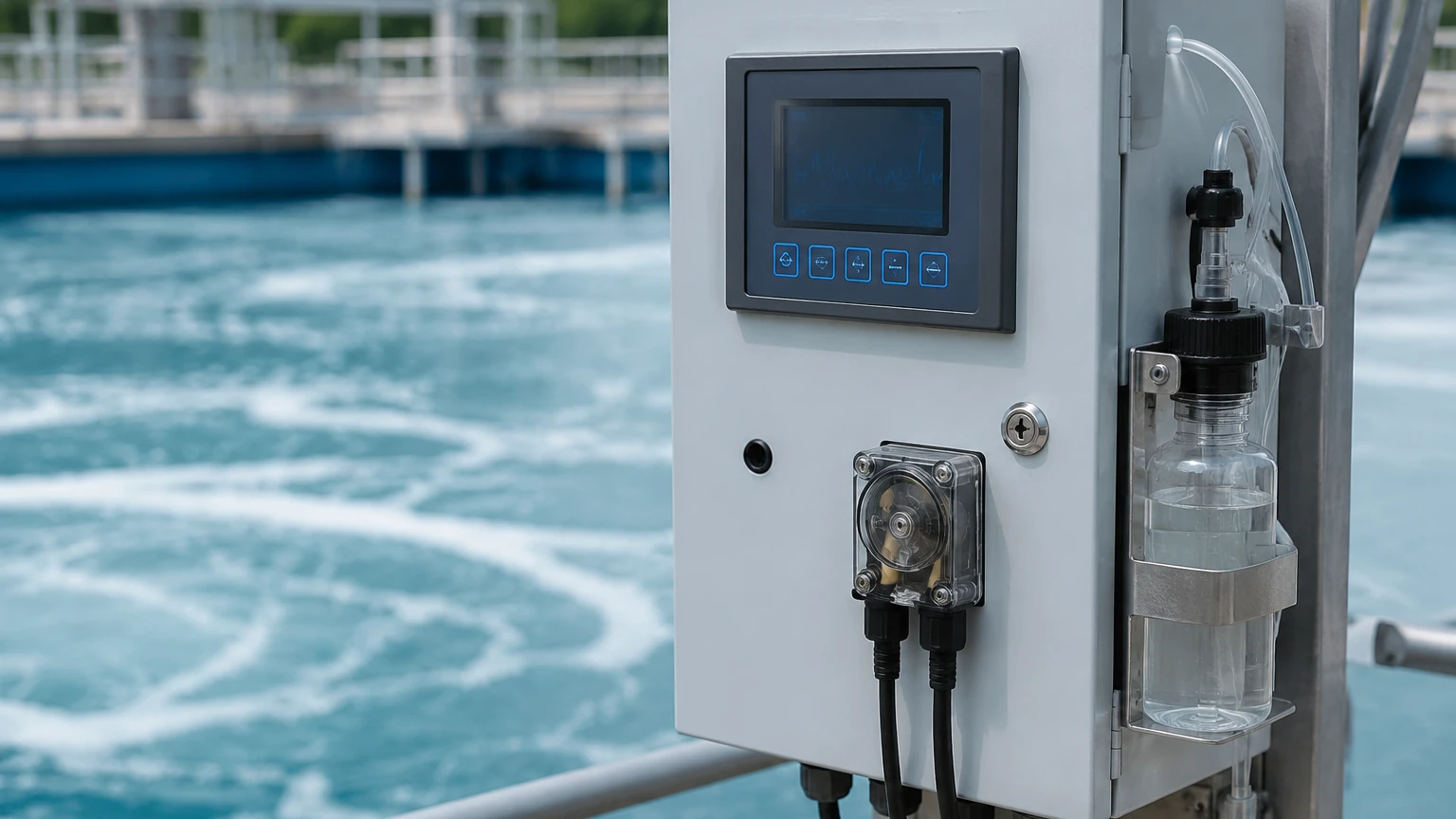
In industrial water treatment and process automation, maintaining precise chemical concentrations is a fundamental requirement for safety, regulatory compliance, and operational efficiency. An online chlorine analyzer serves as the primary instrument for real-time monitoring of disinfection levels in applications ranging from municipal drinking water plants to cooling towers and wastewater discharge systems. Unlike manual grab-sampling, these continuous monitoring systems provide the high-frequency data necessary for automated dosing control, ensuring that chlorine levels remain within strict setpoints.
Selecting and implementing an online chlorine analyzer requires a deep understanding of the underlying measurement physics, the chemical environment of the process, and the integration requirements of the broader facility. This guide examines the primary measurement technologies, installation best practices, and the critical role of auxiliary instrumentation, such as level measurement, in creating a robust chemical dosing loop.
Understanding Chlorine Measurement Principles
Before selecting an instrument, process engineers must distinguish between the different chemical forms of chlorine: Free Chlorine (hypochlorous acid and hypochlorite ion), Combined Chlorine (chloramines), and Total Chlorine (the sum of both). The choice of an online chlorine analyzer depends heavily on which form is being monitored and the specific chemistry of the water matrix.
There are two dominant technologies used in modern industrial online chlorine analyzers: DPD Colorimetric and Amperometric sensors.
1. DPD Colorimetric Principle
This method is based on the N,N-diethyl-p-phenylenediamine (DPD) reagent. When DPD is added to a water sample containing chlorine, a chemical reaction occurs that turns the sample pink. The intensity of the color is directly proportional to the concentration of chlorine.
The analyzer performs this measurement by passing a beam of light (typically at a wavelength of 510 nm to 515 nm) through the reacted sample. A photodetector measures the absorbance of light, and the internal electronics convert this value into a concentration reading in mg/L (milligrams per liter).
* Advantages: High accuracy at low concentrations, less affected by changes in pH or temperature, and widely accepted by regulatory bodies as a standard method.
* Limitations: Requires a continuous supply of chemical reagents, generates a small waste stream, and has a slower response time (typically 2 to 5 minutes per measurement cycle) compared to electrochemical methods.
2. Amperometric Principle
Amperometric sensors are electrochemical cells that measure the change in current resulting from the chemical reduction of chlorine at a cathode. There are two main types: membrane-covered sensors and bare-electrode sensors.
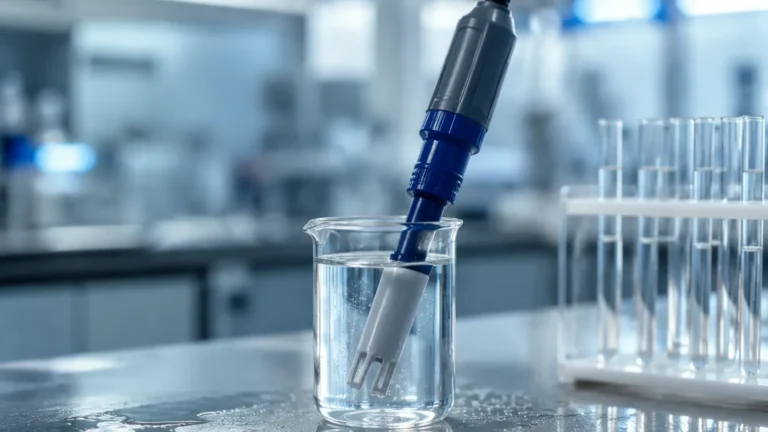
In a membrane-covered amperometric online chlorine analyzer, a thin membrane separates the electrodes and electrolyte from the water sample. Chlorine molecules diffuse through the membrane and are reduced at the cathode, creating a current proportional to the partial pressure of chlorine.
* Advantages: No reagents required, providing a lower long-term cost of ownership; real-time continuous output (T90 response often under 60 seconds); and no waste stream produced.
* Limitations: Highly sensitive to changes in flow rate and pH. Since the ratio of hypochlorous acid (HOCl) to hypochlorite (OCl-) changes with pH, and amperometric sensors primarily measure HOCl, pH compensation is usually required for accurate results.
Key Evaluation Criteria for Industrial Analyzers
When evaluating an online chlorine analyzer for a specific project, engineers should prioritize the following technical specifications to ensure long-term reliability.
Measurement Range and Resolution
Most industrial applications require a range of 0–5 mg/L or 0–10 mg/L, with a resolution of at least 0.01 mg/L. For high-concentration applications, such as initial disinfection stages or concentrated bleach dosing, analyzers with ranges up to 20 mg/L or higher may be necessary.
pH and Temperature Compensation
Because chlorine chemistry is highly dependent on temperature and pH, an integrated sensor for these parameters is essential. For amperometric systems, an analyzer that lacks automatic pH compensation will produce inaccurate data if the process pH fluctuates by more than 0.2 units. High-quality systems include an onboard pH electrode to provide real-time correction factors to the chlorine algorithm.
Communication and Integration
In the era of Industrial IoT and automated process control, the analyzer must communicate effectively with the plant PLC or SCADA system. Standard outputs should include multiple 4-20mA analog loops (for chlorine, pH, and temperature) and digital protocols such as Modbus RS485 or HART. These connections allow for remote monitoring and the integration of alarms for low-chlorine or high-chlorine events.
Maintenance and Consumables
Process engineers must calculate the Total Cost of Ownership (TCO). For colorimetric analyzers, this includes the cost and shelf-life of reagents. For amperometric analyzers, this includes the frequency of membrane replacement and electrolyte replenishment. A system that offers "tool-free" maintenance can significantly reduce labor costs in large-scale facilities.
Installation and Integration Best Practices
The performance of even the most advanced online chlorine analyzer is limited by the quality of its installation. Proper sample conditioning is the most critical factor in achieving stable readings.
1. Sample Point Selection: The sample should be taken from a point in the process where the chlorine is fully mixed but before it has significantly dissipated. For dosing control, the sample point should be far enough downstream of the injection point to allow for a complete chemical reaction, typically 10 to 20 pipe diameters.
2. Flow Regulation: Amperometric sensors are flow-sensitive. It is recommended to use a flow cell with an integrated constant-head device or a pressure-regulating valve to maintain a steady flow rate, usually between 30 and 60 L/h. Excessive flow can cause sensor "noise," while insufficient flow leads to sluggish response.
3. Pressure Management: Analyzers should ideally discharge to an open drain at atmospheric pressure. If the sample must be returned to the process, back-pressure must be carefully controlled (typically kept below 0.5 bar) to avoid damaging the sensor membrane or the internal plumbing of a colorimetric unit.
4. Air Bubble Elimination: Air bubbles trapped against a sensor membrane or in a colorimetric optical cell will cause erratic readings. Installing a Y-strainer and an air-release valve in the sample line can mitigate these issues.
Common Risks and Operational Limitations
Operating an online chlorine analyzer involves managing several environmental and chemical risks that can lead to measurement drift or hardware failure.
* Biofouling and Scaling: In wastewater or cooling water applications, biological growth or mineral scaling can coat the sensor membrane or the optical windows. Regular cleaning cycles, sometimes automated using acid-wash systems or mechanical wipers, are necessary to maintain accuracy.
* Interfering Substances: High levels of manganese, iron, or chromium can interfere with DPD color development. Similarly, in amperometric systems, certain surfactants or oils can coat the membrane, preventing the diffusion of chlorine and leading to false-low readings.
* Reagent Stability: For colorimetric units, reagents are sensitive to temperature. Storing reagents in an environment exceeding 40°C can cause them to degrade, resulting in a loss of sensitivity and inaccurate calibration.
Practical Selection Table for Process Engineers
The following table provides a comparison to assist in selecting the appropriate technology based on common application requirements.
| Feature | DPD Colorimetric Analyzer | Amperometric (Membrane) |
| :— | :— | :— |
| Primary Application | Regulatory reporting, low-range accuracy | Fast-loop dosing control, cooling water |
| Reagent Requirement | Yes (Monthly replenishment) | No |
| pH Sensitivity | Low (Buffered reagents) | High (Requires compensation) |
| Response Time | 2–5 minutes | < 60 seconds |
| Maintenance Interval | 30 days (Reagents/Tubing) | 3–6 months (Membrane/Electrolyte) |
| Waste Stream | Small amount of chemical waste | None (Sample can be returned) |
| Interference Risk | Turbidity and color | Flow velocity and surfactants |
The Role of Level Monitoring in Chlorine Dosing Systems
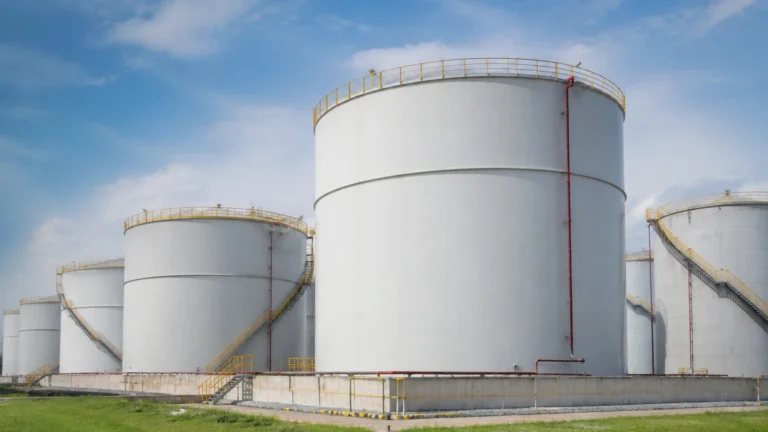
While the online chlorine analyzer monitors the effectiveness of the disinfection process, it is only one part of a complete chemical management system. To maintain a continuous and safe process, engineers must also ensure a reliable supply of the disinfectant itself, such as sodium hypochlorite or calcium hypochlorite solution.
This is where high-precision level measurement becomes indispensable. An online chlorine analyzer might indicate a sudden drop in chlorine levels, but without integrated level sensors on the chemical storage tanks, it is difficult to determine if the issue is a pump failure, a clogged injector, or simply an empty reagent tank.
For engineers looking to optimize their chemical inventory and dosing skids, reviewing the range of radar level meters, ultrasonic sensors, and level switches is a critical step. Specialized manufacturers like Welk provide the robust level measurement instruments required to monitor these corrosive chemical environments. For a comprehensive overview of how these sensors integrate into industrial automation, process managers can consult the Main Page of professional instrumentation providers to find the right hardware for chemical tank management.
By combining real-time concentration data from an online chlorine analyzer with continuous volume data from a hydrostatic or radar level transmitter, facilities can implement "smart dosing." This approach allows for predictive maintenance, automated chemical reordering, and enhanced safety by preventing pump dry-running and chemical spills.
Frequently Asked Questions (FAQs)
1. How often should an online chlorine analyzer be calibrated?
Calibration frequency depends on the technology and the stability of the water matrix. Generally, amperometric sensors should be verified against a laboratory DPD photometer weekly and calibrated if the deviation exceeds 10%. Colorimetric analyzers are more stable but should be checked whenever a new batch of reagents is installed.
2. Can an online chlorine analyzer measure chlorine in seawater?
Yes, but with caveats. In seawater, chlorine reacts with bromide to form hypobromous acid. Most analyzers will detect this as "chlorine equivalent." Amperometric sensors designed for seawater often use specific membranes and electrolytes to handle the high salinity and potential for biofouling.
3. What is the difference between Free and Total chlorine measurement?
Free chlorine refers to the most active disinfecting forms (HOCl and OCl-). Total chlorine includes these plus chloramines (combined chlorine), which are formed when chlorine reacts with ammonia. In drinking water, free chlorine is usually measured. In wastewater discharge or systems with high organic loads, total chlorine is the more common parameter.
4. Does the sample temperature affect the reading?
Yes. Temperature affects the chemical reaction rate in colorimetric units and the diffusion rate through the membrane in amperometric units. Most modern analyzers include an NTC or PT100 temperature sensor to automatically compensate the reading to a standard temperature (typically 20°C or 25°C).
Conclusion
Implementing an online chlorine analyzer is a strategic investment in process safety and water quality. By selecting the right measurement principle—whether the reagent-based precision of DPD colorimetry or the rapid response of amperometry—and adhering to strict installation standards, industrial operators can achieve reliable, long-term monitoring. Furthermore, integrating these analyzers with supporting technologies like level measurement ensures that the entire chemical dosing loop is visible, controllable, and efficient. For those designing or upgrading water treatment systems, exploring the latest in level and concentration instrumentation on the Main Page is the first step toward a fully optimized facility.