Orp Electrodes
Orp Electrodes
In the landscape of industrial process control, the measurement of Oxidation-Reduction Potential (ORP) serves as a critical indicator of a solution's chemical activity. ORP electrodes are the primary sensing components used to quantify the ability of a liquid to either oxidize or reduce another substance. This measurement is indispensable in applications ranging from municipal water disinfection to complex chemical synthesis and industrial wastewater treatment. Understanding the underlying electrochemical principles, hardware selection, and maintenance requirements is essential for engineers and plant operators aiming for precision and reliability in their monitoring systems.
While level measurement technologies, such as those found on the Main Page of industrial instrumentation providers, manage the physical volume and inventory of fluids, ORP electrodes provide the necessary insight into the chemical state of those fluids. Together, these sensors form the backbone of automated process control in modern industrial facilities.
Understanding ORP Measurement Principles
ORP, also known as Redox potential, is measured in millivolts (mV). It represents the tendency of a chemical species to acquire electrons and thereby be reduced. Conversely, it also indicates the tendency of a species to lose electrons and be oxidized.
The Electrochemical Reaction
At the heart of an ORP measurement is an electrochemical cell consisting of two distinct parts: a sensing electrode and a reference electrode. When these are immersed in a solution, a potential difference (voltage) is generated. This voltage is governed by the Nernst equation, which relates the reduction potential of an electrochemical reaction to the standard electrode potential, temperature, and activities of the chemical species involved.
1. Oxidation: The loss of electrons. In a water treatment context, an oxidizing agent like chlorine "steals" electrons from bacteria, destroying their cellular structure.
2. Reduction: The gain of electrons. A reducing agent, such as sodium bisulfite, provides electrons to neutralize oxidizers.
Potential Difference
The ORP electrode does not measure the concentration of a specific ion (unlike a pH electrode which measures hydrogen ions). Instead, it measures the ratio of oxidized to reduced species. If the solution has a high positive mV reading, it is strongly oxidizing. A negative mV reading indicates a strongly reducing environment. This "total" measurement is highly effective for monitoring the progress of reactions where the specific chemical makeup might be complex but the overall oxidative state is the primary concern.
Key Components and Construction of ORP Electrodes
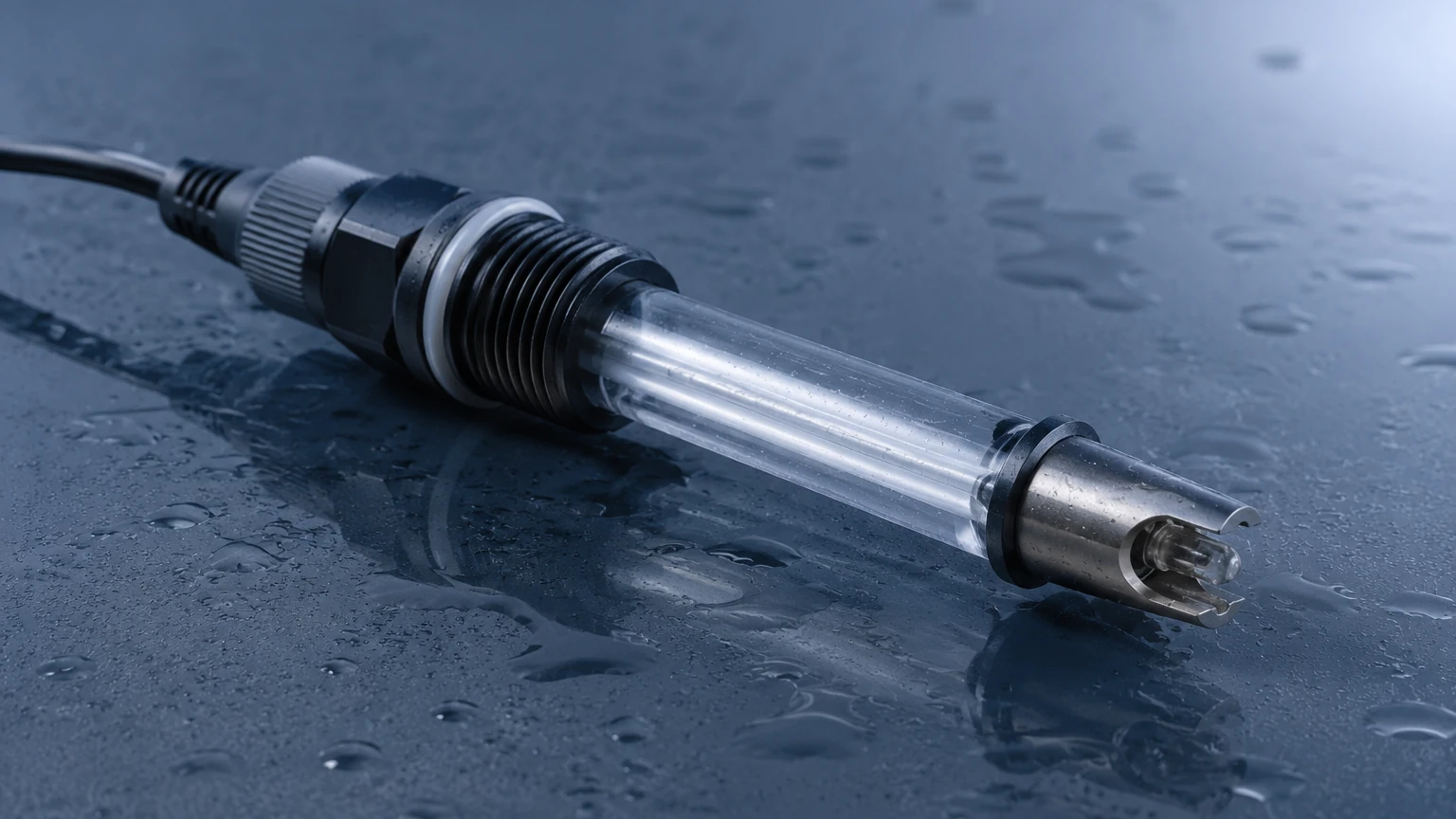
Industrial ORP electrodes are precision-engineered to withstand harsh chemical environments while maintaining electrical sensitivity. A standard sensor assembly typically includes the following components:
The Sensing Element
The sensing element is almost always a noble metal, chosen for its ability to facilitate electron exchange without reacting with the solution itself.
* Platinum: The most common material due to its excellent chemical resistance and broad response range. It is the standard for most water treatment and chemical applications.
* Gold: Used in specific applications, such as the oxidation of cyanide, where platinum might catalyze unwanted side reactions or suffer from surface poisoning.
The Reference System
To provide a stable baseline for the mV measurement, a reference electrode is required. Most modern industrial sensors use a Silver/Silver Chloride (Ag/AgCl) reference system. This system is housed in a chamber filled with a concentrated electrolyte (usually Potassium Chloride, KCl).
The Junction
The junction is the physical interface where the internal reference electrolyte meets the process liquid. It must allow for a small, consistent flow of ions to complete the electrical circuit without allowing the process liquid to contaminate the reference internals. Common junction materials include:
* Ceramic: Durable and standard for clean water.
* Teflon (PTFE): Porous and resistant to fouling, ideal for wastewater.
* Double Junctions: Feature an extra chamber to protect the reference wire from "poisoning" ions like sulfides or heavy metals.
Selection Criteria for Industrial ORP Electrodes
Selecting the correct ORP electrode requires a thorough analysis of the process conditions. Using the wrong sensor type can lead to rapid drift, frequent calibration requirements, or premature sensor failure.
Practical Selection Table
| Application Type | Recommended Sensing Metal | Junction Material | Body Material | Temperature Range |
| :— | :— | :— | :— | :— |
| Potable Water Disinfection | Platinum | Ceramic | Glass/Epoxy | 0°C to 60°C |
| Wastewater (High Solids) | Platinum | Porous PTFE | Ryton (PPS) | -5°C to 80°C |
| Cyanide Destruction | Gold | Ceramic/PTFE | Glass | 0°C to 80°C |
| High-Pressure Chemical Reactors | Platinum | Double Junction | Stainless Steel/Glass | Up to 110°C |
| Cooling Tower Monitoring | Platinum | Ceramic | Plastic | 0°C to 50°C |
Environmental Factors
* Pressure: Standard glass electrodes are often rated for atmospheric pressure. For pressurized pipelines or deep tanks, reinforced bodies or pressure-compensated reference systems are required.
* Temperature: While ORP is less temperature-dependent than pH, high temperatures accelerate the depletion of the reference electrolyte and can degrade the internal seals of the electrode.
* Chemical Compatibility: The body material (Glass, Ryton, or Stainless Steel) must be compatible with the solvent and any corrosive agents present in the tank.
Installation Guidelines and Best Practices
Proper installation is as critical as sensor selection. Even the highest quality ORP electrodes will fail if they are positioned incorrectly within the process stream.
Placement and Orientation
1. Continuous Submersion: The electrode must remain wet at all times. If the sensing tip dries out, the reference junction may crystallize and fail. In tanks where levels fluctuate, sensors should be installed at the lowest possible point or in a bypass loop. For reliable level monitoring to ensure sensors remain submerged, engineers often consult the specialized instrumentation listed on the Main Page.
2. Angle of Installation: Electrodes should be installed at an angle of at least 15° above the horizontal. This prevents air bubbles from being trapped inside the electrode bulb, which would break the electrical contact.
3. Flow Velocity: In pipeline installations, the flow should be sufficient to keep the sensor tip clean but not so high that it causes cavitation or physical abrasion of the sensing element.
Cable Management
ORP signals are high-impedance, meaning they are extremely sensitive to electrical noise. Use shielded cables and keep the distance between the sensor and the transmitter as short as possible. Avoid routing ORP signal cables near high-voltage power lines or variable frequency drives (VFDs).
Maintenance, Calibration, and Troubleshooting
Unlike physical sensors like ultrasonic level meters, ORP electrodes are consumable items that degrade over time. Their lifespan typically ranges from 6 to 24 months depending on the severity of the application.
Calibration Procedures
ORP sensors are calibrated using standard buffer solutions, often Quinhydrone mixed with pH 4 or pH 7 buffers. Unlike pH calibration, which adjusts for slope and offset, ORP calibration is primarily an offset adjustment. If the sensor reading in a known solution deviates by more than 40-50 mV from the theoretical value, it usually indicates that the sensor needs cleaning or replacement.
Cleaning Protocols
Fouling is the most common cause of ORP measurement error.
* General Scaling: Soak in 5% Hydrochloric Acid (HCl) for 5-10 minutes.
* Oil and Grease: Use a mild detergent or isopropyl alcohol.
* Protein Deposits: Use a solution of Pepsin in HCl.
* Biofouling: Use a weak bleach solution (Sodium Hypochlorite).
After cleaning, always rinse the electrode thoroughly with deionized water and soak it in a storage solution (KCl) for at least 30 minutes before recalibrating.
The Role of ORP in Integrated Process Control
In industrial automation, ORP measurement rarely exists in isolation. It is part of a multi-parameter control strategy. For example, in a chemical neutralization tank, the control system must monitor:
1. Level: To prevent overfills and ensure the ORP electrodes are submerged (using hydrostatic or radar level transmitters).
2. pH: Because ORP values are often pH-dependent.
3. ORP: To control the dosing of oxidizing or reducing agents.
By integrating reliable ORP electrodes with robust level measurement solutions, plants can achieve a high degree of safety and efficiency. For those designing these integrated systems, selecting the right level measurement technology is a foundational step, and resources like the Main Page provide the necessary technical specifications for radar and ultrasonic sensors that complement electrochemical monitoring.
Limitations and Environmental Factors
While powerful, ORP measurement has specific limitations that engineers must account for:
* Non-Specificity: ORP measures the total oxidative state. It cannot distinguish between different oxidizers (e.g., it cannot tell the difference between chlorine and ozone).
* pH Dependency: In many aqueous reactions, the ORP value will shift as the pH changes, even if the concentration of the oxidizer remains constant. This is particularly important in chlorine-based disinfection.
* Surface Poisoning: Certain chemicals can form a film on the platinum surface, "blinding" the sensor. Regular mechanical or chemical cleaning is required in these environments.
Frequently Asked Questions (FAQs)
Q: How often should I calibrate my ORP electrode?
A: For most industrial applications, a weekly check is recommended. If the process is relatively clean, this can be extended to once a month. In high-fouling environments, daily checks may be necessary.
Q: Can I use a pH meter to read an ORP electrode?
A: Most modern pH meters have a "mV mode" that can display the raw signal from an ORP electrode. However, dedicated ORP transmitters are preferred for industrial control as they provide the necessary isolation and scaling for 4-20mA or digital output signals.
Q: Why is my ORP reading drifting?
A: Drift is usually caused by a clogged junction or a contaminated reference electrolyte. If cleaning the junction doesn't stabilize the reading, the electrode likely needs to be replaced.
Q: Does temperature compensation matter for ORP?
A: While the Nernst equation includes a temperature term, the effect of temperature on ORP is complex and often unpredictable because it affects the chemical equilibrium of the species being measured. Therefore, most industrial ORP measurements are not automatically temperature-compensated in the same way pH is; instead, the process is maintained at a stable temperature, or the raw mV value is used for trend analysis.
By adhering to these engineering principles and selection guidelines, industrial facilities can ensure that their ORP monitoring systems provide the accurate data required for safe and efficient chemical processing.