Instrumentation Training Online
Instrumentation Training Online
In the rapidly evolving landscape of industrial automation, the demand for skilled professionals who can design, install, and maintain sophisticated measurement systems is at an all-time high. Instrumentation training online has emerged as a critical resource for engineers, technicians, and plant managers seeking to bridge the gap between theoretical physics and practical field application. For industries ranging from water treatment to oil and gas, understanding the nuances of level, pressure, and flow measurement is essential for operational safety and efficiency.
Effective online training must do more than just present slides; it must provide a deep dive into the physics of measurement, the logic of signal processing, and the practicalities of hardware selection. This guide explores the core components of modern instrumentation education, with a specific focus on level measurement technologies, selection criteria, and installation best practices.
Fundamental Principles of Level Measurement
Before selecting a training program or a specific instrument, it is vital to understand the physical principles that govern how industrial sensors detect the surface of a liquid or solid. In modern process control, level measurement is generally divided into contact and non-contact methods.
Radar Level Measurement (ToF)
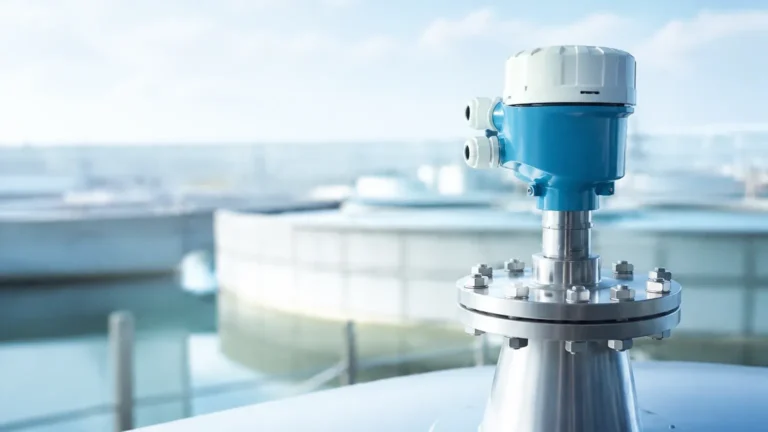
Radar level meters operate on the Time-of-Flight (ToF) principle. The sensor emits a high-frequency microwave signal (typically in the 26 GHz or 80 GHz range) toward the material surface. The signal reflects off the medium and returns to the antenna. By measuring the time interval between emission and reception, the device calculates the distance.
High-frequency 80 GHz radar is increasingly favored in training modules because its narrow beam angle allows for precise measurement even in narrow tanks with internal obstructions. Unlike ultrasonic waves, radar signals are not affected by vacuum, high pressure, or temperature fluctuations in the vapor space.
Ultrasonic Level Sensing
Ultrasonic sensors utilize sound waves rather than electromagnetic waves. A transducer emits an ultrasonic pulse that bounces off the target surface. The distance is calculated based on the speed of sound. However, because the speed of sound varies with air temperature, these sensors require integrated temperature compensation. Online training often highlights the limitations of ultrasonic technology in environments with heavy foam, dust, or high-pressure vapors, which can attenuate the sound signal.
Hydrostatic Pressure Measurement
This contact-based method relies on the principle that the pressure at the bottom of a liquid column is directly proportional to the height of the liquid and its specific gravity ($P = \rho \times g \times h$). Hydrostatic transmitters are widely used in water treatment and open-tank applications due to their reliability and ease of installation. Trainees must learn how to account for changes in fluid density, as any variation in the medium's composition will directly affect the accuracy of the level reading.
The Value of Instrumentation Training Online
Transitioning to digital learning platforms offers several advantages for B2B professionals. Modern instrumentation training online allows for self-paced mastery of complex topics, which is often more effective than compressed three-day in-person seminars.
1. Simulation and Virtual Labs: Many advanced courses now include software simulations that mimic real-world process conditions, allowing students to practice calibrating a 4-20mA loop or configuring a HART (Highway Addressable Remote Transducer) communicator without risking equipment damage.
2. Standardization of Knowledge: For global companies, online modules ensure that a technician in Europe and an engineer in Southeast Asia are following the same safety protocols and calibration standards.
3. Up-to-Date Content: Industrial IoT (IIoT) and Industry 4.0 standards evolve quickly. Online platforms can update their curriculum to include the latest communication protocols, such as Profibus, Foundation Fieldbus, or wireless HART, much faster than traditional textbooks.
Practical Selection Criteria for Level Instruments
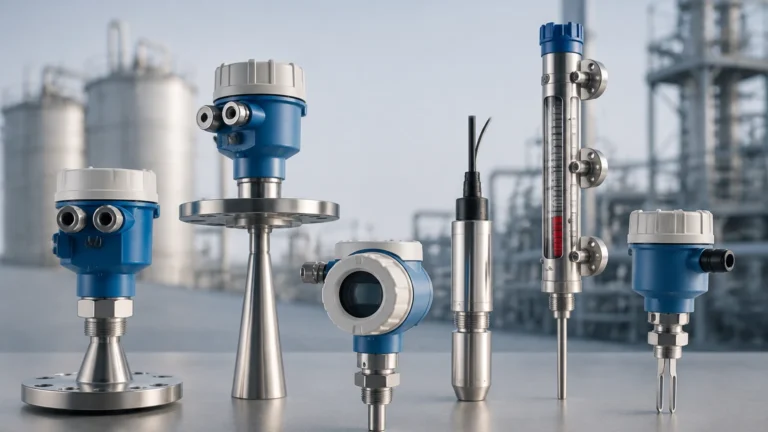
One of the most critical skills taught in instrumentation training is the ability to select the correct tool for a specific application. Choosing the wrong technology can lead to frequent maintenance cycles or catastrophic process failures. The following table provides a high-level comparison of common technologies discussed in professional training programs.
Technology Comparison Table
| Technology | Measurement Type | Ideal Applications | Limitations | Relative Cost |
| :— | :— | :— | :— | :— |
| 80 GHz Radar | Non-contact | Chemical tanks, narrow vessels, high precision | High initial investment | High |
| Ultrasonic | Non-contact | Water/Wastewater, open channels | Affected by foam, dust, and vacuum | Moderate |
| Hydrostatic | Contact | Deep wells, vented tanks, constant density liquids | Requires contact; density-dependent | Low to Moderate |
| Magnetic Gauge | Contact/Visual | High-pressure boilers, toxic chemicals | Mechanical parts; requires bypass chamber | Moderate |
| Level Switch | Point Level | Overfill protection, pump control | Only provides high/low alerts | Low |
When evaluating these options, professionals should consult a comprehensive Main Page of technical specifications to ensure the instrument's wetted materials are compatible with the process media.
Installation and Engineering Considerations
Theoretical knowledge must be supported by practical installation guidelines. Even the most advanced radar level meter will fail if it is poorly positioned. Online training modules typically emphasize the following engineering constraints:
* The Dead Zone (Blocking Distance): Every non-contact sensor has a minimum distance near the antenna where it cannot accurately measure. For ultrasonic sensors, this is often 0.2m to 0.5m (approx. 8 to 20 inches). If the liquid level enters this zone, the sensor may report a false "full" or "empty" reading.
* Beam Angle and Obstructions: Radar and ultrasonic signals spread as they travel. Installers must ensure the "signal cone" does not intersect with agitators, ladders, or inflow streams. For instance, an 80 GHz radar with a 3-degree beam angle requires much less clearance than a 26 GHz radar with a 10-degree beam.
* Nozzle Geometry: The height and diameter of the mounting nozzle can cause signal interference. Training often covers the use of "mapping" or "false echo suppression" to tell the sensor's microprocessor to ignore static reflections from the nozzle walls.
* Environmental Protection: In outdoor or wash-down environments, instruments must meet specific Ingress Protection (IP) ratings, such as IP67 or IP68, to prevent moisture from damaging the electronics.

Limitations and Risks of Remote Learning
While instrumentation training online is highly effective for cognitive learning, it has inherent limitations that practitioners must recognize.
First, the tactile experience of "feeling" a thread engagement or identifying the subtle sound of a failing bearing cannot be fully replicated digitally. Second, safety training—particularly regarding hazardous areas (ATEX/IECEx)—requires rigorous verification. A technician may understand the theory of an intrinsically safe circuit online but must still demonstrate the ability to properly ground equipment in the field.
Furthermore, online training often focuses on "ideal" scenarios. In the field, instrumentation professionals frequently encounter "legacy" systems where documentation is missing or non-standard wiring was used by previous contractors. Bridging the gap between a clean digital simulation and a 30-year-old chemical plant requires critical thinking skills that are developed through a combination of online theory and supervised field mentorship.
Frequently Asked Questions (FAQ)
Q: Can I get certified in instrumentation entirely online?
A: Many organizations offer "Certificate of Completion" programs online. However, professional licensure (like a Professional Engineer license) or specific trade certifications (like NCCER in the US) usually require a combination of online exams and verified field hours.
Q: What is the most important factor in level meter selection?
A: The properties of the medium (dielectric constant, density, corrosiveness) and the tank environment (pressure, temperature, turbulence) are the primary factors. There is no "one size fits all" solution in industrial instrumentation.
Q: How often should industrial level sensors be calibrated?
A: This depends on the industry and the criticality of the measurement. In regulated industries like pharmaceuticals, calibration may be required every 6 months. In general water treatment, an annual check is often sufficient unless drift is detected.
Q: Is 80 GHz radar always better than 26 GHz?
A: Not necessarily. While 80 GHz offers better focus and smaller antennas, 26 GHz radar may be more robust in certain heavy-dust applications or where the surface is extremely turbulent, as the longer wavelength can sometimes be more forgiving of surface scattering.
Conclusion and Next Steps
Investing in instrumentation training online is a strategic move for any professional involved in industrial process control. By mastering the principles of radar, ultrasonic, and hydrostatic measurement, and understanding the nuances of installation and calibration, technicians can significantly reduce downtime and improve plant safety.
As you progress in your learning journey, it is essential to reference authoritative technical data and explore the latest hardware options. For those looking to specify equipment or deepen their understanding of specific sensor models, reviewing product options and application support on a professional Main Page is a logical next step. Combining high-quality digital education with reliable, field-proven hardware ensures that your instrumentation strategy remains robust in the face of modern industrial challenges.