Ph and Do Simulators
Ph and Do Simulators
In the landscape of industrial process control and water quality monitoring, the accuracy of analytical instrumentation is paramount. While physical parameters such as level, pressure, and flow are often measured using robust mechanical or electronic sensors, analytical parameters like pH and Dissolved Oxygen (DO) rely on complex electrochemical or optical interactions. To ensure these systems function correctly, engineers and technicians utilize ph and do simulators. These specialized calibration tools act as a bridge between theoretical sensor output and the actual performance of the transmitter, allowing for precise troubleshooting and system verification without the variables introduced by real chemical samples.
Understanding Measurement Principles
Before selecting or utilizing ph and do simulators, it is essential to understand the underlying principles of the sensors they are designed to mimic. Both pH and DO measurements involve low-level signals that are highly susceptible to interference and impedance issues.
pH Measurement Principles
pH measurement is based on the Nernst equation, which describes the relationship between the hydrogen ion concentration in a solution and the potential difference (voltage) generated across a glass electrode. A standard pH probe consists of a sensing electrode and a reference electrode. At a neutral pH of 7.0, the system ideally produces 0 mV. As the solution becomes more acidic (lower pH), the voltage increases positively; as it becomes more alkaline (higher pH), the voltage increases negatively.
At 25°C (298.15 K), the theoretical slope of a pH electrode is 59.16 mV per pH unit. This means a pH of 4.0 would output approximately +177.48 mV, while a pH of 10.0 would output approximately -177.48 mV. A critical factor in pH measurement is the extremely high impedance of the glass electrode, often ranging from 10 MΩ to 1,000 MΩ. Consequently, any simulator used for pH must be able to replicate this high-impedance environment to ensure the transmitter's input stage is functioning correctly.
Dissolved Oxygen (DO) Measurement Principles
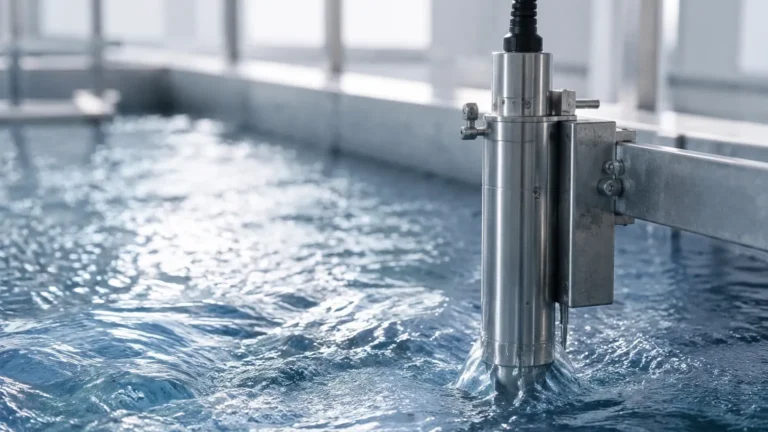
Dissolved Oxygen is typically measured using either electrochemical (polarographic or galvanic) or optical (luminescence-based) sensors.
1. Electrochemical Sensors: These sensors use a cathode and an anode submerged in an electrolyte, separated from the process by a gas-permeable membrane. Oxygen diffuses through the membrane and is reduced at the cathode, creating a current proportional to the partial pressure of oxygen. In polarographic sensors, an external bias voltage is applied, whereas galvanic sensors generate their own current. The signals are typically in the nanoampere (nA) range.
2. Optical Sensors: These utilize a luminophore that glows when excited by a specific wavelength of light. Oxygen molecules "quench" this glow. The rate of quenching is proportional to the oxygen concentration. Simulating these signals often requires digital communication or specific voltage/current outputs that mimic the processed signal of the optical sensor head.
The Function of Ph and Do Simulators
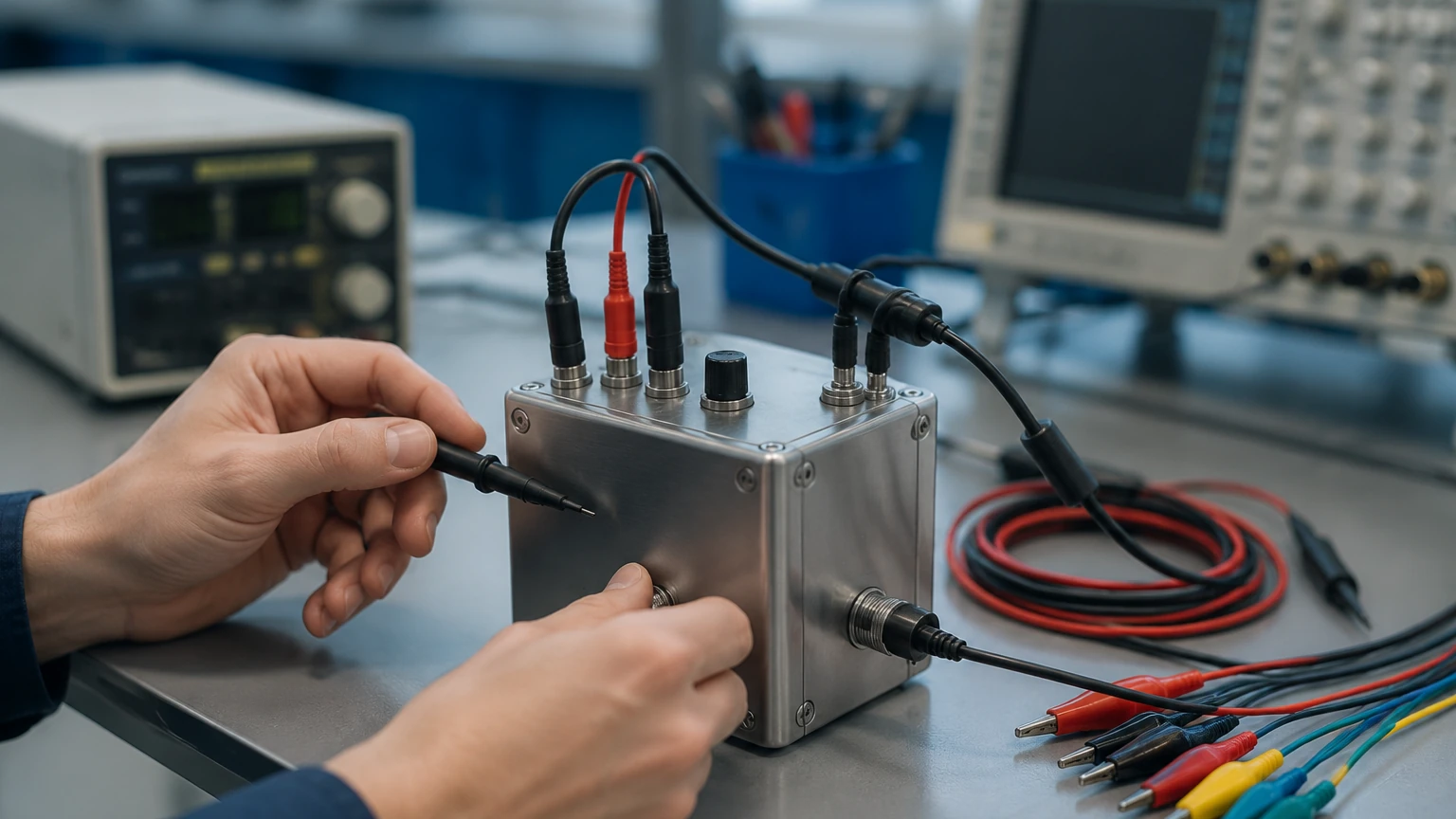
Ph and do simulators are electronic devices designed to generate precise millivolt (mV) or nanoampere (nA) signals that correspond to specific pH or DO values. Their primary role in a B2B industrial setting is to isolate problems within a measurement loop. If a transmitter is providing erratic readings, a simulator can be connected in place of the probe. If the transmitter reads the simulated value correctly, the issue lies with the probe or the cabling; if the transmitter still fails, the electronics or the configuration are at fault.
These simulators are indispensable during the commissioning of new water treatment plants, chemical processing lines, and pharmaceutical bioreactors. They allow for the testing of alarms, control logic (such as PID loops for acid/base dosing), and data logging systems before any hazardous chemicals or expensive biological media are introduced into the tanks.
Key Evaluation Criteria for Selecting Simulators
When evaluating ph and do simulators for industrial use, several technical specifications must be prioritized to ensure the tool provides a reliable reference.
* Signal Accuracy and Stability: The simulator must have a higher accuracy than the transmitter being tested. For pH, a resolution of 0.01 pH (0.6 mV) is standard. For DO, the ability to simulate zero-oxygen and air-saturation levels with high precision is required.
* Impedance Simulation: A high-quality pH simulator must include a high-impedance switch (typically 1,000 MΩ). This tests the transmitter's ability to handle the weak current of a real glass electrode without signal drop or noise.
* Temperature Compensation (ATC): pH and DO values are temperature-dependent. Most industrial transmitters use a PT100 or PT1000 resistance temperature detector (RTD) for Automatic Temperature Compensation (ATC). A comprehensive simulator should be able to simulate these RTD resistances to verify that the transmitter is correctly adjusting its calculations based on temperature.
* Portability and Durability: For field service, simulators should be battery-operated, water-resistant, and ruggedized to withstand the environments of wastewater treatment plants or chemical factories.
Selection Table: Simulator Features and Applications
| Feature | Basic Simulator | Advanced Laboratory Simulator | Industrial Field Simulator |
| :— | :— | :— | :— |
| pH Range | Fixed points (4, 7, 10) | Full 0.00 to 14.00 range | Full range with custom offsets |
| DO Range | 0% and 100% saturation | 0 to 50 mg/L or % saturation | High precision nA simulation |
| Impedance | None or fixed 100 MΩ | Adjustable (10 MΩ to 2 GΩ) | Fixed high impedance (1 GΩ) |
| ATC Simulation | None | PT100, PT1000, NTC | PT100/PT1000 simulation |
| Output Type | BNC / Banana plugs | Multi-connector / Digital | BNC / Industrial Terminal |
| Application | Quick field check | R&D and Lab Calibration | Commissioning and Troubleshooting |
Integration with Level Measurement Systems
In many industrial applications, analytical measurements do not exist in isolation. For instance, in a chemical storage tank or a neutralization pit, monitoring the liquid level is just as critical as monitoring the pH. Level measurement technologies, such as those found on the Welk Main Page, provide the volume context necessary for accurate chemical dosing.
If a pH simulator indicates that a transmitter is functioning correctly, but the dosing pump is still over-injecting acid, the engineer might look at the level sensor data. If a radar level meter or a hydrostatic transmitter indicates the tank volume is lower than expected, the dosing logic might be overcompensating. Ensuring that both the level measurement (tracking the physical quantity) and the pH/DO measurement (tracking the chemical quality) are calibrated and simulated correctly is vital for holistic process automation.
Installation and Maintenance Considerations
While ph and do simulators are themselves calibration tools, they require specific handling to maintain their accuracy.
1. Cable Integrity: The cables connecting the simulator to the transmitter are often the weakest link. For pH simulation, use high-quality coaxial cables with high insulation resistance. Any moisture or dirt on the connectors can create a leakage path, significantly altering the simulated high-impedance signal.
2. Battery Management: Most portable simulators rely on 9V or AA batteries. Low battery voltage can lead to signal drift. Always check the battery status before performing a critical calibration check.
3. Environmental Limits: Do not operate simulators in environments with extreme electromagnetic interference (EMI), such as directly next to large Variable Frequency Drives (VFDs), unless they are specifically shielded. EMI can induce noise on the low-level mV and nA signals.
4. Annual Recertification: Like any precision instrument, ph and do simulators should be sent to a certified laboratory annually for recertification against NIST-traceable standards.
Common Risks and Limitations
It is important to recognize what ph and do simulators *cannot* do.
* Sensor Health Assessment: A simulator can tell you if the transmitter is working, but it cannot tell you if your actual pH probe is coated in lime or if your DO membrane is torn. The simulator replaces the sensor to test the electronics; it does not calibrate the sensor itself.
* Ground Loop Identification: While some advanced simulators can help identify ground loops, basic models might not. If a measurement is stable with a simulator but erratic with a probe, it could be a faulty probe or a ground potential difference in the process tank that the simulator (being battery-powered and isolated) does not replicate.
* Chemical Interference: Simulators provide a "clean" signal. In real-world applications, surfactants, oils, and chemical interferences can affect sensor response times and slopes. These factors cannot be simulated and must be addressed through proper sensor selection and cleaning regimes.
Frequently Asked Questions (FAQ)
Q: Can I use a standard millivolt source to simulate a pH probe?
A: While a standard mV source can simulate the voltage, it usually lacks the high impedance required. A pH transmitter expects a signal from a source with very high resistance. A low-impedance voltage source might bypass the transmitter's input protection or fail to reveal faults in the transmitter's high-impedance FET amplifier.
Q: How often should I use a simulator?
A: Simulators should be used during initial installation, after any major system fault, and during semi-annual or annual preventative maintenance checks to verify the integrity of the transmitter and the signal loop.
Q: Does a DO simulator work for both optical and electrochemical sensors?
A: Not necessarily. Electrochemical DO sensors require current simulation (nA). Optical DO sensors often use digital protocols (like Modbus or RS-485) or convert the signal to 4-20mA within the sensor head itself. Ensure your simulator matches the specific input requirements of your transmitter or controller.
Q: Why is temperature simulation important for pH?
A: Because the slope of the pH electrode changes with temperature (the Nernstian slope). If you simulate a pH of 4.0 at 25°C but the transmitter thinks the process is at 80°C, the transmitter will apply a different slope correction, leading to an incorrect reading. Simulating the temperature sensor ensures the transmitter's compensation algorithms are functioning.
Conclusion
Ph and do simulators are essential tools for maintaining the reliability of analytical measurement loops in B2B industrial environments. By providing a controlled, repeatable signal, they allow engineers to distinguish between sensor failure and electronic malfunction. When integrated into a broader maintenance strategy—alongside reliable level measurement solutions and robust process instrumentation—these simulators ensure that water treatment, chemical production, and industrial automation processes remain safe, efficient, and compliant with environmental standards. For those seeking comprehensive measurement solutions, exploring the technical resources and product options on the manufacturer's Main Page can provide further guidance on building integrated monitoring systems.