Ph Electrode
Ph Electrode
In industrial liquid management, the measurement of chemical properties is as critical as the measurement of physical volume. While level measurement instruments ensure that tanks do not overflow or run dry, the pH electrode serves as the primary sensor for determining the acidity or alkalinity of the process media. Accurate pH monitoring is essential for regulatory compliance in water treatment, product consistency in chemical manufacturing, and equipment protection in oil and gas applications.
Understanding the technical nuances of the pH electrode—from its electrochemical principles to its physical construction—is vital for engineers tasked with designing robust process control systems. This guide explores the fundamental mechanics of pH sensors, selection criteria for harsh industrial environments, and the integration of these sensors alongside traditional level measurement technologies.
Measurement Principles and the Nernst Equation
A pH electrode is a potentiometric sensor that measures the electrical potential difference between a sensing electrode and a reference electrode. This potential is generated when the sensor is immersed in a liquid, and it is directly proportional to the hydrogen ion activity in the solution.
The Electrochemical Cell
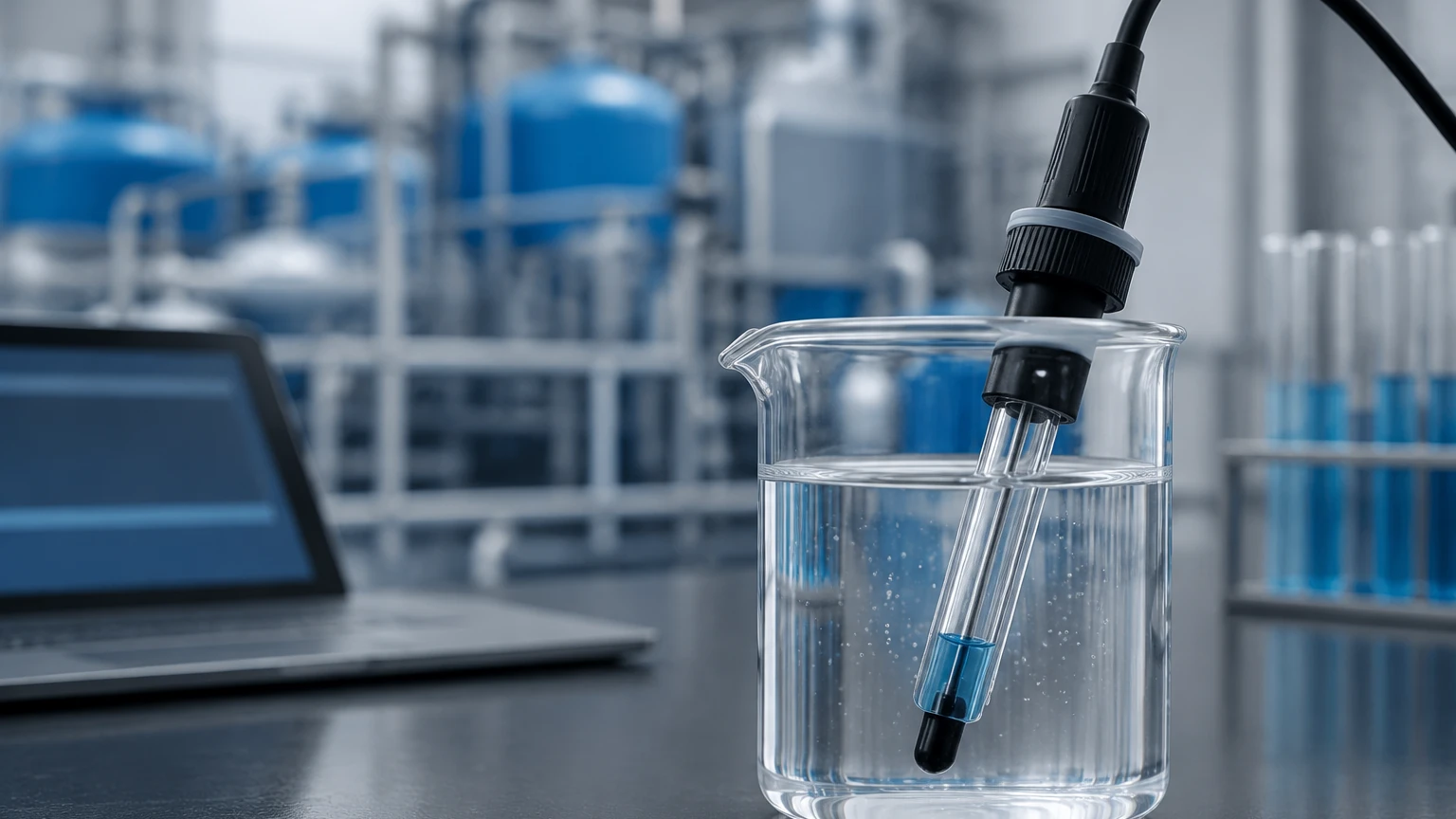
Most modern industrial pH sensors are "combination electrodes," meaning both the sensing and reference elements are housed within a single body. The sensing part consists of a special pH-sensitive glass membrane. When this membrane contacts an aqueous solution, a hydrated gel layer forms on both the inner and outer surfaces. Hydrogen ions in the process liquid exchange with ions in the gel layer, creating a charge separation and thus a potential.
The Nernst Equation
The relationship between the measured potential and the pH value is defined by the Nernst equation:
**E = E0 – (2.303 RT / nF) * pH**
Where:
* E: Measured potential (mV).
* E0: Standard potential of the electrode.
* R: Gas constant.
* T: Absolute temperature (Kelvin).
* n: Ionic charge.
* F: Faraday constant.
At a standard temperature of 25°C (298.15 K), the theoretical slope of a pH electrode is 59.16 mV per pH unit. This means that for every one-unit change in pH, the electrode output changes by approximately 59 mV. Because temperature is a variable in the equation, automatic temperature compensation (ATC) is mandatory for accurate industrial measurements where process temperatures fluctuate.
Key Components of an Industrial pH Electrode
To select the right sensor for a specific application, it is necessary to understand the internal components that dictate the electrode’s performance and lifespan.
1. The Glass Membrane
The shape and composition of the glass bulb are tailored to the application. Spherical bulbs provide a large surface area for general-purpose use, while flat-surface membranes are preferred for slurries or high-viscosity liquids where fouling is a concern. Specialized glass formulations exist for high-temperature environments or low-conductivity (pure water) applications.
2. The Reference System
The reference electrode provides a stable, known potential against which the sensing electrode is measured. It typically consists of a silver/silver chloride (Ag/AgCl) wire immersed in a potassium chloride (KCl) electrolyte. The electrolyte must make contact with the process liquid through a "junction."
3. The Junction
The junction is often the most vulnerable part of a pH electrode. Common materials include:
* Ceramic: Standard for clean water applications.
* PTFE (Teflon): Resistant to chemical attack and less prone to clogging in oily or dirty media.
* Open Junction: Used with solid electrolytes (polymer or transition-gel) for high-solids applications to prevent clogging entirely.
Selection Criteria for Industrial Applications
Choosing a pH electrode requires a thorough analysis of the process conditions. Using a standard laboratory electrode in an industrial chemical reactor will result in rapid failure. The following table provides a comparison of electrode configurations based on typical industrial requirements.
Practical Selection Table
| Application Type | Membrane Type | Junction Material | Electrolyte Type | Recommended Features |
| :— | :— | :— | :— | :— |
| General Water Treatment | Spherical Glass | Ceramic | Liquid/Gel KCl | Standard Ag/AgCl reference |
| Chemical Processing | Heavy-duty Glass | PTFE / Annular | Solid Polymer | Double junction to prevent poisoning |
| Wastewater (High Solids) | Flat Surface | Open Junction | Solid Polymer | Easy-clean design, abrasion resistance |
| High Temperature (>90°C) | High-Temp Glass | Ceramic/PTFE | Pressurized Gel | Temperature-stabilized reference system |
| Pure Water (<50 µS/cm) | Low-Resistance Glass | Large Surface Ceramic | Flowing Liquid KCl | High flow rate junction to stabilize potential |
Installation and Integration with Level Measurement
In most industrial tanks and vessels, pH measurement is one part of a multi-parameter monitoring system. For instance, in a neutralization tank, an ultrasonic level sensor or a radar level meter from the Main Page of a professional manufacturer like Welk might be used to manage the tank volume, while the pH electrode controls the chemical dosing pumps.
Installation Considerations
1. Submersion Depth: Ensure the electrode is always submerged. If the liquid level drops below the sensor, the glass membrane will dry out, leading to sluggish response or permanent damage. Integrating a low-level alarm via a hydrostatic level transmitter can protect the pH sensor.
2. Mounting Angle: Most glass electrodes must be mounted at least 15° above the horizontal plane. This ensures that the internal filling solution stays in contact with the glass bulb and that air bubbles do not get trapped inside the electrode tip.
3. Flow Velocity: In pipeline installations, the flow should be directed toward the sensing face. However, excessive velocity (typically >2 m/s) can cause "streaming potentials," which result in noisy readings.
4. Accessibility: Unlike radar level meters which are often non-contact and maintenance-free, pH electrodes require regular calibration. They should be installed in locations where they can be easily removed without draining the entire tank, often using retractable assemblies or bypass loops.
Limitations and Common Risks
Despite their widespread use, pH electrodes are consumable items with a finite lifespan. Engineers must account for the following limitations:
* Chemical Poisoning: Ions such as sulfides, cyanides, and heavy metals can react with the Ag/AgCl reference system, causing the reference potential to drift. Double-junction electrodes are the standard solution for these environments.
* Glass Dehydration: If an electrode is left in a dry tank for extended periods, the hydrated gel layer on the glass membrane disappears. While it can sometimes be rehydrated in a storage solution, the sensor's accuracy may be compromised.
* Coating and Fouling: In wastewater or oil-water separators, fats, oils, and greases (FOG) can coat the electrode. This increases the response time and can eventually insulate the sensor from the process. Automated cleaning systems (ultrasonic or water spray) are often required.
* Pressure Effects: High process pressure can force process liquid into the reference junction, contaminating the electrolyte. In these cases, pressurized reference electrodes or solid-state electrolytes are necessary.
Maintenance and Calibration Protocols
To maintain an accuracy of ±0.1 pH, a strict maintenance schedule is required.
1. Cleaning: Use a mild detergent for oils, a 5-10% HCl solution for calcium scales, or specialized protein cleaners for biological fouling. Never wipe the glass bulb with a cloth, as this creates static charges; instead, blot it dry with lint-free paper.
2. Calibration: Perform a two-point calibration using certified buffer solutions (typically pH 4.01, 7.00, and 10.01). The "zero point" (offset) should be checked at pH 7.0, and the "slope" should be checked with a second buffer. A slope below 85% of the theoretical Nernstian value indicates the electrode is nearing the end of its life.
3. Storage: Always store the electrode in a specialized storage solution (usually 3M or 4M KCl). Never store a pH electrode in deionized or distilled water, as this will leach ions out of the reference electrolyte.
Frequently Asked Questions (FAQ)
Q: How long does an industrial pH electrode typically last?
A: In clean water at ambient temperatures, an electrode may last 12 to 24 months. In harsh chemical processes or high temperatures, the lifespan can be as short as 3 to 6 months.
Q: Can I use a pH electrode to measure the pH of non-aqueous liquids?
A: Standard pH electrodes require water to function. Measuring pH in pure oils or solvents requires specialized electrodes with non-aqueous electrolytes and even then, the readings are often relative rather than absolute.
Q: Why is my pH reading drifting even after calibration?
A: Drift is often caused by a clogged junction or a contaminated reference electrolyte. If the process has high pressure or contains chemicals that react with silver, consider switching to a double-junction or a solid-polymer electrode.
Q: Does the level of the liquid in the tank affect the pH reading?
A: Indirectly, yes. If the level is too low, the sensor may not be fully submerged. Furthermore, if the tank is not well-mixed, pH stratification can occur. Using reliable level measurement instruments ensures the sensor remains at the optimal depth for a representative sample.
By carefully selecting the pH electrode based on the chemical environment and integrating it with reliable level and flow monitoring, industrial operators can achieve precise process control and extend the service life of their analytical instrumentation.