Ph Metre
Ph Metre
In the landscape of industrial process control, the measurement of liquid characteristics is as vital as the measurement of liquid volume. While level measurement instruments—such as radar, ultrasonic, and hydrostatic transmitters—provide essential data on the quantity of a medium, the ph metre provides critical data on its chemical state. For engineers and plant operators, understanding the synergy between level and analytical measurement is fundamental to maintaining safety, efficiency, and product quality in sectors ranging from wastewater treatment to chemical manufacturing.
This article serves as a technical reference for the selection, installation, and maintenance of industrial pH measurement systems, specifically tailored for B2B applications where these instruments often work alongside level measurement solutions found on our Main Page.
1. Measurement Principles of the pH Metre
The measurement of pH is essentially the measurement of the activity of hydrogen ions in an aqueous solution. The term "pH" stands for *pondus hydrogenii* (potential of hydrogen). The scale is logarithmic, ranging from 0 to 14, where 7 is neutral, values below 7 are acidic, and values above 7 are alkaline (basic).
The Electrochemical Principle
Industrial pH measurement is primarily achieved through an electrochemical sensor consisting of two main components: a glass electrode (the sensing electrode) and a reference electrode. These are often combined into a single "combination electrode."
1. The Glass Electrode: This electrode features a specialized pH-sensitive glass membrane. When immersed in a solution, a hydrated layer forms on both the inner and outer surfaces of the glass. An electrical potential develops across this membrane that is proportional to the difference in hydrogen ion concentration between the internal buffer solution and the external process liquid.
2. The Reference Electrode: The purpose of this component is to provide a stable, constant potential that is independent of the pH of the solution. It typically uses a silver/silver chloride (Ag/AgCl) system submerged in a potassium chloride (KCl) electrolyte.
3. The Nernst Equation: The relationship between the measured voltage (millivolts) and the pH value is governed by the Nernst Equation. At 25°C (298.15 K), a change of one pH unit corresponds to a change of approximately 59.16 mV. As temperature increases, the sensitivity (slope) of the electrode also increases, necessitating temperature compensation.
2. Synergy Between pH and Level Measurement
In most industrial tanks and reactors, a ph metre does not operate in isolation. It is part of a broader instrumentation suite. For example, in a chemical neutralization tank, a hydrostatic level transmitter or a non-contact radar level meter is used to monitor the volume of the effluent. Simultaneously, the pH sensor monitors the acidity.
If the level sensor indicates the tank is reaching capacity while the pH sensor indicates the liquid is still too acidic for discharge, the automated control system will trigger dosing pumps to add a caustic agent. Without accurate level data, the dosing calculation (which depends on the volume of liquid) would be incorrect, leading to chemical waste or environmental non-compliance. You can explore various level measurement technologies that integrate with these analytical processes by visiting the Main Page.
3. Selection Criteria for Industrial pH Metres
Choosing the right pH sensor requires a deep understanding of the process environment. Unlike level sensors, which can often be mounted away from the medium (in the case of radar), pH sensors are almost always in direct contact with the process fluid, making material compatibility and sensor design paramount.
Key Evaluation Factors
* Temperature Range: High temperatures accelerate the aging of the glass membrane and can cause the electrolyte to deplete faster. Standard sensors operate up to 80°C, while specialized versions can handle up to 130°C or higher for sterilization processes.
* Pressure Requirements: In pressurized pipelines or deep tanks, the reference electrode must be able to withstand the process pressure without the electrolyte being forced out or the process fluid entering the electrode (poisoning).
* Chemical Compatibility: The body of the sensor (often PVDF, Ryton, or Stainless Steel) and the O-rings (Viton or EPDM) must resist corrosion from the process medium.
* Fouling and Coating: In wastewater or slurry applications, solids can coat the glass membrane or clog the reference junction. In these cases, flat-surface electrodes or sensors with specialized junctions (like PTFE or ceramic) are preferred.
Selection Table: Industrial pH Sensor Types
| Sensor Type | Application Environment | Key Advantage | Limitation |
| :— | :— | :— | :— |
| General Purpose | Water treatment, cooling towers | Cost-effective, reliable | Not suitable for high fouling |
| High-Temperature | Chemical processing, CIP cycles | Resists glass degradation | Slower response at low temps |
| Flat Surface | Slurries, paper pulp, oily water | Self-cleaning by flow | More expensive |
| Solid Electrolyte | High pressure, harsh chemicals | No junction to clog | Shorter lifespan in some solvents |
| Pure Water | Power plant boiler feed water | High precision at low conductivity | Requires specialized flow cells |
4. Installation Considerations
The physical installation of a ph metre significantly impacts its accuracy and lifespan. Unlike a radar level meter which is usually mounted at the top of a vessel, a pH sensor must be positioned where it is constantly submerged and where the flow represents the bulk of the liquid.
Mounting Orientation
Industrial pH electrodes should never be installed horizontally or upside down. The internal buffer solution must stay in contact with the glass membrane. The standard rule is to install the sensor at least 15° above the horizontal plane to ensure that any air bubbles inside the electrode move away from the sensing tip.
Flow and Velocity
* In-line Installation: If the sensor is installed in a pipe, it should be placed in a location with steady flow. Excessively high velocity (above 2 m/s) can cause "streaming potentials" (electrical noise) and physical wear on the glass.
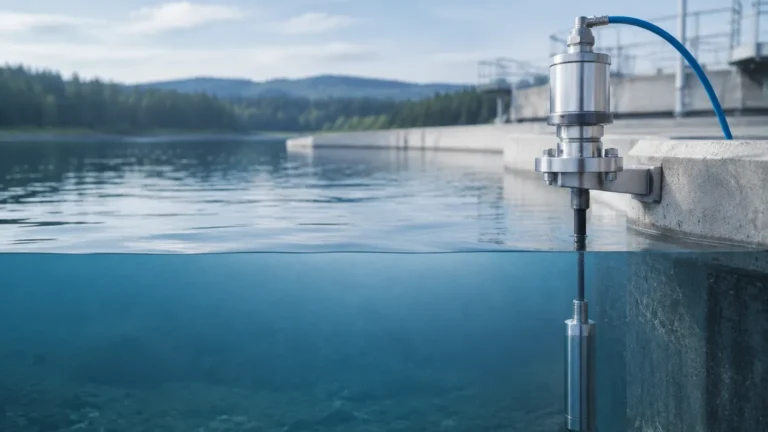
* Submersion Installation: In open channels or tanks, the sensor is often attached to a mounting pipe. It must be positioned deep enough to remain submerged even when the liquid level drops to its minimum operating point, as determined by the level transmitter.
Grounding and Interference
Because pH sensors produce a high-impedance millivolt signal, they are susceptible to electrical interference. Proper grounding of the process liquid and the use of shielded cables are mandatory. Cables should be kept as short as possible, or a pre-amplifier should be used if the distance between the sensor and the transmitter exceeds 10–15 meters.

5. Maintenance and Calibration Protocols
A ph metre is a consumable item. Unlike a magnetic level gauge that might last for decades with minimal intervention, a pH electrode naturally degrades over time.
Calibration
Calibration must be performed regularly using standard buffer solutions (typically pH 4.0, 7.0, and 10.0).
1. Two-Point Calibration: This is the industry standard. The sensor is placed in a neutral buffer (pH 7.0) to establish the "zero point" (offset) and then in an acidic or alkaline buffer to establish the "slope."
2. Frequency: In clean water applications, calibration might be monthly. In harsh chemical processes, it may be required weekly or even daily.
Cleaning
If the sensor becomes coated, it must be cleaned before calibration.
* Grease/Oils: Use a mild detergent or isopropyl alcohol.
* Scale/Mineral Deposits: Use a 5% Hydrochloric acid (HCl) soak.
* Proteins: Use a mixture of HCl and pepsin.
6. Limitations and Common Risks
Understanding the limitations of pH technology prevents operational failures:
1. Dehydration: If a pH electrode dries out, the hydrated layer on the glass membrane is damaged. Sensors must always be kept wet, even during storage, using a storage solution (usually 3M KCl).
2. Poisoning: Certain chemicals, such as heavy metals, cyanides, or sulfides, can react with the silver ions in the reference electrode, clogging the junction and rendering the sensor useless.
3. Sodium Error: At very high pH levels (pH 12+), the glass membrane may respond to sodium ions instead of hydrogen ions, leading to a false low reading. Specialized "low sodium error" glass is required for these applications.
4. Glass Fragility: Despite advancements, the sensing element is still glass. It can be broken by large solids in the flow or by cavitation in the piping.
7. Frequently Asked Questions (FAQs)
Q: How long does an industrial pH sensor last?
A: In mild conditions, a sensor may last 12 to 24 months. In high-temperature or highly corrosive environments, the lifespan may be reduced to 3 to 6 months.
Q: Can I use a pH metre in non-aqueous solutions?
A: Standard pH electrodes require water to function. While measurements can be taken in some mixed solvents (like ethanol/water), specialized electrodes and calibration procedures are required for non-aqueous applications.
Q: Why does my pH reading drift?
A: Drifting is usually caused by a clogged or contaminated reference junction, or by temperature fluctuations if automatic temperature compensation (ATC) is not functioning correctly.
Q: How does pH affect level measurement?
A: While pH doesn't directly affect the level, the chemicals used to adjust pH can change the density or conductivity of the liquid, which may impact the calibration of hydrostatic or conductive level sensors. This is why non-contact radar (available on our Main Page) is often preferred in chemical dosing tanks, as it is unaffected by these chemical changes.
Conclusion
The ph metre is an indispensable tool for industrial process monitoring. By understanding the electrochemical principles and the physical requirements of the sensor, engineers can ensure accurate data collection. When integrated with robust level measurement systems, such as those provided by Welk, pH monitoring enables a comprehensive approach to automation that protects equipment, ensures regulatory compliance, and optimizes chemical usage. For more information on the level measurement technologies that support these industrial processes, please refer to our Main Page.