Ph Probe Maintenance
Ph Probe Maintenance
In industrial process control, pH measurement is a critical parameter for ensuring product quality, protecting equipment from corrosion, and meeting environmental discharge regulations. However, unlike many solid-state sensors used for level or pressure measurement, pH probes are electrochemical devices that interact directly with the process medium. This interaction leads to inevitable wear, fouling, and depletion of internal electrolytes. Effective ph probe maintenance is therefore not merely a recommendation but a technical necessity to ensure measurement accuracy and extend the operational lifespan of the sensor.
For engineers managing complex systems, integrating pH monitoring with other process variables—such as those found on the Main Page of industrial instrumentation portfolios—requires a deep understanding of how these sensors function and how to keep them within calibration limits.
Understanding pH Measurement Principles
Before detailing maintenance protocols, it is essential to understand the underlying physics of a pH probe. Most industrial pH sensors utilize a potentiometric measurement principle involving a glass electrode and a reference electrode.
The Glass Electrode
The sensing element is a thin, pH-sensitive glass membrane. When immersed in a liquid, a hydrated layer forms on both the inside and outside of the glass. The hydrogen ion activity in the process liquid creates a potential difference across this membrane compared to the stable internal buffer solution. This potential is governed by the Nernst Equation, which dictates that for every pH unit change, the millivolt (mV) output changes by approximately 59.16 mV at 25°C.
The Reference Electrode
To measure the potential generated by the glass electrode, a stable reference point is required. The reference electrode provides this by maintaining a constant potential, usually through a silver/silver chloride (Ag/AgCl) element immersed in a concentrated potassium chloride (KCl) electrolyte. The electrical circuit is completed via a junction—a porous ceramic or Teflon plug that allows a small amount of electrolyte to flow into the process medium.
Combined Sensors
Modern industrial applications typically use "combination probes" where both the glass and reference electrodes are housed in a single body. These often include an integrated temperature sensor (such as a Pt100 or Pt1000) to provide Automatic Temperature Compensation (ATC), as pH values are highly temperature-dependent.
The Importance of Regular pH Probe Maintenance
The primary cause of pH measurement failure is a lack of maintenance. Over time, the reference junction can become clogged with solids, or the glass membrane can become coated with oils, scales, or biological growth. These issues lead to several problems:
1. Drift: The baseline reading shifts away from the true value.
2. Slow Response Time: The sensor takes longer to react to process changes, which can destabilize control loops.
3. Shortened Lifespan: Neglected probes may suffer permanent damage to the glass membrane or reference junction.
By implementing a structured ph probe maintenance schedule, facilities can reduce the Total Cost of Ownership (TCO) and avoid costly process deviations.
Step-by-Step Maintenance Procedures
Maintenance should be performed on a schedule determined by the severity of the process conditions. In clean water applications, monthly checks may suffice, whereas in heavy chemical processing, weekly or even daily attention may be required.
1. Cleaning the Probe
Cleaning is the first step in any maintenance routine. The method depends on the type of contamination:
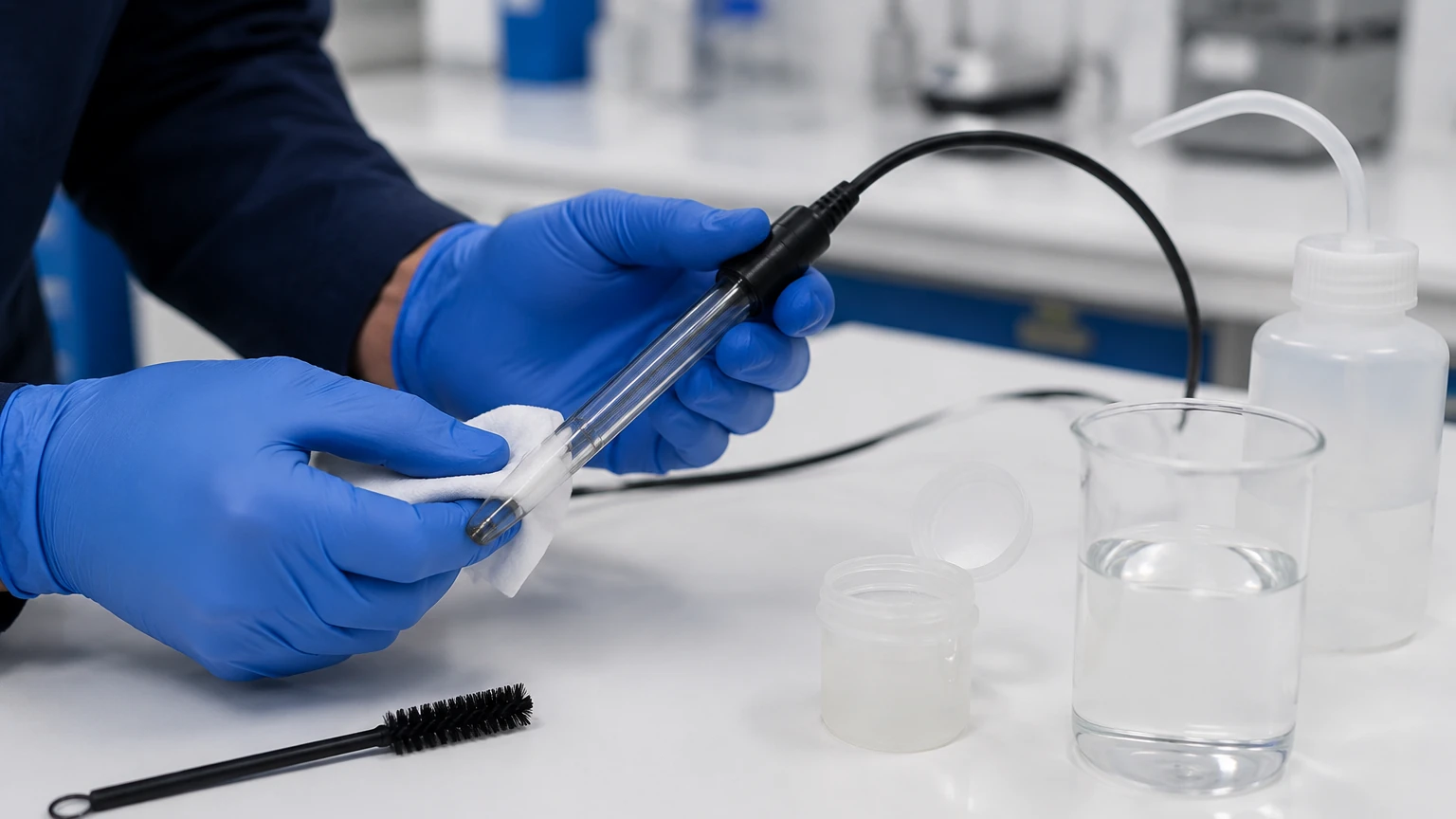
* General Debris: Rinse with deionized (DI) water and wipe gently with a soft, lint-free cloth. Never scrub the glass membrane, as this can create static charges or scratches.
* Inorganic Scale (Calcium/Lime): Soak the probe in a 5% to 10% hydrochloric acid (HCl) solution for 5 to 10 minutes.
* Oils and Greases: Use a mild detergent or a specialized surfactant solution. In extreme cases, a short soak in ethanol or isopropyl alcohol may be used, followed by thorough rinsing.
* Proteins: Soak in a solution of pepsin in 0.1 M HCl for 30 minutes.
* Biological Growth: Use a dilute bleach solution (5% sodium hypochlorite).
After any chemical cleaning, the probe must be rinsed thoroughly with DI water and allowed to soak in storage solution (usually 3M or 4M KCl) for at least 30 minutes to rehydrate the glass membrane.
2. Inspection
Visually inspect the probe for cracks in the glass, air bubbles in the electrolyte, or discoloration of the reference junction. If the internal silver wire appears stripped of its white AgCl coating, the probe is likely nearing the end of its life.
3. Rejuvenation (Etching)
If a probe remains sluggish after cleaning, a last-resort rejuvenation can be attempted by soaking the tip in a 2% ammonium bifluoride solution for one minute. This slightly etches the glass to expose a fresh surface. This process should only be performed by experienced technicians as it thins the glass membrane.
Calibration Protocols for Industrial Probes
Calibration adjusts the transmitter to match the current performance of the probe. It should always follow cleaning.
Two-Point Calibration
This is the standard industrial method. It involves two buffer solutions, typically pH 7.0 (the isopotential point) and either pH 4.0 (for acidic processes) or pH 10.0 (for alkaline processes).
1. Zero Point (Offset): Place the cleaned probe in pH 7.0 buffer. The theoretical output is 0 mV. Most transmitters allow an offset of ±30 mV. If the offset exceeds this, the probe may be contaminated or exhausted.
2. Slope (Efficiency): Place the probe in the second buffer (e.g., pH 4.0). The transmitter calculates the "slope," which should be between 85% and 105% of the theoretical Nernstian value (59.16 mV/pH). A slope below 80% usually indicates the probe needs replacement.
Selection Criteria and Application Tables
Choosing the right probe for the environment simplifies ph probe maintenance. Different junction types and glass formulations are suited to specific industrial challenges.
| Feature | Porous Ceramic Junction | Teflon (PTFE) Junction | Open Aperture / Solid Polymer |
| :— | :— | :— | :— |
| Best For | Clean water, general chemicals | Wastewater, oily liquids | Slurries, high solids, pigments |
| Maintenance Level | Low in clean media | Moderate; resists fouling | High; requires frequent cleaning |
| Pressure Limit | Up to 6 bar (87 psi) | Up to 10 bar (145 psi) | Often limited to atmospheric |
| Clogging Risk | High in presence of solids | Medium | Very Low |
| Electrolyte Type | Liquid or Gel | Gel or Solid | Solid Polymer |
Installation Best Practices
The physical installation of a pH probe significantly impacts the frequency of ph probe maintenance. Probes used in conjunction with level measurement systems in tanks, such as those detailed on the Main Page, must be accessible for service.
1. Mounting Angle: Probes must be installed at least 15° above the horizontal. This ensures that the internal electrolyte stays in contact with the glass membrane and prevents air bubbles from being trapped at the sensor tip.
2. Flow Velocity: In pipe installations, the flow should be between 0.5 m/s and 2 m/s. Too slow, and solids will settle on the probe; too fast, and the glass membrane may suffer mechanical wear or "streaming potentials" that cause noise.
3. Submersion Depth: Ensure the probe is always submerged. If a tank is emptied (monitored by a radar or ultrasonic level meter), the pH probe must be retracted or kept wet using a wet-storage boot. A dry pH probe will fail quickly.
4. Cable Management: pH signals are high-impedance (often >1000 MΩ). Use specialized low-noise coaxial cables and keep them away from high-voltage power lines to prevent electromagnetic interference.
Limitations and Common Troubleshooting
Even with rigorous ph probe maintenance, certain conditions limit the effectiveness of these sensors:
* High Temperature: Every 10°C increase in temperature roughly halves the lifespan of a pH probe due to accelerated glass dissolution and electrolyte depletion.
* Hydrofluoric Acid (HF): HF attacks glass. In processes containing even trace amounts of HF, specialized antimony or non-glass pH sensors must be used.
* Pure Water Paradox: In ultra-pure water (low conductivity), the reference junction potential becomes unstable. Specialized "low-conductivity" probes with high electrolyte flow rates are required.
* Sodium Error: In highly alkaline solutions (pH > 12) with high sodium concentrations, the probe may read lower than the actual pH because the glass membrane starts responding to sodium ions instead of hydrogen ions.
Troubleshooting Guide
* Unstable Readings: Check for ground loops or a clogged reference junction. Ensure the cable is dry and the connectors are clean.
* Slow Response: Usually indicates a coated glass membrane or a depleted reference junction. Perform a deep clean.
* Constant pH 7 Reading: This often indicates a cracked glass membrane, causing an internal short circuit between the sensing and reference elements.
Frequently Asked Questions (FAQ)
Q: How should I store a pH probe when it is not in use?
A: Always store the probe in a dedicated storage solution (3M KCl). Never store it in deionized or distilled water, as this will leach ions out of the glass membrane and the reference electrolyte, rendering the probe useless.
Q: Can I use a pH probe in pressurized pipes?
A: Yes, but you must ensure the probe is rated for the process pressure. Typically, industrial probes are rated up to 6 or 10 bar. For higher pressures, pressure-compensated reference systems are required to prevent process fluid from backing up into the probe.
Q: How often should I replace my pH probe?
A: In mild, room-temperature applications, a probe may last 12 to 24 months. In harsh chemical environments or high temperatures, the lifespan may be as short as 3 to 6 months. Regular monitoring of the slope and offset during calibration will provide an early warning of failure.
Q: Is it necessary to calibrate after every cleaning?
A: Yes. Cleaning can slightly alter the surface chemistry of the glass membrane. Calibrating after cleaning ensures that the transmitter is synchronized with the current state of the sensor.
Conclusion
Successful pH monitoring in industrial environments depends on a proactive approach to ph probe maintenance. By understanding the electrochemical nature of the sensor and implementing standardized cleaning and calibration routines, engineers can ensure high data integrity. When integrated into a broader process automation strategy—alongside reliable level measurement solutions found on the Main Page—accurate pH data becomes a powerful tool for process optimization and safety. Always match the probe selection to the specific chemical and physical demands of the application to minimize maintenance overhead and maximize sensor longevity.