Keller Level Rat
Keller Level Rat
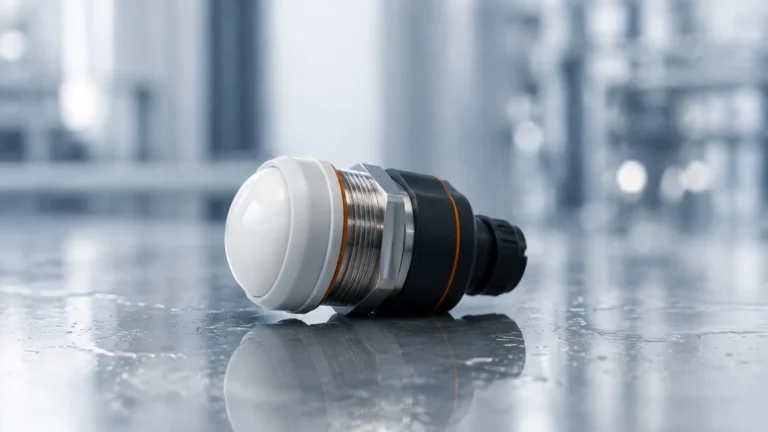
In the demanding world of industrial automation and wastewater management, accurate level measurement is a cornerstone of operational efficiency. Among the specialized instruments designed for these harsh environments, the Keller LevelRat stands out as a purpose-built hydrostatic level transmitter. Specifically engineered to handle liquids with high solids content, such as sewage, slurries, and lift station fluids, this device addresses the common failure points of standard level sensors.
This article provides a comprehensive technical overview of the Keller LevelRat, its underlying measurement principles, selection criteria, and practical installation guidance for engineering professionals seeking reliable level measurement solutions.
Understanding Hydrostatic Level Measurement Principles
To appreciate the design of the Keller LevelRat, one must first understand the physics of hydrostatic level measurement. This method relies on the relationship between the pressure exerted by a liquid column and the height of that column.
The fundamental equation used is:
P = ρ · g · h
Where:
* P is the hydrostatic pressure.
* ρ (rho) is the density of the liquid.
* g is the acceleration due to gravity (approximately 9.81 m/s²).
* h is the height of the liquid above the sensor diaphragm.
In practical applications, a submersible transmitter like the LevelRat is lowered to a fixed depth. The sensor measures the pressure exerted by the liquid above it. Since gravity is constant and the density of the fluid is usually known, the height (level) can be calculated directly from the pressure reading.
Gauge vs. Absolute Pressure
For open tanks, pits, and sumps, the sensor must account for changes in atmospheric pressure. The Keller LevelRat typically utilizes a "vented" or "gauge" pressure design. A small vent tube runs through the length of the cable, allowing the internal side of the sensor diaphragm to be exposed to current atmospheric pressure. This ensures that the sensor only measures the pressure of the liquid column, effectively canceling out any fluctuations caused by weather systems or altitude.
Design Features of the Keller LevelRat
The Keller LevelRat is distinguished by its unique mechanical design, which is optimized for "dirty" applications where clogging is a primary concern. Standard hydrostatic sensors often use small, recessed diaphragms that can easily become trapped with debris, grease, or silt.
The Non-Clogging Diaphragm
The most notable feature of the LevelRat is its large, 2-inch (approx. 50 mm) diameter flush diaphragm. This design eliminates the cavities and small ports found in traditional sensors. By providing a flat, wide surface, the sensor prevents the accumulation of solids, making it ideal for wastewater lift stations where "grease balls" and fibrous materials are common.
Material Construction
To withstand corrosive environments, the LevelRat is available in several high-grade materials:
* Housing: Typically 316L Stainless Steel or specialized plastics for chemical resistance.
* Diaphragm: Options include 316L Stainless Steel or Kynar (PVDF). Kynar is particularly effective in environments with harsh chemicals or where non-stick properties are required to prevent buildup.
* Sealings: Viton or other chemically resistant elastomers.
Signal Output and Electronics
The device usually provides a standard 4-20mA analog output, which is the industry standard for long-distance signal transmission in industrial plants. This 2-wire loop-powered configuration is robust against electrical noise. Some versions may also offer digital interfaces like RS485 (Modbus), allowing for more detailed diagnostics and multi-drop configurations.
Selection Criteria for Wastewater Level Sensors
When selecting a level transmitter for a project, engineers must evaluate several technical parameters. The following table outlines the typical specifications and selection factors for a Keller LevelRat-style sensor.
| Parameter | Specification / Consideration | Metric Units | Imperial Units |
| :— | :— | :— | :— |
| Pressure Range | Custom ranges available | 0 to 10 bar | 0 to 150 psi |
| Level Range | Depth of the fluid | 0 to 100 m | 0 to 328 ft |
| Accuracy | Combined linearity, hysteresis, repeatability | ±0.1% to ±0.5% FS | ±0.1% to ±0.5% FS |
| Operating Temp | Temperature of the medium | -20°C to 80°C | -4°F to 176°F |
| Diaphragm Size | Flush mount diameter | 50.8 mm | 2.0 inches |
| Cable Material | Polyethylene (PE) or Hytrel | Various lengths | Various lengths |
Key Evaluation Questions
Before finalizing a selection from the Main Page of a supplier's catalog, project managers should confirm:
1. Fluid Density: Is the liquid density constant? If the density varies significantly (e.g., in heavy slurries), the hydrostatic reading will require compensation.
2. Chemical Compatibility: Does the fluid contain acids or bases that could degrade 316L stainless steel? If so, Kynar diaphragms are preferred.
3. Cable Length: The cable must be long enough to reach the bottom of the vessel while leaving enough slack for a secure connection at the junction box.
Installation Guidelines and Best Practices
Proper installation is critical to the longevity and accuracy of the Keller LevelRat. Even the most robust sensor can fail if improperly deployed.
Mounting and Positioning
* Avoid Turbulence: Do not install the sensor directly under an inflow pipe or near an agitator. Rapidly moving fluid can create localized pressure changes (Bernoulli effect) that lead to inaccurate readings.
* Stilling Wells: In high-turbulence areas, the use of a stilling well (a vertical pipe with holes) is recommended. This protects the sensor from physical impact and stabilizes the fluid around the diaphragm.
* Suspension: The sensor should be suspended by its cable or mounted via a conduit. Ensure the cable is secured with a specialized cable hanger or strain-relief clamp to prevent the internal vent tube from being pinched or the wires from stretching.
Venting and Moisture Protection
Since the LevelRat uses a vented cable, the end of the cable (at the junction box) must be protected from moisture. If water enters the vent tube, it can reach the internal electronics or create a "water slug" that blocks atmospheric pressure compensation.
* Desiccant Bellows: It is highly recommended to use a desiccant cartridge or a bellows system at the termination point. This allows the sensor to "breathe" while keeping moisture out.
* Junction Box Placement: Ensure the junction box is rated for the environment (e.g., IP66 or NEMA 4X) and located above any potential flood levels.
Comparing Hydrostatic Sensors with Ultrasonic and Radar Technologies
While the Keller LevelRat is an excellent choice for many applications, it is important to compare it with other technologies available on the Main Page of industrial instrument providers.
Hydrostatic (LevelRat)
* Pros: Direct contact measurement, unaffected by foam, steam, or surface turbulence. Excellent for deep wells and narrow lift stations.
* Cons: Subject to errors if fluid density changes. Requires immersion in the fluid.
Ultrasonic Level Sensors
* Pros: Non-contact measurement, easy to install above the fluid.
* Cons: Can be fooled by foam, heavy vapor, or temperature gradients in the air gap. Not suitable for vacuum or high-pressure tanks.
Radar Level Meters
* Pros: Non-contact, extremely accurate, unaffected by vapors, foam, or dust. Works well in high-pressure and high-temperature environments.
* Cons: Generally higher initial cost than hydrostatic sensors. May require more complex configuration.
For most wastewater lift stations, the hydrostatic approach of the LevelRat is preferred because it ignores the thick layers of foam and grease that often cause ultrasonic sensors to fail.
Maintenance and Troubleshooting
The Keller LevelRat is designed for low maintenance, but periodic checks ensure long-term reliability.
1. Diaphragm Inspection: Periodically lift the sensor to inspect the diaphragm for physical damage or extreme buildup. While the flush design minimizes clogging, a layer of dried sludge or mineral scale can eventually affect sensitivity.
2. Cable Integrity: Inspect the cable jacket for cuts or abrasions, especially in environments where rodents or mechanical equipment may be present.
3. Zero-Point Calibration: Over time, all sensors experience slight "drift." It is good practice to check the sensor's zero-point (reading in open air) annually and adjust the scaling in the PLC or controller if necessary.
4. Desiccant Replacement: If using a desiccant filter for the vent tube, check the color-change indicator regularly. Replace the desiccant once it becomes saturated to prevent moisture ingress.
Frequently Asked Questions
Q: Can the Keller LevelRat be used in sea water?
A: Yes, but it is essential to specify a version with compatible materials, such as a Kynar diaphragm and potentially a titanium housing, to prevent galvanic corrosion.
Q: What is the maximum depth the LevelRat can measure?
A: While standard models cover common municipal depths (up to 30 meters or 100 feet), custom versions can be engineered for much higher pressures, exceeding 100 meters (328 feet) of water column.
Q: How do I handle the cable if it is too long?
A: Do not cut the cable unless you have the proper tools to reseal the vent tube and terminate the wires. It is better to coil the excess cable loosely (ensuring no sharp bends) and secure it in the junction box.
Q: Is the LevelRat intrinsically safe?
A: Keller offers versions of the LevelRat that are rated for hazardous locations (ATEX/IECEx/FM). Always verify the specific certification on the product label before installing in a classified zone like a sewer manhole where methane may be present.
Conclusion
The Keller LevelRat represents a specialized solution for some of the most difficult level measurement tasks in the water and process industries. By utilizing a large, flush-mount diaphragm and a robust hydrostatic principle, it overcomes the clogging issues that plague traditional submersible sensors. When properly selected and installed, it provides a reliable, low-maintenance data point for critical control systems. For those exploring a wider range of measurement technologies, including radar and ultrasonic options, visiting the Main Page of a professional manufacturer like Welk can provide additional insights into the best tool for a specific industrial application.