Pmd55
Pmd55
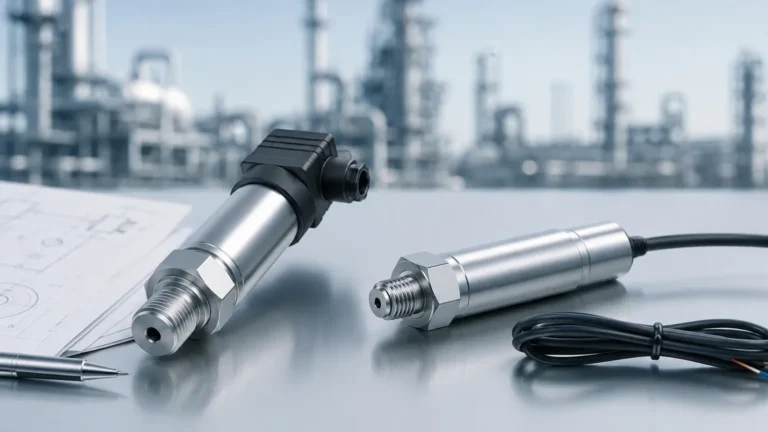
In the landscape of industrial process automation, differential pressure (DP) measurement remains a cornerstone for determining level, flow, and pressure. Among the specialized instruments utilized for these tasks, the pmd55 represents a standard in piezoresistive sensor technology. Designed to handle medium to high-pressure environments, this type of transmitter is essential for industries ranging from chemical processing to water treatment. Understanding the operational mechanics, application nuances, and selection criteria for instruments like the pmd55 is vital for engineers seeking to optimize vessel monitoring and process safety.
Measurement Principles of Differential Pressure
Before evaluating specific hardware like the pmd55, it is fundamental to understand the physics of differential pressure measurement. Unlike standard pressure sensors that measure force relative to atmospheric pressure (gauge) or a vacuum (absolute), a DP transmitter measures the difference between two distinct points.
Hydrostatic Level Measurement in Pressurized Tanks
In an open tank, the level can be determined simply by measuring the hydrostatic pressure at the bottom. However, in closed, pressurized vessels—common in the oil and gas or chemical sectors—the gas pressure above the liquid adds to the total pressure at the bottom. To isolate the pressure exerted solely by the liquid column, a DP transmitter is used.
1. High-Pressure Side (HP): Connected to the bottom of the tank, sensing the combined pressure of the liquid height and the gas overhead.
2. Low-Pressure Side (LP): Connected to the top of the tank, sensing only the gas overhead pressure.
3. The Calculation: The transmitter subtracts the LP from the HP. The resulting value is the hydrostatic pressure of the liquid, which is directly proportional to the level according to the formula: *P = ρ * g * h* (where ρ is density, g is gravity, and h is height).
The Piezoresistive Sensor Mechanism
The pmd55 typically employs a piezoresistive sensor. This involves a measuring diaphragm that deflects under pressure. This deflection changes the electrical resistance of the strain gauges integrated into the diaphragm. The transmitter's electronics then convert this change into a standardized 4-20mA or digital signal (such as HART or PROFIBUS). This technology is favored for its long-term stability and resistance to pressure peaks.
Technical Specifications and Features of the pmd55
The pmd55 is engineered for versatility and durability in demanding B2B environments. Its design focuses on modularity and precision, ensuring that it can be adapted to various process connections and environmental conditions.
Sensor and Diaphragm Materials
Material compatibility is critical in level measurement. The pmd55 often features metallic diaphragms made from 316L stainless steel, Hastelloy C, or Monel. These materials ensure that the sensor can withstand corrosive chemicals without degrading. The housing is typically constructed from aluminum or stainless steel, providing high ingress protection (IP66/67 or higher).
Performance Characteristics
* Accuracy: High-end DP transmitters like the pmd55 offer standard accuracy of ±0.075%, with ultra-high accuracy options reaching ±0.05% of the set span.
* Turn-down Ratio: This refers to the range over which the device can maintain its accuracy. A high turn-down ratio allows a single device to be calibrated for various measurement ranges, reducing the need for extensive spare parts inventory.
* Stability: Long-term stability is a hallmark of this series, often rated at less than 0.05% of the upper range limit per year, minimizing the frequency of required re-calibrations.
For a broader look at how these specifications compare with other industrial level measurement technologies, engineers can consult the Main Page for comprehensive technical data and alternative sensor types.
Applications in Level and Flow Measurement
While the pmd55 is frequently discussed in the context of level, its differential pressure capabilities make it a multi-functional tool in industrial automation.
Closed Vessel Level Monitoring
In industries such as pharmaceuticals or food and beverage, maintaining sterile environments often requires pressurized tanks. The pmd55 provides reliable level data even when the internal tank pressure fluctuates significantly. It is also used for interface measurement, where it detects the boundary between two immiscible liquids of different densities.
Flow Measurement via Primary Elements
When paired with a primary element such as an orifice plate, Venturi tube, or Pitot tube, the pmd55 functions as a flow meter. By measuring the pressure drop across a restriction in the pipe, the square root of the differential pressure is calculated to determine the volumetric or mass flow rate of liquids, gases, or steam.
Filter Monitoring
In water treatment and large-scale industrial cooling systems, DP transmitters monitor the health of filtration units. By measuring the pressure before and after a filter, the pmd55 can alert operators to clogging (high DP), triggering automated backwash cycles or manual maintenance.
Selection Criteria for DP Transmitters
Choosing the right instrument requires a detailed analysis of the process environment. Engineers should evaluate the following factors before specifying a pmd55 or similar DP transmitter:
| Feature | Consideration | Impact on Selection |
| :— | :— | :— |
| Pressure Range | Maximum Operating Pressure (MWP) | Must exceed the highest possible process pressure to avoid sensor damage. |
| Temperature | Process and Ambient Temperature | High temperatures may require remote seals or cooling fins to protect the electronics. |
| Media Type | Corrosive, Viscous, or Slurry | Determines the diaphragm material and whether a flush mount is necessary. |
| Output Protocol | HART, Foundation Fieldbus, PROFIBUS | Must be compatible with the existing plant control system (PLC/DCS). |
| Certifications | ATEX, SIL2/3, FDA | Required for hazardous areas, safety instrumented systems, or food-grade applications. |

Installation and Engineering Considerations
The accuracy of a pmd55 is heavily dependent on proper installation. Even the most precise instrument will provide erroneous data if the impulse lines or process connections are poorly designed.
Impulse Line Configuration
Impulse lines (the small-diameter pipes connecting the process to the transmitter) must be installed with a specific slope to prevent gas bubbles (in liquid lines) or condensate (in gas lines) from being trapped.
* Wet Legs: Used when the gas above the liquid might condense. The LP impulse line is filled with a reference liquid to provide a constant head pressure.
* Dry Legs: Used when the gas is non-condensable. The LP line remains filled with gas.
Manifold Valves
A 3-valve or 5-valve manifold is essential for the pmd55. These manifolds allow the operator to isolate the transmitter from the process, equalize the pressure for zero-point calibration, and bleed off trapped air or fluid without shutting down the entire process line.
Diaphragm Seals
In applications involving highly viscous fluids, extreme temperatures, or hygienic requirements, remote diaphragm seals are used. These seals use a capillary system filled with a transmission fluid (like silicone oil) to transfer the pressure from the process to the pmd55 sensor, keeping the instrument isolated from harsh conditions.
Limitations and Potential Risks
While the pmd55 is a robust solution, it is not universal. Engineers must be aware of its limitations:
1. Density Sensitivity: Since DP measurement relies on the density of the fluid, any change in temperature or concentration that alters the fluid's density will lead to level errors unless compensated for in the control system.
2. Maintenance of Impulse Lines: Impulse lines are prone to plugging or leaking. In applications with heavy solids or crystallization, non-contact technologies like radar may be more appropriate.
3. Complex Calibration: Setting up wet or dry legs requires careful calculation of offsets and suppression/elevation values, which can be more complex than the "plug-and-play" nature of some ultrasonic or radar sensors.
To explore technologies that bypass these impulse line issues, such as non-contact radar or ultrasonic sensors, you can visit the Main Page for a comparison of modern alternatives.
Frequently Asked Questions (FAQs)
Q: How often should a pmd55 be calibrated?
A: While many modern DP transmitters offer high stability, an annual calibration check is recommended for critical processes. In safety-related applications (SIL), the proof-test interval is defined by the safety manual.
Q: Can the pmd55 be used for steam applications?
A: Yes, provided that a siphon or diaphragm seal is used to protect the sensor from the high temperature of the steam. Condensate pots are also commonly used to ensure the impulse lines remain filled with water.
Q: What is the difference between the pmd55 and a standard hydrostatic transmitter?
A: A standard hydrostatic transmitter (like a submersible probe) only has one pressure port and is typically used for vented, open tanks. The pmd55 has two ports, allowing it to subtract overhead pressure in closed tanks.
Q: What happens if the LP and HP lines are reversed?
A: Most modern digital transmitters like the pmd55 allow you to invert the signal via software. However, physically, the transmitter will show a negative pressure reading if the high-pressure source is connected to the low-pressure port.
Conclusion
The pmd55 remains a vital instrument for industrial pressure and level measurement, offering a balance of precision, durability, and versatility. By understanding the underlying piezoresistive principles and adhering to rigorous installation standards, process engineers can ensure reliable data for their control systems. Whether monitoring a high-pressure chemical reactor or a simple water filtration system, selecting the correct configuration of diaphragm materials and process connections is the key to long-term operational success. For more information on specialized level measurement solutions and to view a full range of industrial instrumentation, visit the Main Page.