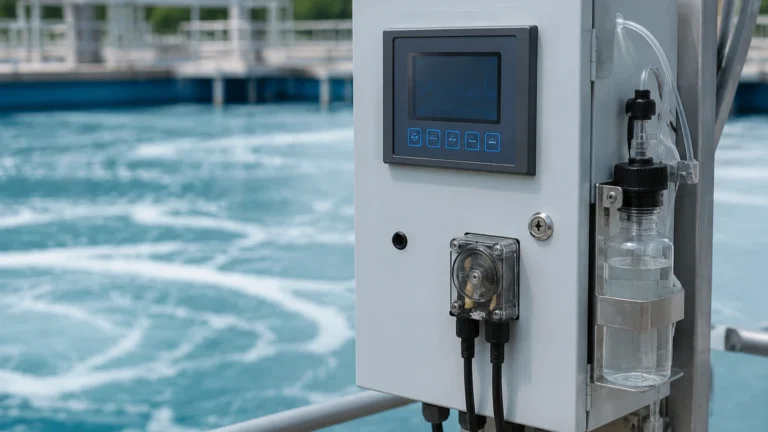
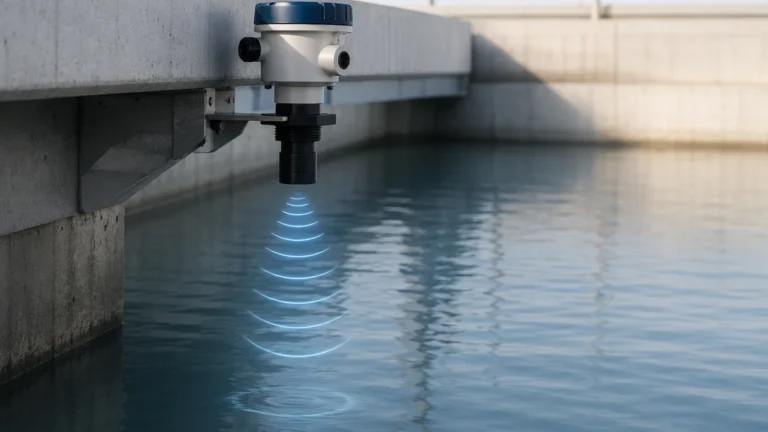
Pmp51b
Pmp51b
In the landscape of industrial process automation, the Pmp51b represents a significant evolution in digital pressure measurement technology. As a part of the latest generation of pressure transmitters, specifically the Cerabar series, the Pmp51b is designed to address the rigorous demands of the chemical, oil and gas, and power industries. This instrument is primarily utilized for hydrostatic level measurement in liquids, as well as for monitoring process pressure and vacuum.
Understanding the technical nuances, application boundaries, and integration requirements of the Pmp51b is essential for instrumentation engineers tasked with maintaining high levels of process safety and operational efficiency. This guide provides a factual overview of the technology, its measurement principles, and the criteria for successful deployment in industrial environments.
Understanding the Hydrostatic Measurement Principle
The Pmp51b operates on the principle of hydrostatic pressure measurement. In level applications, this technique relies on the physical law that the pressure exerted by a static liquid column is directly proportional to the height of the liquid, its density, and the force of gravity.
The mathematical representation is $P = \rho \cdot g \cdot h$, where:
* P is the hydrostatic pressure.
* ρ (rho) is the density of the medium.
* g is the acceleration due to gravity.
* h is the height of the liquid column.
Unlike ultrasonic or radar level meters that use Time-of-Flight (ToF) principles, the Pmp51b uses a metallic process diaphragm to sense the mechanical force of the liquid. The internal sensor converts this physical deflection into an electrical signal. In the Pmp51b, this is typically achieved through a piezoresistive sensor cell. Because the device measures the pressure at a specific point (usually the bottom of a tank), it is highly effective for measuring levels in vessels where internal obstructions or foam might interfere with non-contact methods.
Technical Specifications and Evaluation Criteria
When evaluating the Pmp51b for a specific process, engineers must consider several technical parameters that define its performance and compatibility. The device is characterized by its robust construction and high-precision electronics.
Sensor Material and Diaphragm
The Pmp51b features a metal diaphragm, typically constructed from 316L stainless steel or exotic alloys like Alloy C (Hastelloy). This makes it suitable for high-pressure applications and environments where a ceramic diaphragm might be too brittle or susceptible to hydrogen permeation. The choice of material is critical for ensuring chemical compatibility with the process medium.
Accuracy and Long-term Stability
Modern digital transmitters like the Pmp51b offer high reference accuracy, often up to ±0.055% or even ±0.035% in platinum versions. Furthermore, long-term stability is a key metric, with many units guaranteed to remain within specification for up to 10 years. This reduces the frequency of manual calibration cycles, lowering the total cost of ownership.
Communication and Integration
The Pmp51b supports standard industrial communication protocols, including HART, PROFIBUS PA, and FOUNDATION Fieldbus. A notable feature of the newer generation is the integration of Bluetooth technology, allowing for wireless configuration and diagnostics via mobile applications. This is particularly useful in hazardous areas or locations where physical access to the transmitter is difficult.
Comparative Analysis: Hydrostatic vs. Other Level Technologies
Selecting the right level measurement technology requires a comparison of the Pmp51b’s hydrostatic approach against other common methods like radar or ultrasonic sensors. Each technology has distinct advantages depending on the vessel geometry and fluid properties.
| Feature | Pmp51b (Hydrostatic) | Radar (Non-contact) | Ultrasonic (Non-contact) |
| :— | :— | :— | :— |
| Measurement Principle | Pressure at bottom | Microwave reflection | Sound wave reflection |
| Effect of Foam | Negligible | Can attenuate signal | Highly disruptive |
| Density Sensitivity | High (Requires constant density) | None | None |
| Installation | Wetted (Requires process port) | Non-wetted or top-mounted | Top-mounted |
| Internal Obstructions | No impact | May cause false echoes | May cause false echoes |
| Vacuum Performance | Excellent (with proper seal) | Excellent | Poor (requires air medium) |
For engineers looking to compare these technologies further or source alternative industrial instruments, the Main Page offers a detailed breakdown of various measurement solutions tailored to specific industrial needs.
Practical Selection and Application Table
The following table outlines typical applications for the Pmp51b and the factors that influence its selection over other models.
| Application Category | Suitability | Key Consideration |
| :— | :— | :— |
| Water & Wastewater | High | Ideal for deep wells and lift stations where foam is present. |
| Chemical Processing | High | Requires Alloy C diaphragms for corrosive acids. |
| Oil & Gas | High | Used in separators and storage tanks; requires SIL 2/3 certification. |
| Food & Beverage | Moderate | Requires hygienic process connections and food-grade fill oils. |
| High-Pressure Steam | Low | Differential pressure or guided wave radar is often preferred. |

Installation and Maintenance Considerations
To ensure the Pmp51b provides accurate readings over its operational lifespan, specific installation guidelines must be followed. Because it is a pressure-based instrument, the physical orientation and environmental conditions at the mounting point are paramount.
1. Mounting Position: The transmitter should ideally be installed at the lowest point of the volume to be measured. If installed on a side-mounted nozzle, the height of the nozzle must be accounted for in the zero-point calibration.
2. Atmospheric Venting: For gauge pressure versions of the Pmp51b, the reference side of the sensor must be vented to the atmosphere. This is usually handled through a specialized cable with a vent tube or a breathable Gore-Tex filter on the housing. Blockage of this vent will lead to measurement errors as atmospheric pressure changes.
3. Diaphragm Protection: While the metal diaphragm is robust, it can be damaged by mechanical impact or abrasive solids. In applications with high solids content, a flush-mounted diaphragm or a remote seal may be necessary to prevent clogging.
4. Temperature Management: Extreme process temperatures can affect the fill fluid inside the transmitter. If the process temperature exceeds the limits of the sensor cell (typically above 100°C to 125°C), a remote seal with a capillary tube should be used to dissipate heat.
Potential Risks and Operational Limitations
While the Pmp51b is a highly reliable instrument, there are inherent risks and limitations associated with hydrostatic measurement that must be managed.
* Density Fluctuations: The most common source of error in hydrostatic level measurement is a change in the density of the liquid. If the temperature of the liquid increases, its density typically decreases, leading the Pmp51b to report a lower level than actually exists, even though the mass remains the same. In processes with variable temperatures, density compensation via a secondary temperature sensor is required.
* Build-up and Clogging: In viscous or crystallizing media, material can build up on the diaphragm. This increases the mechanical stiffness of the diaphragm or adds weight, leading to a "drift" in the zero point.
* Overpressure Events: Every Pmp51b has an Overpressure Limit (OPL). If the process experiences a pressure spike (e.g., water hammer) that exceeds this limit, the diaphragm may be permanently deformed, necessitating a full replacement of the sensor module.
Frequently Asked Questions (FAQ)
Q: Can the Pmp51b be used in pressurized tanks?
A: A single Pmp51b measures gauge or absolute pressure. For pressurized tanks, the pressure above the liquid must be subtracted. This usually requires a differential pressure (DP) measurement setup using two transmitters or a single DP transmitter with high and low-pressure ports.
Q: What is the difference between the Pmp51b and the Pmc51b?
A: The primary difference is the sensor technology. The Pmp51b uses a metallic diaphragm (piezoresistive), while the Pmc51b uses a ceramic diaphragm (capacitive). Ceramic sensors are generally more abrasion-resistant but may be less suitable for high-pressure or vacuum-shock applications.
Q: Does the device require periodic recalibration?
A: While the Pmp51b is highly stable, industry standards and safety regulations (such as SIL requirements) often dictate annual or biennial verification. This can often be done in-situ using the Heartbeat Technology diagnostics without removing the device from the process.
Q: Is the Bluetooth connection secure?
A: Yes, the Bluetooth interface used in modern transmitters like the Pmp51b uses encrypted communication and requires a unique password (PIN) found on the device hardware to prevent unauthorized access.
Conclusion and Next Steps
The Pmp51b is a versatile and high-performance solution for industries requiring precise hydrostatic level and pressure monitoring. Its combination of robust metal diaphragms, advanced digital diagnostics, and ease of integration via Bluetooth makes it a preferred choice for modernizing process plants. However, the accuracy of the system is only as good as the engineering logic applied to density compensation and installation environment.
Before proceeding with a purchase or installation, project managers should confirm the chemical compatibility of the wetted parts, the required safety integrity level (SIL), and whether a local display or remote seal is necessary for the specific site conditions. For a broader look at level measurement technologies and to find the right fit for your specific industrial application, you can Review product options and application support on our main site.