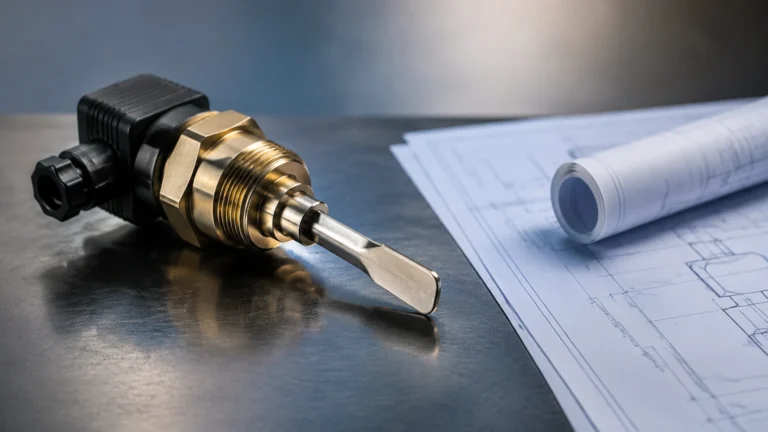
Potentiometric
Potentiometric
In the diverse landscape of industrial level measurement, selecting the appropriate technology requires a deep understanding of the physical properties of the media and the environmental conditions of the process. While radar and ultrasonic sensors dominate many large-scale applications, the potentiometric level measurement principle has carved out a critical niche, particularly in the food, beverage, and pharmaceutical industries. This technology offers a robust solution for continuous level monitoring in small to medium-sized vessels where foam, high temperatures, or viscous coatings might compromise other sensing methods.
As a professional manufacturer of industrial level measurement instruments, Welk provides a comprehensive range of solutions, including radar level meters and ultrasonic sensors. However, understanding the specific mechanics of the potentiometric method is essential for engineers tasked with optimizing process control in challenging hygienic environments. This guide explores the principles, advantages, and practical application of potentiometric level sensors within the broader context of industrial automation.
Measurement Principles of Potentiometric Level Sensors
The potentiometric measurement principle is based on the physical concept of a voltage divider. Unlike capacitive sensors that measure changes in the dielectric constant, or hydrostatic sensors that measure pressure, a potentiometric sensor utilizes the electrical conductivity of the medium to determine the liquid level.
The Voltage Divider Effect
The sensor typically consists of a metallic probe (the resistance rod) that is immersed in the liquid. A low-voltage, high-frequency alternating current is applied to this probe. This current flows through the probe to the end of the sensor and returns through the conductive liquid to the tank wall or a separate reference electrode.
Because the probe has a known, uniform electrical resistance along its length, a voltage drop occurs. The liquid acts as a movable tap on a potentiometer. The sensor electronics measure the ratio between the voltage at the start of the probe and the voltage at the point where the probe enters the liquid. Since the resistance of the probe is linear, the measured voltage is directly proportional to the filling level. This ratio-based measurement makes the system remarkably stable, as it is independent of the absolute conductivity of the medium, provided a minimum threshold is met.
Conductivity Requirements
For the potentiometric principle to function, the medium must be electrically conductive. Most water-based liquids, acids, alkalis, and food products meet this requirement. Typically, a minimum conductivity of 1 μS/cm to 50 μS/cm is required, depending on the specific sensor design. Because the measurement relies on a voltage ratio rather than the magnitude of the current, the sensor remains accurate even if the conductivity of the medium fluctuates during the process.
Key Advantages in Industrial Applications
Potentiometric sensors are frequently selected for applications where non-contact methods or pressure-based methods face technical hurdles. Their design offers several distinct advantages for B2B process industries.
Resistance to Foam and Turbulence
One of the primary challenges for ultrasonic and radar sensors is the presence of heavy foam on the liquid surface. Foam can absorb or scatter signals, leading to false readings or signal loss. Potentiometric sensors are largely unaffected by foam because the measurement occurs along the submerged portion of the probe. As long as the liquid itself is in contact with the rod, the level is accurately detected, regardless of the thickness of the foam layer sitting on top.
Tolerance for Coating and Buildup
In industries dealing with viscous liquids like chocolate, syrups, or heavy oils, sensor probes often become coated with material. In capacitive systems, this buildup can lead to significant measurement errors. Potentiometric sensors are designed to be insensitive to these coatings. The electronics focus on the point of highest current flow (where the probe meets the bulk liquid), allowing the sensor to "ignore" the thin film of residue clinging to the upper portion of the rod.
High-Temperature and Hygienic Compatibility
Potentiometric sensors are often constructed with high-grade stainless steel and PEEK (Polyether ether ketone) insulators, making them ideal for Clean-in-Place (CIP) and Sterilization-in-Place (SIP) processes. They can withstand temperatures exceeding 140°C (284°F) and high-pressure washdowns, ensuring longevity in sterile environments.
Technical Specifications and Selection Criteria
When evaluating level measurement options on the Main Page of a technical catalog, engineers must compare several parameters to ensure the potentiometric sensor fits the application requirements.
| Parameter | Typical Potentiometric Specification | Notes |
| :— | :— | :— |
| Measurement Range | 200 mm to 3,000 mm (8" to 118") | Best suited for smaller tanks and bypass pipes. |
| Accuracy | ±0.5% to ±1% of full scale | Highly precise for short-range measurements. |
| Conductivity | > 1 μS/cm | Requires conductive media. |
| Process Temperature | -20°C to +140°C (-4°F to 284°F) | Suitable for steam sterilization. |
| Process Pressure | Up to 10 bar (145 psi) | Standard for most atmospheric and low-pressure tanks. |
| Output Signal | 4-20 mA, IO-Link | Compatible with modern PLC and SCADA systems. |
Material Compatibility
Selection must involve a review of the wetted materials. Standard probes are 316L stainless steel, but for aggressive chemicals, specialized coatings or alternative alloys may be necessary. The insulation material (often PEEK) must also be checked for chemical compatibility with the process media and cleaning agents.
Installation and Engineering Considerations
Correct installation is paramount for the reliability of potentiometric sensors. Because the measurement circuit involves the tank wall, the electrical environment of the vessel must be considered.
1. Grounding and Reference Electrodes: In metallic tanks, the tank wall serves as the return path for the electrical signal. It is essential that the sensor is electrically bonded to the tank. In non-metallic (plastic or fiberglass) tanks, a dual-rod sensor or a separate reference electrode must be used to provide the return path.
2. Mounting Position: The sensor should be mounted vertically. If installed at an angle, the linearity of the measurement will be affected, requiring complex calibration in the control system. It should be positioned away from the filling inlet to avoid direct impact from the incoming liquid stream, which could cause mechanical stress or signal noise.
3. Bypass Installations: For tanks with heavy agitation or internal obstructions like heating coils, installing the potentiometric probe inside a bypass pipe is a common engineering solution. This provides a calm surface for measurement and protects the probe from mechanical damage.
4. Dead Zones: Like most level sensors, potentiometric probes have small "dead zones" at the very top and bottom of the rod where measurement is not possible. These typically range from 10 mm to 50 mm (0.4" to 2"). Engineers must account for these zones when calculating the usable volume of the tank.

Comparative Analysis: Potentiometric vs. Other Technologies
To provide a balanced view for B2B procurement, it is helpful to compare potentiometric sensors with other common technologies found in the Welk product line.
vs. Radar Level Meters
Radar (both guided wave and non-contact) is excellent for large tanks and non-conductive liquids. However, in small tanks with internal obstructions, radar signals can suffer from interference. Potentiometric sensors are often more cost-effective and easier to install in small-scale hygienic vessels where radar might be overkill or technically difficult to implement due to the dielectric properties of the fluid.
vs. Ultrasonic Sensors
Ultrasonic sensors are non-contact and versatile but fail in the presence of heavy foam, steam, or vacuum. Potentiometric sensors thrive in these conditions. If the application involves a boiling liquid or a pressurized vessel with significant vapor, the potentiometric method is significantly more reliable than ultrasonics.
vs. Hydrostatic Pressure Transmitters
Hydrostatic sensors are highly effective for large storage tanks. However, they measure mass/pressure, meaning changes in the density of the liquid (due to temperature fluctuations) will result in level errors. Potentiometric sensors measure the physical height of the liquid based on electrical contact, making them immune to density changes.
Common Limitations and Risks
While highly effective, the potentiometric method is not a universal solution. Engineers should be aware of the following limitations:
* Non-Conductive Media: This technology cannot be used for oils, pure hydrocarbons, or distilled water with extremely low conductivity. For these applications, Welk recommends radar or capacitive solutions.
* Rod Length Limits: Due to mechanical stability, potentiometric probes are rarely longer than 3 meters (approx. 10 feet). For deeper tanks, hydrostatic or radar sensors are preferred.
* Media Agitation: While the sensor is robust, extremely violent agitation can cause the probe to flex. In such cases, a stilling well or bypass pipe is required to ensure the mechanical integrity of the sensor.
* Scaling: While thin coatings are ignored, heavy, non-conductive scaling (like calcium buildup in hard water applications) can eventually insulate the probe and prevent the electrical circuit from closing.
Frequently Asked Questions (FAQs)
Q: Can potentiometric sensors be used in plastic tanks?
A: Yes, but they require a dual-rod configuration or a secondary grounding rod. Since the plastic tank wall is non-conductive, it cannot serve as the return path for the measurement signal.
Q: Does the sensor need to be recalibrated if I change the liquid in the tank?
A: Generally, no. As long as the new liquid meets the minimum conductivity requirement, the ratio-based measurement principle remains accurate regardless of the change in the media's specific conductivity.
Q: How does the sensor handle agitated surfaces?
A: The electronics usually include damping features to smooth out fluctuations caused by surface ripples. For extreme turbulence, a bypass pipe is the recommended mechanical solution.
Q: Is the sensor affected by temperature changes?
A: The measurement principle itself is independent of temperature. However, the physical materials of the probe expand and contract. High-quality sensors include temperature compensation to maintain accuracy across the rated operating range.
Conclusion
Potentiometric level measurement remains a cornerstone of precision process control in the hygienic and chemical sectors. By leveraging the electrical conductivity of the medium, these sensors provide a reliable, foam-resistant, and low-maintenance solution for challenging vessel geometries. When selecting a level measurement strategy, it is vital to match the technology to the specific physical constraints of the application.
For those seeking to explore a full range of industrial measurement tools, including radar, ultrasonic, and hydrostatic options, we invite you to Review product options and application support to find the ideal fit for your specific operational needs. Welk continues to provide the technical expertise and hardware necessary to ensure accurate and cost-effective level monitoring across the global industrial landscape.